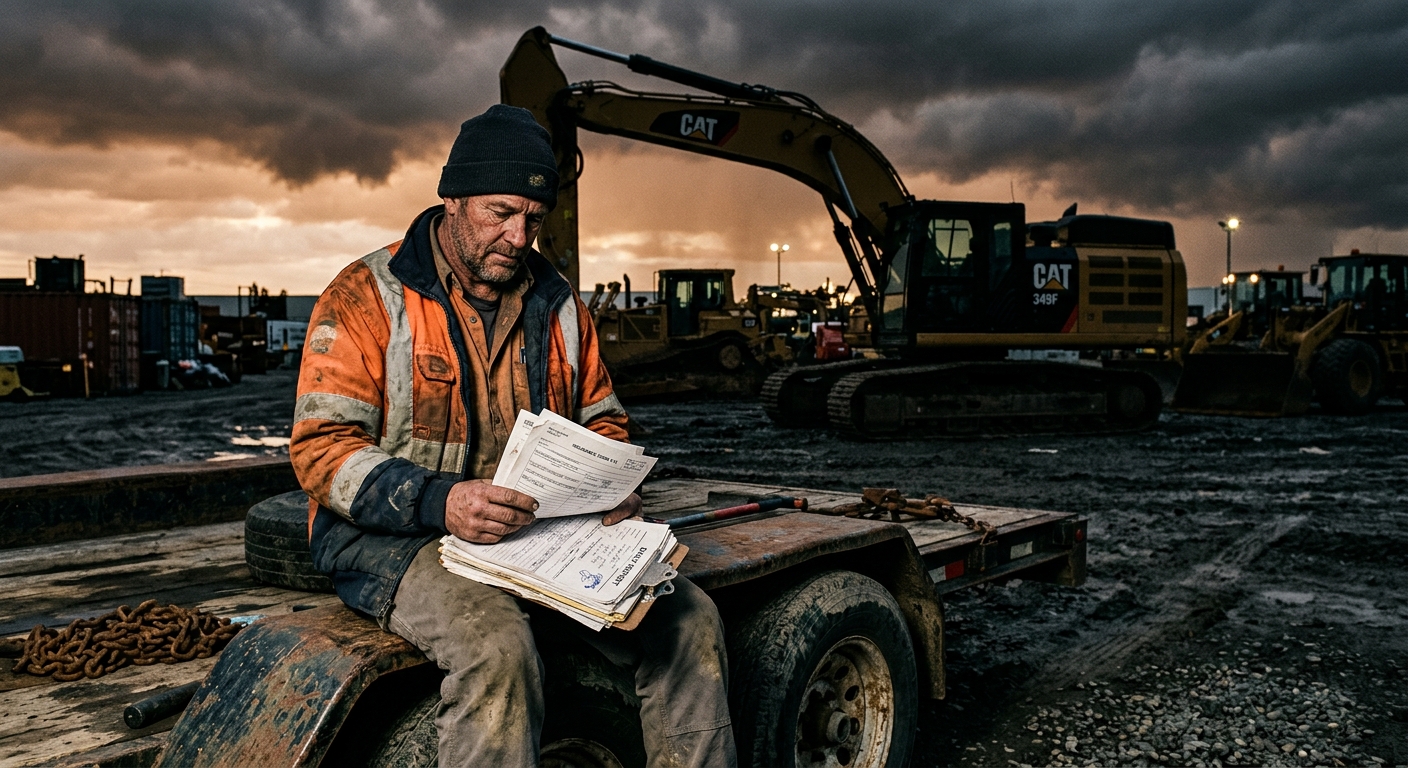

OPINION: The Insurance Racket Is Eating Your Margins
Between GL, auto, equipment, workers comp, and umbrella policies, you're probably paying more to be insured than to run your machines. Nobody talks about it, and it's quietly bankrupting small operators.
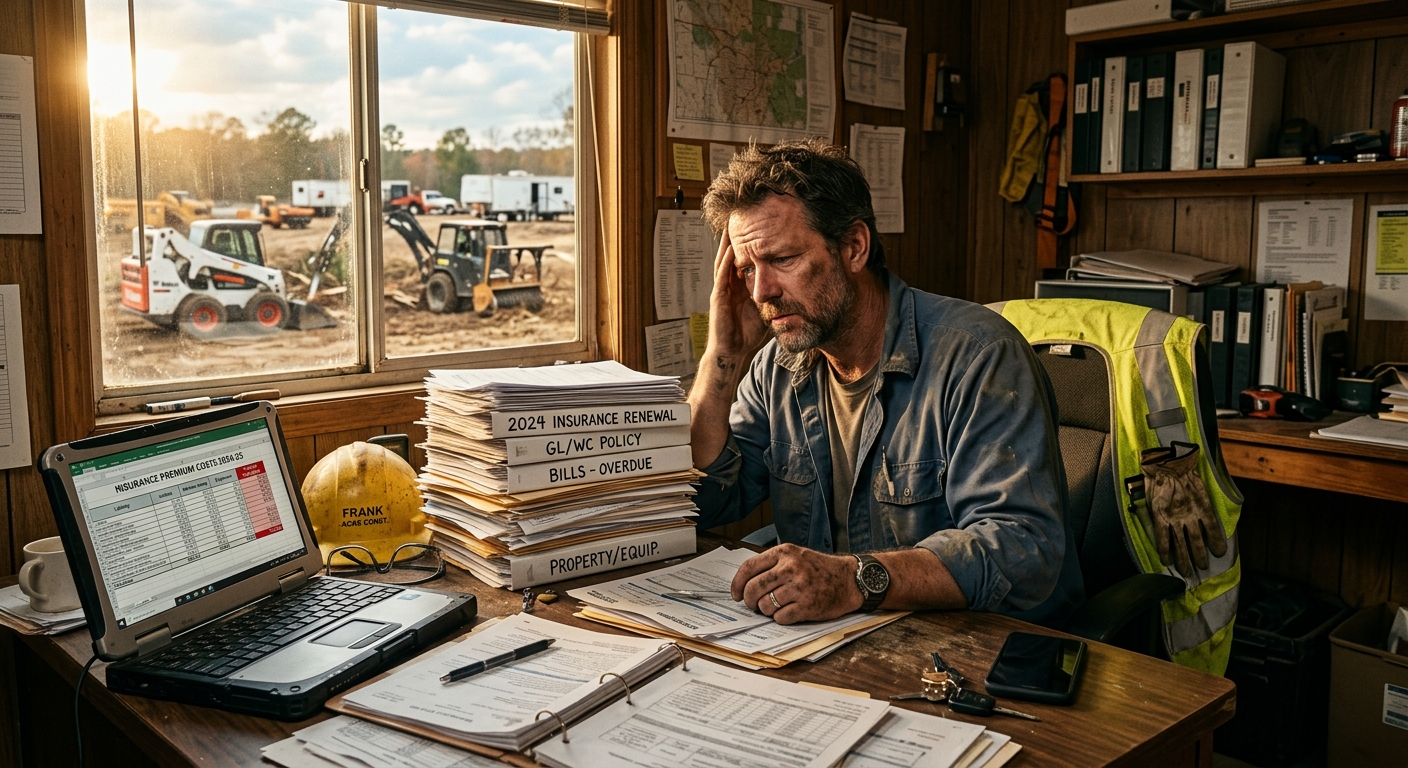
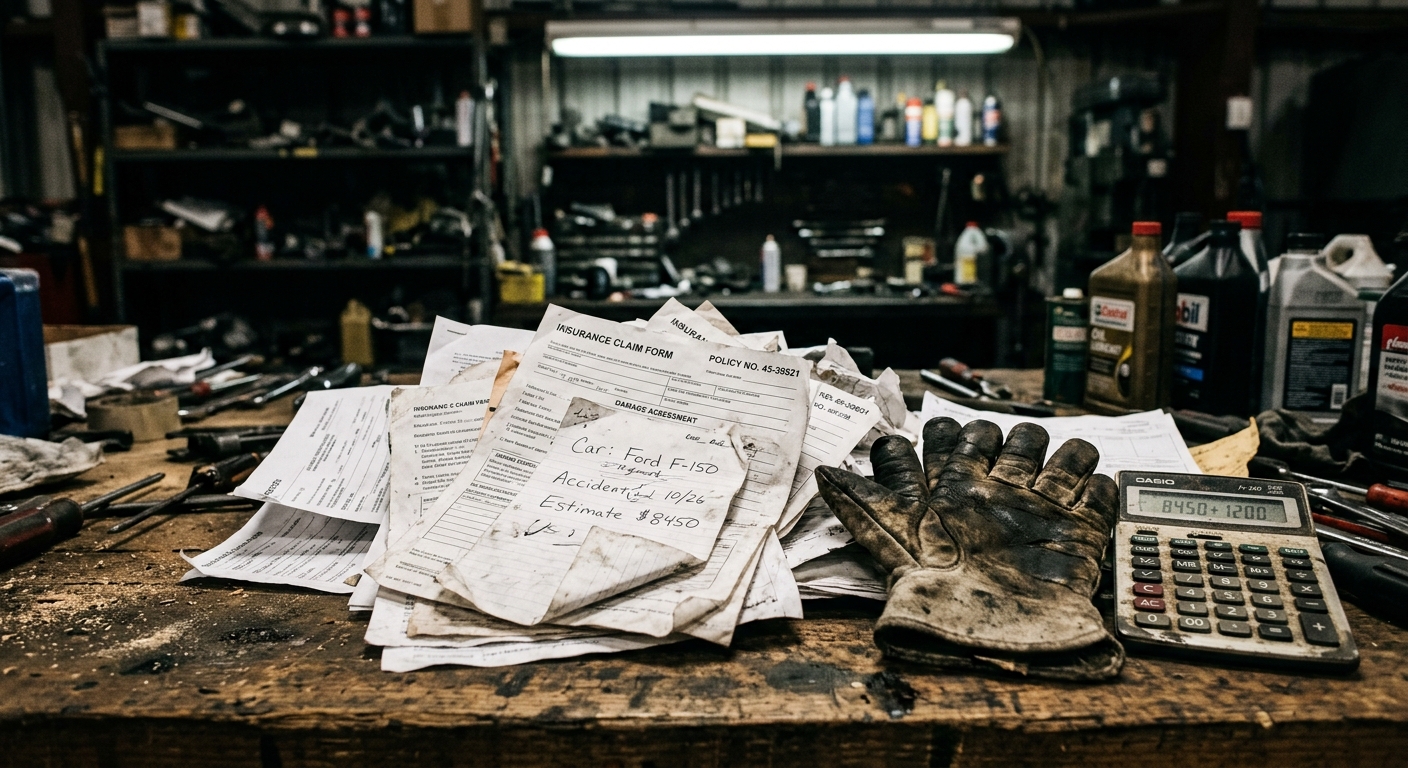
I was sitting in my office last Tuesday looking at the stack of renewal notices on my desk — general liability, commercial auto, inland marine, workers comp, umbrella — and I did something I probably should have done years ago. I added it all up.
Then I added up what I paid for diesel last year.
The insurance number was bigger. Not by a little. By enough that I stared at the spreadsheet for a while and wondered when exactly this became normal.
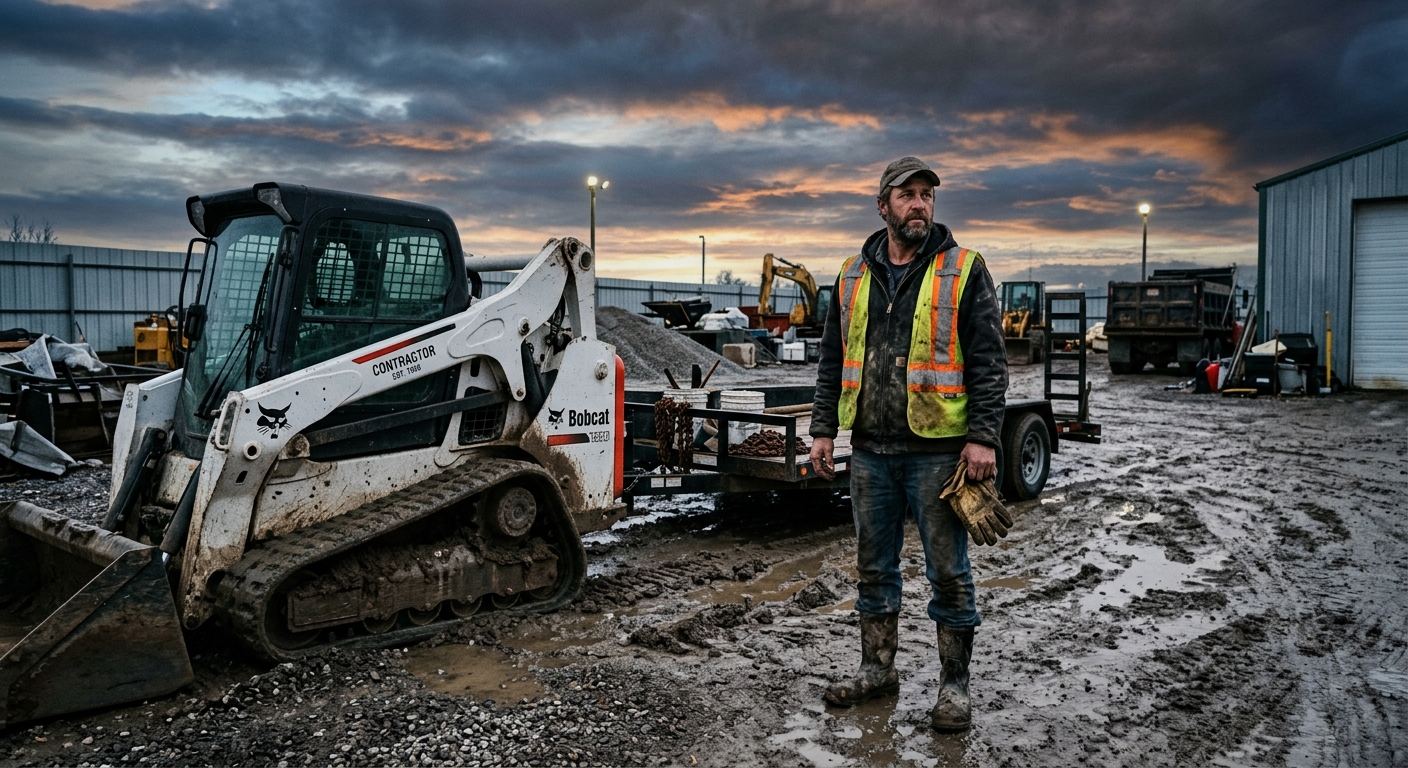
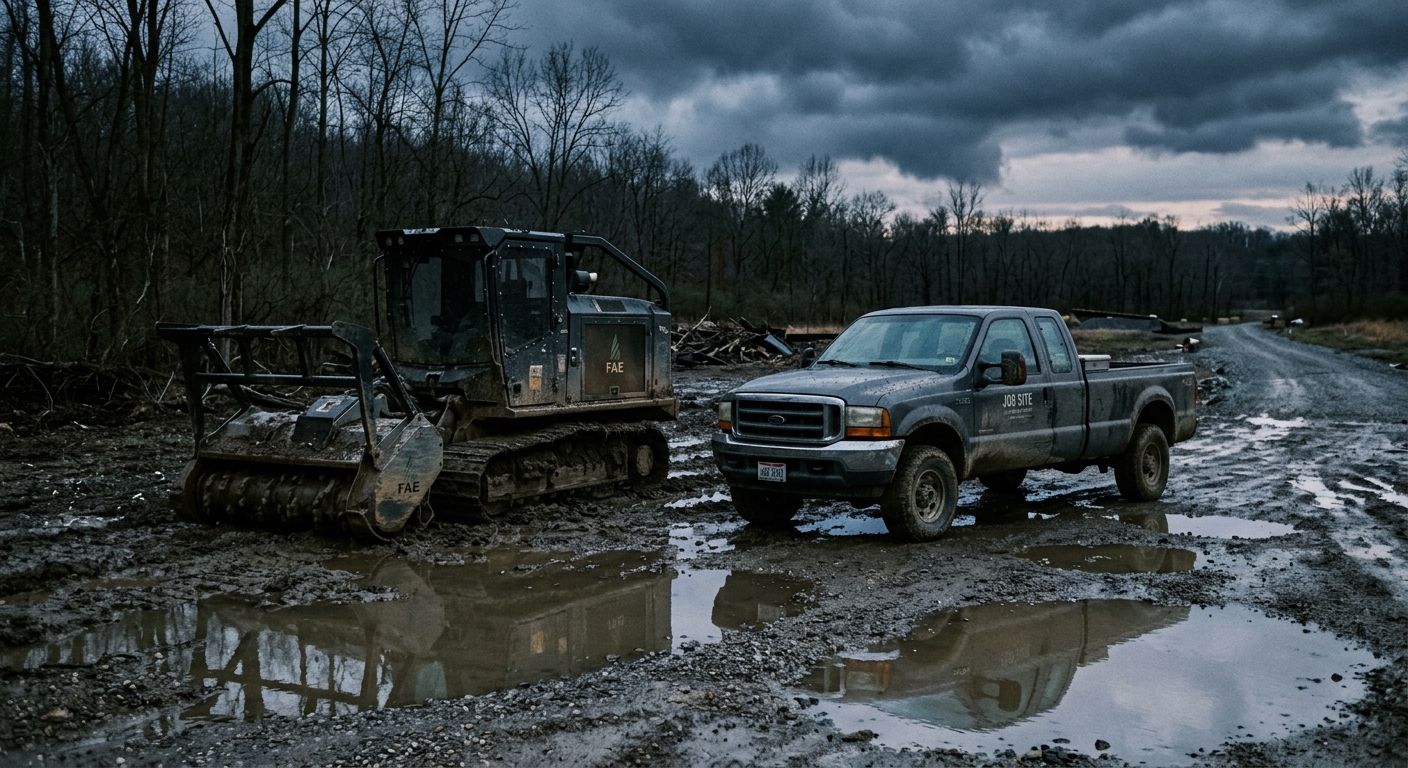
I run a forestry mulching company in Ohio. A few crews, a handful of skid steers, a couple mulching heads that cost more than most people’s cars, a fleet of trucks and trailers. I have been doing this long enough to remember when insurance was something you paid once a year, filed in a drawer, and mostly forgot about unless something went sideways.
That world is gone. And nobody in this industry is talking about how much of our revenue is being siphoned off every month by an industry that has figured out we can’t say no.
The Policies Nobody Warned You About
When you start a land clearing business, everybody tells you about the equipment. They tell you about the marketing. They tell you to keep good books. Nobody sits you down and explains that in five years you’re going to be carrying a policy stack that would make a small law firm jealous.
Here’s what actually ends up on my books:
Commercial general liability. That’s the big one everybody has. Covers you if your crew knocks down the wrong fence or your mulcher head sends a rock through a neighbor’s window.
Commercial auto. Every truck, every trailer, every hauler. And the more you grow, the worse it gets, because carriers price you as a “fleet” the minute you hit five vehicles.
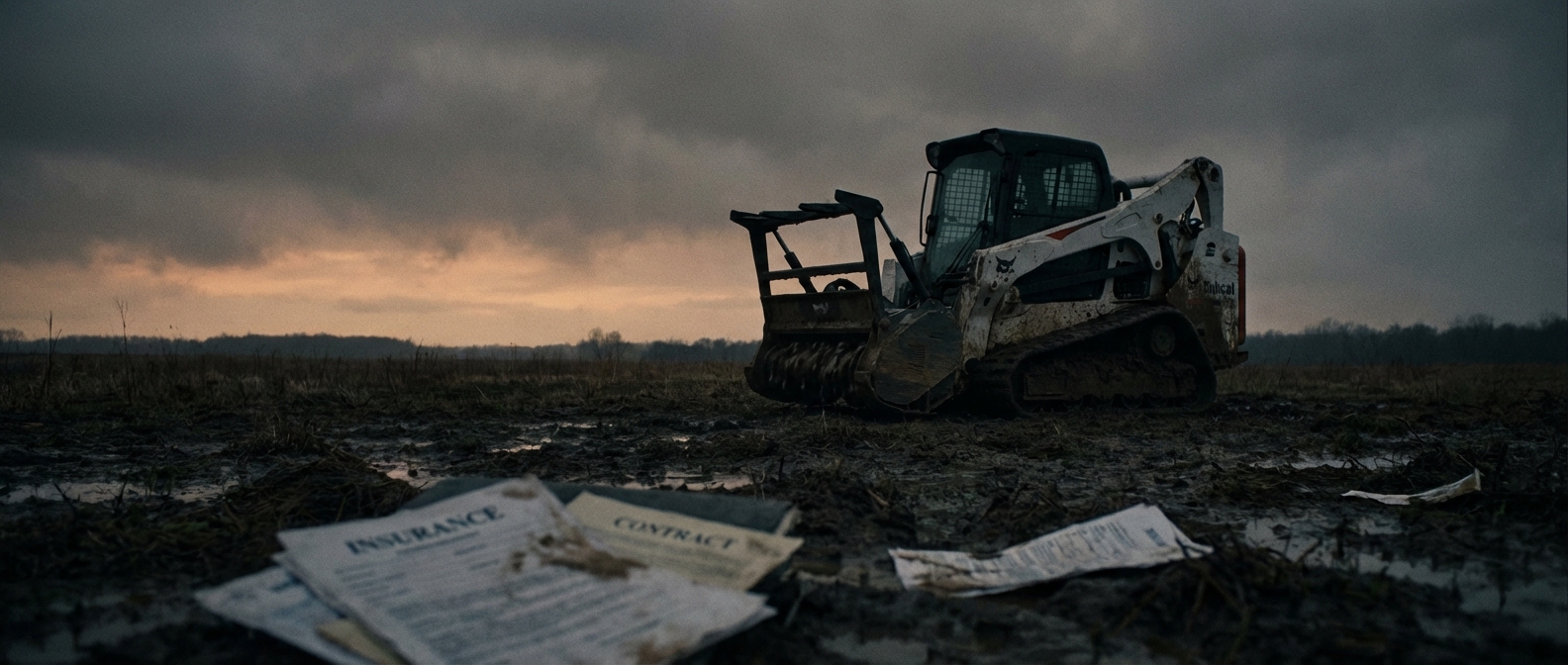
Inland marine or equipment coverage. This is what covers the actual machines when they get stolen off a jobsite or catch fire mid-cut. My mulcher head alone is insured for more than my first house cost.
Workers comp. Mandatory in every state I operate in. Priced on your payroll, your job codes, and your experience modifier. Get one bad claim and you’re paying for it for three years.
Umbrella. Because every commercial customer worth having now wants $2 million, $5 million, or $10 million in coverage, and your primary policies cap out way below that.
Then the add-ons. Employment practices. Cyber. Pollution liability if you touch anything that might have fuel residue or oil in it. Hired and non-owned auto for the kid who drives his own pickup to the jobsite. Certificate fees. Waiver fees. Endorsement fees.
By the time you actually run a real operation, you are not buying a policy. You are assembling a portfolio.
The Math That Ruins a Good Day
Let me put real numbers on this, because I think a lot of operators are too scared to.
A small one-truck, one-machine operation in my part of the country is looking at roughly this:
- Commercial auto: $5,000 to $8,000 a year
- General liability: $3,000 to $6,000 a year
- Equipment coverage: $4,000 to $10,000 a year depending on what you own
- Workers comp: starts around $4,000 once you have one or two employees
- Umbrella: $1,500 to $3,000 a year
That’s a floor of roughly $17,500 and a realistic number closer to $30,000 for a one-machine operation. Before you’ve turned a key.
Scale it up to three crews, five trucks, five trailers, and a proper fleet of machines, and you are well into six figures every year. I know operators running bigger outfits than mine who are writing $200,000 checks annually to their insurance broker. And that is not for some gold-plated coverage. That is just what it costs to exist at that size and be legally allowed to pull onto a commercial jobsite.
For context, I can book an entire month of mulching revenue on one machine that nets me less than what my insurance stack costs me in a single year.
Think about that. I can run the mulcher forty hours a week for a month — fuel, labor, maintenance, wear and tear, the whole thing — and the profit from all of that still doesn’t cover my insurance bill for the year.
The Part That Actually Makes Me Angry
It’s not the cost. I’ve made peace with the fact that insurance is expensive. What drives me crazy is the relationship.
I pay my premiums on time. I’ve never had a major claim. My loss run looks clean. My safety record is good. And every single year, the renewal comes in higher than the year before. Every year.
I’ve had the conversation with three different brokers now. The answer is always some version of, “Well, the market is hardening. Reinsurance costs are up. Wildfire losses in California are affecting everyone. Auto losses nationally are up.”
None of those things have anything to do with my Ohio land clearing operation. I have never sent a crew to California. My trucks have never been in a highway pileup. My safety record has been clean for years. But I’m paying for someone else’s problems, and there’s no mechanism to opt out of that.
Try going to your customer and telling them, “I know we agreed on a price for your mulching job, but my overhead went up this year for reasons that have nothing to do with your project, so I need you to pay 12 percent more.” See how that lands.
Insurance companies have figured out that operators in this industry have nowhere else to go. Commercial customers require proof of insurance. Equipment financing requires proof of insurance. Employees require workers comp. States require auto. The only lever you have is how much you pay, and the answer to that is always “more next year.”
The Certificate of Insurance Game
If you want to see the racket up close, watch what happens the first time a big commercial customer asks you for a certificate of insurance.
You call your broker. Your broker emails you a generic COI. You forward it to the customer. The customer’s risk department bounces it back because the wording isn’t quite right. Now they need “additional insured on a primary and non-contributory basis with a waiver of subrogation and 30-day notice of cancellation.”
You forward that to your broker. Your broker says, “We can add that endorsement — it’ll be $350 per certificate, and your policy premium goes up to reflect the expanded coverage.”
So you pay the extra. The job pays for it. Fine.
Then next year, the policy renews and those endorsements are baked in at a higher cost. And every commercial customer you add wants their own tweak. Their own language. Their own certificate. Pretty soon you’ve got a folder full of COIs, each one slightly different, each one costing you money, each one buying the customer a little more protection at your expense without adding one dollar to what they’re paying you.
The customer isn’t wrong to ask for it. A good commercial customer is protecting their own business. But the insurance company has figured out that this is an arbitrage opportunity and priced it accordingly. The COI system exists because customers demand it. The cost of the COI system exists because insurance companies know you have no choice.
What Nobody Will Tell You
Here are a few things I have learned the hard way that your broker will never volunteer.
Your broker works for the insurance company. Technically they work for you. Practically, their commission is paid by the carrier, and bigger premiums mean bigger commissions. A broker who shops your policy aggressively and drives your premium down is a broker making less money. Think about what that incentive structure actually rewards.
“Package deals” usually aren’t. When the broker bundles your GL, auto, and equipment into one “business owner’s package,” the premium often looks great year one. Then they start layering in the stuff the package didn’t cover, the endorsements, the exclusions, the riders. Three years later the package costs more than buying each line separately would have.
The experience modifier is negotiable. Your workers comp experience mod is calculated on your loss history, but the formula includes assumptions about what a “normal” operation in your code looks like. If your actual operation is cleaner than the industry average, you have a case to make. Most operators never make it because they don’t know they can.
Captives and group programs exist. There are industry-specific group insurance programs, captives, and risk-retention groups where operators pool risk together instead of paying retail premiums to commercial carriers. They’re not for everyone and they come with tradeoffs, but most small operators have never heard of them because nobody in the retail insurance world has any reason to tell you.
Your broker can get fired. I switched brokers last year. It cost me a weekend of paperwork and I saved nearly 14 percent on the same coverage. Your current broker is not a spouse. You can leave.
What I’ve Actually Done About It
I am not going to pretend I’ve solved this. I haven’t. My premiums went up this year too. But I’ve changed how I approach it, and my costs are moving in a better direction than they were three years ago.
First, I actually read my policies now. I know what’s in them. I know what’s excluded. I know my limits. When a renewal comes in with a 14 percent increase, I can push back with specific questions instead of just nodding and signing.
Second, I get real quotes from three brokers every two years. Not at renewal — that’s too late. Ninety days before. And I make each of them compete for the business. It takes time. It is not fun. But I usually save five figures doing it.
Third, I track insurance as its own line item with a cost per machine hour. Just like fuel, just like maintenance, just like labor. When I quote a job, insurance gets priced into the bid. If my insurance costs jump 12 percent, my bids go up accordingly. The customer is going to pay for that overhead one way or another — I just don’t hide it from myself anymore.
Fourth, I joined an industry association that has a group insurance program. The quotes I got through them aren’t always the cheapest, but they are priced based on actual land clearing operations, not a generic contractor code. That alone has been worth the membership.
The Bottom Line
Insurance isn’t going away. I wouldn’t want it to. One bad day on a jobsite without coverage would end my business faster than any recession.
But the industry around it — the brokers, the carriers, the endorsement fees, the constant ratcheting of premiums, the COI game, the annual “the market is hardening” speech — that is a racket. And the reason it keeps working is that operators like me have been too busy running equipment to actually look at what’s happening.
Add up what you paid in total insurance premiums last year. Every line item. Every fee. Every endorsement. If that number doesn’t make you uncomfortable, either you’re running a very small operation or you’re not looking closely enough.
We spend more time negotiating a $400 quote for a residential driveway than we do negotiating a $40,000 annual insurance package. That’s backwards. That’s how they get you.
Start treating insurance like the huge operating expense it actually is. Read the policies. Shop the brokers. Price it into your bids. Know your number. Because if you don’t, the racket is going to keep eating your margins for as long as you let it.
And next year’s renewal is already written, whether you’ve looked at last year’s or not.
Alex Boyd is the founder of BrushWorks, a forestry mulching and land clearing company based in Ohio. He writes about the business side of running an equipment operation at Equipment Insider.