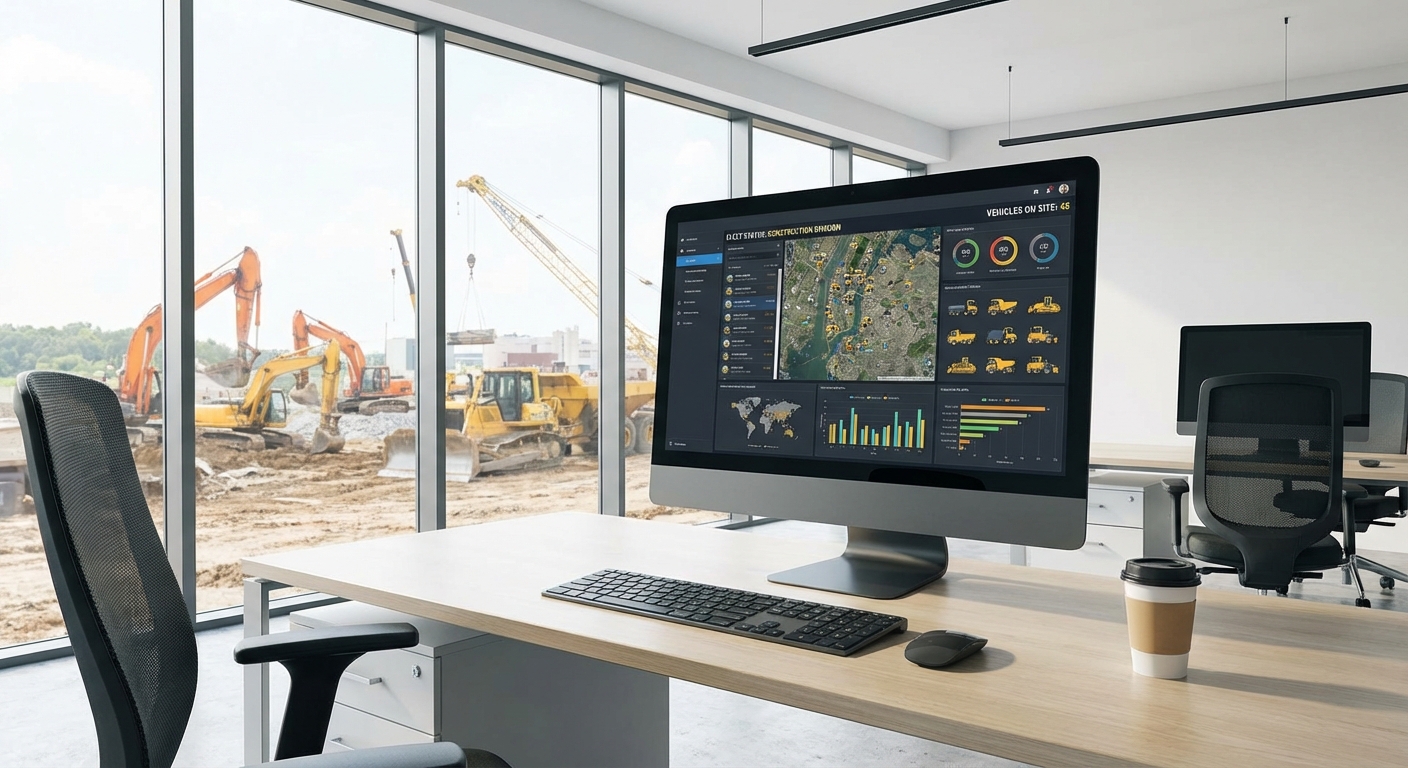

Thunder Creek Built a Business Around the Jobsite Fuel Problem
The Iowa trailer maker is not chasing the biggest iron on the job. It is focused on the support work that keeps machines from losing hours to fuel runs, oil changes, DEF handling, and field service bottlenecks.
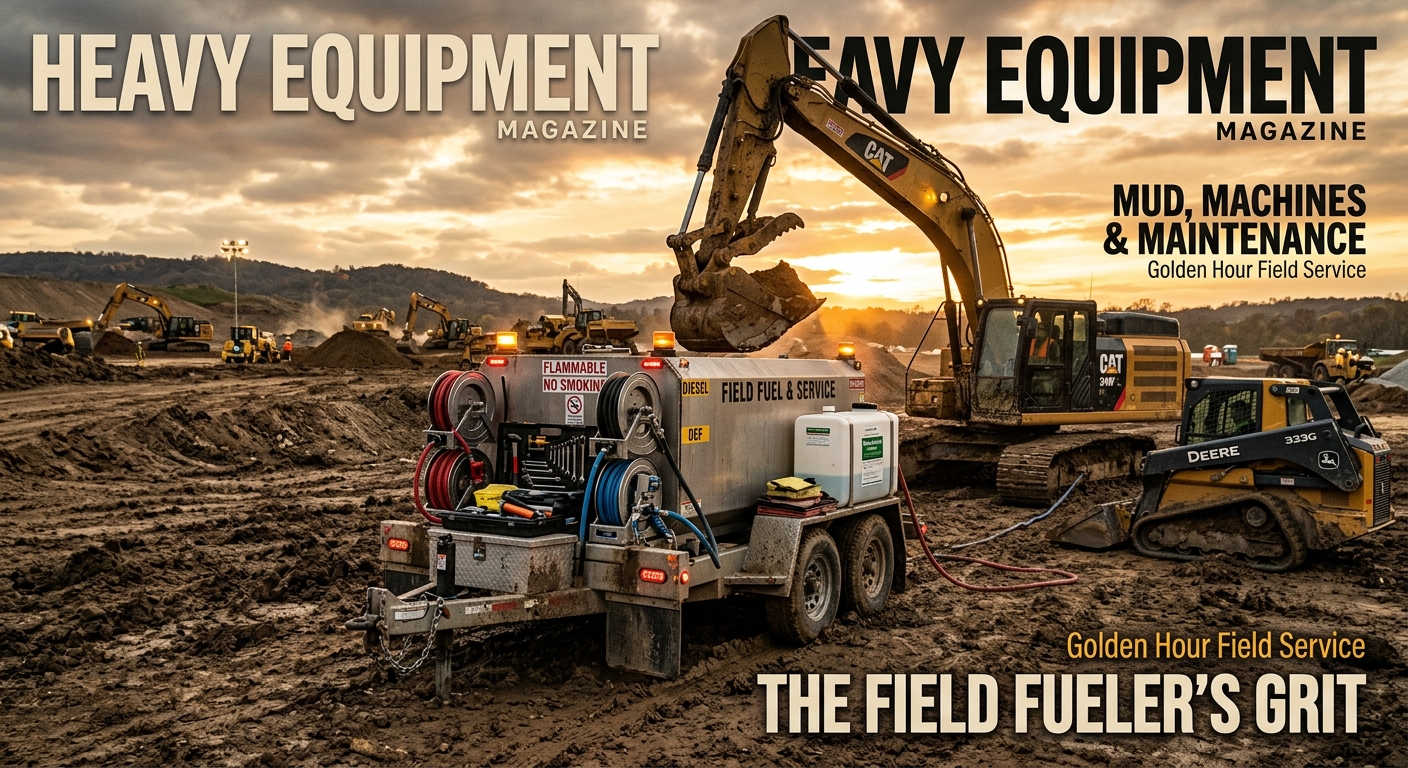
Heavy equipment owners talk about machines. They brag about the excavator, the dozer, the grinder, the skid steer, and the truck that pulled it there. The support gear gets less attention until it fails.
That is where Thunder Creek Equipment fits. The Pella, Iowa company builds fuel, DEF, lube, and service trailers and skids for contractors, farmers, fleets, municipalities, rental companies, and other operators that need to bring the shop closer to the work. Its parent company, LDJ Manufacturing, traces Thunder Creek back to 2009, when the business began building mobile fueling solutions from Iowa farm country. The company background is outlined on Thunder Creek’s own site at thundercreek.com.
The product is not as glamorous as a new excavator. That is part of the point. Field fueling and service sit in the boring part of fleet management, and boring is where a lot of money leaks. If a $300,000 machine is parked because the crew is waiting on fuel, oil, a grease gun, DEF, filters, or a service truck, the expensive asset is not earning. It is waiting.
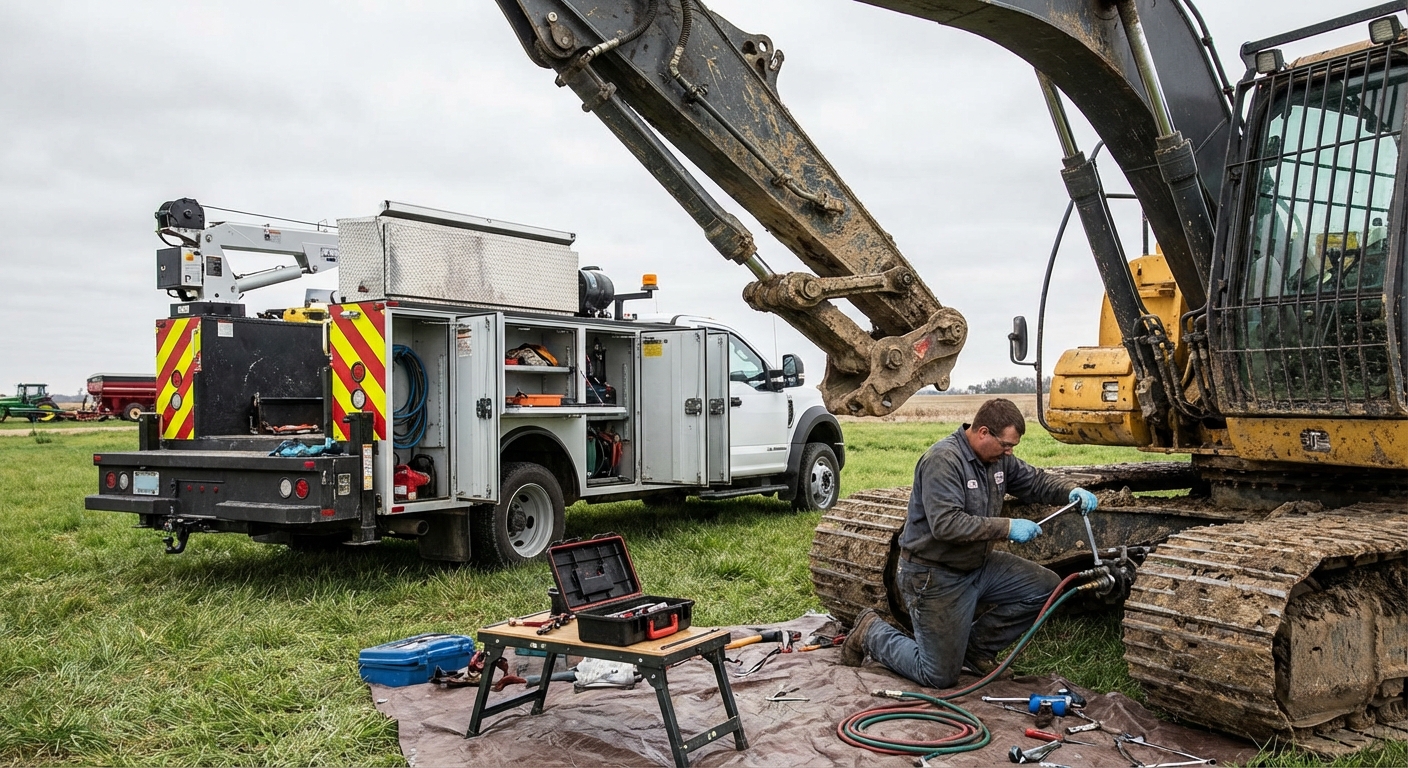
Thunder Creek has built its lane around that wait. Instead of treating fuel as a pickup-bed chore, the company packages fuel storage, pumping, DEF handling, grease, oil, tools, compressors, reels, lighting, and service storage into purpose-built mobile units. The promise is simple: reduce trips, reduce downtime, and make field service less improvised.
FieldFix Editor’s Note: Field fueling only pays when owners can see the time it saves. FieldFix helps contractors track machine hours, service history, downtime, and operating cost so support equipment can be judged by real fleet data, not guesswork.
A small problem that gets expensive fast
Most contractors understand machine downtime when something breaks. A hydraulic hose blows. A final drive fails. A regen issue derates the machine. That kind of downtime gets attention because it feels dramatic.
Fuel and service delays are quieter. They hide inside the day.
A foreman sends a laborer to town for diesel. A mechanic drives back to the shop for the right oil. DEF is stored wrong and gets contaminated. A machine misses a grease interval because the crew is racing weather. A rental unit comes back filthy and half-serviced because nobody had a clean process in the field. None of those moments looks like a major failure on its own. Add them up across a busy month and they start to look like payroll, fuel, and machine payments wasted in small pieces.
Thunder Creek’s core idea is that those small pieces are worth managing. Its Multi-Tank Trailers are built around separate diesel tanks tied into a common pumping system. The company markets the design as a way to move diesel in the field while avoiding some hazmat and CDL hurdles that come with larger single-tank fuel transport. Operators still have to follow federal, state, and local rules, but the design speaks to a real pain point: small and midsize contractors often need more fuel than a slip tank, but they do not want to turn every fuel run into a compliance project.
That is a practical wedge. Thunder Creek is not asking a contractor to rethink the whole fleet. It is asking whether the crew should keep wasting production time on fuel logistics.
Why the no-hazmat angle matters
The no-hazmat message has become a major part of Thunder Creek’s identity. The company explains that its multi-tank approach uses individual tanks under common regulatory thresholds, with a manifold system that lets the operator pump from the trailer as one system. Thunder Creek lays out that positioning across its product pages and dealer materials at thundercreek.com.
For contractors, the appeal is obvious. Labor is tight. Good CDL drivers are not easy to find. Mechanics are busy. Owners do not want their best people tied up in avoidable errands, and they do not want a fuel solution that creates more paperwork than production.
That does not mean compliance disappears. Fuel transport is still regulated. Insurance, placarding, driver qualifications, spill control, tank labeling, route rules, and local enforcement all matter. Any owner treating a trailer as a loophole is asking for trouble. The smarter reading is different: Thunder Creek found a way to package field fueling so more contractors can handle it with normal fleet staff and clearer procedures.
That is why the product has pull beyond agriculture. Construction crews, utility contractors, excavators, road builders, land clearing companies, municipalities, disaster response teams, and rental fleets all share the same basic problem. The machines move. The fuel and service operation has to follow.
DEF made field service harder
Tier 4 emissions systems changed the service trailer conversation. Diesel alone was no longer enough. Fleets also had to move, store, and dispense diesel exhaust fluid without wrecking it.
DEF is sensitive. Dirt, oil, metal, fuel, and poor storage can cause problems. Crews that treat DEF like another jug in the truck bed can create the kind of downtime nobody wants to explain. Thunder Creek has leaned into that headache with trailer and skid options built to carry DEF alongside diesel, oil, grease, and service tools.
The company lists DEF handling across several product families, including fuel and service trailers, service and lube trailers, and skid-mounted systems. That matters because mixed fleets are now normal. A contractor may have older machines that only need diesel and grease, newer machines with DEF systems, compact equipment on one site, and large equipment on another. The support unit has to be flexible enough to serve the fleet as it exists, not as the owner wishes it existed.
The real value is not just carrying DEF. It is giving the crew a cleaner routine. Keep the fluid protected. Put the hose and nozzle where they belong. Make it obvious what goes where. Reduce the chance that a tired operator grabs the wrong container at the end of a long day.
That sounds basic. Basic is good. Field service should be hard to mess up.
The product line has moved past trailers
Thunder Creek started with trailers, but the product story is broader now. The company offers fuel trailers, lube trailers, service trailers, DEF systems, and skid units. In late 2025, Thunder Creek announced fuel and lube skid products aimed at customers who want the same mobile service concept mounted on flatbeds, service trucks, or utility trailers. The company has promoted the skid line as a way to bring fuel, oil, DEF, grease, tools, and waste oil reclaim into tighter fleet setups.
That shift matters because not every contractor wants another trailer. Some jobsites are tight. Some crews already have trucks that should carry the service package. Some companies would rather mount a skid on a flatbed and keep the setup compact. A skid also fits fleets that already own trailers but need a cleaner service module.
It is a smart move because the customer is not really buying a trailer. The customer is buying mobile uptime. If the same job can be done from a truck bed, a skid, or a trailer, Thunder Creek gets more ways to sell the same operating idea.
The broader product mix also helps the company serve more than one customer type. A farmer running long harvest days may need mobile fuel and DEF. A site contractor may need diesel, hydraulic oil, engine oil, grease, filters, and a compressor. A rental branch may need a way to service returned units and support customers in the field. A municipality may need fuel and service gear that can move during storm cleanup.
The steel changes. The problem does not.
The dealer channel is part of the play
Thunder Creek is not a direct-only internet brand. It relies on dealers, and that matters in this category.
Support equipment is a trust sale. Contractors want to see build quality, pump layout, hose routing, storage, axle spec, toolbox placement, and service access. They also want to know who will help if a pump fails, a reel breaks, a light quits, or a trailer needs parts. A dealer can turn the product from a catalog item into a local fleet discussion.
That fits how equipment owners already buy. A contractor may hear about Thunder Creek from a dealer that also sells compact equipment, attachments, trailers, or service bodies. The dealer can connect the support trailer to the customer’s actual operation: how many machines, how far from the shop, what fuel burn, what fluids, what tow vehicle, what driver qualifications, and what jobsites.
This is also why Thunder Creek is interesting as a mid-size manufacturer. It does not need to outspend the big OEMs. It needs to be the brand a dealer brings up when the customer is tired of losing time to field logistics.
That is a narrower lane, but it is a useful one.
The economics are about hours, not gallons
A contractor should not judge a field fueling setup only by how many gallons it carries. Gallons matter, but hours matter more.
The right question is how many paid machine hours the support unit protects. If a crew burns a morning moving fuel instead of moving dirt, that cost belongs in the fleet calculation. If a service trailer lets one mechanic handle preventive maintenance in the field instead of pulling machines back to the yard, that has value. If clean DEF storage prevents one emissions headache, that can pay for a lot of hose reels and tanks.
The opposite is true too. A fancy trailer that sits behind the shop is just another asset to insure, maintain, and store. Contractors love buying solutions before they fix routines. Thunder Creek’s equipment makes sense when the owner has enough machine hours, enough distance from the yard, or enough service complexity to justify it.
That is the honest test. A one-machine owner may be better served by a smaller setup and disciplined scheduling. A growing sitework, utility, forestry, paving, or ag operation may hit the point where field support becomes cheaper than improvisation.
The best customers for this kind of product are usually the ones already feeling the pain. They have crews waiting. They have mechanics stretched thin. They have fuel slips all over the cab. They know the shop is too far from the work.
Why Thunder Creek is worth watching
The heavy equipment business tends to reward visible horsepower. Bigger engines, deeper buckets, stronger lifts, higher breakout force, more hydraulic flow. Thunder Creek is playing on the other side of the job: the messy support layer that keeps those machines alive.
That is a durable place to be. Machines are more expensive. Labor is harder to replace. Emissions systems are less forgiving. Jobsites are spread out. Contractors are under pressure to get more done with the fleet they already own. All of that makes field service more important, not less.
Thunder Creek does not need every contractor to buy a premium support trailer. It needs more owners to realize that fuel and maintenance logistics are not background noise. They are production systems.
That is the company’s real lesson for the industry. The machine that makes the money is only part of the fleet. The support gear decides how often that machine is ready when the operator climbs in.
For contractors, that should be the takeaway. Stop treating fuel, DEF, grease, oil, and small service tasks as errands. They are part of uptime. If Thunder Creek keeps growing, it will be because more owners finally start pricing those errands for what they are: lost hours wearing a work shirt.