
Excavators Are Turning Into Control Systems With Tracks
The newest excavator launches are not just about horsepower or bucket force. Volvo CE and DEVELON are pointing at a different fight: hydraulic response, operator aids, grade readiness, service data, and how much work a machine can take off the operator's plate.
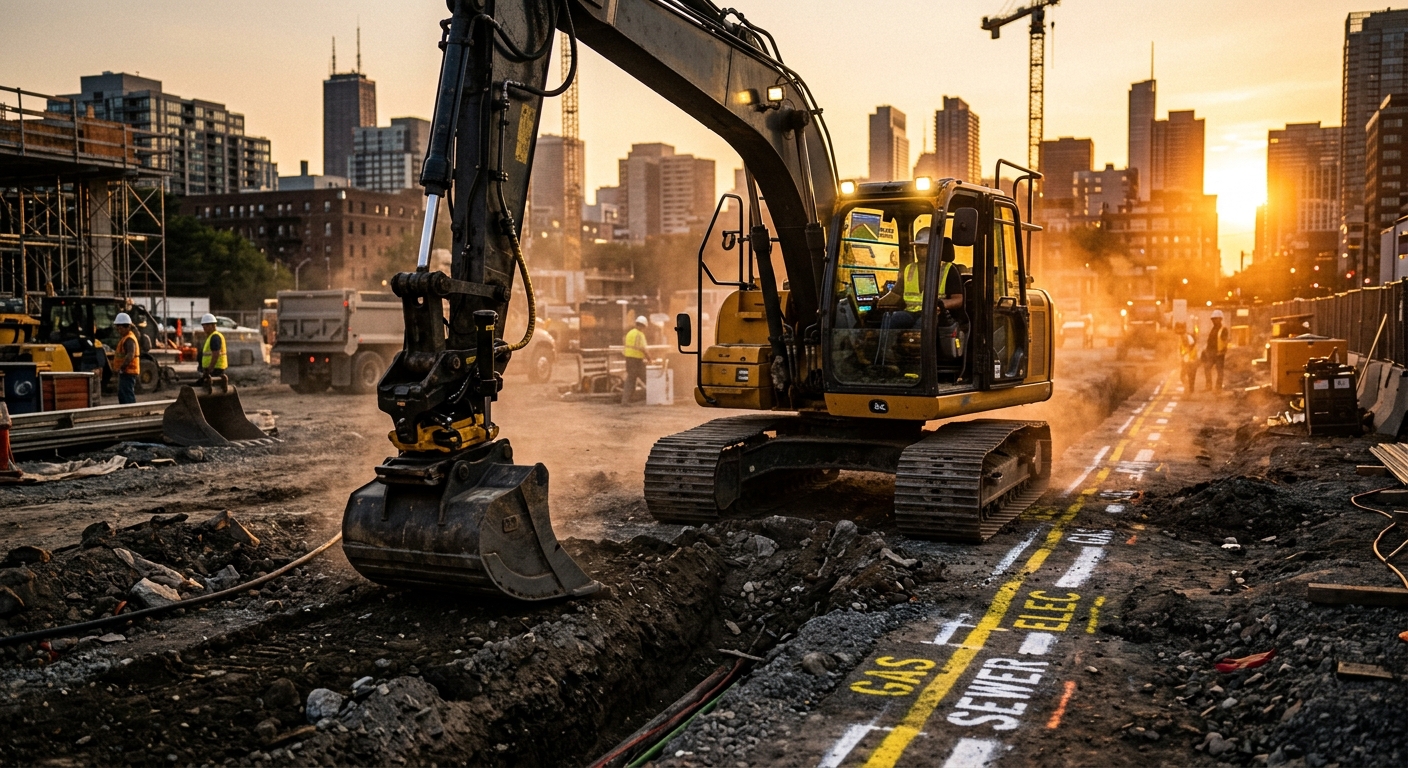
The excavator spec sheet is changing. Horsepower still matters. Digging force still matters. Weight class still matters. But the real fight is moving into the parts of the machine contractors cannot see from the fence line: hydraulic response, electronic controls, attachment presets, camera systems, grade readiness, service intervals, and the software sitting between the operator and the iron.
That sounds like marketing until a crew is trying to trench around utilities with a newer operator in the seat, a tiltrotator on the coupler, and three other trades waiting. Then control stops being a brochure feature. It becomes production.
Volvo CE’s new compact excavators and DEVELON’s -9 Series heavy excavators, both introduced ahead of and during CONEXPO 2026, point in the same direction from opposite ends of the size chart. The industry is not done chasing power. It is learning that power without control is expensive noise.
FieldFix Editor’s Note: More controls and more sensors only help if owners track what happens after the machine leaves the dealer. FieldFix helps equipment owners log hours, service, repairs, and machine costs, so the smart-machine promise can be checked against real fleet numbers.
Volvo’s compact update is really about work rate
Volvo CE launched three new-generation compact excavators in January: the ECR90 short-swing excavator, the EC65 crawler excavator, and the EW65 wheeled excavator. The headline numbers are easy to understand. The 9-ton ECR90 has 28 percent more engine power than the ECR88 it replaces, 15 percent more pump torque, 13 percent more bucket force, 11 percent more arm digging force, and 7 percent more tractive force. Volvo also says the cab is 30 percent larger.
Those are not small changes. But the more interesting part is what Volvo did around the hydraulics and operator interface. The EC65 and EW65 get 100 percent more hydraulic flow than the prior models, while the ECR90 gets 15 percent more. The machines support Volvo’s compact excavator attachment range, and Volvo specifically calls out tiltrotator use, including factory fitment in Europe.
That is the direction compact excavation has been heading for years. Contractors are asking small machines to do more than dig holes. They want them to grade, place pipe, cut slopes, run hammers, handle grapples, clean ditches, prep hardscape, move around tight sites, and do it without burning half the day repositioning.
A compact excavator with more hydraulic flow is not automatically better. A machine with more flow and better attachment control can be. The difference matters when the attachment is no longer an occasional accessory. For a lot of contractors, the attachment is the business model.
The operator is the bottleneck
The labor problem gets talked about like it is only a headcount problem. It is also a skill-transfer problem. Good operators are hard to find, and the gap between a good operator and an average operator can be the difference between a profitable job and a long week of rework.
That is why the cab and controls are no longer nice-to-have items. Volvo’s updated compact machines have a high-definition touchscreen with attachment presets, rear and side camera views, service interval settings, and Bluetooth pairing. The seats, armrests, and left-hand console were also reworked.
None of that sounds as tough as breakout force. It still matters. A tired operator makes mistakes. A newer operator with confusing controls works slowly. A crew lead who has to explain the same attachment setup every morning loses time. A machine that remembers settings, shows better sight lines, and makes service intervals harder to miss can save money without ever showing up as one big dramatic win.
The best contractors already know this. They do not buy only for the strongest operator on the payroll. They buy for the operator they are likely to have on a Tuesday afternoon in August when the schedule is behind and the jobsite is cramped.
DEVELON is pushing the heavy side toward electronic hydraulics
At the heavy end, DEVELON used CONEXPO 2026 to debut its -9 Series excavators in North America. The models shown included the DX230LC-9, DX260LC-9, DX360LC-9, and DX400LC-9. DEVELON said the platform is built on full electronic hydraulic technology with integrated AI tools.
The important phrase there is electronic hydraulic. Traditional pilot controls have served the industry well, but electronic control gives manufacturers more room to shape how the machine responds. DEVELON lists adjustable joystick sensitivity, response time, button layout, stick steer travel through joystick thumbwheels, and smart-ready grading with built-in IMU sensors. The machines are factory-equipped for 2D and ready for 3D systems from providers such as Trimble and Leica.
That is not just a nicer way to move oil. It changes how quickly a machine can be set up for different operators, different job types, and different accuracy requirements. It also makes the excavator a better host for grade control and site technology.
The risk, of course, is complexity. Contractors have heard plenty of promises about smarter machines. They have also watched machines sit while someone waits for a laptop, a sensor, a harness, or a technician who understands the fault code. Electronic control needs dealer support behind it. If the machine is smarter but harder to keep working, the contractor pays for the experiment.
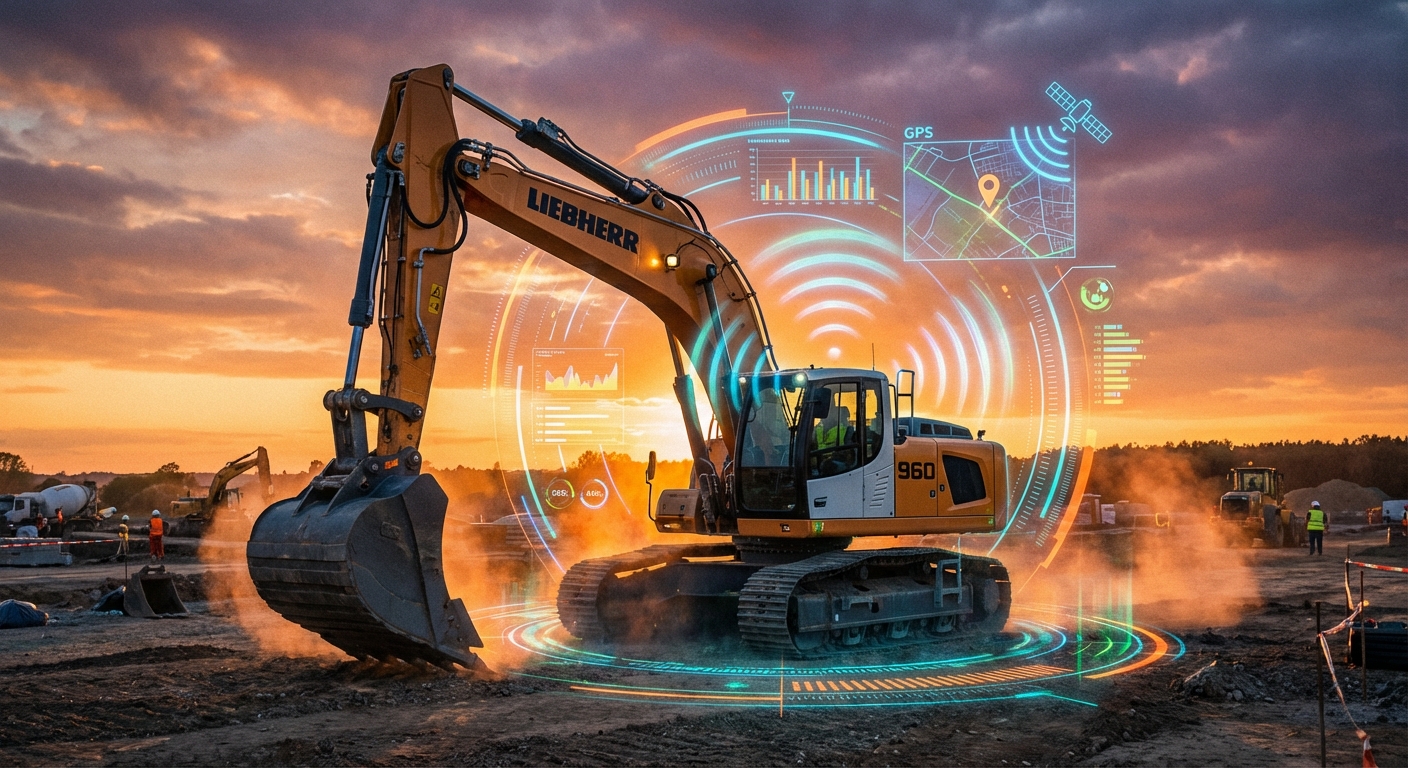
Still, this is where the market is going. Grade systems, cameras, safety logic, operator profiles, and telematics do not work well when the machine is mostly mechanical and the controls are isolated. Manufacturers want the excavator to be a connected platform. Electronic hydraulics are a big part of that shift.
Safety tech is moving closer to intervention
DEVELON’s -9 Series also shows where jobsite safety systems are headed. The company says its smart around-view monitor uses AI to identify humans in the work zone, while a radar system detects objects up to 6 meters away. The system can trigger an intelligent E-Stop to halt swing or travel when a person is detected in the danger zone.
That is a serious step. Cameras that help operators see are one thing. Systems that intervene in machine movement are another. Some operators will like it. Some will hate it. Both reactions make sense.
On congested jobsites, blind spots are not a theory. People walk where they should not. Trucks back in. Laborers cut across swing radius. The operator is expected to watch the bucket, the trench, the dump truck, the foreman, the grade, the utilities, and the guy who just stepped into the wrong place. Better detection can prevent a bad day.
But intervention systems have to be tuned well. If they stop the machine too often, operators will work around them. If they miss obvious hazards, owners will stop trusting them. If they create fault-code headaches, the system becomes another thing to complain about in the yard.
This is the same pattern the truck industry has been living with for years. Safety systems are useful when they are accurate, predictable, and easy to understand. They are maddening when they feel like a nervous passenger grabbing the wheel.
Grade readiness is becoming table stakes
For years, grade control was treated like a premium add-on for bigger contractors. That line is fading. If a machine is doing utility work, site prep, drainage, roadbuilding, foundation excavation, or commercial dirt work, grade capability is not exotic anymore. It is a labor and rework tool.
DEVELON making the -9 Series factory-equipped for 2D and ready for 3D systems says a lot. Volvo’s compact updates point the same way from a different angle, with more hydraulic flow, attachment presets, tiltrotator suitability, and better screens. The machine is being prepared to work with tools that reduce guesswork.
That matters most for small and mid-size contractors. A large earthmoving contractor may already have survey support, machine control staff, and dedicated grade systems. Smaller crews often have one good operator, a laser, a foreman, and a lot of pressure to get it right the first time. A machine that makes grade work easier can close part of that gap.
The catch is training. Grade-ready does not mean production-ready. Somebody still has to understand the system, maintain the sensors, manage files, and teach operators how to use it without blindly trusting the screen. Smart iron does not remove discipline. It punishes sloppy discipline more quietly.
Service intervals are part of the control story
Volvo also put maintenance into the launch message. The company lists larger fuel tanks, ground-level access to grouped service points, wide-opening hoods, 8,000-hour DPF cleaning intervals, and 1,500-hour hydraulic return filter changes.
That belongs in the same conversation as controls. Uptime is not separate from technology. The more contractors rely on compact excavators as multipurpose jobsite tools, the more a down machine scrambles the schedule. If the excavator runs the tiltrotator, hammer, grapple, bucket, and grading setup, downtime does not only stop digging. It can stop the whole job rhythm.
The same applies to heavy excavators loaded with cameras, sensors, screens, and grade components. The machine may be more capable than the old one, but the maintenance record has to keep up. Filters, fluids, electrical connections, software updates, sensor calibration, and fault history become part of the machine’s value.
Used buyers will eventually care about this too. A clean paint job and low hours will not tell the whole story if the machine has had repeated electronic issues or neglected service. As more excavators become control systems with tracks, the service history becomes more important, not less.
What contractors should take from this
The practical takeaway is simple: stop shopping excavators like the spec sheet ends at weight, horsepower, and bucket force.
Ask how the machine handles attachments. Ask how easy it is to save settings between operators. Ask what grade systems it is ready for and what the dealer can actually support. Ask whether the safety tech can be adjusted for real jobsites. Ask how service data is captured. Ask what happens when the screen, camera, sensor, or control module acts up during busy season.
Then demo the machine with the attachment and operator who will use it. Not the best operator. The normal operator. The one who has to make money with it.
The market is not moving toward simpler excavators. It is moving toward machines that blend hydraulic power, software, sensors, and operator aids into one package. That will make good crews faster. It may also expose owners who buy technology without building the habits to use and maintain it.
The excavator is still iron. But increasingly, the money is in the control system wrapped around it.