Opinion · May 26, 2026
OPINION: Stop Buying Attachments for Work You Haven't Sold
Too many contractors finance a grinder, planer, mulcher, or specialty head because they want to feel bigger than they are. If the work is not already showing up, that attachment is not growth. It is a monthly payment looking for a problem.
I see this all the time.
A guy gets a few decent jobs, starts feeling momentum, and convinces himself the next move is a new attachment.
Not because he has a backlog for it.
Not because customers are already asking for it every week.
Not because the numbers prove it.
Because he wants to be able to say yes.
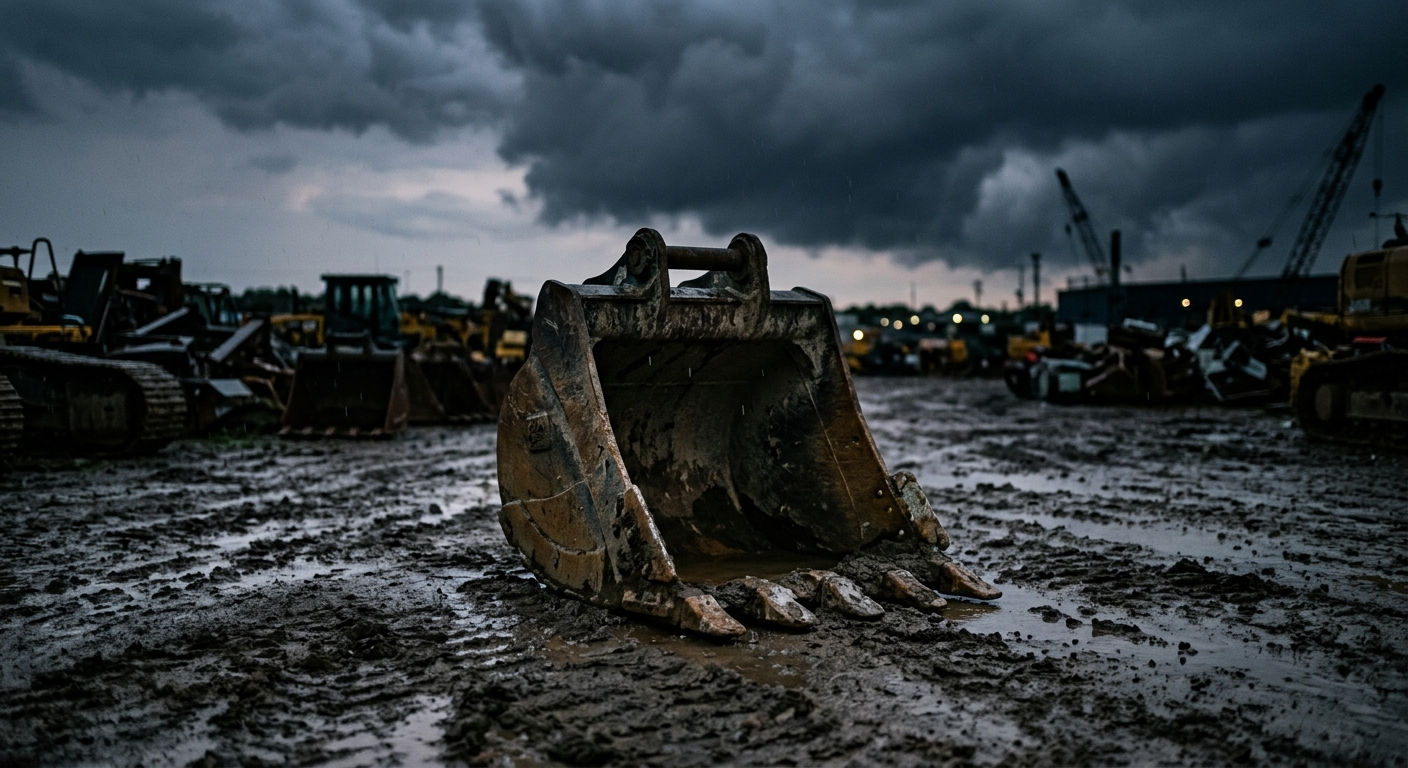
That is how a lot of contractors end up with forty thousand dollars of steel sitting behind the shop while they keep making payments on work they never actually sold.
I run a land clearing company in Ohio. We use specialty equipment. I like equipment. I understand the temptation. A new attachment feels like capability. It feels like growth. It feels like you are building something serious.
Sometimes it is.
A lot of the time it is just expensive ambition with no demand behind it.
And this industry has a bad habit of confusing capability with revenue.
The attachment fantasy
Here is the fantasy.
You buy the mulcher head, planer, stump grinder, brush cutter, grapple saw, or screening bucket. Then you update the website, post a few pictures, tell a few people, and the phone starts ringing with profitable work that fits the new tool perfectly.
That story sounds good because it protects the ego.
It lets you feel like a visionary instead of a guy who made a speculative purchase.
The real story is usually uglier.
The attachment shows up. Everybody is excited for three days. You run one or two jobs with it. Then the normal work comes back. Dirt work is still dirt work. Clearing is still clearing. Demo is still demo. The weird specialty jobs you thought were everywhere turn out to be occasional, price-sensitive, and annoying to schedule.
Meanwhile the note does not care.
Neither does insurance.
Neither do hoses, teeth, cutting edges, bearings, pins, couplers, freight, storage, or the simple fact that another piece of iron now needs attention from a business that was already stretched.
People talk about buying attachments like the purchase price is the whole cost. That is rookie math.
A parked attachment still has a payroll number on it
I think more owners should look at attachments the same way they look at employees.
If a guy costs you money every month, he better be producing.
Same deal here.
Let us say you finance a specialty head for $38,000. Maybe your payment lands around $800 to $950 a month depending on terms. Add wear parts, interest, downtime risk, and the labor to maintain it, and the real monthly burden is higher than what shows on the invoice.
Now ask the only question that matters.
How many times is this thing going to make me money each month?
Not theoretically. Not if everything goes right. Not if your cousin’s buddy sends you work. Actual work.
I know small operators who buy attachments based on two conversations and one Facebook message.
That is insane.
If your current pipeline cannot keep that tool busy, you did not buy an asset. You bought pressure.
And pressure changes how people bid.
Bad purchases create bad pricing
This is the part nobody wants to admit.
When guys buy attachments for work they have not sold, they start chasing jobs they should not touch.
Now the payment is there every month, so every stump job starts looking like a good idea. Every tiny milling patch starts feeling worth it. Every awkward one-day specialty project that is two hours away somehow becomes “strategic.”
No it isn’t. You are just feeding the note.
That is how contractors end up underpricing junk work. The machine purchase already happened, so now they talk themselves into taking thin-margin jobs just to justify the decision.
I have seen this in land clearing. A contractor buys a specialty head because he thinks there is a whole market waiting. Then instead of using it on premium jobs, he starts discounting just to get hours on it. He thinks simple use alone will save him.
Use on bad work is not a win.
If you run an attachment 120 hours a year on low-margin jobs, you did not prove the purchase was smart. You proved you can stay busy while still making weak decisions.
Operators love attachments. Owners need discipline.
I get why this happens.
Attachments are exciting because they expand what you can do without buying a whole new machine. A mulcher head can change a skid steer business. A planer can open a new service line. A screening bucket can make material handling more efficient. A grapple saw can create jobs you could not touch before.
That part is true.
What is also true is that contractors love to buy the tool first and figure out the market later.
That is backwards.
The market should punch you in the face before you buy.
You should already be losing work because you cannot serve it well enough. You should already have repeat demand, not just curiosity. Customers should already be asking. Your existing network should already know you for that type of work, or at least be ready to hand it to you the minute you are equipped for it.
If none of that is happening, the attachment is probably a want dressed up like a plan.
What this looks like in the real world
I will give you a simple example.
Say you run a skid steer and compact track loader business doing general clearing, brush cutting, grading, and cleanup. You start seeing videos of asphalt planers online. The jobs look clean. The margins sound good. You hear one paving company needs help sometimes, and suddenly you are telling yourself a planer will diversify the business.
Maybe it will.
But before you buy it, you should know at least a few things.
How many jobs in the next ninety days can you put it on?
What is the average revenue per job?
What are the wear costs per hour?
Who is your repeat customer, not your hypothetical customer?
What machine is carrying it, and what does that do to your existing schedule?
If the attachment breaks, who services it and how long are you down?
If work slows, can you sell it without getting your head chopped off?
Most guys skip all of that because they are buying on emotion.
They call it betting on themselves.
Sometimes betting on yourself is just a nicer way to describe ignoring risk.
I am not arguing that nobody should buy specialty attachments. That would be stupid.
I am saying the order matters.
Sell the work first.
Sub the work first.
Rent the attachment first.
Borrow confidence from real demand before you manufacture confidence with debt.
When we think about adding capability, I would much rather lose a few jobs, rent a few times, or partner with somebody for a short window than lock in a payment before I know the market is real.
Rentals are annoying. Subcontractors can be imperfect. Margin sharing is not fun.
You know what is less fun?
Owning a specialty attachment that only comes out when you are trying to remind yourself why you bought it.
If you rent three times in sixty days and every one of those rentals could have been your own profitable work, now we are having a different conversation. If customers keep asking. If your crew gets efficient with it. If pricing is strong. If the attachment fits your brand and not just your curiosity. Then fine. Buy it.
By that point the purchase is supporting momentum instead of trying to create it.
That is a huge difference.
Cash flow hates ego
A lot of equipment decisions are really ego decisions with a spreadsheet taped to them.
A new attachment makes you feel more legit. It gives you more to post online. It makes the yard look stronger. It gives you another answer when someone asks what your company does.
None of that pays the bill.
Cash flow does not care that the setup looks impressive.
Cash flow cares whether the attachment is converting into consistent gross profit after all the stupid little costs show up.
And those costs always show up.
Teeth disappear. Hoses rub through. Bearings get noisy. Couplers loosen. Somebody stores it wrong. Somebody runs it wrong. Somebody forgets the one part you need on a Friday afternoon.
This is why I laugh when people talk about an attachment purchase like it is some simple bolt-on growth move.
Nothing in equipment is simple once you own it.
The best equipment buyers are boring
The smartest equipment owners I know are not the flashiest.
They are almost boring.
They buy when demand is obvious.
They wait longer than everybody else.
They run ugly spreadsheets.
They keep iron working.
They are willing to look unexciting for six months while other guys are announcing their next big thing on Facebook.
Then when they do buy, the tool goes straight to work because the decision was made from reality, not adrenaline.
That is usually the difference between an attachment that becomes part of the business and one that becomes a lesson.
People underestimate how much discipline looks like missed opportunity in the short term.
But most missed opportunities are not actually missed. They are just unproven.
What I would ask before buying
If you are thinking about buying a specialty attachment, ask yourself this stuff and answer it honestly.
How many jobs did this attachment lose me in the last six months?
How many customers are likely to need it again?
Can I rent or sub this capability for a while without hurting my reputation?
What is the monthly carrying cost after interest, wear, freight, and maintenance?
How many productive hours a month do I need just to feel decent about this purchase?
If work drops by twenty percent, do I still want it?
If the answer to most of those questions is fuzzy, the answer is probably no.
Fuzzy math creates hard problems.
My take
I think too many contractors buy attachments as a form of hope.
Hope that a new service line appears.
Hope that marketing will catch up.
Hope that the market is bigger than it looks.
Hope that more capability automatically means more revenue.
Hope is fine.
Hope is not equipment strategy.
You do not need every tool. You need the right tools for work that already pays you well.
There is real money in staying narrow, getting known for something profitable, and expanding only when the demand is already annoying enough to force your hand.
That is usually how healthy growth feels. It is less sexy. It is less fun to post. It is a lot better for the bank account.
So here is my advice.
Before you buy the shiny new attachment, make it earn its place.
Rent it.
Sub it.
Track the demand.
Track the margin.
Then buy it when the work is already there and you are tired of giving the revenue away.
Do it in that order and the attachment becomes a tool.
Do it backwards and it becomes another expensive thing you have to explain to yourself every month.