Market Analysis · June 9, 2026
Rental Is Becoming a Capacity Strategy, Not a Backup Plan
Contractors are renting more than machines in 2026. They are renting flexibility, delivery timing, specialty support, and a way to stay out of overbuying trouble.
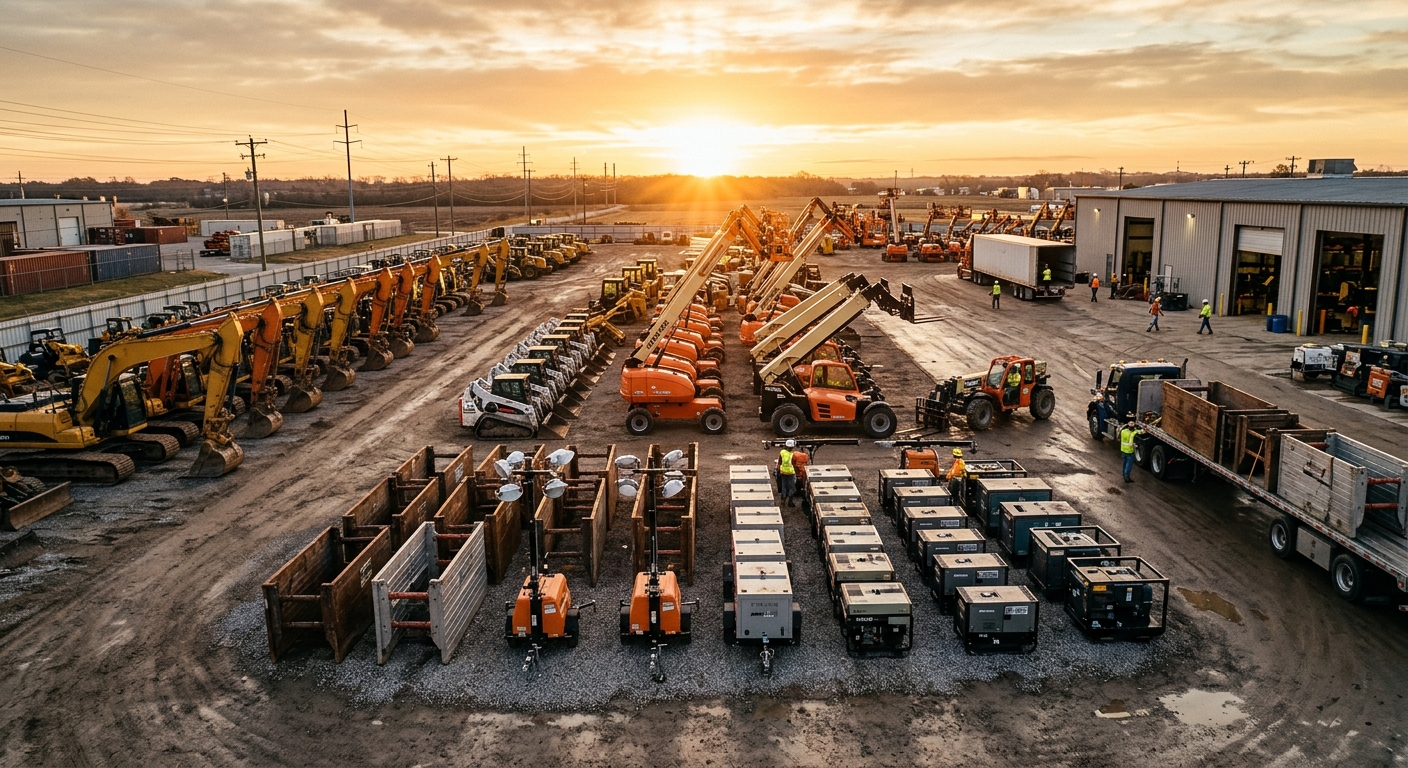
The rental market is getting harder to read because contractors are using it differently.
For years, renting heavy equipment was the obvious answer when a contractor needed a machine for a short job, a backup unit, or a piece of iron too specialized to own. That part has not gone away. But in 2026, rental is also becoming a way to manage risk. It is how contractors cover uneven backlogs, test demand before buying, protect cash, and keep work moving when the project pipeline is strong in one segment and weak in another.
That matters because the construction market is not moving as one clean block. Associated Builders and Contractors reported that its Construction Backlog Indicator rose to 8.8 months in April, with data center work helping large contractors. At the same time, the U.S. Census Bureau’s April construction spending release showed total construction spending up 0.4 percent from March, while private nonresidential construction slipped 0.2 percent.
That is the awkward part. Some contractors are buried. Others are bidding carefully and waiting for projects to actually release. Rental sits right in the middle of that uncertainty.
FieldFix Editor’s Note: Renting can protect cash, but it can also hide sloppy equipment decisions. Track rental days, owned-machine utilization, downtime, transport, fuel, and repair history together. FieldFix helps contractors compare real cost per hour across owned and rented machines instead of guessing from monthly invoices.
The rental market is still growing
The American Rental Association expects another year of growth in North America. According to coverage from Lift and Access, ARA’s updated 2026 outlook calls for continued expansion in construction, industrial, access, and general tool rental, with Canada’s combined construction, industrial, and general tool rental market forecast to grow 5 percent to $6.3 billion.
That fits what the largest rental companies are telling investors. United Rentals reported record first-quarter 2026 rental revenue of $3.419 billion and raised its full-year guidance. The company also said fleet productivity increased 2.3 percent year over year and lifted its gross rental equipment purchase outlook to $4.4 billion to $4.8 billion.
Those numbers do not prove every rental yard is printing money. They do show that demand for equipment access is healthy enough for the biggest player in the market to keep investing in fleet.
The useful read for contractors is this: rental capacity is not unlimited. If the national players are buying fleet, it is because they see enough demand to justify it. If they are getting better productivity from the fleet they already own, it means machines are working, rates are holding, utilization is improving, or the mix is moving toward higher-value categories.
In plain English, the machine you plan to rent at the last minute may not be sitting there when you need it.
Uneven construction demand changes the math
The old rent-versus-buy calculation was already too simple. It usually came down to expected utilization, payment size, maintenance burden, tax treatment, and whether the contractor had enough repeat work to justify owning. Those pieces still matter, but they do not capture the market contractors are in right now.
Backlog is concentrated. Data centers, power work, infrastructure, industrial construction, and certain public projects are pulling crews, equipment, and specialty support in specific markets. Meanwhile, other parts of private construction are softer. Census data shows private nonresidential construction down month to month in April, even as public spending rose.
That split creates a weird fleet problem. A contractor may have enough work to stay busy, but not enough certainty to add another $200,000 to $500,000 machine. Or the work may be strong, but only in a narrow category: site prep for a data center, utility trenching, concrete support, temporary power, access equipment, matting, pumps, or compaction.
Buying for that kind of demand can be dangerous. Renting for it can be expensive. Doing neither can cost the job.
This is where rental becomes a capacity strategy. The question is no longer, “Can I afford to rent this machine?” The better question is, “What kind of capacity am I trying to buy for the next 30, 60, or 120 days?”
Sometimes the answer is a compact excavator because the crew has a tight utility package. Sometimes it is a 60-foot boom lift because the schedule is compressed. Sometimes it is a telehandler, generator, light tower, pump, roller, or CTL that keeps a project from waiting on the one owned machine that is already committed.
Rental is not cheap, but idle owned iron is not cheap either.
Specialty equipment is pulling ahead
The rental story goes beyond excavators, skid steers, loaders, and lifts. Specialty rental is becoming more important because jobs are asking for more than dirt-moving capacity.
United Rentals’ first-quarter release is useful here. General rentals segment revenue grew 6.2 percent year over year, while specialty rentals revenue grew 13.8 percent to a first-quarter record of $1.190 billion. The specialty segment includes categories such as trench safety, power and HVAC, fluid solutions, tool solutions, and other jobsite support areas.
That mix says a lot about the current construction cycle. Large projects need more than machines that dig, lift, and load. They need power distribution, climate control, pumps, trench protection, matting, safety equipment, lighting, and temporary infrastructure. A contractor can own some of that. Most should not try to own all of it.
Specialty rental also has a different failure mode. If a rented CTL is not available, a contractor may find another brand, another size, or a different way to sequence work. If trench safety, pumps, or temporary power are wrong, the job can stop cold. That is why specialty categories often carry more planning value than owners give them credit for.
The smartest contractors are treating rental suppliers less like vending machines and more like capacity partners. That sounds fluffy, but the practical version is simple: talk earlier, reserve earlier, share project timing, and get clear about delivery windows, transport charges, minimum terms, damage rules, after-hours support, and who pays when the site is not ready.
The contractor who calls Friday afternoon for a Monday morning machine is giving up leverage before the conversation starts.
Renting does not solve utilization
There is a trap in all this. Contractors can use rental to avoid a bad purchase, then turn around and make the same bad decision in smaller weekly chunks.
Rental invoices feel temporary. That makes them psychologically easier to approve than a machine payment. But a rented machine that sits because the crew was not ready is still burning money. A rented lift parked for three days behind another trade is still a cost. A rented excavator brought in before locates, permits, materials, or trucking are lined up is not flexibility. It is waste with a delivery ticket.
This is where owners need better internal discipline. Every rental should have a job, a start date, an expected finish date, and an owner inside the company. Someone should know why the machine is there, what work it is supposed to unlock, and when it should leave.
That sounds basic. It is also where money leaks.
On owned equipment, the problem is often hidden in low utilization. On rented equipment, it shows up as extra days, standby time, delivery surprises, damage charges, fuel charges, environmental fees, and extensions that nobody planned. The invoice arrives later, and by then everyone remembers the rental as “necessary.”
Maybe it was. Maybe it was not.
The best contractors are getting more ruthless about that distinction. They look at rental as one line in the fleet plan, not a separate category. If a rented mini excavator is on site for six weeks every spring, that may be a buy signal. If a rented 80-foot lift appears twice a year for oddball work, that is probably exactly what rental is for. If a rented CTL is covering for an owned machine that is always down, the real issue may be maintenance, operator abuse, or an overdue replacement.
Rental data should feed ownership decisions. Too many companies keep those worlds separate.
Dealers and rental yards are converging
The line between equipment dealers and rental houses keeps getting blurrier. Dealers want recurring relationships after the machine sale. Rental companies want fleet scale, service revenue, used equipment channels, and technology that keeps customers inside their systems. Contractors want availability, support, and fewer phone calls.
That convergence is not good or bad by itself. It does mean contractors need to know what kind of supplier they are dealing with.
A dealer rental department may be strong on brand knowledge, parts, and service support for the lines it sells. A national rental company may be stronger on coverage, specialty categories, jobsite logistics, and moving fleet across regions. A local independent may be more flexible, more personal, and faster to solve odd problems, but it may not have depth in every category.
The right answer depends on the job. A contractor renting a newer excavator for a production dig may care most about service response and bucket setup. A contractor renting light towers, pumps, and power gear for a shutdown may care more about specialty support. A contractor covering a remote job may care about transport and whether the supplier can actually get the machine there without turning delivery into its own project.
Price matters, but it is not the whole rental decision. The cheapest rental rate can get expensive fast if the wrong machine shows up late, under-equipped, or unsupported.
What contractors should change now
The next move is not complicated. Contractors need a rental plan before they need a rental machine.
Start with the next 90 days of work. List the machines already committed. List the work that could require temporary capacity. Mark the dates that are firm, the dates that are likely, and the dates that are still fantasy. Then call rental suppliers before the calendar gets ugly.
For each likely rental, decide whether the goal is production, schedule protection, specialty capability, or backup capacity. Those are different reasons, and they should be managed differently. A production rental needs utilization pressure. A schedule-protection rental may be worth paying for even if it sits briefly. A specialty rental needs the right support more than the lowest daily rate. A backup rental should trigger a hard look at why the owned fleet needs backup in the first place.
Also track the boring costs. Delivery. Pickup. Fuel. Cleaning. Damage waiver. Environmental fees. Attachments. Extra buckets. Hammer charges. Standby. Weekend billing. Overtime service calls. These are not footnotes. They are part of the real rental rate.
Finally, use rental history as a buying signal. If the same class of machine shows up repeatedly, run the math. If it only appears when schedules get chaotic, fix scheduling before buying iron. If rented equipment keeps saving jobs, that is useful information too. It may mean the fleet is too lean, the sales team is taking work the owned fleet cannot support, or the company is growing into a different kind of contractor.
The rental market is healthy because contractors need flexibility. But flexibility is not the same as discipline.
In 2026, renting equipment well may be one of the clearest signs that a contractor understands its own capacity. The owners who treat rental as planned capacity will protect cash and keep jobs moving. The ones who treat it as a panic button will keep paying premium prices for avoidable chaos.