Market Analysis · June 19, 2026
Rental Growth Is Not a Free Pass to Skip Fleet Discipline
Rental demand is still moving higher in 2026, but contractors using rental as a rescue plan need to know whether they are buying flexibility or covering up weak fleet planning.
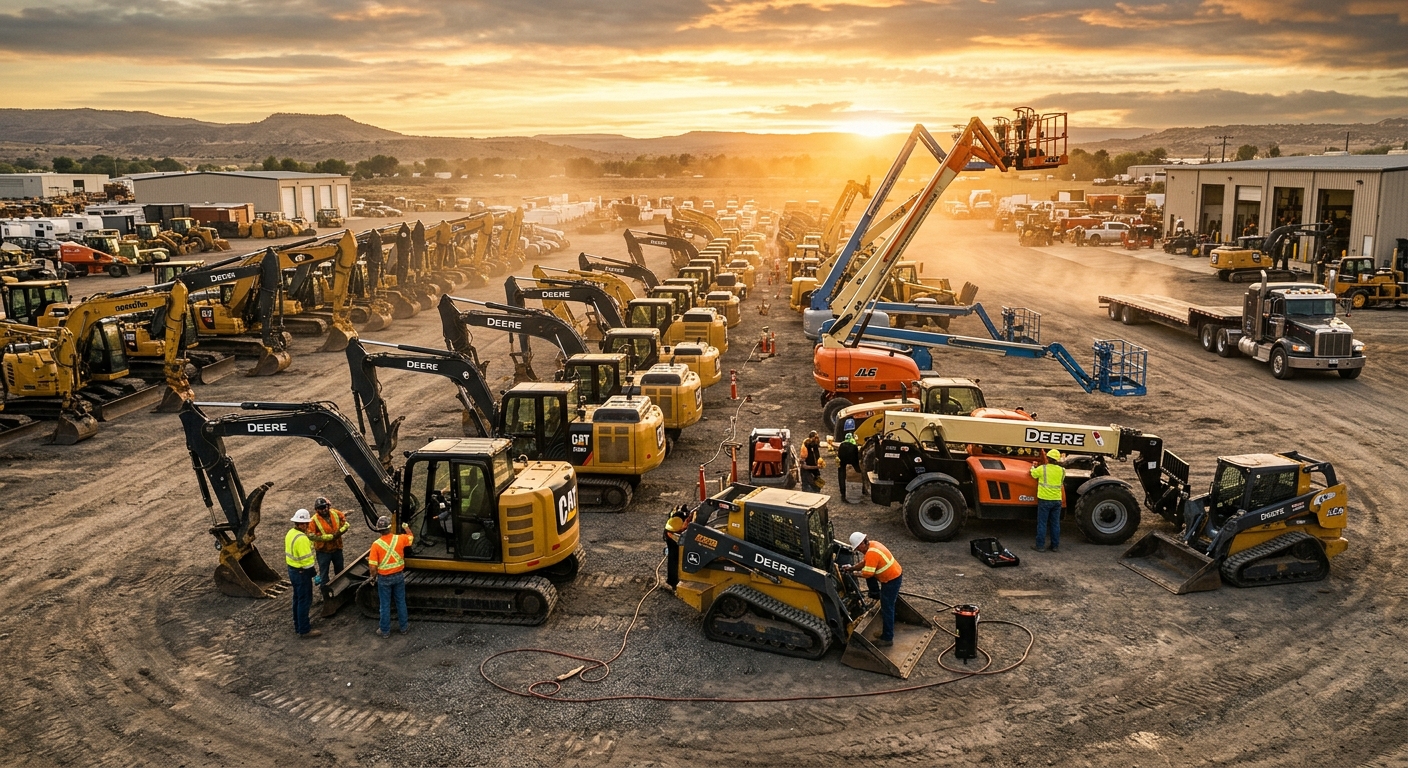
The equipment rental market is still growing, but the useful question for contractors is not whether rental is popular. It is why they are renting.
There is a big difference between renting to stay flexible and renting because the owned fleet cannot be trusted. One is strategy. The other is an expensive warning light.
The American Rental Association’s updated 2026 forecast, reported by Lift and Access, projects the combined U.S. construction and industrial equipment and general tool rental industry will grow 3.6 percent this year to $83.5 billion. That is above the prior quarterly estimate of 2.8 percent growth and $82.9 billion in revenue. ARA also projects growth of 3.8 percent in 2027 and 4.4 percent in 2028. Lift and Access
That fits what contractors are seeing on the ground. Project schedules are uneven, capital is still expensive, equipment prices have not magically reset, and labor is too tight to let machines sit idle. Rental gives contractors a way to add capacity without committing to another payment, another insurance line, another transport problem, and another machine that has to be maintained through the slow months.
But rental growth can hide sloppy thinking. If a contractor rents a 35,000-pound excavator because a short job needs one for two weeks, fine. If he rents the same excavator three times in a season because his owned machine is always waiting on parts, the issue is no longer market flexibility. It is fleet discipline.
FieldFix Editor’s Note: Rental can be a smart pressure valve, but it needs to show up in the same cost picture as owned equipment. Track rental invoices, machine hours, repair history, downtime, parts, and transport by job and by machine. FieldFix helps contractors see whether rental is protecting margin or quietly replacing margin.
The demand side is not dead
The construction market is mixed, but it is not frozen. Dodge Construction Network said total construction starts rose 9.0 percent in April 2026 to a seasonally adjusted annual rate of $1.33 trillion. Through April, starts were up 5.4 percent year to date. On a 12-month basis, total starts were up 8.1 percent compared with the prior 12 months. Nonresidential starts were up 10.0 percent, and nonbuilding starts were up 19.5 percent over that same period. Dodge Construction Network
That matters because rental demand follows work more than mood. Data centers, power, utilities, public works, site packages, road work, and industrial jobs all pull on iron. They do not all pull on the same iron, and they do not pull evenly by region, but the broad signal is clear enough: contractors still need machines.
Associated Builders and Contractors reported in mid-June that its Construction Backlog Indicator rose to 9.1 months in May, up 0.3 months from April and 0.7 months higher than May 2025, according to the association’s member survey. ABC
Backlog does not guarantee profit. It does mean a lot of contractors are trying to staff, schedule, and equip months of work while the cost of a bad fleet decision is higher than it was a few years ago.
Global Market Insights estimates the global construction equipment market at $169.6 billion in 2026, up from $167 billion in 2025, with a 6.1 percent compound annual growth rate projected through 2035. The same report lists rental and leasing growth, high capital costs, maintenance costs, operator shortages, and emissions requirements among the forces shaping the market. Global Market Insights
Put those pieces together and the contractor’s problem gets sharper. There is work to chase. There are machines to buy. There are rentals available. None of that tells you which option makes money.
Rental is strongest when the owned fleet has a job
The best rental users usually know their owned fleet cold. They know which machines are core, which machines are occasional, and which machines should never have been bought.
That sounds obvious. It is not how a lot of small and mid-size fleets operate.
Many contractors still make equipment decisions by memory. They know the skid steer is “always busy.” They know the dozer “paid for itself.” They know the old loader “doesn’t owe us anything.” Those statements might be true. They might also be stories that hide poor utilization, rising repair costs, and jobs that would have been better served by a rental.
Rental works best when it fills a specific gap. A contractor owns the machines that are central to the business, then rents the machines that are too specialized, too seasonal, too risky, or too expensive to keep around. A land clearing contractor may own mulchers and track loaders but rent a larger excavator for a short pond job. A site contractor may own excavators and dozers but rent extra compaction for a dense stretch of road base. A utility crew may rent trench protection, pumps, generators, or telehandlers when the job demands it.
That is clean rental. It has a reason.
Dirty rental is different. Dirty rental happens when a contractor rents because the fleet is poorly scheduled, poorly maintained, or poorly matched to the work being sold. The rental invoice then looks like a normal job cost, but it is really paying for an earlier decision that nobody wants to admit was wrong.
The cure is not “never rent.” That would be dumb. The cure is knowing why the rental happened.
Utilization can lie
Contractors love high utilization until they live with the consequences.
A machine that is booked every day looks great on a whiteboard. It looks less great when there is no room for service, no backup plan for a breakdown, and no time to move it between jobs without overtime or chaos. Running equipment too tight can turn every small issue into a schedule problem.
That is where rental deserves a more serious role. Rental can protect uptime during peak periods. It can cover a machine while it is in the shop. It can let a contractor test a new service line before buying into it. It can prevent one late job from wrecking the next one.
But the math has to include the whole bill. Rental rate, delivery, pickup, fuel, damage waiver, attachments, operator efficiency, idle days, and job delay all count. So does the owned machine sitting in the yard while the rental works.
If a contractor rents because the owned machine is down, that rental should be tied back to the owned machine’s maintenance record. If the same unit keeps causing substitute rentals, the owner needs to see that pattern before buying another machine or blaming the job schedule.
This is where small fleets get caught. They track the rental invoice under the job, the repair invoice under the machine, and the lost production in nobody’s system. Each number is incomplete by itself. Together, they tell the truth.
Buying still makes sense, but the bar is higher
Rental growth does not mean ownership is dying. Contractors still need owned machines. Core equipment gives control over schedule, operator familiarity, attachment setup, maintenance standards, and availability. For high-use machines, ownership can still beat rental by a mile.
The bar is just higher now.
Before buying, the contractor should have a real answer to a few questions. How many billable hours will this machine run in the next 12 months? Which jobs are already sold or likely enough to justify it? What rental bills would it replace? What repair and maintenance budget comes with it? Who will operate it? Who will haul it? What happens if it goes down during peak season?
The wrong answer is “we could use it.” Every contractor could use another excavator, skid steer, loader, dozer, lift, or mini. That does not mean the machine belongs on the balance sheet.
High capital cost is one reason rental keeps pulling demand. Financing a machine is not just a monthly payment. It is cash tied up in depreciation, insurance, attachments, service, wear parts, storage, and risk. A machine bought for occasional work often needs a perfect season to make sense. Real seasons are rarely perfect.
Still, the reverse mistake is common too. Some contractors rent a machine so often that they are effectively making payments without building equity or control. At that point, the rental invoices are the purchase case. If the machine is consistently used, reliably staffed, easy to maintain, and central to the work, buying may be the disciplined move.
The regional piece matters
National forecasts are useful, but contractors do not work in national averages. They work in counties, metro areas, and dealer territories.
Dodge’s April construction starts data showed regional gains in the Midwest, Northeast, and South Atlantic, while the South Central and West declined for the month. That kind of variation matters for rental planning. A contractor in a hot utility or data center market may face tight availability and rising rates for certain machines. Another contractor in a softer residential-heavy market may have more rental leverage but less work to absorb the cost.
Dealer and rental branch density matters too. A market with several strong rental yards can support leaner ownership for some equipment classes. A rural contractor with limited rental options may need to own more iron simply because the backup plan is too far away.
That should shape fleet strategy. A contractor in a deep rental market can treat certain machines as just-in-time capacity. A contractor in a thin rental market should be more careful. If the nearest suitable machine is two hours away and already booked when the weather breaks, rental is not really flexible.
The practical 2026 rule
The practical rule for 2026 is simple: every rental should explain something.
It should explain a short-term project need, a seasonal capacity spike, a specialty requirement, a maintenance bridge, or a buying test. If it cannot explain one of those things, it may be hiding a problem.
Owners should review rentals the same way they review repairs. Which machines were rented most often? Which owned machines caused rentals when they went down? Which jobs needed equipment the company does not own? Which rentals sat idle? Which rental classes are becoming repeat needs? Which branch or dealer actually performed when the schedule was tight?
That review will usually point to one of three decisions.
First, keep renting because the work is occasional and the flexibility is worth it. Second, buy because the demand is steady enough and the machine is core to the business. Third, fix the fleet process because rentals are covering for weak maintenance, bad scheduling, or equipment that should be sold.
That third answer is the one contractors tend to dodge. It is also where the money leaks.
Rental is not the enemy of ownership. It is one of the best tools contractors have when work is lumpy, capital is expensive, and uptime matters. But it only works when it is used with intent.
The rental market can grow all it wants. The contractor still has to know whether he is renting capacity or renting his way around a fleet problem.