Liebherr Announces $450 Million Texas Manufacturing Facility
German equipment giant commits to major US production expansion with new 500,000 sq ft facility near Houston, creating 800 manufacturing jobs.
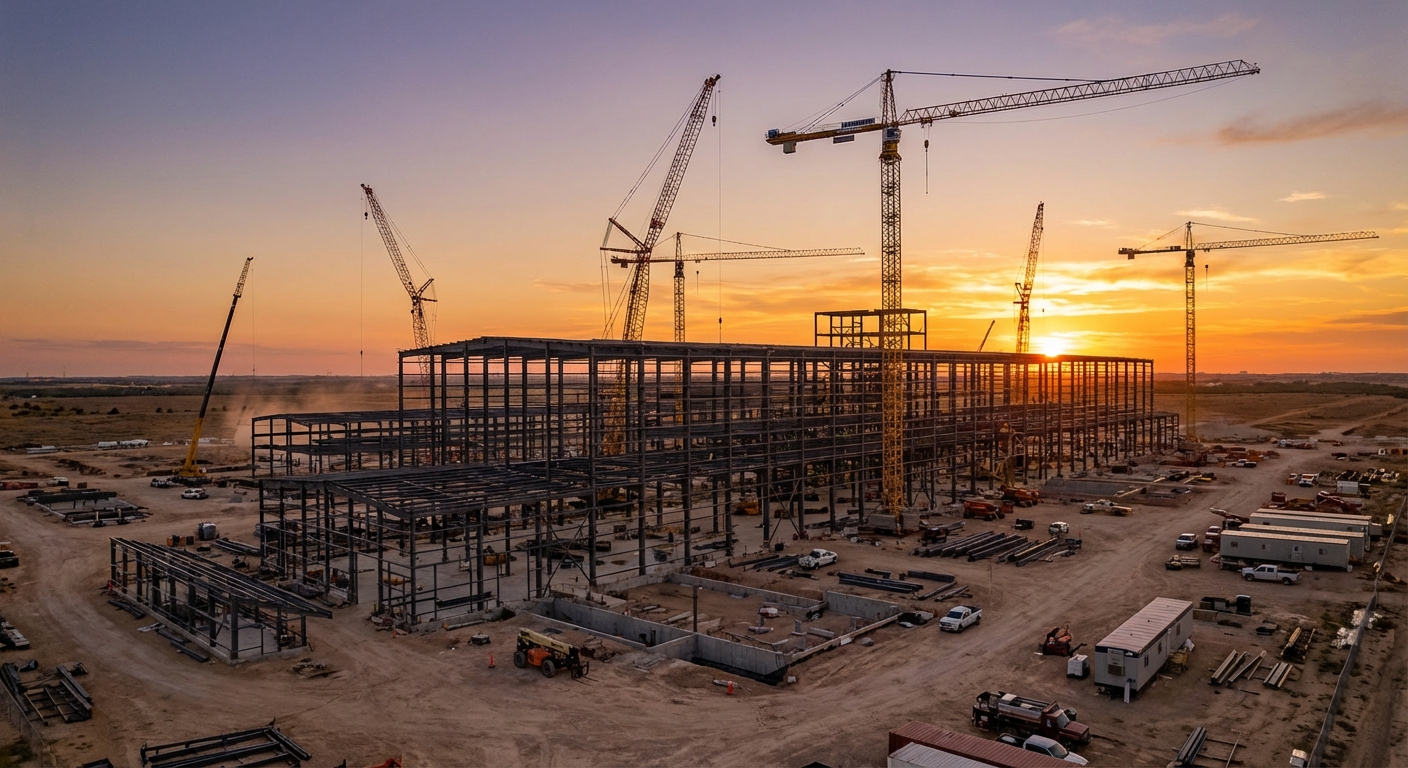
In a move that signals growing confidence in American construction markets, Liebherr Group announced plans this week to construct a $450 million manufacturing facility in the greater Houston area. The German equipment manufacturer, known for its premium earthmoving and material handling equipment, will break ground on the 500,000-square-foot complex in early 2026.
The facility represents Liebherr’s largest single investment in North American production capacity and underscores the company’s commitment to serving the Americas from domestic manufacturing operations.
Strategic Location Selection
Liebherr selected a 250-acre site in Fort Bend County, approximately 35 miles southwest of downtown Houston. The location offers several strategic advantages:
Transportation access: The site sits adjacent to major highway corridors and within 50 miles of the Port of Houston, facilitating both domestic distribution and export capabilities.
Workforce availability: The greater Houston area offers a deep pool of skilled manufacturing workers, drawing from the region’s aerospace, petrochemical, and automotive industries.
Supply chain proximity: Texas hosts numerous steel suppliers, hydraulic component manufacturers, and other suppliers critical to heavy equipment production.
Business environment: Texas offers no state income tax and maintains business-friendly regulatory policies that factored into Liebherr’s site selection analysis.
“Houston offers the rare combination of skilled workforce, transportation infrastructure, and supply chain access that modern heavy equipment manufacturing requires,” said Stefan Heissler, member of the Liebherr Group board responsible for production coordination. “This facility will serve as our primary manufacturing hub for the Western Hemisphere.”
Production Scope and Timeline
The Texas facility will initially produce hydraulic excavators in the 30- to 100-ton class, with plans to expand into wheeled material handlers and possibly mining equipment as the facility matures. Production is targeted to begin in Q3 2027, with full operational capacity expected by early 2029.
Initial employment projections include:
- Phase 1 (2027): 350 manufacturing positions
- Phase 2 (2028): 600 positions
- Full capacity (2029): 800+ positions
The facility will incorporate Liebherr’s latest manufacturing technologies, including automated welding systems, precision machining centers, and comprehensive quality control processes. The company emphasized that the Texas plant will produce equipment meeting the same specifications as its European facilities.
Market Positioning
Liebherr’s investment comes as the company seeks to strengthen its competitive position in the North American excavator market, where it currently trails leaders like Caterpillar, John Deere, and Komatsu. The company has historically imported most of its equipment sold in the Americas from European facilities.
“Domestic production provides significant advantages in lead times, customization flexibility, and currency stability,” noted James Kowalski, president of Liebherr USA Construction. “We’ve seen strong demand for our excavators in infrastructure, mining, and general construction applications. This facility positions us to better serve that demand.”
The investment also provides some insulation from potential trade policy changes. With discussions of tariffs affecting heavy equipment imports continuing in Washington, domestic manufacturing offers strategic value regardless of policy outcomes.
Economic Impact
Texas Governor Greg Abbott welcomed the announcement at a press conference in Austin: “Liebherr’s decision to build this facility in Texas validates our state’s position as the premier destination for advanced manufacturing. This investment brings high-quality jobs and strengthens our industrial base.”
Economic analyses estimate the facility will generate:
- Direct economic impact: $450 million construction investment
- Annual operations: Approximately $180 million in payroll and local spending
- Indirect employment: 2,400+ jobs in supporting industries
- Property tax revenue: Estimated $8 million annually at full operation
Fort Bend County approved a tax abatement package worth approximately $45 million over 10 years, contingent on job creation and investment milestones.
Industry Reactions
The announcement drew measured responses from competitors and industry observers.
“Liebherr has always been a strong competitor in the excavator segment,” acknowledged one Caterpillar dealer who requested anonymity. “Domestic production will help them address some of their traditional weaknesses in parts availability and delivery times. We’ll have to respond to that competitive pressure.”
Association of Equipment Manufacturers (AEM) president Megan Tanel issued a statement welcoming the investment: “Liebherr’s commitment to American manufacturing is excellent news for the industry and for American workers. Their investment reflects confidence in the long-term growth of construction equipment demand in North America.”
Independent analysts noted that Liebherr’s move reflects broader trends toward production localization in heavy industries. Supply chain disruptions during recent years highlighted vulnerabilities in globally distributed manufacturing, prompting many companies to reconsider production geography.
Dealer Network Implications
Liebherr operates through a hybrid distribution model in North America, combining company-owned operations with independent dealers. The Texas facility could accelerate network expansion.
“Better availability and shorter lead times make it easier to sell Liebherr equipment,” observed one Midwest dealer who carries the Liebherr line. “Currently, some customers choose competitors simply because they can get equipment faster. Domestic production changes that equation.”
The improved production capacity may also support expansion of Liebherr’s rental channel relationships. Rental companies require reliable equipment supply, and domestic manufacturing improves Liebherr’s ability to meet large fleet orders.
Construction Progress
Site preparation work is scheduled to begin in Q4 2025, with major construction commencing in early 2026. Liebherr has engaged Austin-based McCarthy Building Companies as general contractor, with architectural work by Stuttgart-based firm Reichel + Associates in collaboration with Houston’s Page Southerland Page.
The facility design emphasizes sustainability features including:
- Solar panel installation covering 40% of roof area
- Rainwater collection and treatment systems
- Energy-efficient HVAC and lighting systems
- Electric vehicle charging infrastructure
“Environmental responsibility is central to Liebherr’s corporate philosophy,” Heissler noted. “This facility will demonstrate that modern heavy equipment manufacturing and environmental stewardship are compatible.”
Workforce Development
Liebherr announced partnerships with local community colleges and technical schools to develop manufacturing training programs aligned with the facility’s needs. San Jacinto College and Wharton County Junior College will offer specialized courses in welding, CNC machining, and hydraulic systems, with guaranteed job interviews for graduates.
“We need skilled technicians who understand modern manufacturing processes,” said Maria Santos, who will lead workforce development for the new facility. “These partnerships ensure we’ll have a trained workforce ready when production begins.”
The company also committed to apprenticeship programs modeled on Germany’s dual education system, combining classroom instruction with hands-on factory experience.
Looking Ahead
Liebherr’s Texas investment represents a significant bet on continued North American construction market growth. Industry forecasts generally support this optimism—infrastructure spending remains elevated, housing construction continues despite interest rate pressures, and industrial facility construction shows strength.
For the broader industry, the announcement signals that major OEMs remain committed to the American market despite economic uncertainties. Domestic production capacity, once lost to overseas facilities, is gradually returning.
The facility should reach full production capacity around the same time that current economic forecasts predict the next construction cycle peak. Whether that timing proves fortunate or challenging will depend on factors beyond Liebherr’s control—but the company has clearly positioned itself for long-term success in the Americas.
Equipment Insider will provide updates as construction progresses and additional details emerge about production plans and equipment specifications.