John Deere to Build America's First All-American Excavator Factory in North Carolina
In a major reshoring move, Deere announces a $70 million North Carolina factory that will produce excavators previously manufactured in Japan—part of a $20 billion U.S. manufacturing commitment announced alongside President Trump.
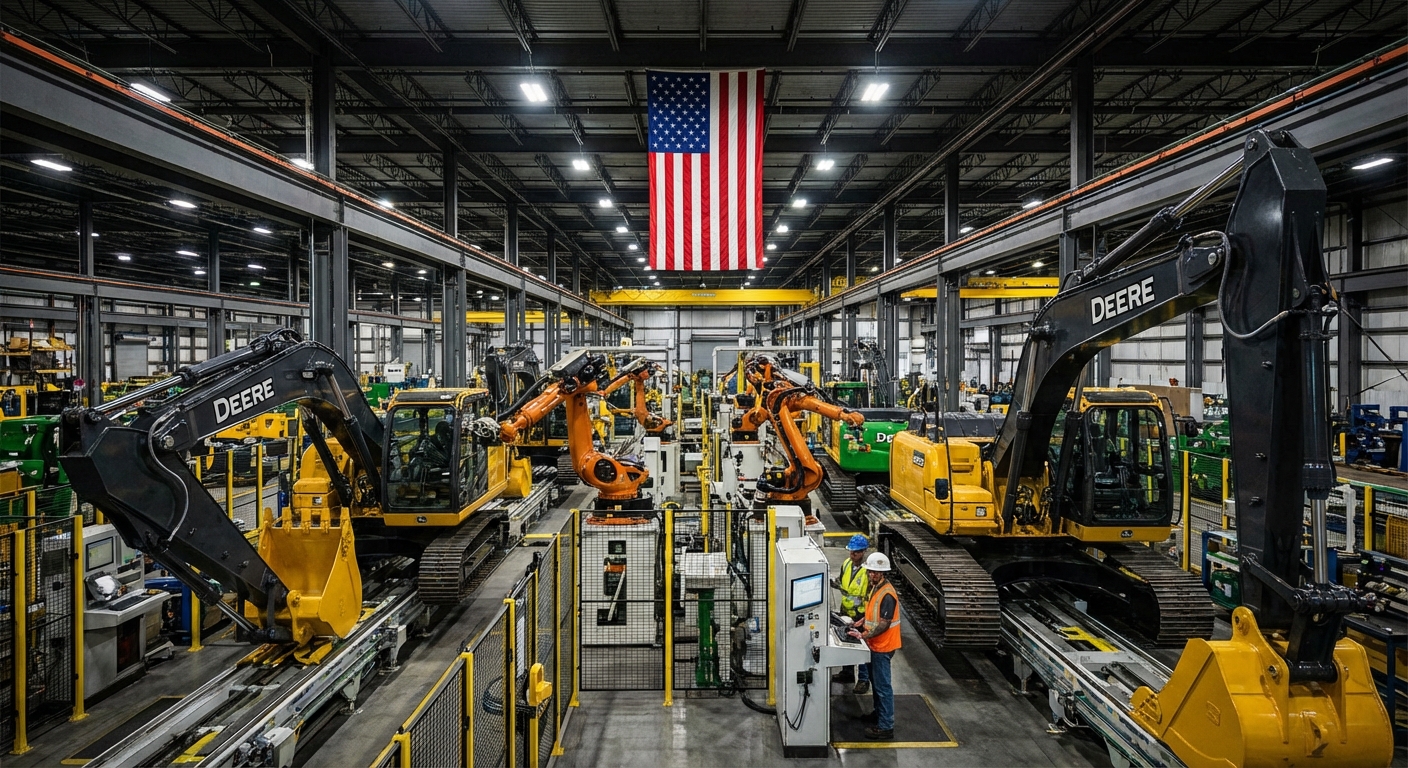
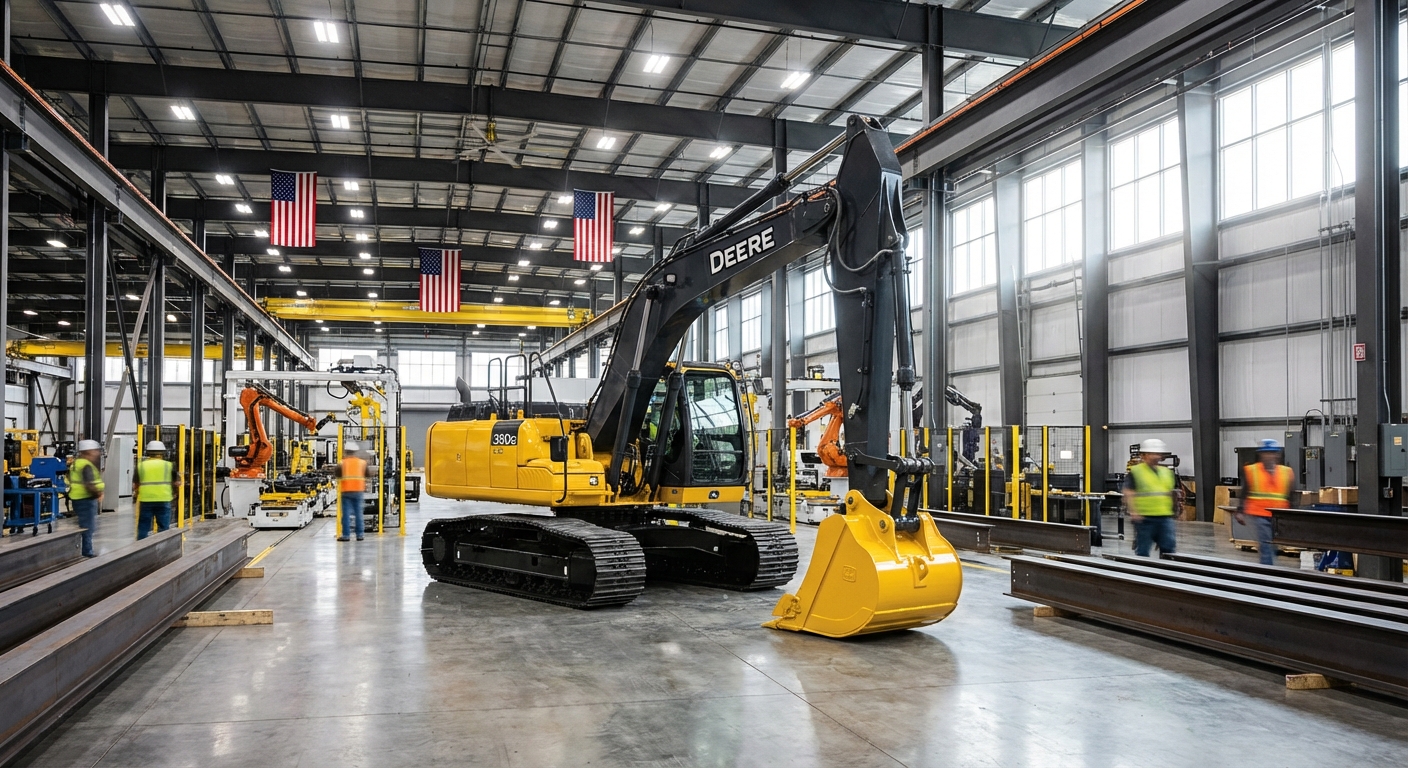
In what represents one of the most significant reshoring announcements in the heavy equipment industry in years, John Deere revealed today that it will open a new $70 million excavator manufacturing facility in Kernersville, North Carolina. The factory will produce the only excavator designed, developed, and manufactured entirely in the United States—a notable shift from the company’s previous Japan-based excavator production.
The announcement came during a speech by President Donald Trump in Clive, Iowa, where the President highlighted Deere’s new American manufacturing investments as part of broader efforts to strengthen domestic industrial capacity.
“Our investment in these new facilities underscores John Deere’s dedication to strengthening the backbone of American industry and supporting local economies,” said John May, Chairman and Chief Executive Officer of John Deere. “We believe in building America, and these projects represent our intent to continue driving innovation and job creation in the United States.”
Editor’s Note: What This Means for Fleet Owners
For equipment managers running mixed fleets, domestic manufacturing brings tangible benefits: shorter supply chains, faster parts availability, and equipment built closer to where it operates. As OEMs increasingly localize production, the question becomes whether this translates into pricing advantages or simply shields against future tariff uncertainties. Either way, service and parts networks stand to benefit. Learn how FieldFix helps contractors track equipment regardless of where it’s built.
Two New Facilities, 300+ Jobs
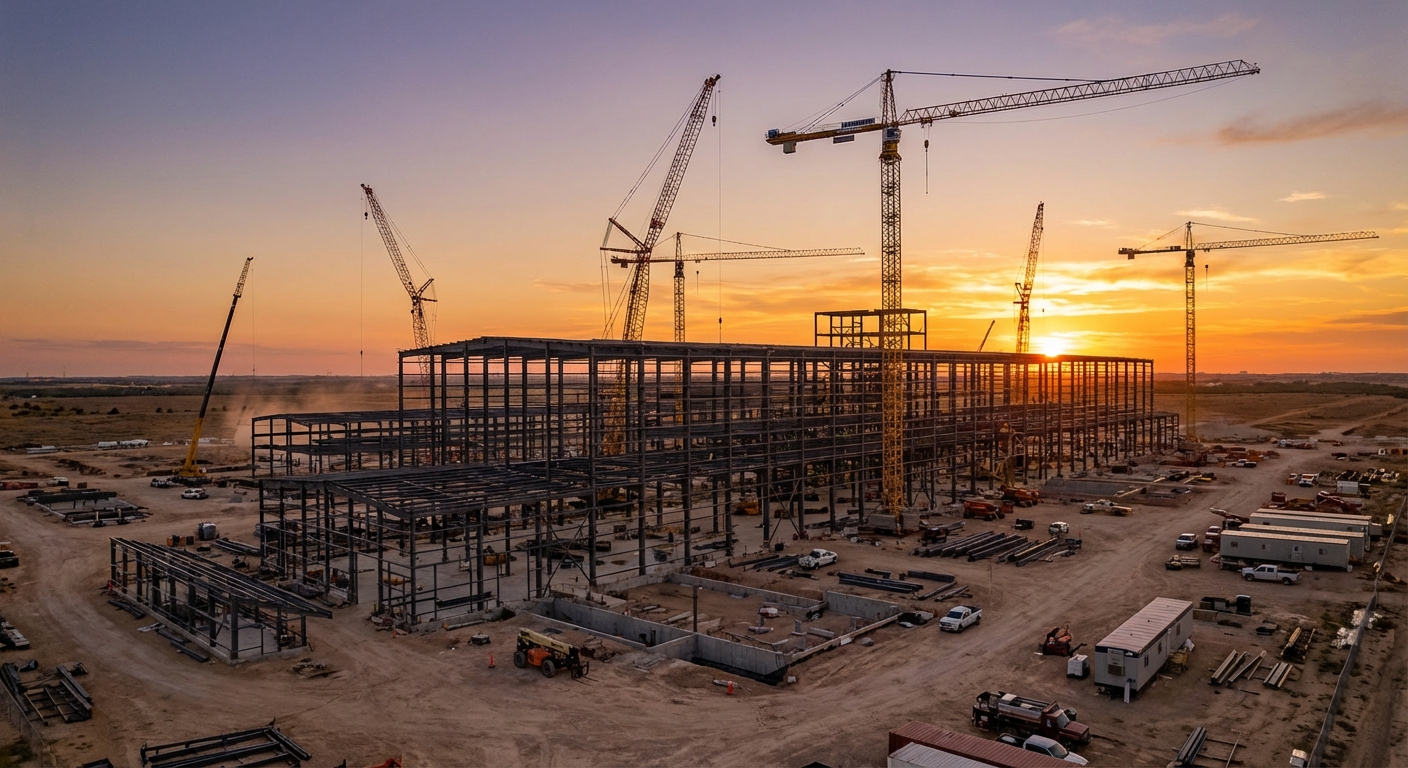
The Kernersville campus isn’t Deere’s only new investment. Alongside the North Carolina announcement, the company revealed plans for a new distribution center near Hebron, Indiana. Both facilities are expected to open within the next year.
North Carolina Excavator Factory:
- $70 million investment
- 150+ new jobs
- Will produce future-generation excavators
- Advanced manufacturing technologies
- Previously Japan-based production
Indiana Distribution Center:
- Strategic location to enhance nationwide supply chain
- Approximately 150 jobs anticipated
- Designed to streamline operations and ensure timely parts delivery
- Complements existing Milan, Illinois facility
“This new facility is an investment in customer expectations around world class product support through parts availability for our US based ag, turf, construction, forestry, mining and turf customers,” said Denver Caldwell, Vice President of Aftermarket and Customer Support. “Indiana’s strong workforce and central location make it an ideal choice for expansion.”
The Indiana center will supplement—not replace—Deere’s primary North American Parts Distribution Center in Milan, Illinois, which has operated since 1973 and employs approximately 1,200 people.
The Only Truly American Excavator
What sets the North Carolina announcement apart isn’t just reshoring—it’s the scope of domestic integration. According to Deere, the Kernersville facility will produce excavators that are designed, developed, and manufactured in the United States. This end-to-end American production distinguishes these machines from competitors who may assemble equipment domestically but rely on foreign engineering and design.
“We are excited to bring this new facility to our Kernersville campus and to be part of the region’s thriving manufacturing community,” said Ryan Campbell, President of Worldwide Construction and Forestry and Power Systems. “Our focus will be on delivering excellence, creating jobs and advancing the legacy of John Deere in American manufacturing.”
The timing aligns with Deere’s recent product announcements. Earlier this week, the company unveiled the new 210, 230, and 260 P-Tier excavators—Deere-designed and built machines that represent the company’s latest generation of mid-size excavators. Whether these specific models will be produced in North Carolina wasn’t specified, but the new facility is intended for “future generation excavators.”
Part of a $20 Billion Commitment
Today’s announcement represents a piece of Deere’s broader pledge to invest $20 billion in United States manufacturing over the next decade. This commitment signals a strategic long-term bet on domestic production, even as global supply chains face continued uncertainty from trade policy changes, shipping disruptions, and geopolitical tensions.
“It is a testament to our confidence in the future of U.S. manufacturing and our unwavering commitment to innovation, quality, and economic growth,” May added.
The investment comes at a pivotal time for the construction equipment industry. Rising tariff discussions, particularly regarding equipment and components from China and other nations, have prompted many OEMs to reevaluate their manufacturing footprints. Deere’s move to bring excavator production from Japan to American soil positions the company to navigate potential trade barriers while appealing to customers who prioritize domestically-built equipment.
Industry Implications
John Deere’s decision to reshore excavator production carries significant implications for the competitive landscape:
Supply Chain Resilience: Domestic manufacturing reduces exposure to international shipping delays, port congestion, and global logistics disruptions that have plagued equipment availability since the pandemic.
Tariff Insulation: With trade policy remaining a fluid issue, American-built equipment sidesteps potential import duties that could increase costs for foreign-manufactured machines.
Skilled Workforce Development: The combined 300+ jobs across both facilities represent meaningful investments in American manufacturing employment, particularly in regions with strong manufacturing traditions.
Competitive Positioning: As the “only excavator designed, developed and manufactured in the United States,” Deere can market a differentiated value proposition to contractors and government buyers who specify domestic content requirements.
The Kernersville Connection
The choice of Kernersville, North Carolina isn’t arbitrary. Deere already operates a campus in the area, making this an expansion of existing operations rather than a greenfield investment. The Triad region of North Carolina—encompassing Greensboro, Winston-Salem, and High Point—has emerged as a manufacturing hub with a skilled workforce, favorable business climate, and strong transportation infrastructure.
North Carolina has actively courted manufacturing investment in recent years, particularly in automotive, aerospace, and heavy equipment sectors. The state’s proximity to major East Coast markets and its well-developed logistics networks make it an attractive location for equipment production.
What Comes Next
The new facilities are expected to become operational within the next year, though exact timelines weren’t specified. For contractors looking to purchase American-built Deere excavators, the wait begins now—but the end result promises equipment with a fully domestic pedigree.
In the meantime, Deere’s Japanese-built excavators will continue serving customers until production transitions to North Carolina. The company’s dealer network will manage the changeover while maintaining parts and service support across all machines regardless of manufacturing origin.
The Bigger Picture
Today’s announcement extends beyond Deere’s corporate strategy. It reflects a broader industry trend toward supply chain localization that accelerated during the pandemic and shows no signs of reversing. For construction contractors, the message is clear: the equipment of tomorrow will increasingly be built closer to where it’s deployed.
Whether other OEMs follow Deere’s lead in reshoring major production remains to be seen. But with $20 billion committed to American manufacturing over the next decade, John Deere has placed a significant bet that building in America will prove to be both a competitive advantage and a source of long-term value creation.
The green machines are coming home—and they’re bringing American jobs with them.
This is a developing story. Equipment Insider will continue to monitor and report on Deere’s North Carolina facility progress as additional details become available.