Komatsu Unveils Next-Gen Hybrid Excavators at BAUMA Preview
Japanese manufacturer showcases three new hybrid excavator models promising 30% fuel reduction. Production slated for mid-2026.
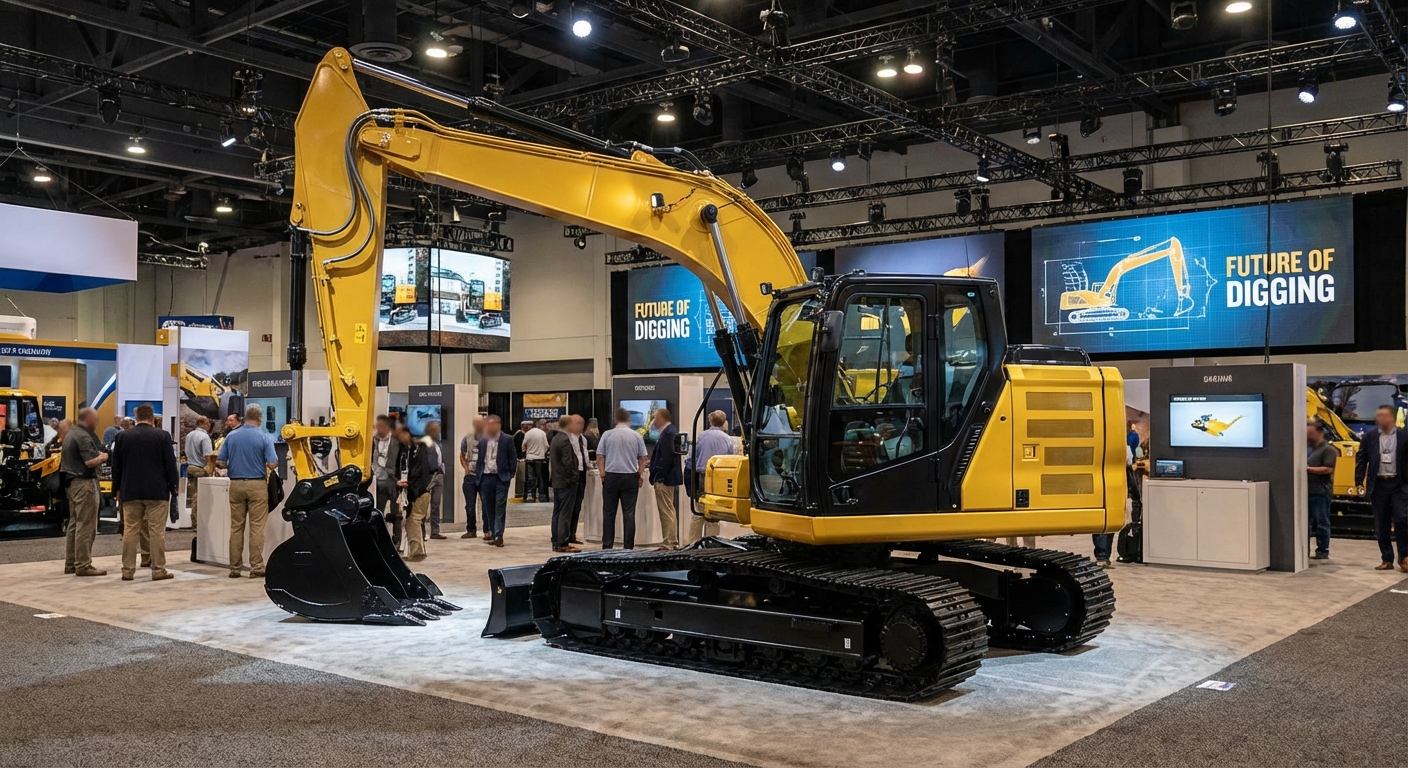
Komatsu Ltd. has unveiled its next generation of hybrid hydraulic excavators at a BAUMA 2026 preview event in Munich, showcasing technology the company says will deliver 30% fuel consumption reductions compared to conventional diesel models.
The new HB series includes three models spanning the 20-50 ton weight classes, with North American production expected to begin in mid-2026.
Technical Innovation
The updated hybrid system represents Komatsu’s second generation of production hybrid technology for excavators. Key improvements include:
Advanced energy recovery captures energy during swing braking and boom lowering, storing it in an improved lithium-ion battery pack with 40% greater capacity than the previous generation.
Intelligent power management uses machine learning algorithms to predict operator inputs and optimize power flow between diesel engine, electric motor, and hydraulic systems.
Reduced engine sizing allows a smaller diesel engine to provide base power, with electric assist handling peak demands. The smaller engine reduces both fuel consumption and emissions.
Seamless operation ensures operators experience no performance compromise. Komatsu engineers emphasize that productivity matches conventional diesel models while achieving fuel savings.
Model Lineup
The three new models address different market segments:
HB205LC-4 (20-ton class) targets the high-volume mid-size excavator market where fuel costs significantly impact project economics.
HB335LC-4 (35-ton class) serves heavier earthmoving applications including mass excavation and production digging.
HB490LC-4 (50-ton class) represents Komatsu’s largest hybrid offering, aimed at quarry and infrastructure applications.
All models share common hybrid architecture, allowing operators and technicians to transfer skills across the lineup.
Market Context
Komatsu’s hybrid push comes as the industry grapples with emissions regulations and customer demands for lower operating costs. While fully electric equipment has captured attention, practical limitations around charging infrastructure and battery capacity make hybrid technology attractive for many applications.
“Hybrid is the practical path to lower emissions for equipment that runs all day,” explains Komatsu’s product planning director. “Our customers can’t always access charging infrastructure, and they can’t afford equipment that needs to stop working while it charges. Hybrid gives them fuel savings and emissions reductions with zero compromise on productivity.”
The company notes that its first-generation hybrid excavators have accumulated over 15 million operating hours globally, providing extensive field data informing the new design.
Competitive Landscape
Komatsu’s announcement intensifies competition in the hybrid excavator segment:
Caterpillar offers hybrid wheel loaders but has not announced hybrid excavator plans.
Hitachi markets hybrid excavators in select markets but with more limited availability than Komatsu.
Kobelco has shown hybrid concepts but has not committed to production timelines.
Chinese manufacturers including Sany and XCMG are developing hybrid models for export markets.
For contractors evaluating fleet technology decisions, hybrid options are becoming increasingly practical alternatives to conventional diesel equipment.
Pricing and Availability
Komatsu has not announced specific pricing, but industry analysts expect hybrid models to carry premiums of 15-20% over equivalent conventional models—consistent with current hybrid pricing patterns.
North American availability will follow Japanese market introduction by approximately six months, with dealer pre-orders expected to open in early 2026.
Demo units will be available at BAUMA 2026 in Munich (April 7-13) and at selected dealer events throughout the year.
Dealer Perspective
Komatsu’s North American dealer network expressed optimism about the new models’ market potential.
“We’ve had customers asking about hybrid options for years,” notes a Midwest dealer principal. “The fuel savings math works out better than most people realize, especially for high-utilization machines. And there’s a growing segment of customers who need to demonstrate environmental responsibility to win certain contracts.”
Dealers also highlighted service considerations. Hybrid systems require specialized training, but Komatsu’s dealer training programs have been preparing technicians for expanded hybrid service demands.
What This Means for Contractors
For contractors considering equipment purchases in the coming year, Komatsu’s announcement introduces another option to evaluate:
Fuel economics should be modeled carefully. At current diesel prices and high utilization rates, 30% fuel savings could offset the hybrid premium within 3-4 years.
Resale values for hybrid equipment remain somewhat uncertain, though strong demand for fuel-efficient equipment may support hybrid residual values.
Maintenance requirements differ slightly for hybrid systems, though Komatsu emphasizes that routine maintenance intervals are unchanged.
Operator acceptance has been strong for existing hybrid excavators, with operators appreciating the smooth power delivery and reduced noise levels.
Contractors should discuss hybrid options with their Komatsu dealers and request demo opportunities when units become available.
Equipment Insider will provide full coverage from BAUMA 2026 including hands-on reviews of the new Komatsu hybrid lineup.