The Excavator Arms Race Is Real: Five OEMs Drop New Models Ahead of CONEXPO
Volvo, Hyundai, Komatsu, CASE, and SANY are all bringing new or redesigned excavators to Las Vegas this week. Here's what each one is betting on.
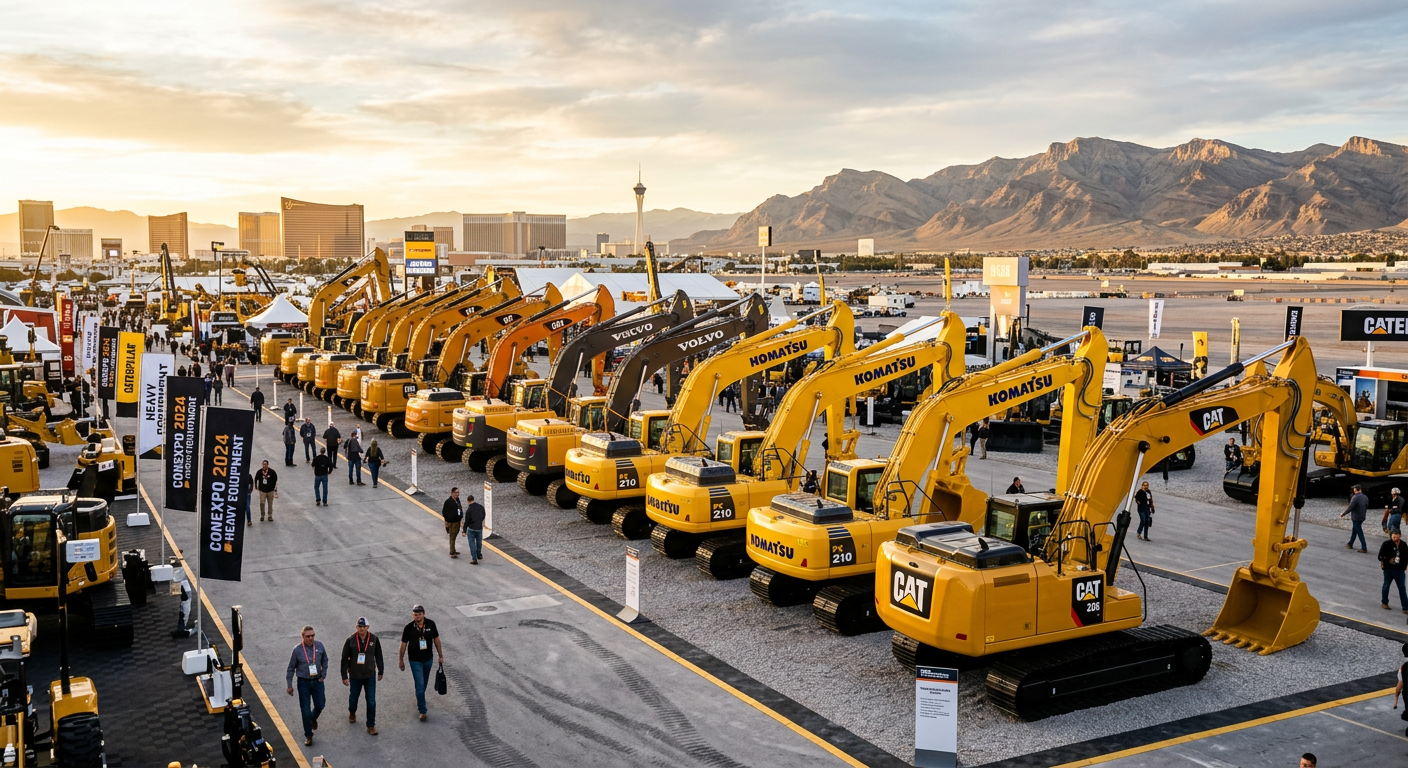
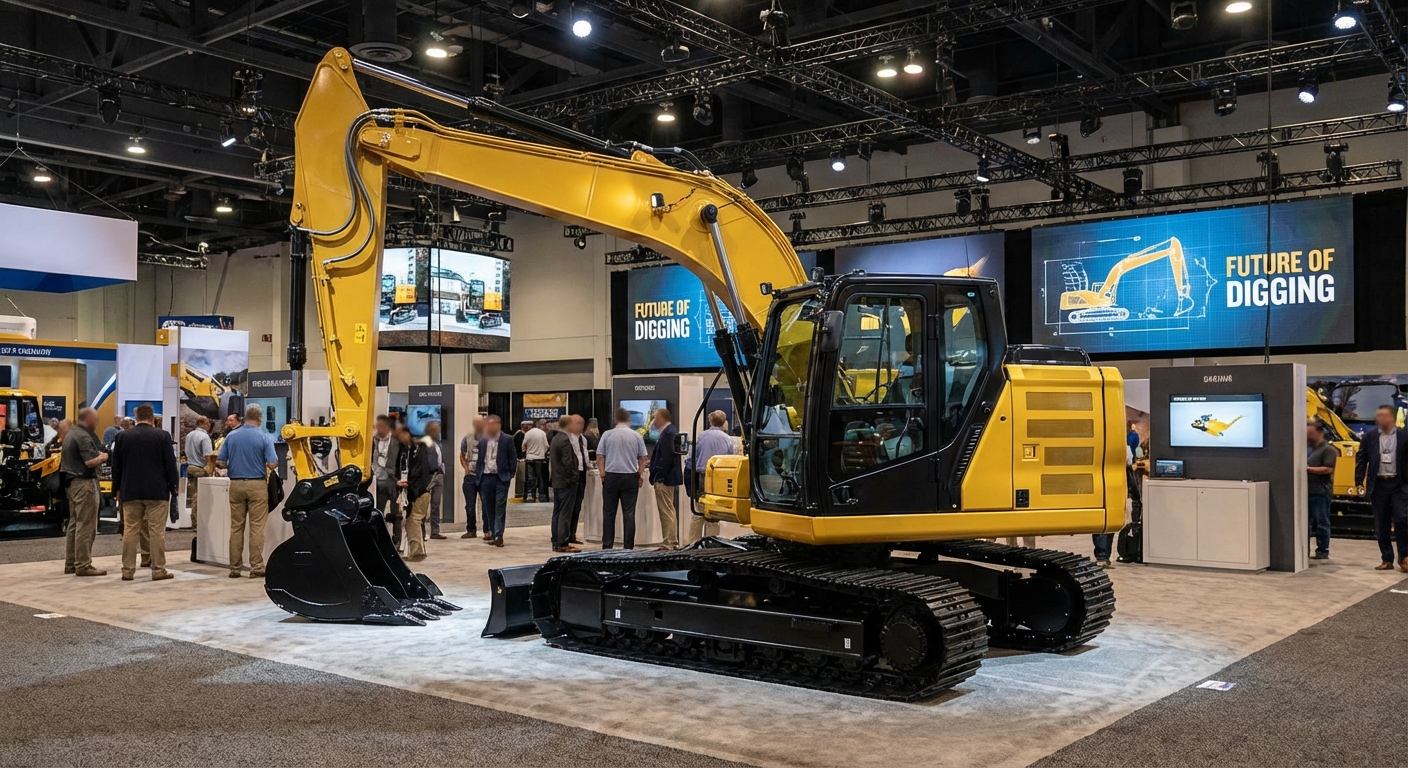
CONEXPO-CON/AGG opens tomorrow in Las Vegas, and if you’re shopping excavators, bring comfortable shoes. At least five major OEMs are rolling out new or completely redesigned models this week — and the specs suggest nobody wants to finish second.
Volvo CE has three new compact excavators. Hyundai is debuting a next-gen 23-tonner. Komatsu is pushing intelligent machine control deeper into the mid-size class. CASE is expanding its E Series lineup. And SANY is bringing 32 machines total, 10 of them brand new for North America.
It’s the most competitive excavator launch cycle in years, and it tells you a lot about where the market is heading.
Editor’s Note: Show season means your fleet back home still needs attention. FieldFix helps equipment operators log maintenance, track cost-per-hour, and get AI diagnostics — so you know exactly what shape your machines are in while you’re walking the show floor. Free for up to three machines.
Volvo CE: Three New Compact Excavators
Volvo is leading with the ECR90, EC65, and EW65 — three machines that target the compact and mid-size segments where rental demand has been strongest over the past two years.
The ECR90 is the headline. It gets a 28% bump in engine power, 16% more pump torque, 13% greater bucket force, and a cab that’s 30% larger than the outgoing model. Those aren’t incremental improvements. That’s a machine designed to close the gap between compact and full-size performance — the kind of excavator a one-truck contractor can run all day without feeling like they compromised.
The EC65 crawler gets a more modest 4% power increase with 9% more boom lifting force. The EW65 wheeled excavator bumps power by 6% and hits travel speeds up to 18.6 mph, which matters if you’re moving between jobsites without a trailer.
Volvo’s play here is clear: give smaller machines bigger-machine capabilities. That tracks with what we’re seeing across the industry — contractors want fewer machines that do more, not bigger fleets.
Hyundai: The HX230L Goes Next-Gen
Hyundai’s big reveal is the HX230L, a 23-tonne crawler excavator that the company says is among the most powerful in its weight class. The numbers back that up: 141kW (189 hp) and 955 Nm of torque from Hyundai’s DX05 four-cylinder twin-turbocharged engine.
The “Next Generation” branding isn’t just marketing speak. Hyundai has been methodically rolling out redesigned machines across its lineup, and the 23-tonne class is a battleground. It’s the sweet spot for general contractors — big enough for serious earthmoving, small enough to fit on residential and light commercial sites.
At 189 hp in a 23-tonne package, Hyundai is putting pressure on the Cat 320 and Deere 210G — machines that have owned this segment for years. Whether contractors bite depends on dealer support and parts availability as much as spec sheets, but the hardware is competitive.
Komatsu: IMC 3.0 Comes to the PC220LCi-12
Komatsu’s approach is different. Instead of leading with raw power numbers, they’re pushing intelligence.
The PC220LCi-12 is a 21-24 tonne hydraulic excavator that ships with IMC 3.0 — Komatsu’s third-generation intelligent machine control system. Factory-integrated 3D boundary control means the machine knows where the grade target is and won’t dig past it. No aftermarket GPS kits. No calibration headaches. It works out of the box.
The rest of the spec sheet is solid too: 28% larger cab, up to 20% better fuel efficiency, and up to 20% lower maintenance costs compared to the outgoing model. But the story is the technology. Komatsu has bet heavily on machine control as a differentiator, and the PC220LCi-12 is the latest proof.
For contractors who run grade-intensive work — foundations, utilities, road prep — the IMC system can genuinely save time. An operator who doesn’t have to get out and check grade every few passes is an operator who moves more dirt per hour. The math works even if you’re paying a premium for the technology upfront.
CASE: 40+ Machines Including New Minis and the TL100EV
CASE is taking a volume approach. Over 40 machines on display, nearly 20 of them new or upgraded. The highlights are the D Series 3-ton mini excavators, a new midi excavator, and new E Series full-sized models.
But the machine that’ll get the most attention might be the smallest: the TL100EV, an all-electric mini track loader. Electric compact equipment has been the industry’s “next year” story for a while now. CASE actually shipping one in a production-ready configuration puts real pressure on competitors to follow.
The mini excavator updates matter too. The 3-ton class is the fastest-growing segment in North American equipment sales. Landscapers, plumbers, fence companies, homeowners — the buyer base for small excavators has expanded well beyond traditional construction. CASE clearly wants a bigger slice of that market.
They’re also showing new G Series compact wheel loaders, which rounds out a lineup refresh that touches nearly every product category. When an OEM updates this many SKUs at once, it usually means they’ve been losing ground and want it back.
SANY: 32 Machines, 17 Attachments, 10 New Models
SANY is bringing the biggest booth in terms of sheer machine count. Thirty-two machines and 17 attachments, with 10 models designed specifically for the North American market.
The new arrivals include the SY10U Mini Excavator, SY335LC Medium Excavator, SCA3300A Lattice Boom Crawler Crane, SCA1100TB Telescopic Crawler Crane, a new-gen SW940L Wheel Loader, and the STH5519 Telehandler.
SANY is also pushing its software story. The SANY AI Service Assistant (SASA) and SANY RootPilot are both on display — AI-driven diagnostics and semi-autonomous operation, respectively. Whether North American contractors trust a Chinese OEM’s AI platform is an open question, but the technology exists and it’s shipping.
The broader SANY strategy hasn’t changed: competitive specs at lower price points, with improving dealer networks. Five years ago, SANY was a curiosity at CONEXPO. Now they’re a legitimate option for cost-conscious buyers, especially in the mini and mid-size excavator categories where brand loyalty runs thinner.
What This Means for Buyers
Five OEMs all launching new excavators in the same week isn’t coincidence. It’s a market signal.
Demand for excavators — especially compact and mid-size models — has been strong. The combination of infrastructure spending (IIJA money is finally flowing), residential construction, and a massive installed base of aging machines means the replacement cycle is hitting hard. Every manufacturer wants to capture those dollars.
For contractors shopping at CONEXPO this week, the competition is good news. More options means better pricing, better financing, and more willingness from dealers to negotiate. If you’ve been waiting to replace a 10-year-old excavator, this is a buyer’s market for new iron.
A few things to watch:
Technology is the new differentiator. Komatsu’s IMC 3.0, SANY’s AI diagnostics, Volvo’s operator comfort — the machines are all powerful enough. The question is which one makes your operator faster and your maintenance cheaper.
Electric is coming, but slowly. CASE’s TL100EV is real, but it’s a mini track loader, not a 20-ton excavator. Full electrification of larger machines is still years away. Don’t make buying decisions based on waiting for electric — buy what works now.
Dealer support still matters more than specs. A 23-tonne Hyundai with 189 hp is impressive on paper. But if your nearest dealer is three hours away and parts take a week, the Cat 320 with a dealer down the road wins every time. Walk the show floor, but check your local dealer map before you sign anything.
Used equipment gets more interesting. When OEMs launch new models, the outgoing ones hit the secondary market. If you’re flexible on model year, the next six months could be a good window for used excavator deals.
CONEXPO runs March 3-7 at the Las Vegas Convention Center. We’ll be covering announcements and new machine details throughout the week.