Fecon: How an Ohio Manufacturer Became the Global Standard in Forestry Mulching
From humble beginnings in Evendale to a 150,000+ square foot manufacturing powerhouse in Lebanon, Fecon has shipped over 25,000 mulcher heads worldwide and continues to define the vegetation management industry.
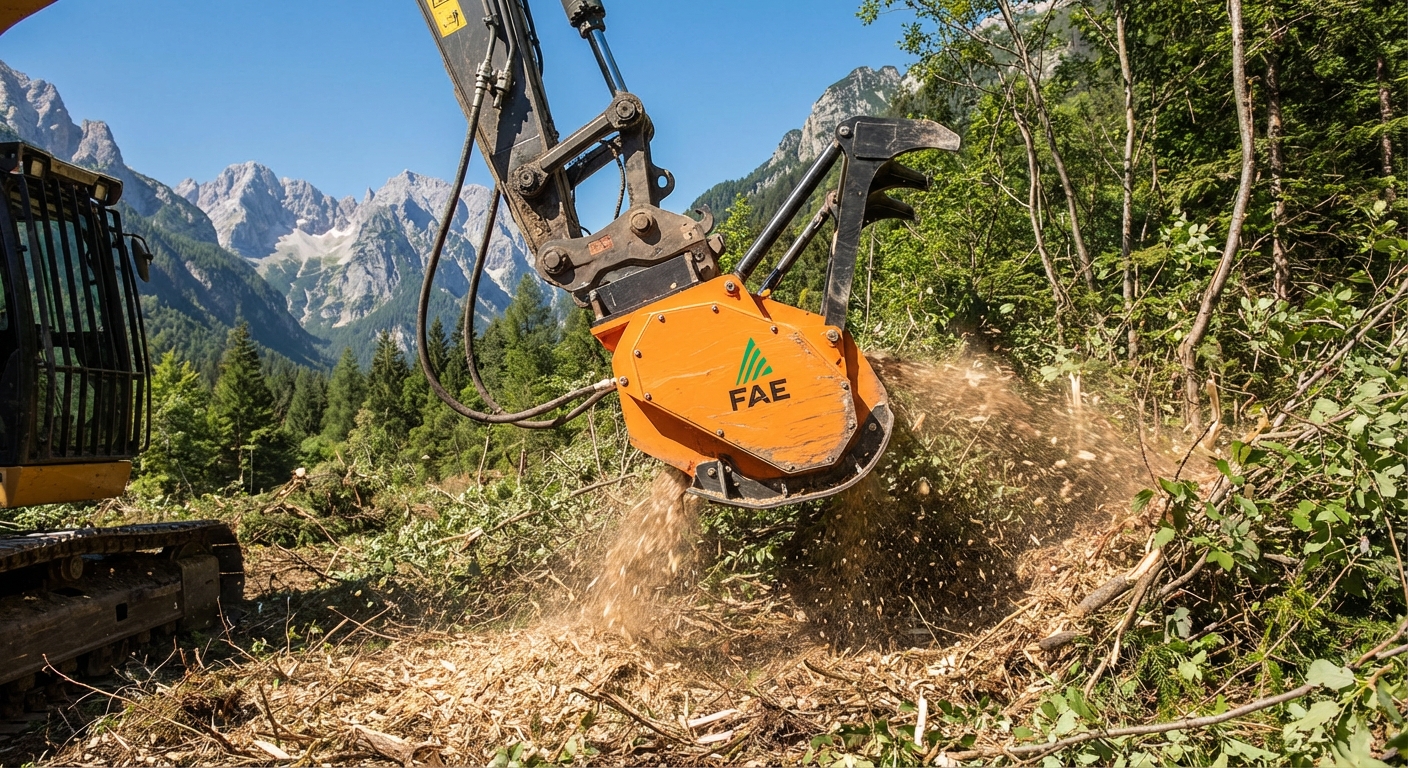
In the world of forestry mulching and vegetation management, few names carry as much weight as Fecon. For over three decades, this Lebanon, Ohio-based manufacturer has been building the mulching equipment that land clearing professionals trust to tackle the toughest jobs—from wildfire prevention in California to right-of-way maintenance across the American heartland.
What started as a small manufacturing operation in Evendale, Ohio, serving the organic resource recovery industry has evolved into a global enterprise with representatives on every continent and more than 25,000 mulcher heads in service worldwide. It’s a quintessentially American manufacturing success story, rooted in Midwest values and built on relentless innovation.
Editor’s Note: Fleet Visibility in Land Clearing Operations
Managing a forestry mulching operation means tracking expensive equipment across challenging terrain—often in areas with limited connectivity. FieldFix provides real-time GPS tracking for mixed fleets, giving operators visibility into equipment location, utilization, and maintenance needs. Whether you’re running Fecon attachments on excavators, skid steers, or dedicated mulching tractors, knowing where your iron is and how it’s performing can make the difference between profit and loss. FieldFix works across all equipment brands, so your whole fleet stays connected.
The Fecon Story: From Recovery to Vegetation Management
Fecon’s origins trace back to the early 1990s when the company began operations in Evendale, Ohio, a Cincinnati suburb better known as home to GE Aviation. The founders recognized an emerging need in the organic resource recovery industry—specialized equipment that could process vegetation efficiently and durably.
“We work hard to understand our customers’ needs and provide real value,” CEO Bob Dieckman has stated, summarizing the philosophy that has guided Fecon through three decades of growth. “We build specialized equipment—machines that uniquely fit the conditions in which you run and operate them.”
That customer-first approach has been central to Fecon’s evolution from a niche manufacturer to an industry leader. Unlike large equipment OEMs that produce mulching attachments as one small segment of their product lines, Fecon has remained laser-focused on vegetation management, allowing the company to develop deep expertise in the specific challenges operators face.
Building a Manufacturing Powerhouse in Southwest Ohio
The company’s growth trajectory accelerated in 2002 when Fecon moved to a new state-of-the-art 56,000 square foot manufacturing facility in Lebanon, Ohio—about 30 miles northeast of Cincinnati. This wasn’t just a relocation; it was a statement of intent.
Lebanon offered several advantages: proximity to the Cincinnati/Dayton manufacturing corridor, a skilled workforce with experience in heavy equipment production, and room to expand. That expansion came quickly. Within a few years, Fecon added another 55,000 square feet of manufacturing space, and in 2014, the company acquired an additional 40,000 square feet adjacent to the main facility.
Today, Fecon’s Lebanon campus encompasses more than 150,000 square feet of manufacturing space—a far cry from the modest Evendale startup. The facility houses everything from steel fabrication to assembly lines for the company’s signature Bull Hog mulching heads and FTX mulching tractors.
The Product Line: Built for Life, Engineered for Success
Fecon’s core philosophy of “built for life, engineered for success” manifests in a deep and differentiated product line that covers virtually every forestry mulching application.
Bull Hog Mulching Attachments
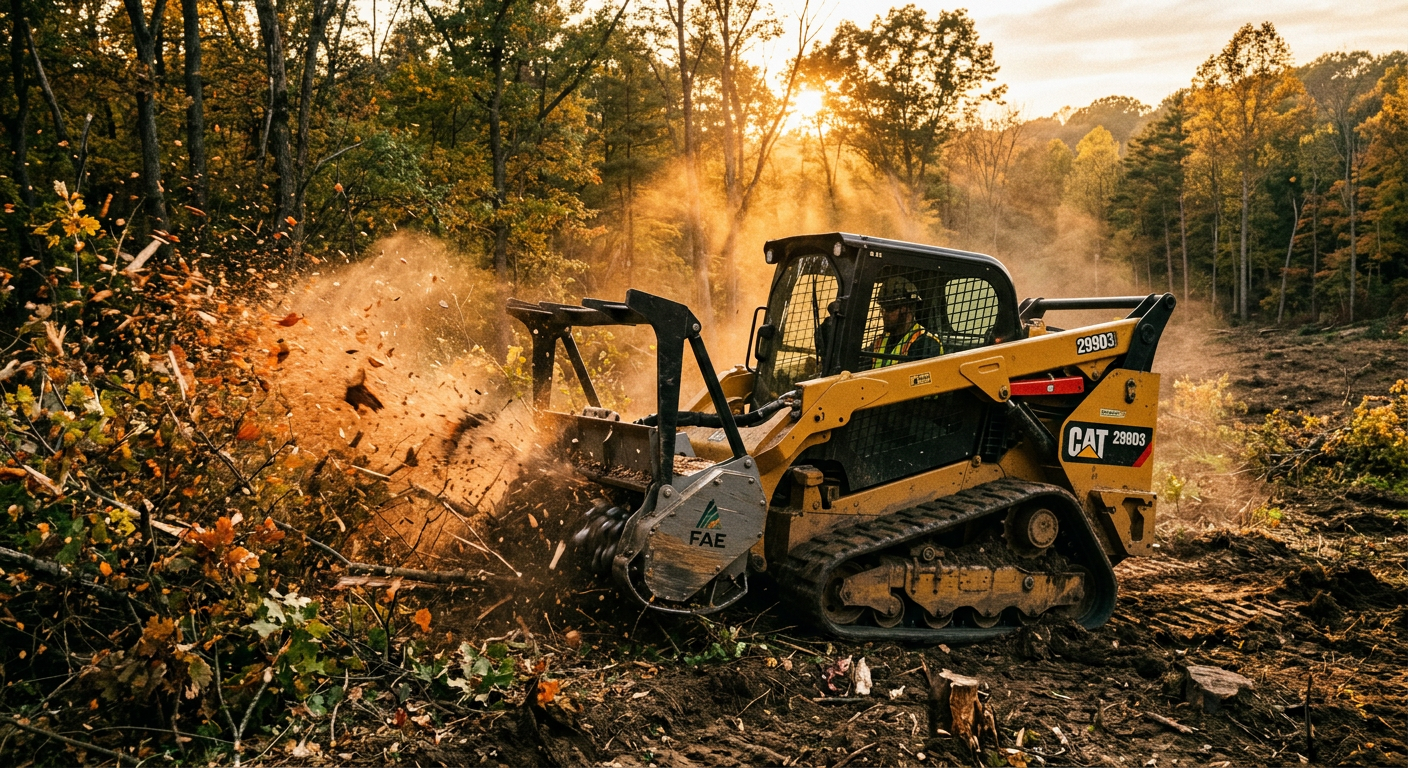
The Bull Hog has become synonymous with professional forestry mulching. Available for skid steers, excavators, tractors, and as PTO-driven units for agricultural tractors, the Bull Hog represents Fecon’s flagship mulching technology.
What sets the Bull Hog apart is its durability and serviceability. Operators in the land clearing industry put their equipment through punishing conditions—rocky terrain, dense hardwood, long hours, and minimal downtime for maintenance. The Bull Hog’s robust construction and easily replaceable wear parts (teeth, rotors, and cutting tools) have earned it a reputation as “the most durable mulching head on the market.”
For excavator applications, Fecon offers various Bull Hog models including the FMX28 Excavator Mulcher, designed to handle the specific hydraulic and mounting requirements of modern excavators. Skid steer models accommodate a range of machine sizes and hydraulic capacities.
FTX Mulching Tractors
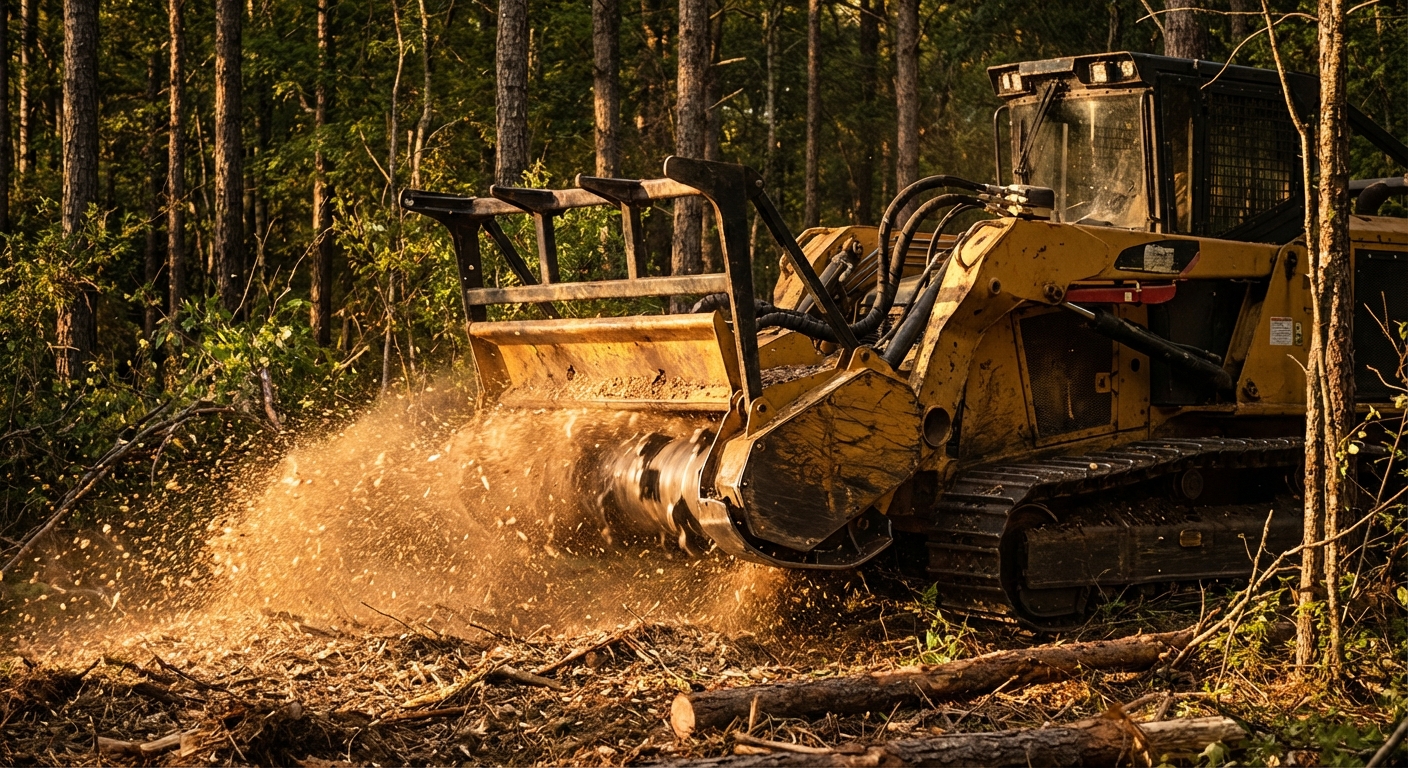
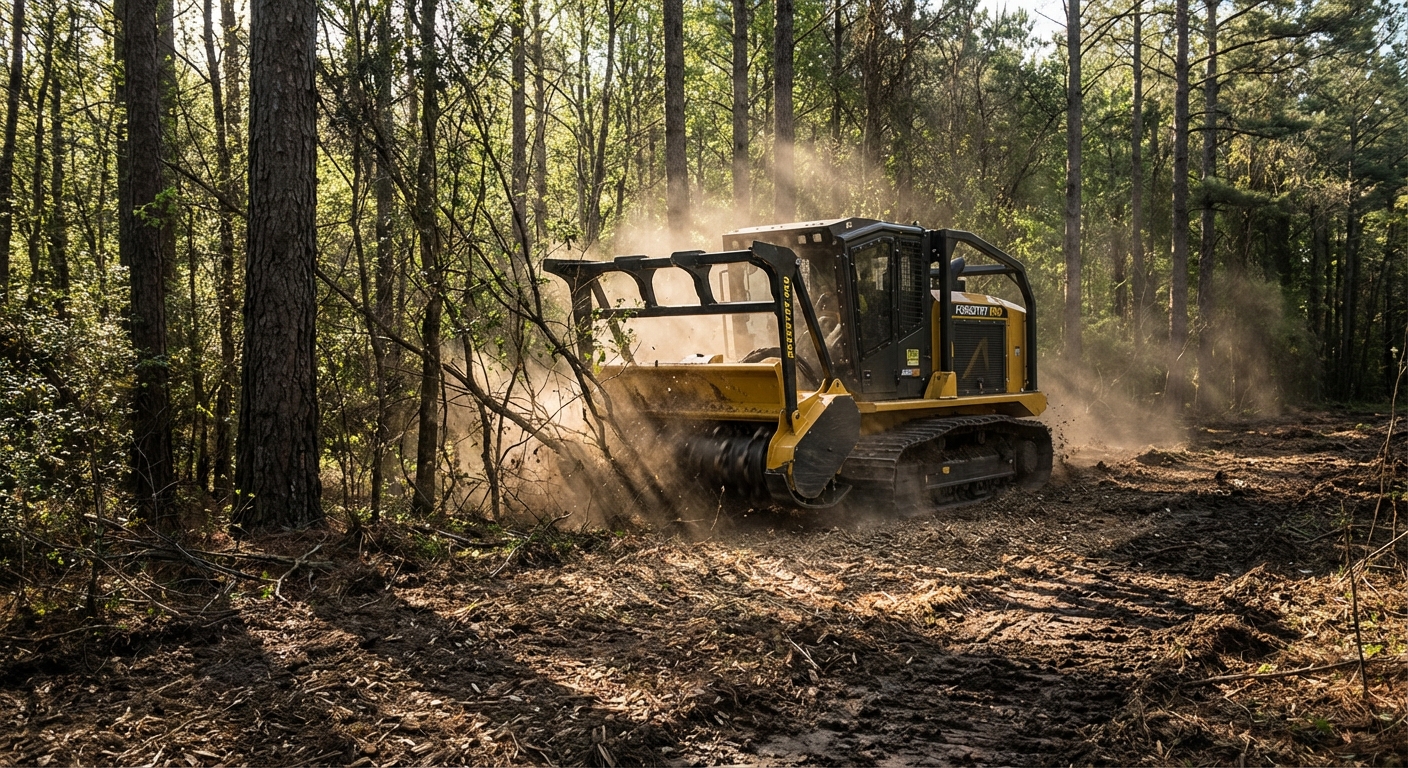
While attachments remain Fecon’s bread and butter, the company has also made significant investments in dedicated mulching tractors. The FTX line—including the FTX150-2, FTX200, and FTX300—represents purpose-built machines engineered specifically for vegetation management.
The flagship FTX600, launched in the mid-2010s, demonstrated Fecon’s ambition to compete in the dedicated forestry carrier market. These machines combine tracked mobility, powerful hydraulic systems, and optimized weight distribution to maximize productivity in challenging conditions.
The advantage of a dedicated mulching tractor versus an attachment on a carrier machine? Integration. Everything from the engine power curve to the cab ergonomics is designed with mulching in mind, potentially improving both productivity and operator comfort over long working days.
Stone Crusher and Specialty Attachments
Beyond traditional mulching, Fecon has expanded into adjacent applications. The Stone Crusher tackles one of forestry mulching’s persistent challenges: what to do when rocks and vegetation share the same terrain. Rather than forcing operators to switch equipment, the Stone Crusher processes both materials.
Other specialty attachments include:
- Disc Hawk and Disc Mulchers: Alternative cutting technologies for specific vegetation types
- Tree Shears: For selective tree removal before mulching
- Trim Ex: For precision vegetation trimming applications
- Deck Mulchers: For wide-swath clearing operations
- Rotating Grapples: For material handling in conjunction with mulching
- Stump Grinders: Including the Stumper, Compact Stumpex, and Stumpex 2 Speed
This breadth of offerings means contractors can often source their entire vegetation management equipment package from a single manufacturer—simplifying parts sourcing, training, and support.
The Ownership Evolution
Like many successful mid-size manufacturers, Fecon has navigated through ownership transitions that have shaped its growth trajectory.
LFM Capital, a private equity firm focused on lower middle-market manufacturing companies, previously held Fecon in its portfolio. Under LFM’s ownership, the company continued its expansion and product development, maintaining the tight-knit culture that CEO Bob Dieckman describes as “a family.”
More recently, Windjammer Capital Investors acquired Fecon, marking the company’s next chapter. In announcing the transition, Fecon leadership expressed enthusiasm about continuing to “provide the best, most durable vegetation management tools and world-class support to our amazing customers.”
Private equity involvement in mid-size equipment manufacturers is a double-edged sword that industry observers watch carefully. On one hand, capital investment can accelerate product development and geographic expansion. On the other, short-term profit pressures can sometimes compromise the long-term thinking that builds great equipment companies.
Thus far, Fecon’s trajectory under various ownership structures suggests management has maintained its focus on product quality and customer relationships—the foundation of the company’s market position.
Leadership and Culture
The addition of Jeff Smith as Chief Financial Officer represents Fecon’s continued investment in professional management. Smith brings over 30 years of financial leadership experience across manufacturing and service industries, with previous roles at Batesville Casket, Hill-Rom, Protective Industries (Caplugs), and Gorilla Glue.
“Jeff will lead financial strategy, planning, and performance management as we continue to grow and scale the business,” the company announced. “His deep expertise in acquisitions, ERP implementations, corporate restructuring, and global expansion will play a key role in shaping Fecon’s next phase of growth.”
The mention of acquisitions hints at potential M&A activity ahead—a common growth strategy for equipment companies looking to expand product lines or geographic reach.
Despite its growth, Fecon emphasizes its family-like culture. “We are a tight-knit organization in southern Ohio that feels like a family,” the company states. “We share the same values and commitment, and that cohesiveness and sense of team shows in the end product.”
For a manufacturing operation, culture matters more than many outsiders realize. Equipment quality ultimately depends on the people building it—their attention to detail, their pride in their work, their willingness to go the extra mile when something isn’t right. Companies that maintain strong cultures through growth phases often produce better equipment than those that scale too quickly.
The Forestry Mulching Market
To understand Fecon’s position, it helps to understand the market they serve. Forestry mulching has grown from a niche application to a significant segment of the land clearing industry.
According to The New York Times, the American market for mulch and composting reached $1 billion annually by 2022, with forestry mulching representing a substantial share of the commercial segment.
Key applications driving demand include:
Right-of-Way Clearing: Utilities, pipelines, and transportation agencies need to maintain clear corridors. Forestry mulching offers advantages over traditional clearing methods—single-pass operation, no hauling required, and immediate erosion protection from the mulched material left on-site.
Wildfire Prevention: Western states have dramatically increased investment in vegetation management as wildfire seasons intensify. Forestry mulching creates defensible space and firebreaks while processing the material in place—a critical consideration when fire danger is high.
Land Development: Before construction can begin, sites need clearing. Forestry mulching offers faster turnaround than conventional methods while minimizing soil disturbance—an increasingly important consideration as environmental regulations tighten.
Agricultural and Wildlife Habitat: From invasive species control to habitat restoration, mulching applications continue to expand into new markets.
Heavy-duty forestry mulchers can clear up to 15 acres of vegetation per day depending on terrain, density, and material type. That productivity, combined with the environmental advantages of on-site processing, has driven steady market growth.
Competition and Market Position
Fecon competes in a market that includes both specialized manufacturers and large OEM attachment divisions. Denis Cimaf, FAE, Seppi, Rayco, and Loftness represent some of the primary competitors, each with their own technological approaches and market positioning.
What distinguishes Fecon is the combination of specialization and scale. The company is large enough to invest in R&D, maintain a robust dealer network, and stock parts inventory, but focused enough to maintain deep expertise in vegetation management specifically.
The Sourcewell cooperative purchasing contract also gives Fecon an advantage in government and institutional markets, where procurement simplification matters.
Looking Ahead
With global representatives, 25,000+ mulcher heads in service, and a continued focus on innovation, Fecon appears well-positioned for continued growth. The company’s core markets—land clearing, right-of-way maintenance, wildfire prevention, and habitat management—face increasing demand driven by infrastructure investment, climate change, and population growth.
The integration of technology into forestry mulching equipment—telematics, automated features, and improved controls—represents the next frontier. Companies that successfully blend their mechanical expertise with digital capabilities will likely lead the next generation of vegetation management equipment.
For now, Fecon continues to do what it has done for three decades: build mulching equipment that works, support the contractors who use it, and maintain the family culture that has defined the company since its Evendale beginnings.
“By providing the highest value products and superior service, Fecon forges lasting relationships with customers,” the company states. In an industry where equipment often operates in remote locations under harsh conditions, those relationships—and the support they represent—can matter as much as any specification on a product sheet.
Key Facts: Fecon at a Glance
- Headquarters: Lebanon, Ohio
- Founded: Early 1990s (Evendale, Ohio)
- CEO: Bob Dieckman
- Manufacturing: 150,000+ sq ft facility
- Products: Bull Hog attachments, FTX tractors, stone crushers, stump grinders
- Milestone: 25,000+ mulcher heads sold
- Global Presence: Representatives on every continent
- Certifications: ISO certified
- Cooperative Contract: Sourcewell
Equipment Insider covers the companies, equipment, and trends shaping the heavy equipment industry. For more company profiles and market analysis, visit equipmentinsiderhq.com.