How Fecon Became the Name Behind Every Serious Mulching Operation
From a small Ohio shop frustrated with bad equipment to the company that bought Vermeer's forestry mulcher line, Fecon has spent 30+ years building Bull Hogs that won't quit. Here's how they got here.
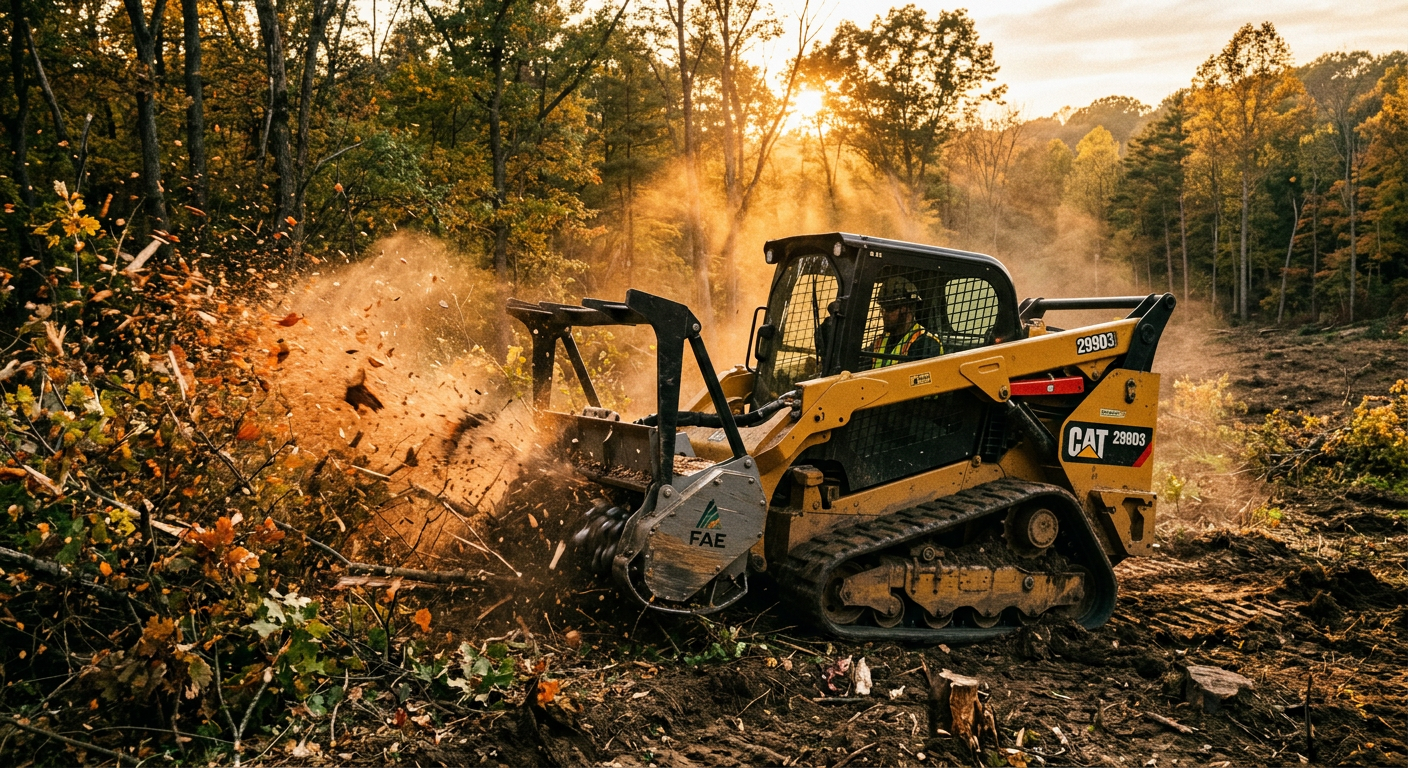
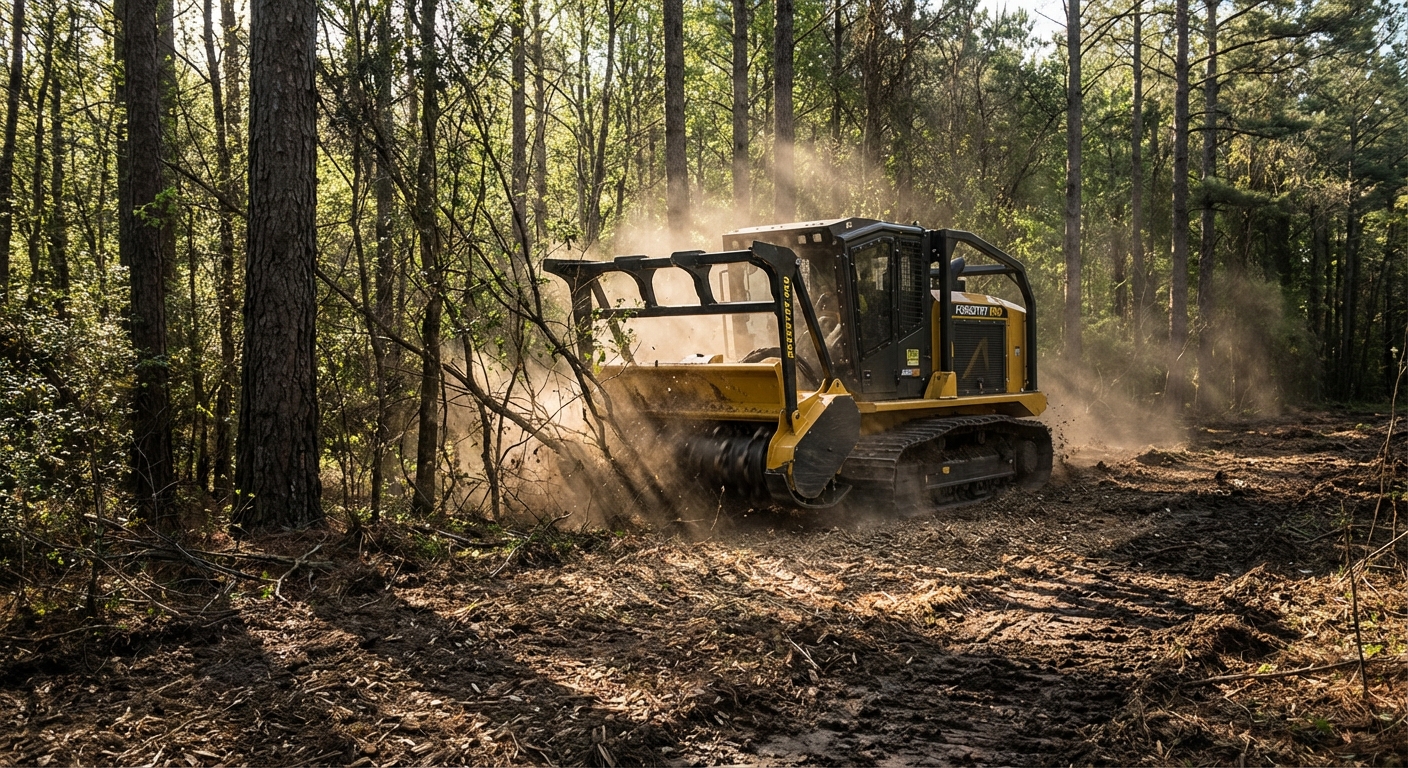
If you’re in the land clearing business and you haven’t run a Fecon, you’ve at least argued about one. The Lebanon, Ohio-based company has been building forestry mulchers and land management equipment since the early 1990s, and their Bull Hog line has become something close to an industry standard for operators who want to chew through hardwoods without babying their gear.
But Fecon’s story isn’t just about building a tough mulcher head. It’s about a company that kept making acquisitions, kept expanding its lineup, and kept finding ways to stay relevant in a market where the big OEMs would love to squeeze out the specialists.
FieldFix Editor’s Note: Running mulching attachments hard means tracking hours and maintenance is critical — not just on the carrier machine, but on the heads themselves. FieldFix logs service history and cost-per-hour for every piece of equipment in your fleet, from your CTL to your Bull Hog.
Started in Ohio, Stayed in Ohio
Fecon was founded in 1991 in Evendale, Ohio, originally serving the organic resource recovery industry. That’s a fancy way of saying they built equipment to grind up wood and organic material. The land clearing and forestry mulching side of the business grew out of that — operators needed something that could handle brush, small trees, and stumps in a single pass, and Fecon started building it.
By 2004, the company had outgrown its original space and moved to a new 56,000-square-foot manufacturing facility in Lebanon, Ohio — about 30 miles northeast of Cincinnati. Four years later, they doubled down and added another 55,000 square feet. In 2014, they tacked on 40,000 more.
That’s not a company coasting. That’s a company that kept having to build bigger buildings because they couldn’t make mulchers fast enough.
Lebanon is still home base today, and all manufacturing happens there. In an industry where more and more production is moving overseas, Fecon has stayed put. Their dealer network spans North America and beyond, but the iron comes out of Ohio.
The Bull Hog: Why It Matters
You can’t talk about Fecon without talking about the Bull Hog. It’s their flagship mulching attachment, and it’s the product that put them on the map.
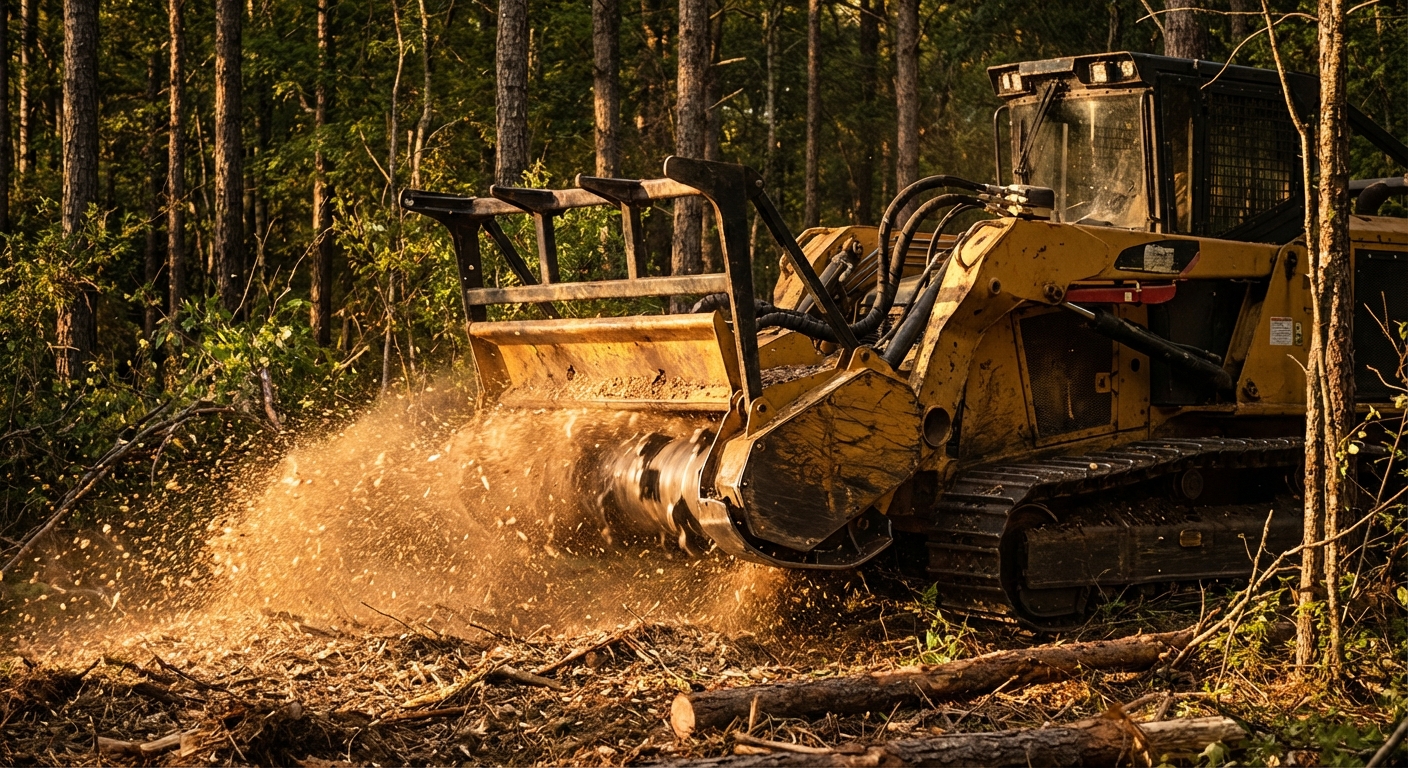
The Bull Hog is a drum-style forestry mulcher available for skid steers, excavators, and tractors. What set it apart early on was build quality — Fecon overbuilt these things compared to what the competition was offering in the early 2000s. Heavier drums, beefier bearings, and a tooth system designed for quick field changes.
The current lineup covers a wide range of carriers:
Skid Steer / CTL Mulchers: The BH74SS and BH85SS are the workhorse models. The BH85SS is the high-flow option for operators running machines with serious hydraulic output — think Bobcat T870s and ASV RT-135s. Standard flow machines run the BH74SS.
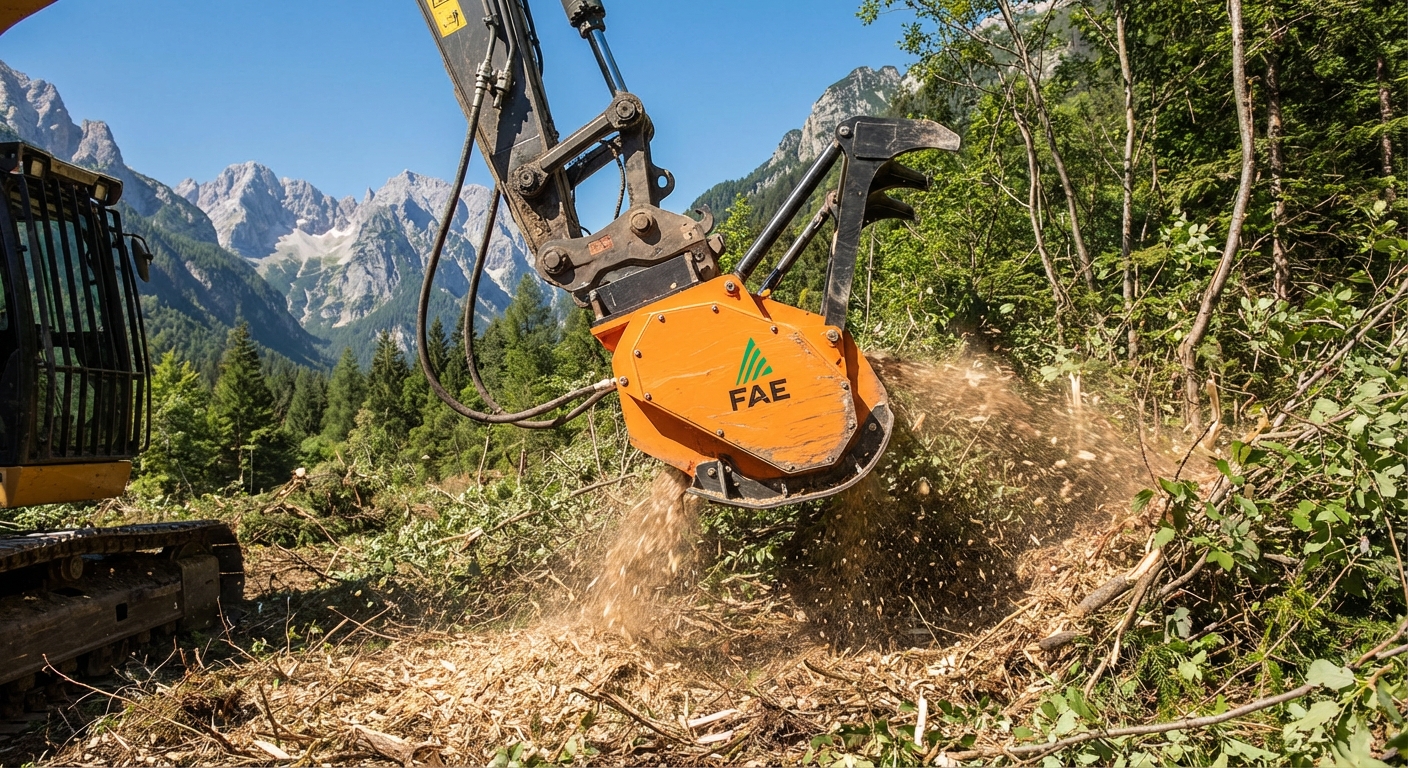
Excavator Mulchers: The FMX28 covers the mini excavator crowd (3-10 ton machines), while the BH40EXC-2 and BH80EXC-2 handle the bigger iron, from 15-ton to 45-ton carriers. These are the heads you see on dedicated mulching excavators running FAE or Fecon heads full time.
Tractor Mulchers: Fecon has PTO-driven Bull Hog options for agricultural tractors, which opens up the mulching market to landowners and farmers who already have a tractor sitting around.
The common thread across all of them: the rotor system. Fecon’s rotors are interchangeable and designed for different conditions — you can swap between configurations depending on whether you’re clearing hardwoods, brush, or processing slash. That flexibility is a big part of why operators stick with the brand.
The Acquisition Run
What makes Fecon interesting from a business perspective is how aggressively they’ve grown through acquisition over the past five years.
2021 — The Vermeer Deal: This was the big one. Fecon acquired Vermeer’s forestry mulcher product line, including the FT100 and FT300 forestry mulching tractors. Vermeer, a much larger company, decided to exit the forestry mulcher tractor business and handed it off to Fecon. Production moved to the Lebanon factory, and the two companies entered a global distribution agreement.
That deal was significant for a couple of reasons. First, it gave Fecon a dedicated forestry tractor line (the FTX series that exists today evolved from this). Second, it signaled that even a company Vermeer’s size recognized Fecon as the right home for that product category. If you’re going to hand off your mulching tractor business, you give it to the mulching company.
2023 — TREEfrogg: Fecon bought TREEfrogg LLC, a manufacturer of tree-trimming saw attachments for skid steers and compact track loaders. The products were rebranded as “Trim Ex” and integrated into Fecon’s attachment lineup. This pushed Fecon further into the vegetation management space beyond just mulching — now they had a precision cutting tool for operators doing roadside and utility right-of-way work.
2023 — Stumper Industries: The same year, Fecon acquired Stumper Industries, which makes stump grinder attachments for skid steers, excavators, and tractors. The “Stumper by Fecon” line joined the existing Stumpex stump grinders, giving Fecon the widest stump grinding lineup in the attachment market.
Three acquisitions in three years. Each one filled a gap in the product line. Each one turned a competitor into a Fecon brand.
Private Equity and What It Means
It’s worth noting who owns Fecon, because it matters for understanding where the company is headed.
LFM Capital, a Nashville-based private equity firm, acquired Fecon in 2018. Three years later, in 2021, they sold it to Windjammer Capital Investors. Private equity ownership in the equipment space can go either way — sometimes the new owners invest and grow the business, sometimes they strip it for parts.
In Fecon’s case, the PE ownership has coincided with the acquisition spree. The Vermeer deal, TREEfrogg, and Stumper all happened under PE ownership. They’ve also brought in experienced leadership, including a new CFO (Jeff Smith) with a background at companies like Gorilla Glue and Hill-Rom.
The risk with PE-backed equipment companies is always the same: at some point, the fund will want to exit. That could mean an IPO (unlikely for a company this size), a sale to a larger equipment manufacturer, or a sale to another PE firm. For dealers and operators, that means the ownership could change again in the next few years.
But for now, the money has been going into growth, not cost-cutting. That’s a good sign.
The Product Line Today
Beyond the Bull Hog and the acquisitions, Fecon has built out a surprisingly complete lineup for land clearing work:
FTX Forestry Tractors: The FTX150-2, FTX200, and FTX300 are purpose-built mulching tractors. These aren’t agricultural tractors with a mulcher bolted on — they’re ground-up forestry machines with integrated mulching heads, reinforced undercarriages, and operator protection systems. The FTX300 is the big dog, designed for large-scale commercial land clearing.
Stone Crushers: A newer addition that lets operators crush rock and stone on-site rather than hauling it off. Useful for road building and site prep.
Disc Mulchers: The FDX line uses a disc-style cutting system instead of a drum, which some operators prefer for certain conditions — particularly when processing larger diameter material.
Rotating Grapples and Tree Shears: Rounding out the lineup for operators who need to grab, cut, and process timber rather than just mulch it.
Fecon Green: Their own line of biodegradable lubricants — a small detail, but one that matters on job sites where environmental compliance is a concern.
The breadth of the lineup is what separates Fecon from the one-product attachment companies. You can run a full land clearing operation with nothing but Fecon iron from carrier to attachment.
Where Fecon Fits in the Market
The forestry mulching attachment market has gotten crowded. FAE, Diamond Mowers, Denis Cimaf, Bandit, Loftness — there’s no shortage of companies building mulcher heads. On the tractor side, Fecon competes with Prinoth, Bandit, and Rayco.
Fecon’s edge has always been the dealer network and the parts support. With over 7,500 mulcher heads sold over their history, they’ve built the installed base that makes dealers willing to stock teeth, rotors, and wear parts. When your Bull Hog needs teeth at 2 PM on a Thursday, your local dealer probably has them. That matters more than whatever the spec sheet says about cutting width.
The other advantage is the Ohio manufacturing. In a post-tariff, post-supply-chain-mess world, having your factory in Lebanon, Ohio means you’re not waiting on containers from overseas. Fecon can react to orders and warranty claims faster than companies shipping from Europe or Asia.
The Bottom Line
Fecon isn’t trying to be John Deere. They’re not trying to build every type of construction equipment. They picked a lane — forestry mulching and land management — and they’ve spent 30+ years going deeper into it.
The acquisition strategy has been smart: buy complementary products (stump grinders, tree saws) that your existing dealers can sell to your existing customers. The Vermeer tractor deal gave them instant credibility in the mulching tractor market. And keeping everything in Ohio gives them a manufacturing story that resonates with an operator base that cares about where their equipment comes from.
If you’re running a land clearing or forestry mulching operation, Fecon is one of those companies worth knowing — not because they have the flashiest marketing, but because they’ve been building the same type of equipment long enough to get it right.
For more company profiles and industry coverage, visit equipmentinsiderhq.com.