Loftness: How a Minnesota Farm Shop Became an Employee-Owned Powerhouse in Vegetation Management
From snow blowers on a Hector farm to Battle Ax mulchers shipped worldwide, Loftness has spent nearly 70 years proving that employee ownership and specialized focus create lasting equipment brands.
In the small town of Hector, Minnesota—population 1,100—sits a manufacturing operation that ships vegetation management equipment across the globe. Loftness Specialized Equipment has been building rugged machinery since 1956, and in 2020, the company took a bold step that secured its legacy: becoming 100% employee-owned through an ESOP.
For contractors running land clearing operations, utility right-of-way maintenance, or agricultural brush management, Loftness represents something increasingly rare in the equipment world—a manufacturer that remained laser-focused on specialized applications while staying independent in an era of consolidation.
FieldFix Editor’s Note
Equipment ownership models matter for fleet operators. Whether you’re running Loftness attachments or mixed-brand fleets, knowing your iron is performing pays dividends. FieldFix provides real-time fleet tracking and maintenance logging for land clearing contractors, helping you capture equipment costs and maximize utilization across any brand of machinery. Try it free for up to three machines.
From Snow Blowers to Land Clearing: The Loftness Origin Story
The company traces its roots to Dick Loftness, a Hector farmer who built a V-type snow blower for his own use in 1956. When neighbors saw the blower’s performance and asked Dick to build more, what started as a farm shop favor became a business.
“A few neighbors saw the blower and asked if Dick would make one for them,” the company’s history recounts. “Soon Dick had made several of the snow blowers, and Loftness Manufacturing was launched.”
The progression followed a familiar pattern for upper Midwest manufacturing: farmers needing equipment during winter downtime led to seasonal production runs. Sales grew slowly but steadily, and by 1970, Marv Nelson—a local farmer—began distributing the snow blowers to implement dealers throughout the upper Midwest.
Nelson eventually purchased the business in 1979, and what happened next shaped Loftness’s trajectory. With sales fluctuating wildly based on weather patterns, the company needed product diversification. They systematically added vegetation management equipment, crop shredders, grain bagging systems, and fertilizer spreaders.
The strategy worked so well that Loftness eventually discontinued the original snow blower line entirely—the product that launched the company became obsolete as newer product lines proved more successful.
The ESOP Transition: Securing Independence
After Marv Nelson’s passing, his wife Gloria and sons Dave and Steve continued growing the company. But rather than sell to a strategic buyer or private equity—the path many equipment manufacturers take—the Nelson family chose employee ownership.
On January 1, 2020, Loftness Specialized Equipment became an employee-owned company through an Employee Stock Ownership Plan (ESOP). The decision transferred ownership to the workers who had built Loftness’s reputation for quality.
For equipment buyers, the ESOP structure matters beyond corporate governance. Employee-owned companies demonstrate different incentive structures: workers with ownership stakes tend to prioritize product quality and customer relationships over short-term financial metrics that can drive acquisition-driven companies toward cost-cutting.
“The legacy built by Dick Loftness and the Nelson family lives on,” the company states, “with each employee taking a personal stake in the quality of Loftness products and the success of their customers.”
The Product Line: Vegetation Management Focus
Today, Loftness divides its product portfolio between two primary segments: vegetation management and agriculture. The vegetation management side represents the company’s highest-profile products for the construction and land clearing industries.
Battle Ax: Engineering Innovation
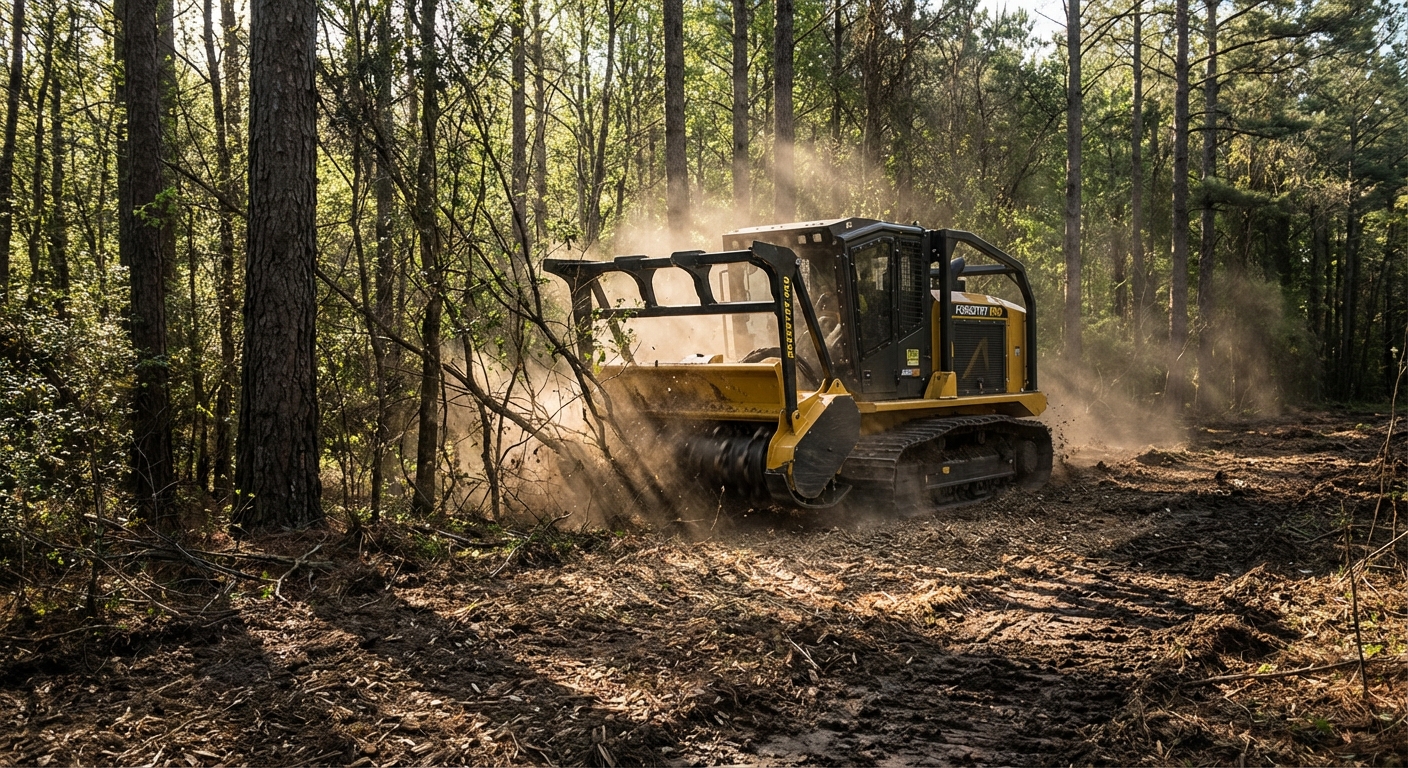
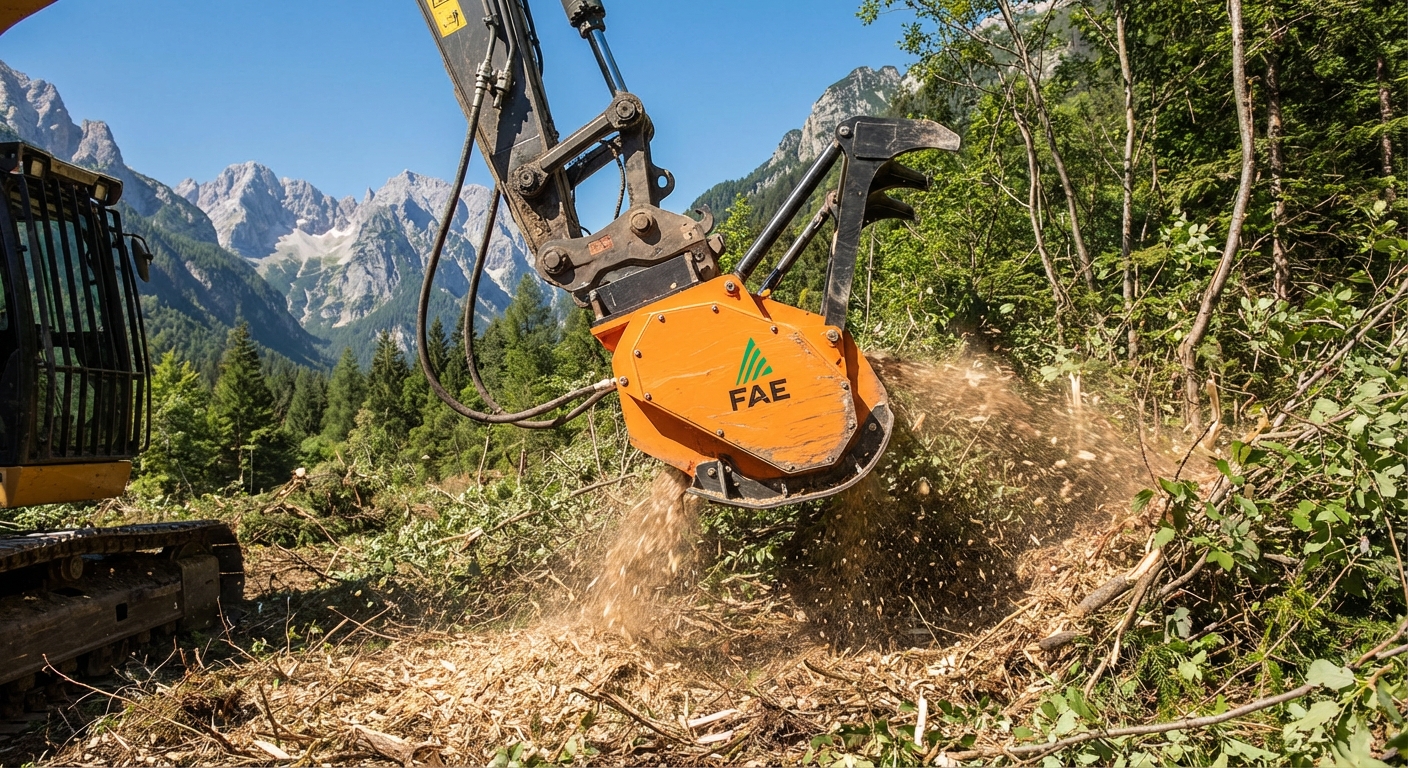
The Battle Ax mulcher represents Loftness’s flagship vegetation management product and showcases the company’s engineering approach. The distinguishing feature is the depth gauge system—bite-limiting devices similar to raker teeth on chainsaws.
The engineering problem the Battle Ax solves is common across mulching applications: aggressive cutting teeth can bite into material too deeply, slowing or stalling the rotor. Loftness’s depth gauges regulate material feed into the mulching head, resulting in more consistent operation and better particle sizes.
What separates the Battle Ax depth gauges from competing ring-style rotors, according to Loftness, is that they’re not overly limiting. Many bite-limiting designs struggle to pick material off the ground when using carbide cutting teeth. The Battle Ax maintains aggressive ground pickup while still regulating the bite, making it effective with either steel or carbide teeth configurations.
Timber Ax: Mid-Range Performance
The Timber Ax targets skid steer and compact track loader applications with hydraulic systems in the 40-85 horsepower range. The 17-inch diameter rotor spins at 1,700 RPM in upward rotation, using hardened steel knives in pocket-style mounts that allow field sharpening.
Available in 73-inch and 83-inch cutting widths, the Timber Ax weighs between 2,416 and 2,632 pounds depending on model. Features include spring-loaded belt drives, machined anti-wrap bearing protection, and adjustable skid shoes ranging from 1 to 3 inches.
The integrated PSI gauge positioned for cab visibility helps operators maintain optimal hydraulic load—a practical touch that reflects Loftness’s focus on operator productivity rather than just machine specifications.
Universal Compatibility
Across the product line, Loftness emphasizes universal skid steer mounting that accommodates any brand or model of skid steer or compact track loader. In an industry where proprietary attachments can lock buyers into specific carrier brands, universal compatibility provides fleet flexibility.
Agriculture: The Other Half
While vegetation management equipment draws attention from the land clearing industry, Loftness maintains significant agricultural product lines including crop shredders, grain bagging equipment, and fertilizer/lime spreaders.
This diversification proved strategically important. Just as early snow blower sales fluctuated with weather, agricultural equipment provides revenue stability when construction and land clearing markets cycle. The company’s roots in farming mean authentic expertise in agricultural applications—not merely rebadged industrial equipment.
Government and Commercial Purchasing
Loftness holds a GSA Schedule contract (GS-30F-0039Y), positioning the company for government and institutional buyers. For municipalities managing roadside vegetation, utility companies clearing rights-of-way, or federal land management agencies, the GSA contract simplifies procurement while providing pre-negotiated pricing.
The Better Business Bureau accreditation and active warranty registration systems signal the company’s focus on long-term customer relationships rather than transactional sales.
Market Position and Competition
Loftness competes in the vegetation management attachment space against manufacturers including Fecon, FAE, Seppi, Rayco, and Denis Cimaf. Each competitor brings different technological approaches and market positioning.
What distinguishes Loftness is the combination of specialized focus and employee ownership. Large OEM attachment divisions may have greater resources, but specialized manufacturers often demonstrate deeper application expertise and more responsive product development.
The ESOP structure provides insulation from acquisition pressures that have consolidated other equipment manufacturers. Private equity-backed competitors face pressure for returns within fund timelines; Loftness operates on its own timeline.
Manufacturing in Rural America
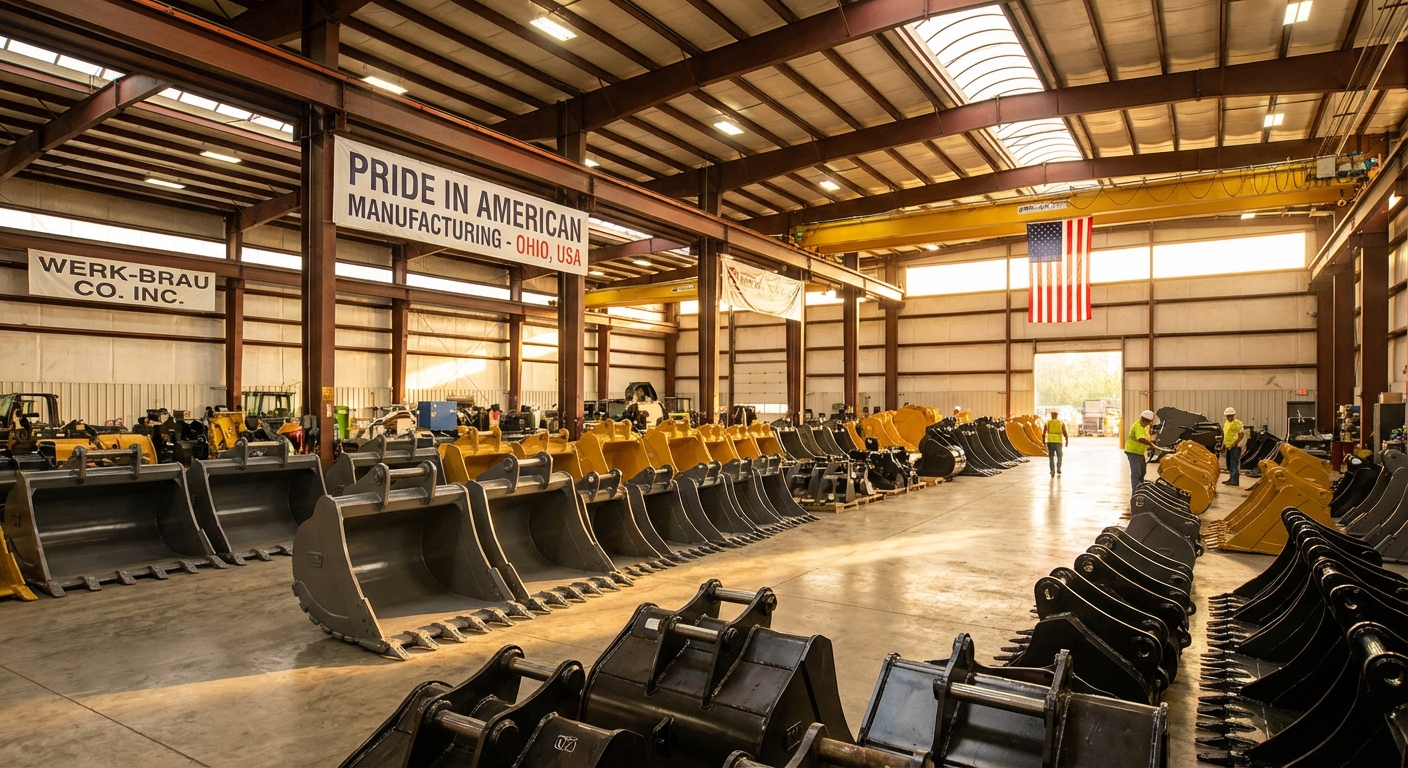
The company’s Hector, Minnesota headquarters represents small-town American manufacturing. The 650 Main Street South address sits in a farming community where workers likely know each other outside the factory walls.
For equipment buyers, manufacturing location matters beyond patriotism. Rural Midwest manufacturing operations typically offer lower overhead than coastal facilities, stable workforces with deep mechanical skills, and cultural alignment with the agricultural and contractor customers they serve.
The international phone number (320-848-6266) alongside toll-free US/Canada support (800-828-7624) indicates the global reach from this small-town operation.
Looking Forward
Nearly 70 years after Dick Loftness built that first snow blower for his neighbors, the company bearing his name continues evolving. The ESOP transition represents the most significant structural change in company history, but the fundamentals remain constant: specialized equipment, built to last, by people who stake their own careers on product quality.
For contractors evaluating vegetation management equipment, Loftness represents an alternative to both large OEM attachment programs and smaller regional manufacturers. The company brings scale for parts support and dealer networks, specialization for application expertise, and employee ownership for aligned incentives.
The equipment industry sees plenty of consolidation, brand acquisitions, and financial engineering. Loftness offers something different: a company that has chosen to remain independent, specialized, and owned by the people who build its products.
That’s a story worth watching—and equipment worth evaluating—for anyone in the vegetation management business.
Key Facts: Loftness at a Glance
- Founded: 1956 in Hector, Minnesota
- Founder: Dick Loftness
- Ownership: Employee-owned (ESOP since January 1, 2020)
- Headquarters: 650 Main Street South, Hector, MN 55342
- Primary Products: Vegetation management mulchers, agricultural equipment
- Key Product Lines: Battle Ax, Timber Ax mulchers; crop shredders; grain baggers; spreaders
- GSA Contract: GS-30F-0039Y
- Contact: 800-828-7624 (US/Canada), 320-848-6266 (International)
- Website: loftness.com
- Social: @LoftnessAg on X/Twitter
Equipment Insider covers the companies, people, and technology shaping the heavy equipment industry. For more company profiles and industry analysis, visit equipmentinsiderhq.com.