Inside the Mulcher: What Operators Really Think About Equipment, Demand, and the Bulldozer Myth
We talked to forestry mulching operators about equipment choices, market demand, and the misconceptions customers have about land clearing. Their answers might surprise you.
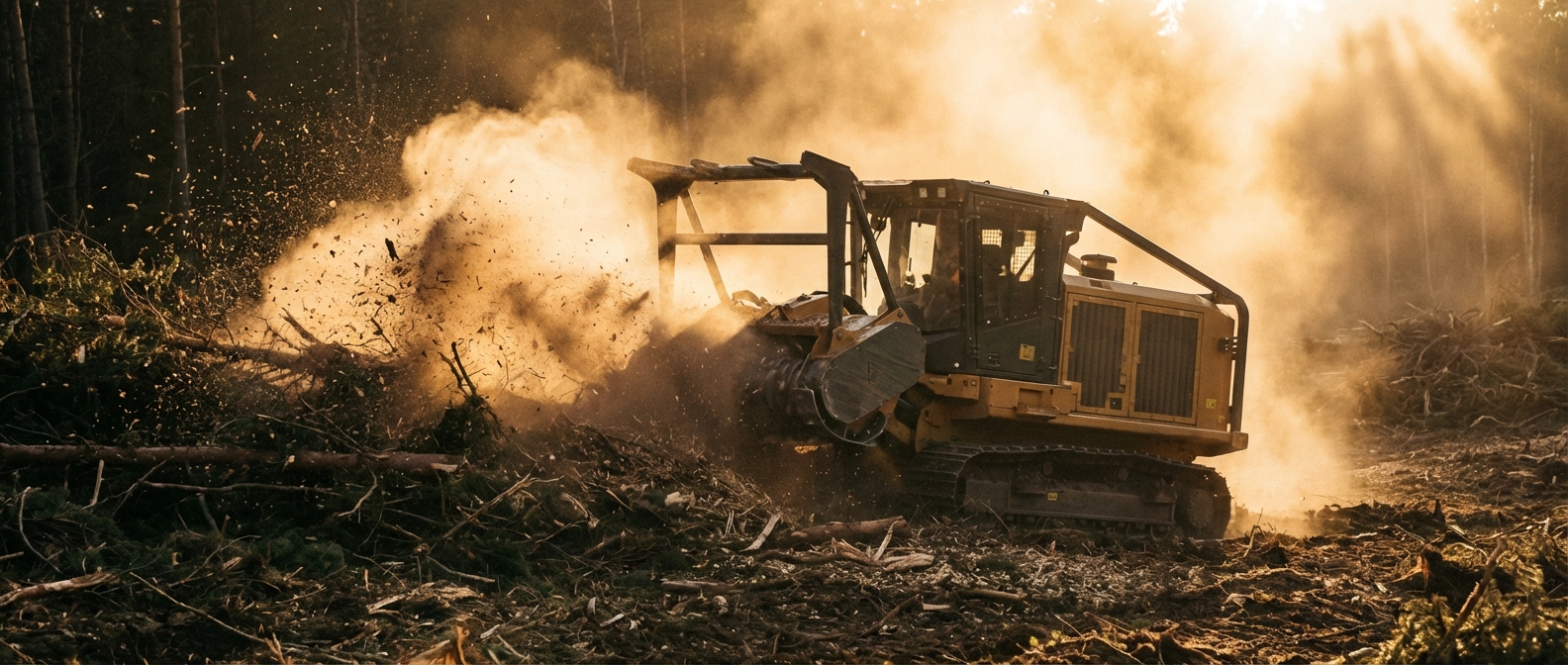
The forestry mulching industry has exploded over the past five years. What was once a niche service has become a go-to solution for land clearing across residential, commercial, and municipal projects. But behind every mulching operation is an operator making critical decisions about equipment, technique, and customer expectations.
We reached out to operators across the country to understand what’s really happening on the ground. Their insights reveal a segment that’s maturing rapidly—and manufacturers who may be missing some critical feedback.
Editor’s Note: Managing a fleet of mulching equipment? FieldFix helps operators track maintenance, log service hours, and calculate true cost-per-hour across mixed fleets. Free for up to 3 machines.
Equipment Selection: Why Operators Choose What They Choose
Ask five mulching contractors about their equipment lineup and you’ll get five different answers. But patterns emerge.
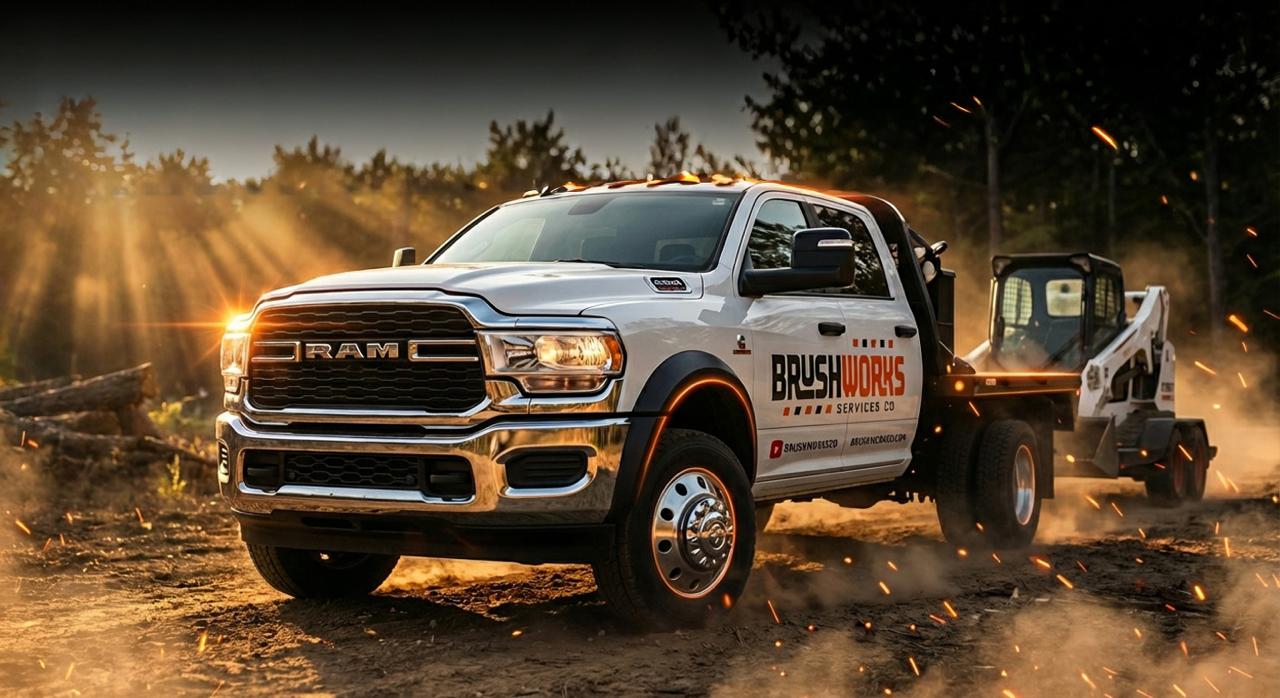
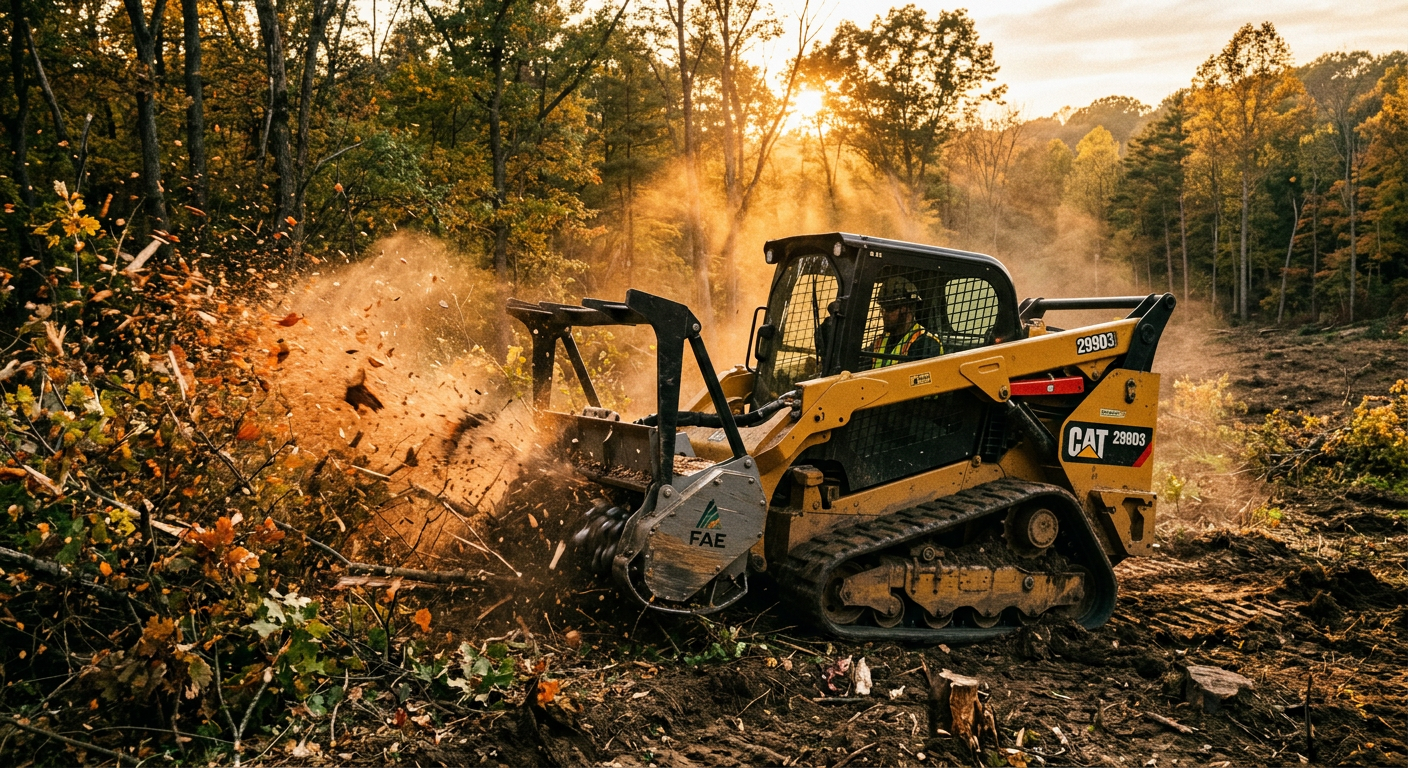
Alex Boyd, owner of Brushworks Services in Ohio, runs a mixed fleet: two Bobcat T770 compact track loaders, a Takeuchi TL12 V2, and an FAE RCU 55 remote-controlled mulcher.
“We started with Bobcats because of the ease of operation,” Boyd explains. “Anyone can get into these machines and get started. The Takeuchi we got for the extra power. The RCU we got for hillside clearing and for tight spaces.”
That progression—starting accessible, then adding power and specialty capability—mirrors what we hear from operators nationwide. The entry point matters, but so does the ability to take on jobs competitors can’t.
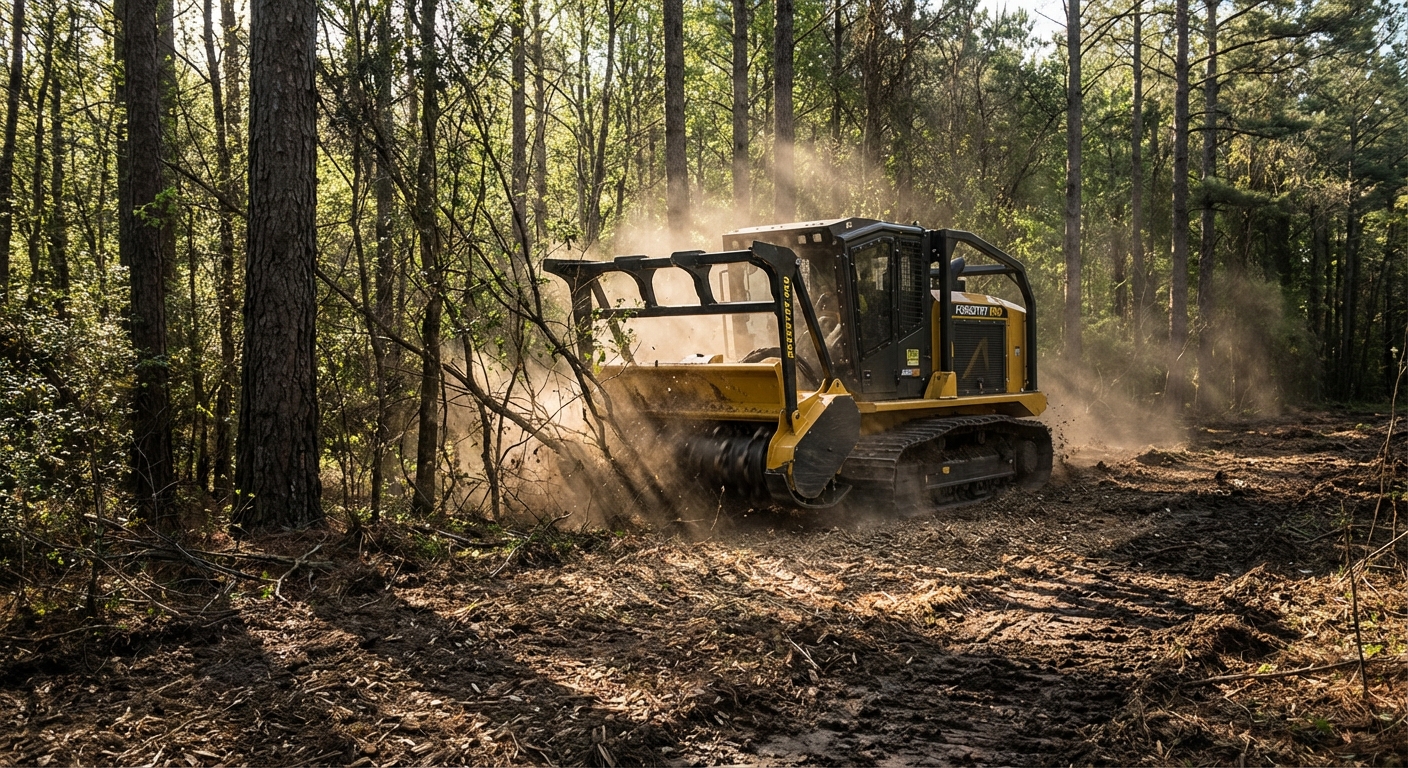
The remote-controlled FAE unit represents a growing trend: equipment that lets operators tackle terrain that would be too dangerous or impractical for traditional machines. Steep hillsides, unstable ground, areas near structures—the RCU opens doors that stay closed to conventional track loaders.
Demand Remains Strong Despite Competition
One question we asked every operator: How has demand changed?
The answer was nearly unanimous. Despite a surge of new entrants into the forestry mulching space, demand continues to outpace supply in most markets.
“Demand remains high even with increased competition,” Boyd confirms.
This tracks with broader industry data. Land development activity, utility right-of-way maintenance, and fire mitigation programs have all expanded. The customers are there. The question is whether operators can scale to meet them—and whether they want to.
The Bulldozer Myth
Perhaps the most interesting insight came from a simple question about customer misconceptions.
“People typically think that because mulch is left behind it doesn’t go away,” Boyd says. “In reality, it only takes about 12 to 18 months to decay, which ultimately leaves a much better finish.”
Then came the kicker: “Bulldozing seems cleaner but it’s not! It leaves big holes where the trees used to be.”
This is the education gap that operators face daily. Customers see a bulldozed lot—bare dirt, no debris—and assume that’s the superior result. They don’t see the soil disruption, the erosion risk, the years it takes for that ground to stabilize.
Mulching, by contrast, leaves organic material that breaks down naturally, enriches the soil, and prevents erosion. The “messier” result is actually the more sustainable one.
Operators who can articulate this difference win jobs. Those who can’t lose to the bulldozer’s visual appeal.
What Manufacturers Are Missing
When we asked operators what they’d like to see from equipment manufacturers, the responses were pointed.
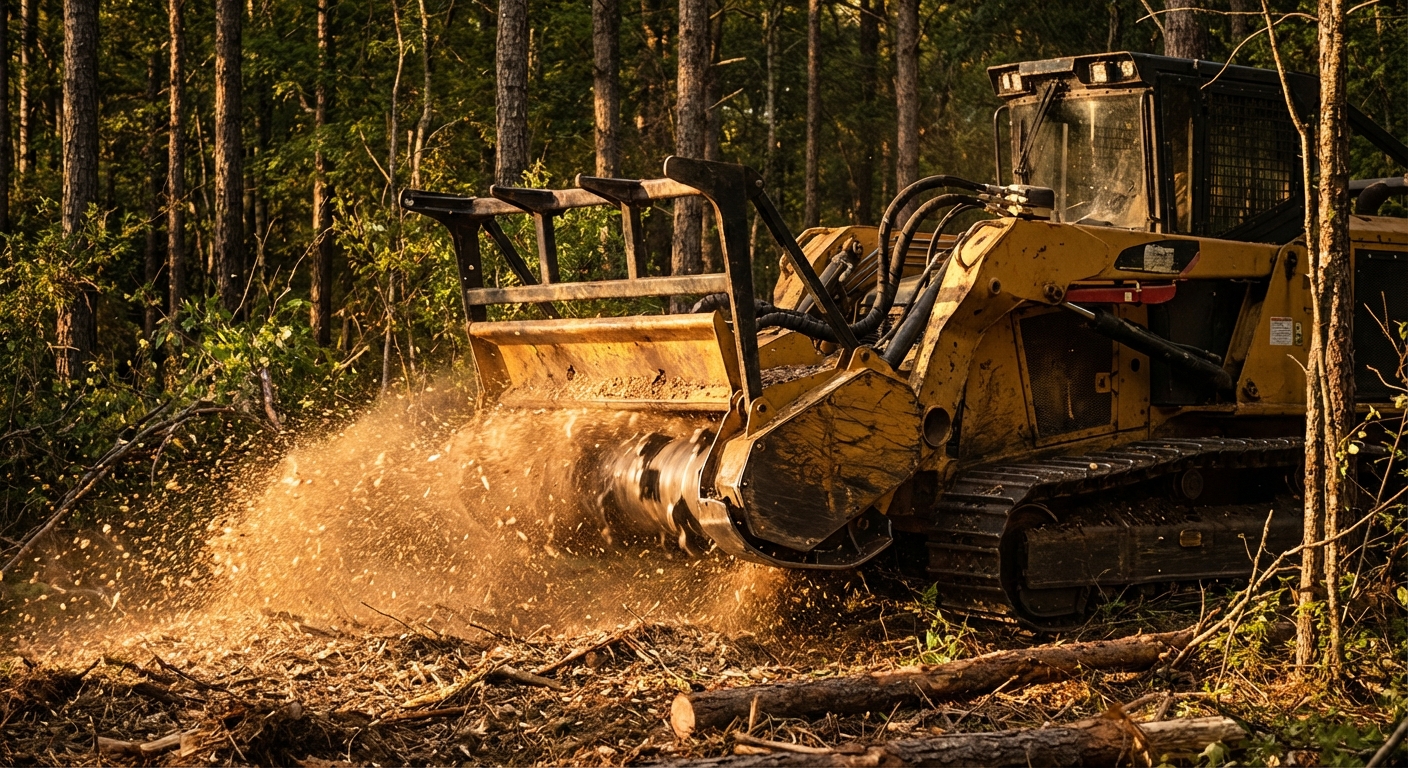
“We’d love to see a priority placed on protecting the hydraulic couplings from debris,” Boyd says. “We’d also like to see better debris management to prevent machines from catching leftover debris on fire if it was to get in the engine bay.”
That fire risk isn’t theoretical. Mulching generates enormous amounts of fine organic material. Some of it inevitably finds its way into engine compartments. On a hot day, with dry conditions, that’s a fire waiting to happen.
It’s the kind of real-world feedback that doesn’t always make it back to engineering teams. Operators adapt—they blow out engine bays religiously, modify guards, accept the risk. But a manufacturer that solved this problem elegantly would earn serious loyalty.
The hydraulic coupling issue is similarly practical. In heavy debris environments, exposed couplings take a beating. Downtime for coupling repairs or replacements is downtime that costs money.
The Bigger Picture
Forestry mulching has grown from a regional specialty into a national industry segment. The operators driving that growth are pragmatic, equipment-savvy, and increasingly sophisticated about their business decisions.
They’re choosing mixed fleets that balance accessibility with capability. They’re educating customers about the real advantages of mulching over traditional clearing. And they’re quietly asking manufacturers to solve problems that affect their daily operations.
The segment is healthy. The demand is there. The question now is whether the equipment and support infrastructure can keep pace with operators who are ready to scale.
Have insights from your own mulching operation? We want to hear from you. Contact us at editor@equipmentinsiderhq.com.