HD Construction Equipment Emerges: Inside the Hyundai-Infracore Merger Reshaping the Industry
The January 2026 merger of HD Hyundai Construction Equipment and HD Hyundai Infracore creates a new global powerhouse targeting $11 billion in sales by 2030.
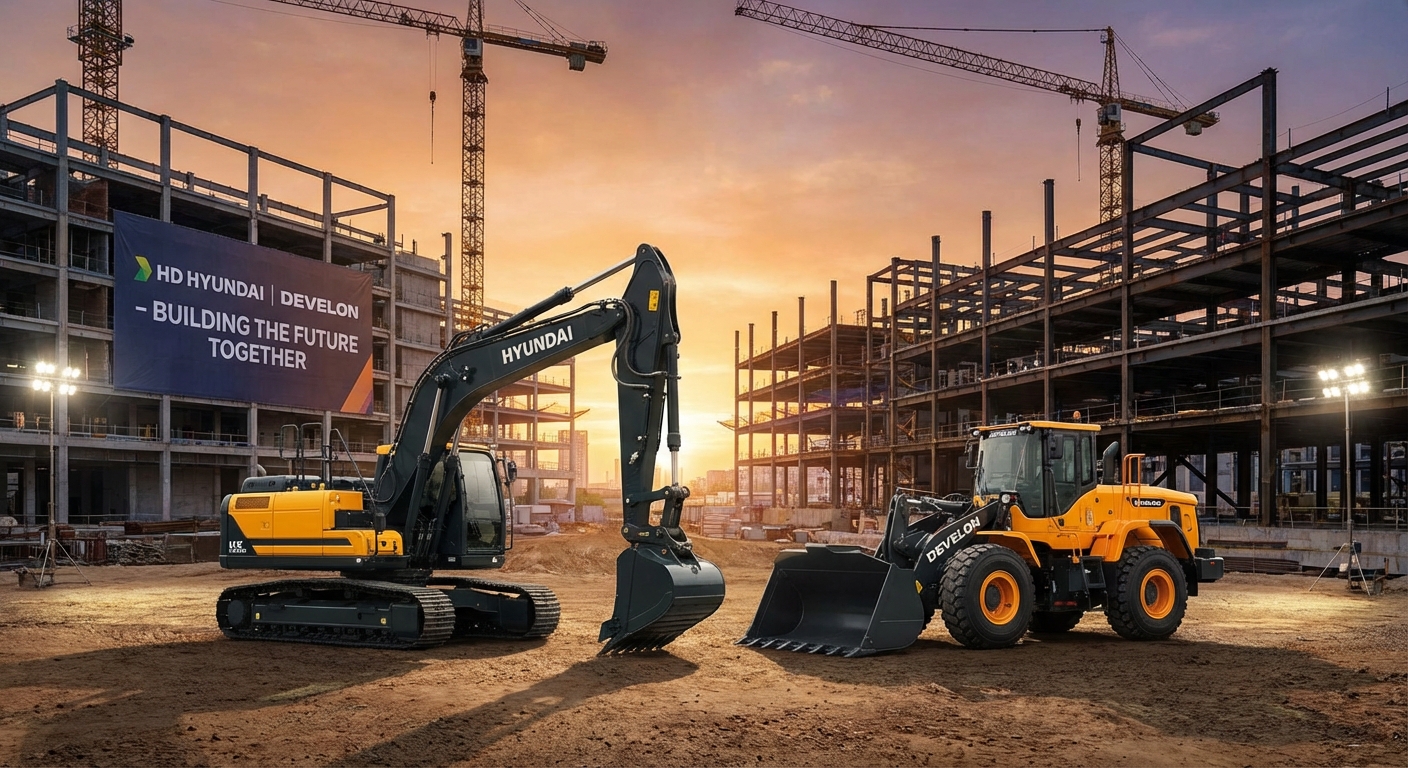
The construction equipment industry witnessed a seismic shift on January 1, 2026, when HD Hyundai Construction Equipment and HD Hyundai Infracore officially completed their merger to form HD Construction Equipment. This consolidation creates one of the world’s largest construction equipment manufacturers, with ambitious plans to reach 14.8 trillion won (approximately $11 billion USD) in annual sales by 2030.
The merger represents a strategic response to intensifying global competition and economic uncertainty, combining two major players under a single corporate umbrella while maintaining their distinct brand identities in the marketplace.
Editor’s Note: The Fleet Management Challenge
Managing mixed fleets that span multiple equipment brands has never been more complex. As consolidations like this reshape the industry, operators need unified systems to track maintenance, costs, and performance across diverse machine types. FieldFix provides exactly that—AI-powered fleet management that works with any brand, giving you a single source of truth for your entire operation. Whether you’re running Hyundai excavators alongside Develon wheel loaders, FieldFix calculates your true cost-per-hour and keeps maintenance schedules organized.
The Birth of HD Construction Equipment
Moon Jae-young has been appointed as the first president of the newly formed HD Construction Equipment, tasked with guiding the combined entity through its critical early stages. The merger received overwhelming shareholder approval during extraordinary general meetings held in September 2025, with HD Hyundai Construction Equipment shareholders voting 99.91% in favor and HD Hyundai Infracore shareholders approving at 99.24%.
The formation of HD Construction Equipment brings together decades of engineering expertise and manufacturing capability. The company now operates production facilities across South Korea—including major plants in Ulsan, Incheon, and Gunsan—as well as international manufacturing operations in India, China, Brazil, and Norway.
This global manufacturing footprint positions HD Construction Equipment to serve markets across multiple continents while maintaining competitive logistics and regional responsiveness.
Dual-Brand Strategy: Hyundai and Develon
Perhaps the most notable aspect of this merger is the decision to maintain a dual-brand strategy. HD Construction Equipment will continue operating both the HYUNDAI and DEVELON brands, each with its own market positioning and product focus.
For North American customers, this means business largely continues as usual. Both brands will maintain their independent dealer networks, parts supply chains, and service structures. Equipment owners won’t need to change their service relationships or parts ordering processes.
The Develon brand, which emerged from the former Doosan Infracore lineage, has built a strong reputation in the excavator and wheel loader segments. Meanwhile, Hyundai construction equipment has established itself across a broad range of earthmoving and material handling categories.
By preserving both brand identities, HD Construction Equipment aims to capture market share across different customer segments while leveraging shared engineering resources and economies of scale in manufacturing.
Strategic Rationale: Why Now?
The construction equipment industry has entered a period of rapid transformation. Electric and hybrid powertrains are gaining market share, autonomous and semi-autonomous operation is moving from concept to reality, and digital integration has become a baseline expectation rather than a premium feature.
This merger allows HD Construction Equipment to consolidate research and development investments in these critical areas. Rather than duplicating efforts across two separate companies, engineering teams can now collaborate on shared platforms while tailoring applications for each brand’s specific market positioning.
Cost competitiveness has also become increasingly important as Chinese manufacturers expand their global presence. By combining manufacturing operations and supply chains, HD Construction Equipment can achieve economies of scale that would be difficult for either predecessor company to accomplish independently.
The timing also reflects broader trends in the construction equipment industry, where consolidation has become a recurring theme. Dealers and rental companies increasingly prefer working with manufacturers that can offer comprehensive product lines and strong aftermarket support—capabilities that scale with company size.
Product Development and Innovation
HD Construction Equipment isn’t resting on its laurels following the merger. The company has announced plans to debut its next-generation excavator model in North America during the first half of 2026. This new machine features an advanced full electro-hydraulic (FEH) system designed to deliver improved fuel efficiency and productivity.
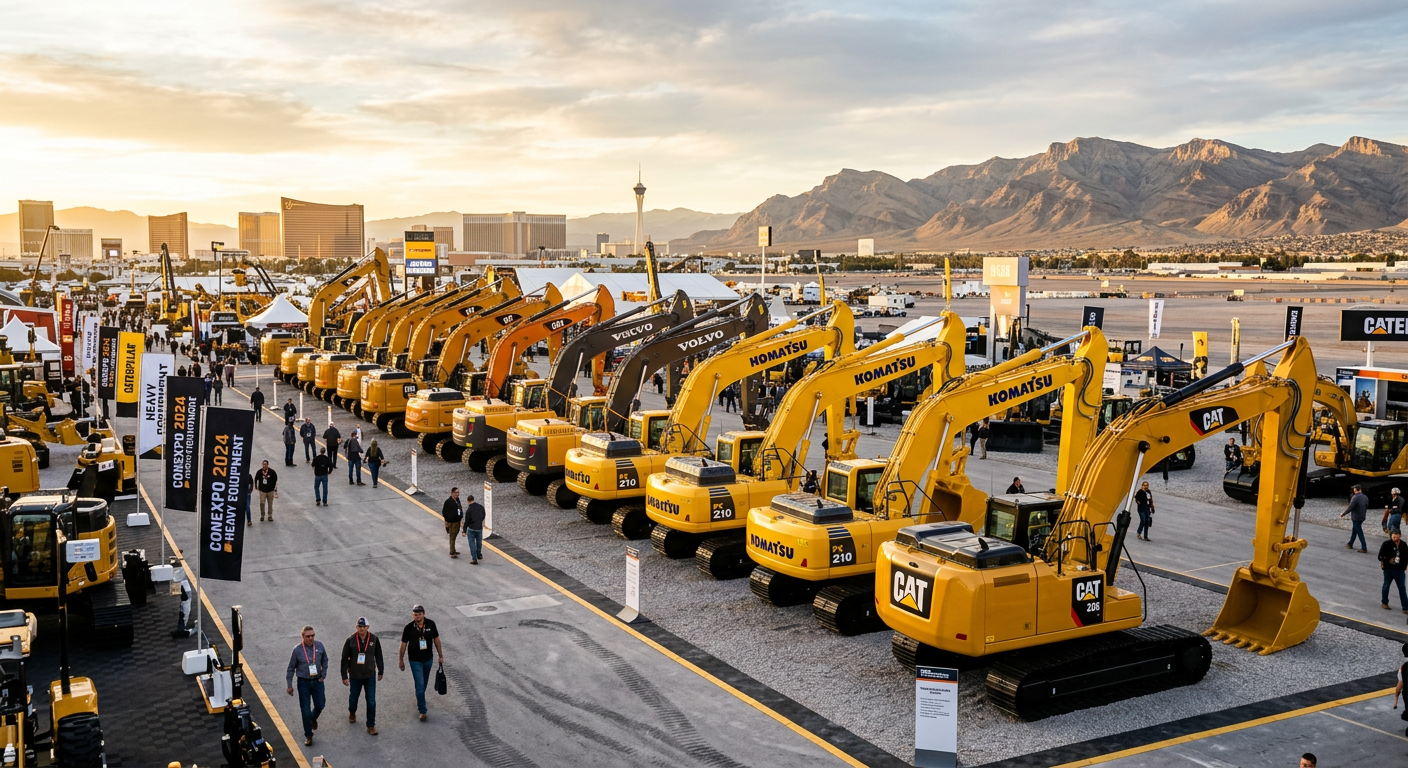
The company is also making a significant showing at CONEXPO-CON/AGG 2026 in Las Vegas, where it’s showcasing its Next Generation HX crawler excavators. These machines represent the first major product development efforts to benefit from the combined engineering resources of the merged company.
Industry observers are watching closely to see how HD Construction Equipment balances innovation investments between its two brands. The challenge lies in differentiating Hyundai and Develon products enough to justify separate brand identities while still achieving the cost benefits of shared development.
Market Positioning and Sales Targets
The merger creates a company with combined annual sales of approximately 8 trillion won based on pre-merger figures. HD Construction Equipment has set an ambitious target of reaching 14.8 trillion won (roughly $11 billion USD) by 2030—representing growth of approximately 85% over five years.
Achieving this target will require HD Construction Equipment to gain market share in key regions while expanding its product offerings. The company has identified three core focus areas: the construction equipment sector itself, the engine business, and aftermarket services.
The aftermarket emphasis is particularly notable. Used equipment sales, parts, and service represent high-margin revenue streams that provide stability during cyclical downturns in new equipment demand. By investing in aftermarket capabilities, HD Construction Equipment can build deeper customer relationships while improving its financial resilience.
Corporate Structure and Governance
HD Hyundai XiteSolution, the intermediate holding company for HD Hyundai’s construction machinery sector, retains a 35.8% stake in HD Construction Equipment following the merger. This ownership structure maintains strategic alignment between HD Construction Equipment and its parent organization while allowing operational independence.
The merger ratio of 0.1621707 common shares of HD Hyundai Construction Equipment for each common share of HD Hyundai Infracore reflected the relative valuations of the two companies at the time of the merger agreement. This ratio meant that shareholders who held six shares of HD Hyundai Infracore received one share of the combined HD Construction Equipment.
The governance structure emphasizes operational efficiency and rapid decision-making—qualities that management has identified as essential for competing in the fast-moving equipment market.
Impact on North American Customers
For equipment owners and fleet managers in North America, the immediate impact of this merger should be minimal. Both Hyundai and Develon dealer networks will continue operating independently, and existing warranty and service agreements remain in effect.
Over time, customers may benefit from improved parts availability as the combined company optimizes its supply chain. Shared technology development could also accelerate the introduction of new features across both product lines.
Rental companies managing mixed fleets may find opportunities to consolidate relationships while maintaining brand diversity. The dual-brand strategy means customers can choose between Hyundai and Develon based on specific application needs or pricing considerations while dealing with a single ultimate manufacturer.
However, some industry observers have raised questions about long-term brand differentiation. If Hyundai and Develon products become too similar, the justification for maintaining separate brands may diminish—potentially leading to brand rationalization in future years.
Industry Consolidation Context
The HD Construction Equipment merger fits within a broader pattern of consolidation in the construction equipment industry. Major manufacturers have pursued growth through acquisition and merger throughout the 2020s, seeking scale advantages in an increasingly competitive global market.
Chinese manufacturers like SANY, XCMG, and Zoomlion have emerged as formidable competitors, leveraging domestic market scale to fund international expansion. Traditional Western and Japanese manufacturers have responded by consolidating to achieve comparable economies of scale.
This consolidation trend creates both opportunities and challenges for equipment dealers. Larger manufacturers can offer more comprehensive product lines and stronger financial backing, but consolidation also reduces the number of available franchise options and may shift negotiating leverage toward manufacturers.
For end users, consolidation generally means fewer brand choices but potentially stronger support infrastructure for the brands that remain. The key question is whether consolidated manufacturers maintain competitive pressure on pricing and innovation, or whether reduced competition leads to complacency.
Looking Ahead
HD Construction Equipment enters 2026 with significant momentum. The merger positions the company to compete more effectively against global rivals while maintaining strong brand recognition through its dual-brand strategy.
The construction equipment market itself is poised for continued growth, with infrastructure investments, urbanization trends, and equipment replacement cycles all supporting demand. Electric and hybrid equipment represents a particularly important growth segment, and HD Construction Equipment has indicated plans to expand its electrified product offerings.
For the broader industry, this merger signals that consolidation remains an active force shaping the competitive landscape. Equipment buyers, dealers, and service providers should expect continued evolution in manufacturer relationships and market structure.
The ultimate success of HD Construction Equipment will be measured by its ability to achieve the aggressive growth targets management has set, while delivering products and services that meet customer needs. The coming years will reveal whether the strategic logic behind this merger translates into marketplace success.
HD Construction Equipment’s merger represents the latest chapter in ongoing industry consolidation. Equipment Insider will continue tracking developments as the combined company executes its growth strategy.