The Great Equipment Dealer Consolidation Is Here. Here's What It Means for You.
Private equity is buying up equipment dealers and rental houses at a record pace. The industry is reorganizing around scale, and contractors are about to feel the effects.
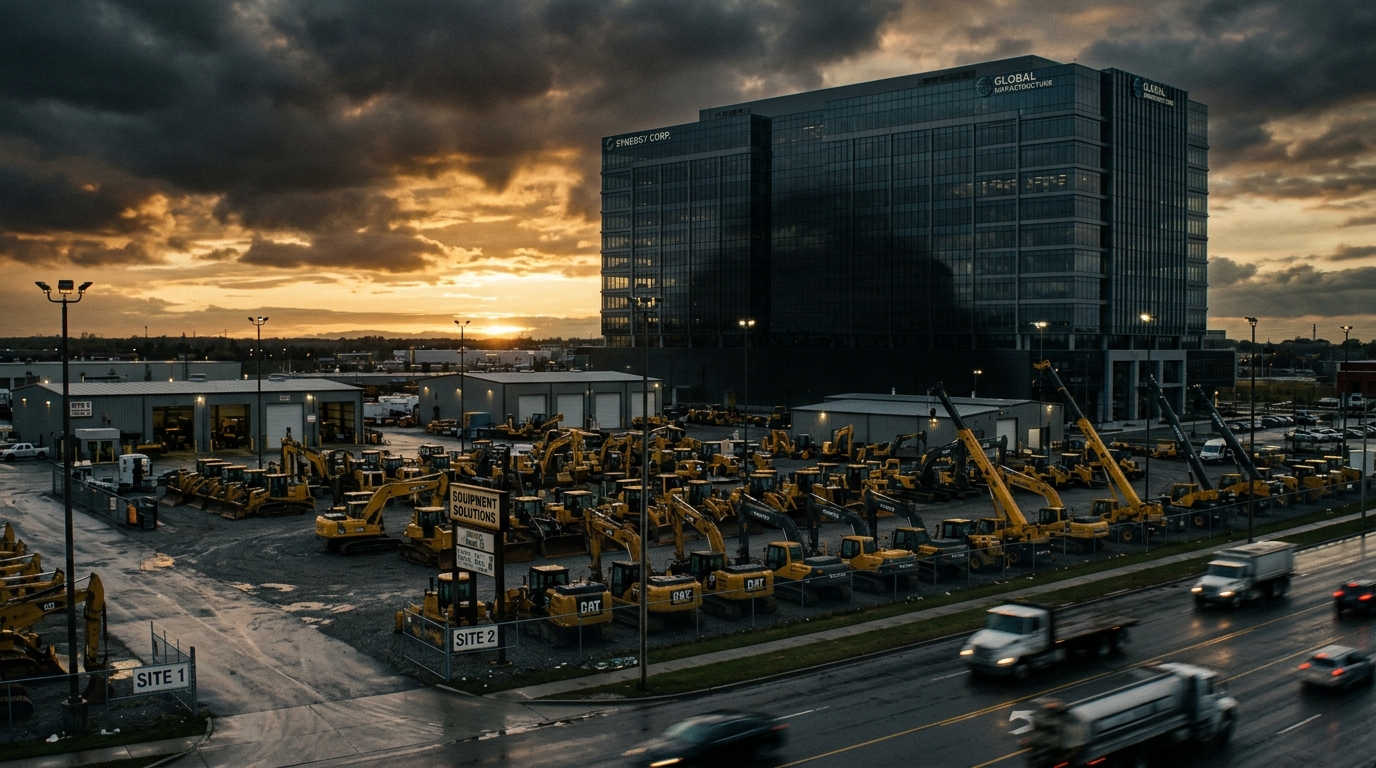
If your local equipment dealer got bought out in the last twelve months, you’re not imagining things. It’s happening everywhere, and it’s accelerating.
The heavy equipment industry is in the middle of a consolidation wave that’s reshaping who sells, rents, and services the machines contractors depend on. Private equity firms, major rental companies, and OEM-backed dealer groups are acquiring smaller operations at a pace that hasn’t been seen since the post-recession land grab of 2010-2012. Except this time, the money is bigger, the strategy is more deliberate, and the implications for contractors are more significant.
Here’s what’s driving it, who’s making moves, and what it means for the person writing the check for their next machine.
FieldFix Editor’s Note: Dealing with a new dealer or service provider after an acquisition? Keep your maintenance records, cost-per-hour data, and service history in one place so you’re never dependent on someone else’s system. FieldFix gives you that independence across every machine in your fleet.
The Numbers Tell the Story
The global construction equipment rental market hit $151.6 billion in 2025 and is projected to reach $159.4 billion in 2026. That growth isn’t coming from organic expansion alone. A massive share of it is being driven by acquisitions.
The headline deal of 2025 was Herc Holdings’ $5.3 billion acquisition of H&E Equipment Services. That single transaction combined two of the largest rental providers in North America and fundamentally changed the competitive landscape in the southern and central United States. If you were renting from H&E in Texas, Louisiana, or the Carolinas, you’re now a Herc customer whether you asked to be or not.
United Rentals, already the largest equipment rental company in the world, has completed 27 acquisitions through early 2026. Sunbelt Rentals, which recently completed its transition to a U.S. primary listing on the NYSE under the ticker SUNB, has 40 acquisitions on its resume with an average deal size of $193 million. These aren’t small bolt-on deals. These are strategic plays to lock up market share in regions where demand is surging.
And behind the big names, private equity is doing the same thing on a smaller but no less significant scale.
The Private Equity Playbook
Here’s how the PE consolidation machine works in equipment, and it’s happening across dealers, rental houses, and service providers simultaneously.
A private equity firm identifies a fragmented market — say, independent equipment dealers in the Midwest or specialty rental companies in the Southeast. They acquire a platform company, typically one with $50-100 million in revenue, strong management, and a good reputation. Then they start bolting on smaller competitors. Two here, three there. Within 18-24 months, they’ve assembled a regional powerhouse that has pricing leverage, operational efficiency, and a story to tell the next buyer.
The industry has seen this play out with real money behind it. Wildcat Equity’s investment in Groff Tractor & Equipment, a major John Deere dealer, is a textbook example of PE entering the dealer channel. Brightstar Capital Partners’ acquisition of WW Williams, a major provider of equipment distribution, repair, and power solutions, is another. In both cases, the PE firm isn’t just writing a check and walking away. They’re positioning these companies for rapid expansion through follow-on acquisitions.
The math makes sense for them. Independent equipment dealers and rental companies typically trade at lower valuation multiples than larger, scaled competitors. Buy five independents, combine them under one back office, standardize the operations, and the combined entity is worth more than the sum of its parts. Wall Street calls it multiple arbitrage. On the ground, it means your local dealer might have a new owner, a new name, and a new approach to doing business.
Why Now?
Three forces are converging to make 2026 the peak year for equipment industry consolidation.
Rising R&D costs. Electrification, autonomy, telematics, and AI-assisted operations aren’t cheap to develop. OEMs are pouring billions into next-generation technology — Caterpillar and NVIDIA’s AI partnership, Komatsu’s electric drive mining excavators, Deere’s autonomous operations push. That R&D spending flows downhill to dealers and service providers who need to invest in training, tooling, and infrastructure to support increasingly complex machines. Smaller dealers can’t absorb those costs. Larger groups can.
Infrastructure spending. The federal infrastructure bill, data center construction, and grid modernization are creating sustained demand in specific regions. Companies that have scale in those markets win disproportionately. If you’re a national rental company and you can shift 200 machines to a data center project in Virginia next month, you get the contract. If you’re a three-location rental house, you’re watching from the sidelines.
Interest rate environment. Despite elevated rates, PE firms are sitting on record levels of dry powder — committed capital that needs to be deployed. Construction equipment dealers and rental companies are attractive targets because they throw off consistent cash flow, have hard asset backing, and operate in a market with secular growth tailwinds. When a PE fund needs to put $500 million to work, a handful of equipment dealers looks a lot better than a tech startup burning cash.
What Contractors Actually Feel
This is where the analysis hits the jobsite. Here’s what changes when your dealer or rental house gets rolled up into a larger operation.
Service quality is the first thing at risk. The number one complaint from contractors after a dealer acquisition is that the personal relationship disappears. You used to call Mike at the parts counter and he knew your fleet by heart. Now you’re calling a regional service center and explaining your machine’s serial number to someone who’s reading from a script. That’s not inevitable, but it’s common enough that contractors need to be prepared for it.
Pricing gets more standardized — and that cuts both ways. Large dealer groups and rental companies use centralized pricing models. If you were getting a handshake deal on your rental rates from an independent operator, those days might be numbered. On the flip side, larger organizations sometimes offer better financing terms, extended warranties, and bundled service packages that independents couldn’t afford to provide.
Parts availability can actually improve. One legitimate advantage of scale is supply chain leverage. A 50-location dealer group carries more parts inventory and has more bargaining power with OEMs than a two-location independent. If your machine goes down and needs a hydraulic pump, the consolidated dealer might have it in stock at a regional warehouse. The independent might have been waiting on a two-week backorder.
Technology adoption accelerates. Larger dealer groups are investing in customer-facing technology — online parts ordering, telematics integration, fleet management portals, predictive maintenance alerts. These are real tools that can save contractors money. The question is whether the technology replaces the relationship or enhances it.
The Mid-Size OEM Problem
It’s not just dealers feeling the squeeze. Mid-sized OEMs are among the most exposed players in this consolidation cycle.
Consider the position of a manufacturer with $2-5 billion in annual revenue. They’re large enough to have significant R&D obligations — they need to develop electric powertrains, autonomous capabilities, and connected machine platforms to stay competitive. But they’re not large enough to spread those costs across the kind of unit volume that Caterpillar, Deere, or Komatsu enjoy.
That creates a strategic dilemma. Some will merge with competitors to achieve scale. Others will become acquisition targets for larger OEMs looking to fill gaps in their product lines or geographic coverage. The CNH Industrial restructuring, which has been making headlines throughout early 2026, is a preview of how this plays out at the corporate level — a major manufacturer evaluating partnerships and divestitures to optimize its construction equipment business.
For contractors, the practical impact of OEM consolidation is that product lines may shift. The brand you’ve been loyal to for 15 years might get absorbed into a larger family. Your dealer might start pushing machines from a parent company you’ve never considered. The models you love might get discontinued, redesigned, or repositioned in the lineup.
How to Protect Yourself
If you’re a contractor watching this unfold, here’s the practical advice.
Document everything about your fleet. Maintenance records, cost-per-hour data, warranty claims, dealer interactions. If your dealer gets acquired and the new owner doesn’t have your service history, you’re starting from scratch. Own your data. Don’t depend on anyone else’s system to store it.
Build relationships at multiple dealers. The days of single-dealer loyalty may be numbered. If your primary dealer gets bought and the service quality drops, you need a backup plan. That means having accounts set up, credit established, and relationships built at competing dealerships before you need them.
Watch your rental rates. If your rental provider gets acquired, audit your rates within 90 days. Consolidated companies often implement standardized pricing, and your old rates might not survive the transition. If they go up, negotiate. If the new owner won’t negotiate, shop around.
Pay attention to who’s buying. Not all acquisitions are equal. A PE firm rolling up dealers for financial engineering is different from an OEM acquiring a dealer to strengthen its direct-to-customer channel. The motivations matter because they determine whether service gets better or worse after the deal closes.
Get comfortable with technology. The companies that are winning the consolidation game are the ones investing in digital tools. Telematics, fleet management software, predictive maintenance — these are becoming standard expectations. Contractors who adopt them have more leverage with dealers because they can quantify exactly what they need and what they’re spending. Contractors who don’t are more vulnerable to being sold services they don’t need.
Where This Goes
The consolidation wave isn’t slowing down. If anything, it’s likely to intensify through the back half of 2026 and into 2027. The structural forces driving it — technology costs, infrastructure spending, PE capital deployment — are all accelerating.
The end state is an industry that looks more like automotive than the fragmented, relationship-driven market that many contractors grew up with. A handful of mega-dealers and rental companies will dominate, with regional and independent operators surviving in niches where personal service and local knowledge still command a premium.
That’s not necessarily bad. Scale can bring efficiency, better technology, and more consistent service. But it requires contractors to be smarter about managing their dealer relationships, owning their data, and understanding that the person on the other side of the counter might have different incentives than the guy who owned the place five years ago.
The machines haven’t changed. The industry around them is changing fast. Pay attention.