The Great Dealer Consolidation: How International Capital Is Reshaping Midwest Equipment Distribution
Swedish conglomerate Ferronordic's $17M Iowa acquisition signals accelerating consolidation in construction equipment distribution as regional dealers face a choice: grow or get acquired.
The construction equipment dealer network that took decades to build across the American heartland is being remade in a matter of years. International capital, succession challenges, and OEM pressure are accelerating a consolidation wave that’s fundamentally changing how contractors buy and service their machines.
The latest evidence? Swedish-listed Ferronordic’s quiet expansion into Iowa through its Kentucky-based subsidiary, Rudd Equipment Company—a $17 million asset purchase that closed January 30, 2026, and positions the 74-year-old dealership for what its parent company calls “the first step in expanding our U.S. business.”
Editor’s Note: Fleet management is more critical than ever during times of dealer transition. FieldFix helps equipment owners maintain detailed service histories, track costs per hour, and keep their machines running regardless of which dealer network they’re working with. Your maintenance data travels with you—not your dealer.
The Iowa Deal: A Template for What’s Coming
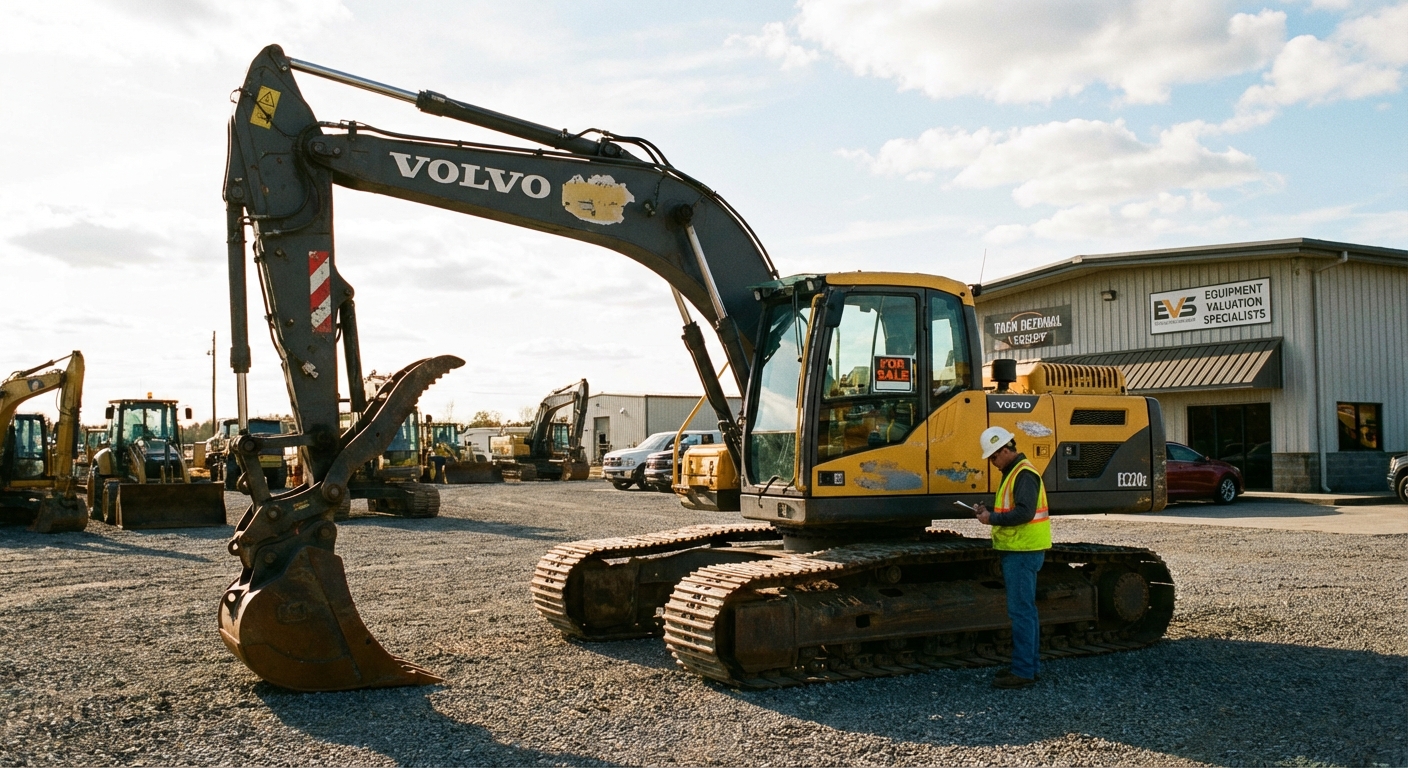
When Housby Heavy Equipment transferred its Volvo Construction Equipment inventory at three Iowa locations to Rudd Equipment, it marked the end of an eight-year chapter. Housby had taken on the Volvo CE line in 2018, building a presence in a territory where 400 to 500 general purpose excavators, wheel loaders, and articulated haulers change hands annually.
The numbers tell a story of modest profitability squeezed by scale challenges. Housby’s construction equipment division generated $26.6 million in revenue for 2024 with an estimated EBIT of $1.3 million—a margin of roughly 5% that included allocated corporate overhead costs.
For Rudd, backed by Ferronordic’s balance sheet, the calculation is different. The Swedish parent company explicitly stated it expects “profitability in the acquired business to reach the same level as Rudd’s current branches” over time. That optimism isn’t unfounded—larger dealer networks typically achieve better margins through purchasing power, shared overhead, and the ability to move inventory and technicians across a broader geography.
The transaction structure itself reveals how these deals get done. Rudd acquired machines in inventory and the rental fleet—assets that immediately generate revenue—while leaving receivables, debts, and liabilities with Housby. No real estate changed hands. All 26 equipment-focused employees were offered positions with Rudd, ensuring continuity for customers while keeping severance costs off the transaction.
Housby, notably, isn’t exiting the equipment business entirely. The company retains its Mack Trucks dealership, a line it’s operated for decades with market leadership in Iowa. The construction equipment divestiture appears to be a strategic focus decision rather than a distress sale.
Why Regional Dealers Are Selling
The forces driving dealer consolidation have been building for years, but several factors are accelerating the trend in 2026.
Succession timing. The generation of dealers who built their businesses in the 1970s and 1980s is reaching retirement age. Many family-owned dealerships face the same question: Does the next generation want to run a capital-intensive business with thin margins and 24/7 service demands? Increasingly, the answer is no—and private equity or strategic acquirers offer an attractive exit.
Technology investment requirements. Modern construction equipment dealerships must maintain sophisticated diagnostic tools, telematics integration capabilities, and technician training programs that require continuous investment. Emissions systems, electric and hybrid machines, and connected equipment features all demand specialized knowledge and tooling. Smaller dealers struggle to justify these investments across limited unit volumes.
OEM pressure for coverage and performance. Manufacturers want their dealer networks to provide consistent customer experiences across territories. That means adequate parts inventory, sufficient service capacity, and sales staff who can represent increasingly complex product lines. When a regional dealer falls short of performance metrics, OEMs may encourage consolidation with stronger partners.
Customer consolidation. As construction companies themselves grow through acquisition, their equipment suppliers face pressure to match their geographic footprint. A regional contractor operating across multiple states prefers working with a dealer network that can service machines wherever they’re deployed.
The New Dealer Landscape
The Rudd/Housby transaction exemplifies a broader pattern: multi-location dealerships backed by international capital or private equity are absorbing family-owned regional operations.
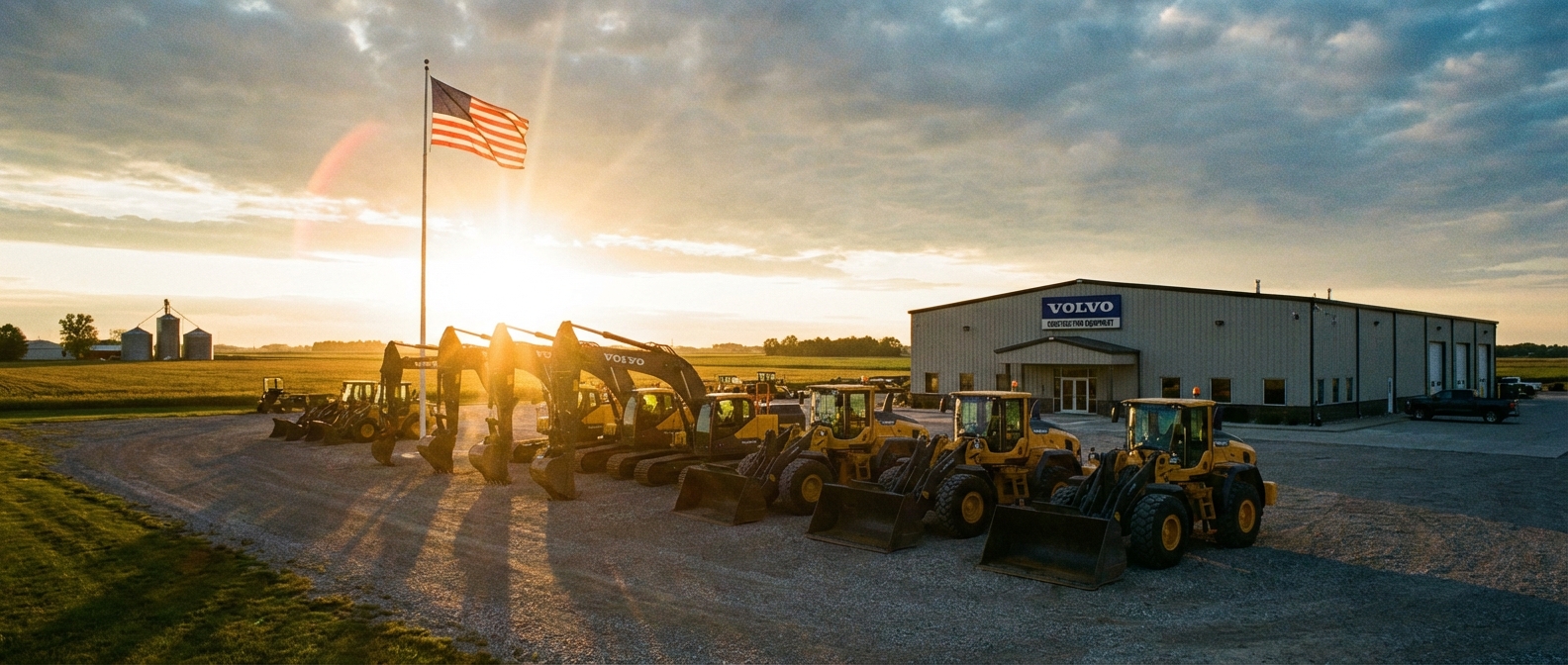
Rudd Equipment Company itself illustrates this evolution. Founded in Louisville in 1952, the company operated as a regional Volvo dealer for decades before Ferronordic acquired it. The Swedish conglomerate—which started as a Russian market distributor before pivoting to the U.S. and Germany—brought access to capital markets and a playbook for dealer roll-ups developed across multiple geographies.
Post-acquisition, Rudd operates 16 locations across eight states. The company represents not just Volvo CE but also Hitachi, Sandvik, and Link-Belt in portions of its territory. That multi-line approach provides both revenue diversification and the ability to offer customers a broader equipment selection.
Similar dynamics are playing out across the country:
- Caterpillar dealers have been consolidating for years, with the manufacturer actively encouraging mergers that create larger, better-capitalized distributors
- Deere & Company has pushed its construction equipment dealers toward regional scale
- Komatsu’s distribution network has seen significant ownership changes as independent dealers sell to larger groups
What This Means for Contractors
For equipment buyers and fleet operators, dealer consolidation brings both opportunities and risks.
Potential benefits:
- Larger dealers often maintain deeper parts inventory, reducing downtime for critical repairs
- Multi-location networks can provide service coverage across broader geographies
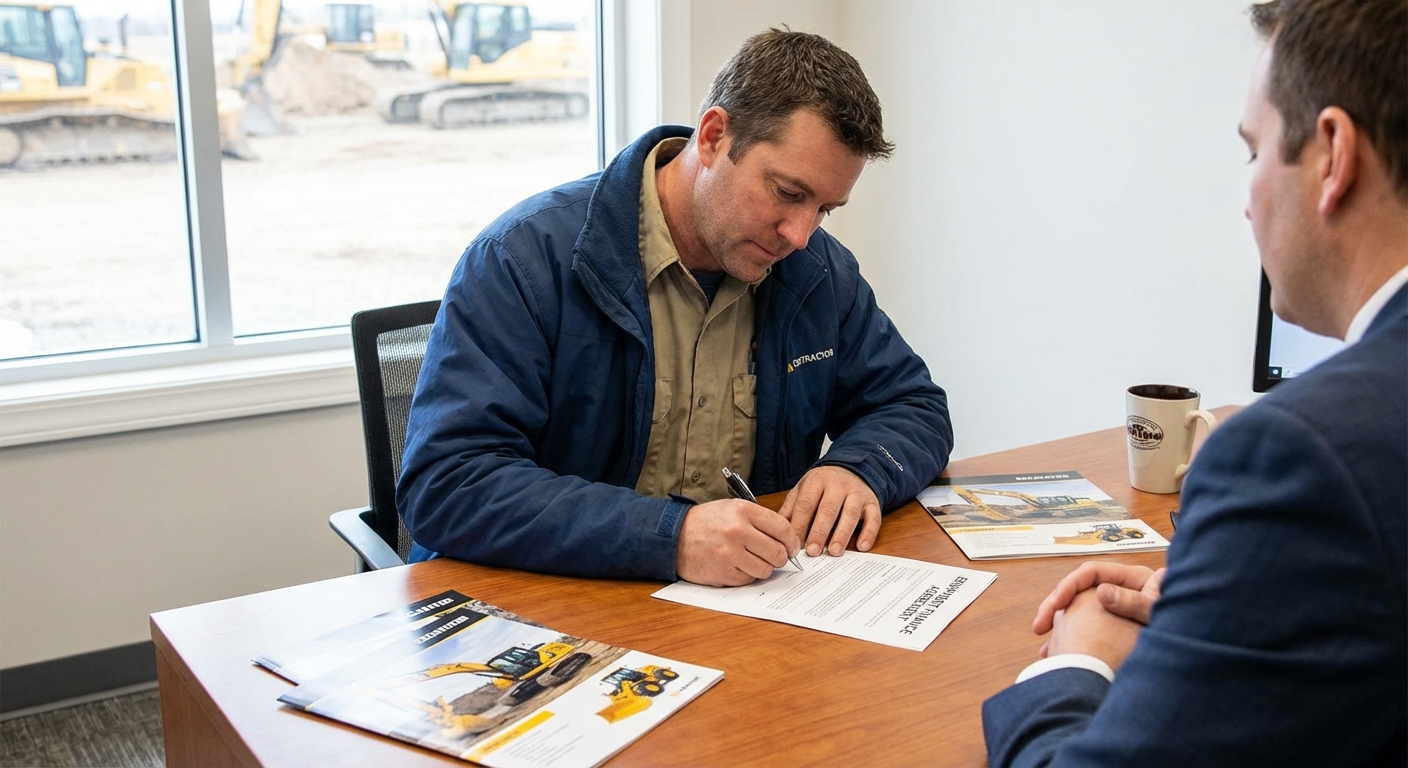
- Better-capitalized dealers may offer more competitive financing options
- Technology investments in diagnostics and telematics tend to be stronger at larger operations
Potential concerns:
- Personal relationships with salespeople and service managers may disappear as staff turns over
- Pricing negotiation leverage may decrease as fewer dealers compete in each territory
- Service response times could suffer if consolidation leads to branch closures or technician layoffs
- Knowledge of local conditions and customer needs may diminish as decision-making centralizes
The most sophisticated equipment operators are responding by taking greater control of their own data. Maintaining detailed service records, cost tracking, and machine histories independent of any particular dealer provides leverage in negotiations and continuity through ownership changes.
The Investment Thesis
From an investor perspective, the construction equipment distribution sector presents an interesting risk-reward profile in 2026.
Bull case: Infrastructure spending from federal programs continues flowing through 2026 and beyond. Equipment demand remains strong. Consolidation creates more efficient dealer networks with better margins. International capital continues viewing U.S. distribution as an attractive market.
Bear case: Interest rates affect equipment financing demand. Construction activity slows with economic uncertainty. Consolidation reduces competition, eventually triggering contractor pushback. OEMs decide to explore direct sales models, threatening dealer economics.
Ferronordic’s Iowa acquisition suggests the bull case remains compelling for strategic buyers. The $17 million price tag for a business doing $26.6 million in annual revenue implies a multiple under 0.7x sales—reasonable for an asset-light deal that excludes real estate and legacy liabilities.
The company’s explicit statement that this is “the first step in expanding our U.S. business” signals more acquisitions to come. With Ferronordic operating as the Volvo CE dealer in all or parts of nine states through Rudd, geographic expansion into adjacent territories represents a clear growth path.
Looking Ahead
The Midwest dealer landscape will look meaningfully different by the end of this decade. Family-owned operations that have served their communities for generations will increasingly fly corporate flags. International capital will flow into what was once a quintessentially local business.
For the industry, this evolution brings efficiency gains but also cultural loss. The dealer who knew every contractor in the county, who could extend credit during a tough season, who understood which machine configurations worked best for local conditions—that figure is becoming rarer.
What replaces him is more systematic but less personal: corporate inventory management, centralized pricing, technicians dispatched by algorithm rather than relationship.
Whether that trade-off benefits construction equipment customers depends largely on how well the new owners execute. The equipment still needs to work. The parts still need to arrive. The technicians still need to show up.
For contractors watching this consolidation wave, the lesson is clear: your relationship is with your machines, not your dealer. Document everything. Track your costs. Maintain your own records. The dealer network may change, but your fleet remains your responsibility.
Equipment Insider covers the business of construction and forestry equipment across North America. For breaking news and analysis, follow @equipinsiderhq on X.