Equipment Financing Trends Mid-2025: What Contractors Need to Know
Interest rate stabilization and evolving lender programs create new opportunities for equipment acquisition. Here's the current financing landscape.
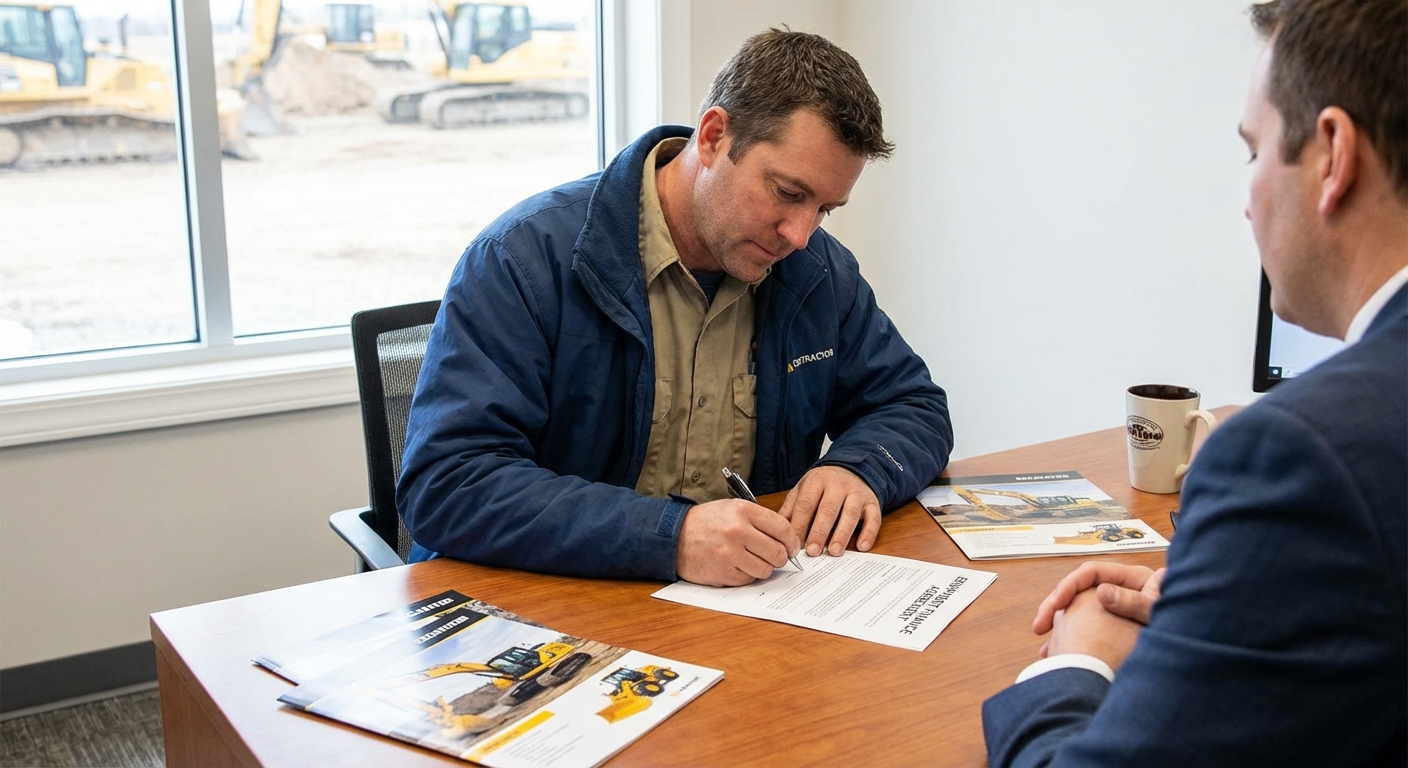
Equipment financing remains the primary method for contractors to acquire machinery. Understanding current financing trends helps contractors optimize capital deployment and equipment acquisition timing. This mid-year analysis examines interest rates, lender programs, and emerging financing innovations.
Interest Rate Environment
The Federal Reserve’s monetary policy has stabilized interest rates following the aggressive increases of 2022-2023. Current equipment financing rates reflect this stability:
Prime rate-based loans: Prime currently sits at 8.50%, with equipment loans typically priced at Prime + 0.50% to Prime + 2.50% depending on borrower creditworthiness and deal structure.
Bank financing: Qualified borrowers access equipment loans in the 8.5-11% range. Credit score, time in business, equipment type, and financial statement strength all affect rate.
Captive financing: Manufacturer financing programs from Caterpillar Financial, John Deere Financial, and Komatsu Financial typically offer competitive rates, often subsidized to support equipment sales. Rates in the 6-9% range are common for qualified buyers during promotional periods.
Equipment finance companies: Specialized equipment lenders serve borrowers who don’t qualify for bank financing. Rates range from 10% to 18%+ depending on credit profile and equipment.
Dealer financing: Dealers often offer financing through various sources. Rate competitiveness varies—dealers may prioritize approval speed over rate optimization.
Rate Outlook
Interest rate trajectory remains uncertain. Federal Reserve guidance suggests rates will remain elevated compared to the near-zero levels of 2020-2021, but dramatic increases appear unlikely absent unexpected inflation resurgence.
For equipment buyers, this suggests:
- Current rates are reasonable compared to long-term historical averages
- Waiting for significantly lower rates may not be practical given equipment needs
- Locking rates through financing commitment provides certainty
Financing Structures
Equipment acquisition involves various financing structures, each with advantages for specific situations:
Traditional Loans
Secured equipment loans remain the most common structure:
- Terms: 36-84 months depending on equipment type and useful life
- Down payment: Typically 10-20% for qualified borrowers; higher for weaker credits or specialty equipment
- Collateral: Equipment secures the loan; lender holds title until payoff
- Tax treatment: Borrower claims depreciation; interest expense deductible
Traditional loans suit buyers who want ownership, expect to keep equipment long-term, and want to build equity.
Finance Leases
Finance leases (capital leases) provide loan-like economics through lease structure:
- Terms: Similar to loans, typically matched to equipment useful life
- Structure: Monthly payments with bargain purchase option at term end
- Balance sheet: Equipment and obligation appear on balance sheet
- Tax treatment: Lessee claims depreciation; lease payment interest component deductible
Finance leases suit buyers who want ownership but prefer lease documentation for administrative or other reasons.
Operating Leases
True operating leases transfer equipment use without ownership:
- Terms: Typically shorter than equipment useful life
- Structure: Monthly payments with fair market value or return options at term end
- Balance sheet: Off-balance-sheet treatment (though accounting rules have evolved)
- Tax treatment: Entire lease payment deductible as operating expense
Operating leases suit buyers who want flexibility, uncertain about equipment needs, or prefer to avoid residual value risk.
Rental with Purchase Option
Equipment rental with eventual purchase option has grown as a financing alternative:
- Initial period: Equipment rented at standard rental rates
- Conversion: Rental payments (typically 50-75%) apply toward purchase price
- Flexibility: If equipment doesn’t fit needs, return without purchase obligation
This structure suits buyers uncertain about equipment fit or contractors wanting to test before committing. The rent vs. buy analysis becomes more complex with purchase option structures.
Lender Programs
Various lender types serve the equipment financing market:
Captive Finance Companies
Manufacturer-affiliated financing offers several advantages:
Caterpillar Financial Services: Extensive product knowledge, promotional rates, flexible terms. Strong technology integration with dealer sales process.
John Deere Financial: Competitive programs, agricultural-equipment crossover expertise. Strong understanding of seasonal equipment use patterns.
Komatsu Financial: Integrated with dealer relationships. Programs designed for Komatsu equipment characteristics.
Captives often provide the most competitive rates, particularly during manufacturer promotions. The tradeoff: financing is typically restricted to that manufacturer’s equipment.
Banks
Traditional banks serve well-established contractors with strong financials:
Commercial banks: Relationship lending with competitive rates for qualified borrowers. May require deposit relationships and offer package pricing.
Community banks: Often more flexible than large banks on unusual situations. Relationship focus may enable creative structuring.
Bank requirements: Banks typically want 2-3 years of financial statements, strong credit history, and demonstrated equipment management capability.
Equipment Finance Companies
Specialized lenders serve the middle market:
Advantage: More flexible underwriting than banks; faster processing than some alternatives Consideration: Rates typically higher than bank financing Specialization: Many focus on specific equipment types or contractor segments
Equipment finance companies often approve borrowers that banks decline, making equipment acquisition possible for younger businesses or those recovering from credit challenges.
Alternative Lenders
Non-traditional financing has expanded:
Online lenders: Fast processing, technology-enabled applications. Rates typically higher than traditional sources; convenient for speed-priority situations.
Revenue-based financing: Payment amounts vary with business revenue. Can work for businesses with irregular cash flow.
Merchant cash advances: Not technically financing but used by some equipment buyers. Expensive and often inappropriate for equipment acquisition.
Underwriting Considerations
Understanding what lenders evaluate helps contractors prepare for financing:
Credit Profile
Personal credit scores remain important for small contractors. Business credit bureaus (Dun & Bradstreet, Experian Business) matter for larger operations.
- 700+ credit scores access best rates and terms
- 650-700 scores qualify with most lenders at moderate premiums
- Below 650 limits options and increases rates significantly
Time in Business
Lenders prefer established businesses:
- 3+ years: Full financing options available
- 2-3 years: Most options available with some restrictions
- 1-2 years: Limited options; higher rates and larger down payments
- Less than 1 year: Specialized lenders only; challenging terms
Financial Statements
Lenders analyze financial health:
- Revenue trends and profitability
- Debt service coverage (typically want 1.25x+ coverage)
- Balance sheet strength and working capital
- Existing debt obligations and leverage
For significant equipment purchases, expect requests for 2-3 years of tax returns and current financial statements.
Equipment Characteristics
The equipment itself affects financing:
- Age: Newer equipment finances more easily with better terms
- Brand: Premium brands often finance at better terms due to collateral value
- Configuration: Standard configurations are easier to finance than specialized equipment
- Application: Equipment with broad market appeal presents lower risk to lenders
Current Opportunities
Several opportunities exist in the current financing environment:
Promotional Programs
Manufacturer promotions frequently offer subsidized rates. Current programs include:
- 0% financing for limited terms on selected equipment
- Reduced rates below market for extended terms
- Deferred payment programs allowing revenue generation before payments begin
- Loyalty programs for existing customers
Promotions change regularly—timing equipment purchases to coincide with favorable programs can yield significant savings.
Section 179 Planning
Section 179 expensing allows immediate deduction of equipment purchases up to specified limits. Current limits enable most contractors to expense equipment purchases fully in the acquisition year.
Timing equipment purchases and financing to optimize Section 179 benefit requires coordination with tax advisors. Fourth-quarter purchases placed in service before year-end often maximize tax benefit.
Refinancing Consideration
Contractors who financed equipment during the high-rate period of 2023-early 2024 may find refinancing advantageous as rates have stabilized. Review existing financing against current market to identify savings opportunities.
Technology Impact
Technology is changing equipment financing:
Online applications: Digital application processes have streamlined financing. Some lenders provide decisions within hours rather than days.
Integrated purchasing: Telematics data and equipment history are beginning to influence underwriting. Well-documented equipment may qualify for enhanced terms.
Payment flexibility: Some lenders offer seasonal payment structures, skip-payment options, and other flexibilities that match contractor cash flow patterns.
Contractor Recommendations
For contractors navigating equipment financing:
-
Maintain credit health: Credit profile directly affects rate and availability. Monitor and protect personal and business credit.
-
Shop multiple sources: Rate variation between lenders can be substantial. Compare captive, bank, and equipment finance company options.
-
Time strategically: Align equipment purchases with promotional periods and tax planning windows when possible.
-
Consider total cost: Lowest rate isn’t always lowest cost. Factor origination fees, prepayment penalties, and flexibility into evaluation.
-
Maintain banking relationships: Strong bank relationships improve rate negotiating position and provide fallback options.
For related analysis, see our coverage of economic outlook and rent versus buy decisions.