Used Crawler Excavator Pricing Analysis: What's Driving Valuations in 2025
Detailed pricing analysis for 20-50 ton excavators reveals how hours, age, technology, and brand affect resale values in today's market.
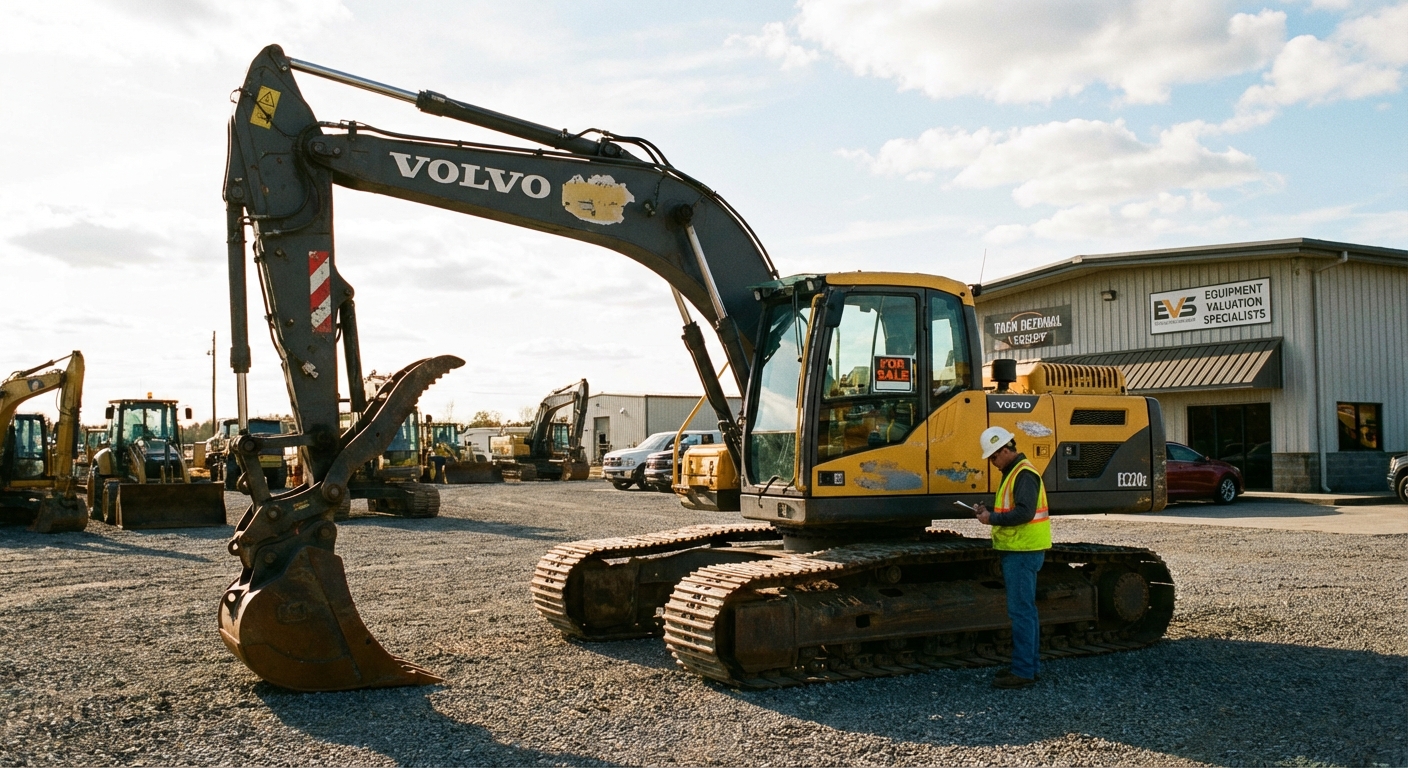
Crawler excavators represent the largest segment of the used heavy equipment market by transaction value. Understanding the factors that drive excavator pricing helps both buyers and sellers make informed decisions. This analysis examines current pricing for mid-size crawler excavators (20-50 ton class) and identifies the variables most affecting valuations.
Market Context
The used excavator market has experienced significant pricing volatility over the past five years. Pandemic-era supply constraints pushed prices to historic highs in 2021-2022, followed by gradual normalization as new equipment supply recovered.
Current market conditions:
Supply: New excavator production has largely recovered from pandemic disruptions. Dealer inventory has improved, reducing pressure on used equipment as an alternative to unavailable new machines.
Demand: Construction activity remains healthy across most regions. Southeast and Midwest markets show particular strength.
Pricing: Used excavator prices have declined from 2022 peaks but remain above pre-pandemic levels. Well-maintained late-model units command strong premiums.
Pricing Framework
Used excavator valuation involves multiple factors:
Age and Hours
Age and operating hours are primary valuation drivers, though their relationship is complex:
Hours per year: A five-year-old excavator with 3,000 hours has been lightly used (600 hours/year). The same age machine with 10,000 hours has been heavily worked (2,000 hours/year). Valuation reflects usage intensity, not just age.
Benchmark utilization: Industry benchmarks suggest 1,000-1,500 hours annually represents moderate utilization. Hours significantly below this range may indicate underutilization; significantly above suggests intensive use.
Component life: Major components—engine, hydraulic pumps, final drives—have expected service lives typically measured in hours. Valuation considers remaining component life.
Current market pricing for a representative 36-ton class excavator (Caterpillar 336, Komatsu PC360, John Deere 350):
| Age | Hours | Typical Price Range |
|---|---|---|
| 2-3 years | 2,000-4,000 | $275,000-$325,000 |
| 2-3 years | 4,000-6,000 | $240,000-$290,000 |
| 4-5 years | 4,000-6,000 | $210,000-$260,000 |
| 4-5 years | 6,000-8,000 | $175,000-$225,000 |
| 6-7 years | 6,000-8,000 | $155,000-$195,000 |
| 6-7 years | 8,000-10,000 | $125,000-$165,000 |
These ranges represent machines in average condition with standard configuration. Significant variance above or below these ranges reflects condition, configuration, and market factors.
Brand Premium
Brand affects valuation, with premium manufacturers commanding higher prices:
Caterpillar: Consistently commands highest resale values in most size classes. Strong dealer network, parts availability, and perceived quality support Caterpillar premium.
Komatsu: Commands premium similar to Caterpillar in many applications. Komtrax telematics and fuel efficiency features are valued by buyers.
John Deere: Strong resale values, particularly in agricultural-crossover markets where Deere brand recognition is highest.
Hitachi: Values well in markets familiar with the brand. Partnership with Deere dealers improves aftermarket support.
Volvo: Premium pricing in applications where fuel efficiency and operator comfort are prioritized.
Kobelco: Value positioning attracts price-sensitive buyers. Resale discount versus premium brands typically 10-15%.
Hyundai/Develon: Value positioning with improving quality perception. Develon rebrand creates some market uncertainty.
LiuGong, SANY, XCMG: Chinese manufacturers at lowest price points. Resale values significantly below established brands.
Brand premium varies by market—Caterpillar commands maximum premium in markets with strong Cat dealer presence; in dealer-sparse markets, premium narrows.
Configuration
Excavator configuration significantly affects valuation:
Bucket packages: Machines sold with multiple buckets command premiums. A complete bucket package (general purpose, rock, ditch clean, trenching) may add $15,000-$30,000 to valuation.
Quick coupler: Factory quick couplers add $5,000-$10,000 versus pin-on bucket machines.
Thumb attachment: Hydraulic thumbs add significant versatility and command $8,000-$15,000 premium.
Blade: Dozer blades on excavators command premium for applications requiring backfill capability.
Technology: GPS grade control preparation or installed systems add substantial value—$15,000-$40,000 depending on system sophistication.
Counterweight options: Heavy lift counterweights affect application suitability and valuation.
Condition Assessment
Physical condition assessment is essential for accurate valuation:
Structural integrity: Frame cracks, boom wear, attachment pin bores affect structural safety and repair cost.
Undercarriage: Track condition, roller wear, idler and sprocket condition. Undercarriage represents significant repair cost—10-40% of machine value depending on severity.
Hydraulics: Pump condition, valve function, cylinder integrity. Hydraulic repairs are costly and often indicate broader neglect.
Engine: Hour meter accuracy, smoke color, fluid analysis history. Engine condition affects near-term repair risk.
Cab and controls: Operator environment condition, control function, display condition.
Paint and appearance: While cosmetic, presentation affects market perception and pricing.
Condition assessment should include:
- Fluid analysis results (oil, coolant, hydraulic fluid)
- Component service history
- Inspection by qualified technician
- Verification of reported hours
Documentation
Complete documentation supports premium pricing:
Service records: Documented maintenance history demonstrates care and enables valuation of remaining component life.
Ownership history: Clear title and transparent ownership history eliminates buyer concern.
Operation records: Telematics data or logbook records verify hours and usage patterns.
Warranty status: Remaining factory or extended warranty adds value.
Machines with complete documentation typically command 5-10% premium versus comparable machines with incomplete records.
Market Dynamics
Several factors are affecting current used excavator markets:
New Equipment Pricing
New excavator prices have increased significantly over the past three years. A 36-ton class excavator that listed near $350,000 in 2019 now approaches $450,000. This new equipment pricing supports used valuations—buyers compare used prices against current new pricing, not historical levels.
Technology Transition
The industry’s transition toward electric and hybrid equipment creates uncertainty about diesel equipment residual values. Current impact is modest, but buyers increasingly consider future technology when evaluating used equipment purchases.
Tier 4 vs. Previous
Tier 4 Final emission systems have proven reliable, reducing concerns about aftertreatment system durability that initially suppressed Tier 4 residual values. Tier 4 equipment now commands appropriate premiums versus older emission tier equipment.
Rental Returns
Rental company fleet cycling continues to influence used equipment supply. Rental returns—typically high-hour but well-maintained—represent significant transaction volume. Pricing for rental returns often benchmarks broader market.
Buyer Considerations
For buyers evaluating used excavators:
Total cost of ownership: Purchase price is only part of the equation. Maintenance requirements, fuel efficiency, parts costs, and expected service life all affect ownership economics. Sometimes higher-priced equipment delivers lower total cost.
Application fit: Match machine specification to application requirements. Over-specified equipment wastes capital; under-specified equipment limits productivity.
Support infrastructure: Consider parts availability and service support. Premium brands often justify price through support infrastructure, particularly for buyers lacking internal maintenance capability.
Financing: Equipment financing affects purchase decisions. Used equipment typically requires larger down payments and shorter terms than new, affecting cash flow.
Seller Considerations
For sellers marketing used excavators:
Timing: Market conditions affect pricing. Selling during strong demand periods yields better results than selling during slowdowns when equipment is competing against other distressed sellers.
Presentation: Clean equipment with organized documentation sells better. Investment in presentation yields return through higher sale prices.
Channel selection: Dealer trade-in, auction, private sale, and broker each offer different advantages. Optimal channel depends on equipment characteristics, timeline, and seller capability.
Documentation assembly: Gather all available records before marketing. Complete documentation supports premium pricing.
Outlook
Used excavator markets should remain healthy through 2025:
- Construction activity supports demand
- New equipment pricing supports used valuations
- Technology transition creates some uncertainty but hasn’t yet significantly affected pricing
Buyers and sellers who understand valuation fundamentals and market dynamics will achieve better outcomes than those focused solely on price comparison.
For broader used equipment market context, see our Q4 2025 market trends analysis.