Midwest Construction Market Report: Regional Growth Patterns
Infrastructure spending, reshoring trends, and population shifts are reshaping construction demand across the Midwest. Our regional market analysis.
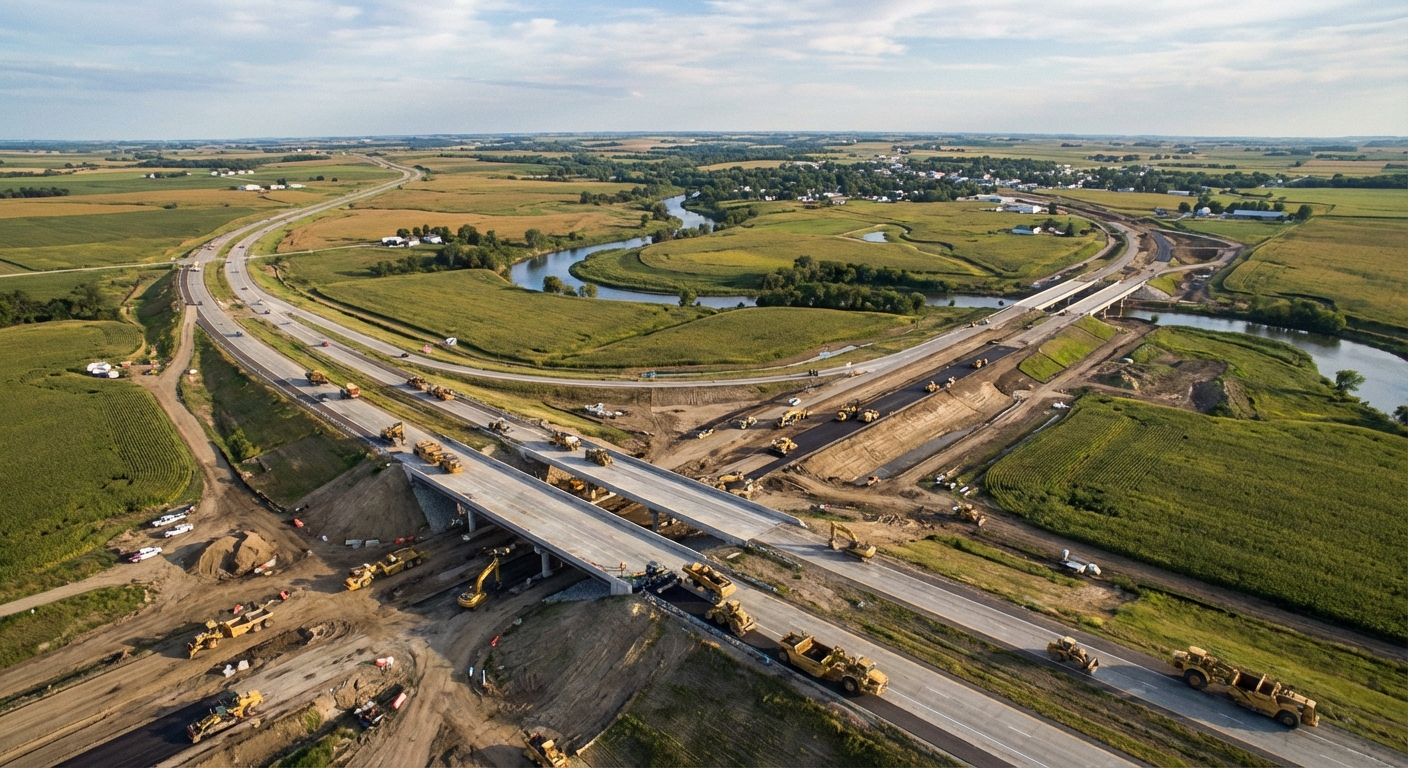
The Midwest construction market is experiencing a transformation driven by federal infrastructure investment, manufacturing reshoring, and shifting demographic patterns. After years of lagging coastal markets, the region is emerging as one of the nation’s most dynamic construction environments.
This analysis examines market conditions across the Midwest, identifying growth drivers, subregional variations, and implications for contractors and equipment operators.
Market Overview
Midwest construction spending totaled an estimated $187 billion in 2025, representing growth of approximately 8% from the prior year. This growth rate exceeds the national average and marks the third consecutive year of above-trend regional expansion.
Key market characteristics include:
Infrastructure dominance. Highway, bridge, and water infrastructure projects represent a larger share of regional construction than national averages, reflecting both federal investment and significant deferred maintenance.
Manufacturing resurgence. Industrial construction has surged as manufacturers establish or expand domestic production facilities, reversing decades of manufacturing decline.
Data center concentration. The region has become a preferred location for hyperscale data center development, attracted by power availability, climate, and lower costs.
Affordable housing pressure. Residential construction has increased to address housing affordability challenges in growing metropolitan areas.
State-by-State Analysis
Ohio
Ohio leads regional growth driven by a remarkable concentration of semiconductor, electric vehicle, and battery manufacturing investments.
The Intel semiconductor fabrication plants near Columbus represent the largest construction project in state history, with total investment exceeding $20 billion. This anchor project has attracted supplier facilities and infrastructure improvements throughout central Ohio.
Electric vehicle and battery plant construction continues in the northeastern part of the state, building on the region’s automotive manufacturing heritage.
Highway and bridge reconstruction remains active, supported by federal infrastructure funding. The state’s aging transportation network requires substantial investment, creating steady demand for heavy civil contractors.
Local companies like Columbus Equipment report strong demand across their dealer territories, with equipment utilization rates at historic highs.
Michigan
Michigan construction activity centers on electric vehicle transition investments. Legacy automakers and new entrants are investing billions in retooling existing facilities and constructing new EV production capacity.
Battery manufacturing represents a major growth segment, with multiple large-scale facilities under construction or in planning. These projects require specialized construction capabilities and equipment.
The state’s infrastructure also demands significant investment. Road conditions rank among the nation’s worst, and increased funding is flowing to highway reconstruction.
Indiana
Indiana has emerged as a logistics and distribution hub, driven by its central location and relatively low costs. Warehouse and distribution center construction remains robust, particularly in the Indianapolis metropolitan area.
Manufacturing construction has strengthened, with food processing, pharmaceutical, and industrial equipment facilities under development.
The state’s highway network serves as a national crossroads, generating ongoing demand for heavy civil work.
Illinois
Chicago metropolitan construction drives Illinois market activity, with significant commercial, residential, and infrastructure projects underway.
Data center development has concentrated in the Chicago market, attracted by abundant power, connectivity, and proximity to major population centers.
Downstate markets present a mixed picture, with agricultural economics influencing construction activity in rural areas.
Wisconsin
Wisconsin manufacturing strength supports construction demand, particularly for food processing, machinery, and paper products facilities.
The state has attracted data center development, with major projects in the southeastern region.
Infrastructure investment continues addressing transportation and water system needs, though at somewhat slower pace than neighboring states.
Minnesota
Minneapolis-St. Paul drives Minnesota construction activity, with a diverse mix of commercial, residential, and infrastructure projects.
Medical technology manufacturing supports industrial construction demand, reflecting the region’s concentration in this sector.
The state’s relatively healthy fiscal position has enabled continued infrastructure investment.
Growth Drivers
Federal Infrastructure Investment
The Infrastructure Investment and Jobs Act continues flowing funds to Midwest projects. Highway, bridge, and water infrastructure spending has increased substantially, with multi-year project pipelines now established.
The region’s infrastructure deficits—aging bridges, deteriorating highways, lead water pipes—position it for above-average infrastructure investment allocations.
Manufacturing Reshoring
Supply chain vulnerabilities exposed during the pandemic have accelerated manufacturing reshoring, with the Midwest benefiting disproportionately. The region’s manufacturing heritage, skilled workforce, and lower costs make it attractive for domestic production.
Semiconductor, electric vehicle, and battery manufacturing represent the highest-profile investments, but reshoring extends across industrial categories.
Energy Transition
Renewable energy construction continues expanding, with wind and solar installations throughout the region. Battery storage projects are increasing as grid operators integrate variable renewable generation.
Electric vehicle charging infrastructure construction is growing, though from a small base, as the region prepares for transportation electrification.
Population and Housing
Several Midwest metros are experiencing population growth after years of stagnation or decline. Columbus, Indianapolis, and Des Moines have emerged as affordable alternatives to higher-cost regions.
This population growth is generating residential construction demand and supporting retail and commercial development.
Equipment Market Implications
The Midwest construction surge has significant implications for equipment markets:
Strong utilization is pushing rental rates higher and supporting equipment purchases. Contractors report difficulty sourcing equipment for large projects.
Skilled labor shortages are particularly acute, creating demand for equipment that reduces labor requirements. GPS grade control and semi-automated equipment are seeing accelerated adoption.
Used equipment demand remains strong regionally, with some equipment flowing into the Midwest from slower markets. Used equipment values in the region often exceed national averages.
Dealer expansion is occurring as equipment manufacturers seek to capture regional growth. Several major dealers have announced branch expansions or territory additions.
Challenges and Risks
Despite positive momentum, the regional market faces challenges:
Labor availability remains the primary constraint. Skilled equipment operators and craft workers are in short supply, limiting project execution capacity.
Material costs have moderated from peak levels but remain elevated. Steel, cement, and aggregates face ongoing cost pressures.
Interest rates have increased financing costs for both contractors and project developers, potentially moderating some project categories.
Federal funding uncertainty could affect infrastructure spending if political dynamics shift. Current project pipelines provide some insulation, but longer-term programs remain subject to policy changes.
Outlook
The Midwest construction market outlook remains positive through 2026-2027, supported by:
- Multi-year infrastructure project backlogs
- Continued manufacturing investment
- Data center development pipeline
- Housing demand in growing metros
Contractors positioned in the region should expect continued strong demand, though competition for labor and equipment will remain intense. Those who have invested in equipment, people, and technology capabilities are best positioned to capture available opportunities.
The region’s emergence as a construction growth leader may persist beyond the current cycle, as fundamental drivers including reshoring and infrastructure investment appear structural rather than cyclical.
For more market analysis, see our coverage of used equipment trends and economic outlook.