Economic Outlook: What 2026 Holds for Construction Equipment
Infrastructure spending, interest rates, labor markets—the key economic factors that will shape equipment demand this year.
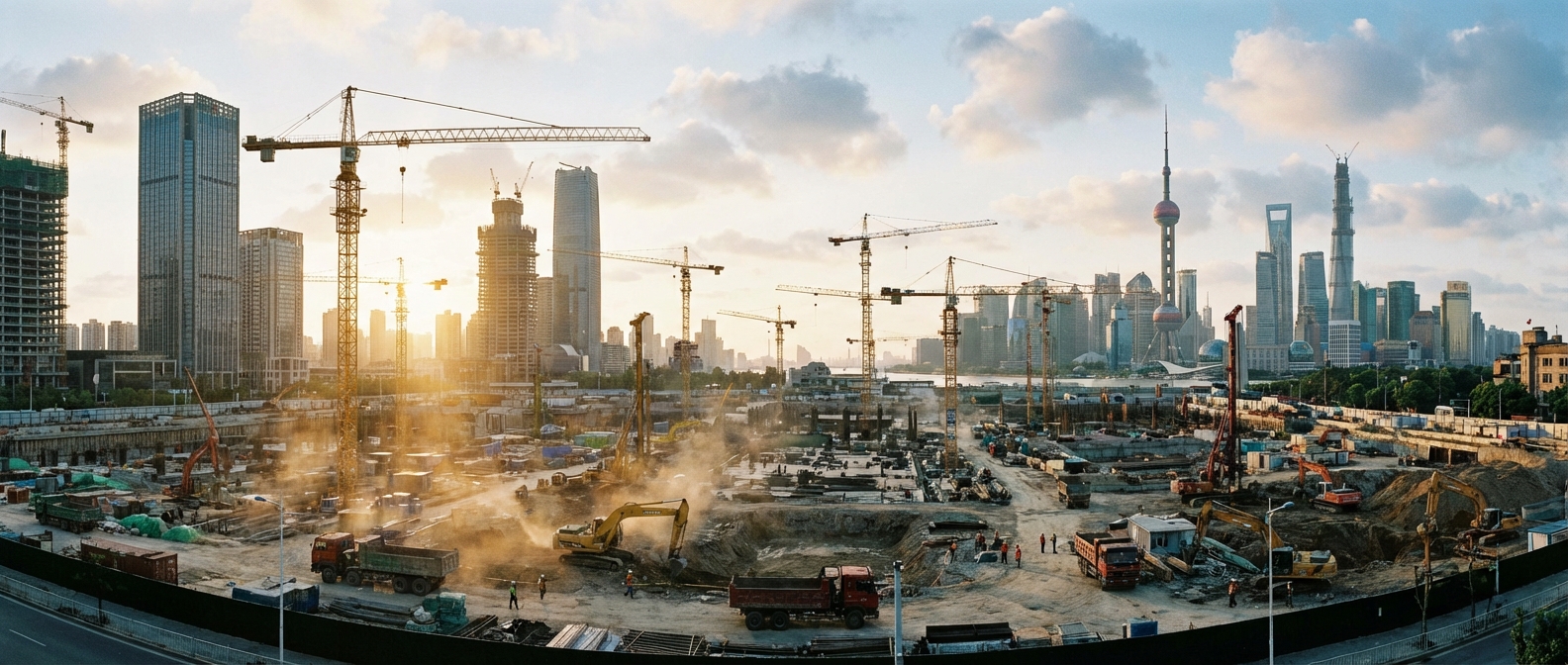
The construction equipment industry enters 2026 with momentum from a record-setting 2025, but facing economic crosscurrents that create uncertainty for the year ahead. Infrastructure spending remains robust, but commercial construction shows signs of cooling. Labor markets are tight, but interest rates have stabilized.
This analysis examines the economic factors that will shape equipment demand in 2026 and provides a framework for contractors planning their operations.
Overall Economic Environment
The U.S. economy continues expanding, though at a moderating pace. Key indicators:
GDP growth is projected at 2.0-2.5% for 2026, down from approximately 2.8% in 2025 but still representing solid expansion.
Inflation has moderated to the 2.5-3.0% range, allowing the Federal Reserve to pause interest rate increases while not yet cutting.
Employment remains strong with unemployment below 4%, though job growth has slowed from peak recovery rates.
Consumer spending continues growing but at slower rates as pandemic-era savings are depleted.
This economic environment supports continued construction activity but at more modest growth rates than recent years.
Construction Sector Outlook
Construction spending patterns vary significantly by segment:
Infrastructure: Strong
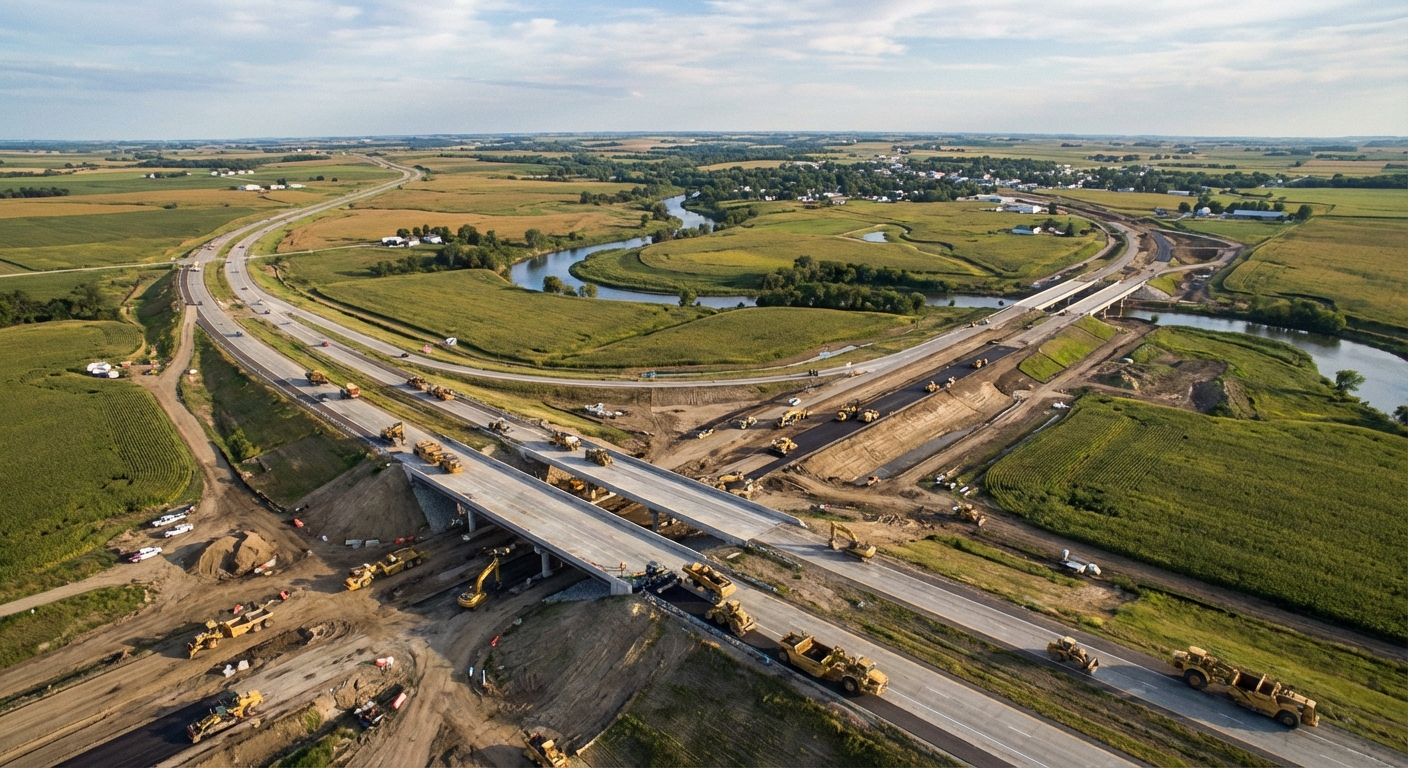
Federal infrastructure funding is flowing into projects at accelerating rates. The Infrastructure Investment and Jobs Act continues providing multi-year spending authority for:
- Highway and bridge construction
- Water and wastewater systems
- Broadband deployment
- Grid and energy infrastructure
This spending provides the most reliable demand driver for heavy equipment, particularly in the Midwest and other regions with significant infrastructure needs.
Industrial: Very Strong
Manufacturing construction continues at exceptional levels:
- Semiconductor fabrication facilities
- Electric vehicle and battery plants
- Reshored manufacturing capacity
- Data center construction
These projects are typically large, equipment-intensive, and have multi-year timelines providing visibility.
Residential: Mixed
Housing construction faces crosscurrents:
- Underlying demand remains strong due to demographic factors and housing shortage
- Higher interest rates have constrained buyer affordability
- Builder sentiment has moderated from recent highs
- Single-family construction shows resilience; multifamily has slowed
Equipment demand from residential construction will likely be flat to slightly positive.
Commercial: Softening
Office and retail construction continues slowing:
- Remote work has permanently reduced office demand
- Retail construction reflects ongoing sector restructuring
- Hospitality construction has recovered but plateaued
Warehouse and distribution center construction remains active but has moderated from pandemic-driven peaks.
Key Economic Factors
Interest Rates
Equipment financing costs have stabilized with short-term rates in the 5.0-5.5% range. This represents the “new normal” after years of near-zero rates.
Implications for equipment:
- Financing costs are a meaningful component of ownership expense
- Rent versus buy calculations have shifted modestly toward rental
- Larger contractors with strong credit retain financing advantages
- Equipment demand is less interest-rate sensitive than real estate development
Labor Markets
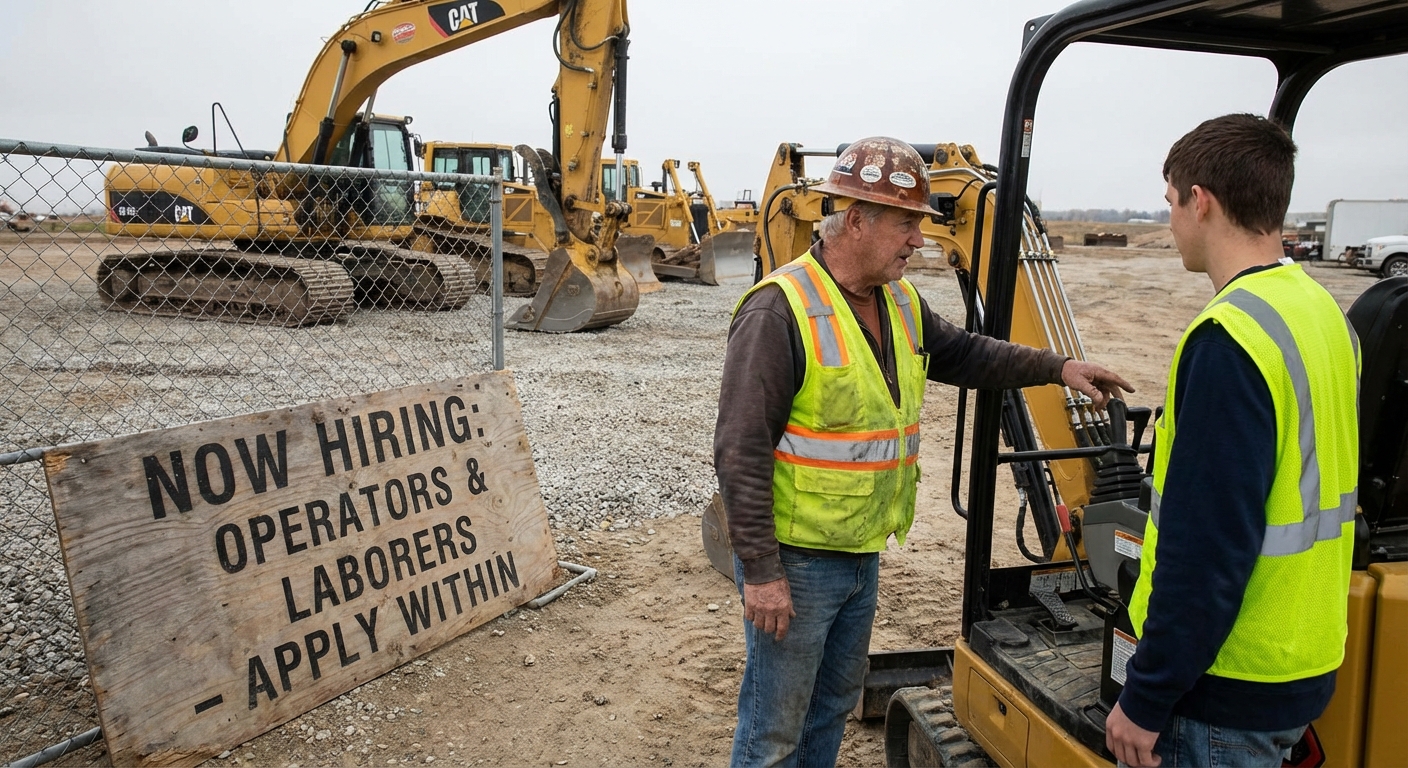
Labor availability remains the industry’s primary constraint:
- Skilled equipment operators command premium wages
- Construction unemployment is near historic lows
- Immigration policy affects labor supply
- Workforce development programs are scaling but slowly
Tight labor markets support equipment investment as contractors seek productivity improvements that reduce labor requirements. Technology adoption accelerates when labor is scarce.
Input Costs
Equipment input costs have stabilized:
- Steel prices have normalized below peak levels
- Component availability has improved
- Labor costs in manufacturing continue rising
- Equipment prices reflect these cost factors
Fuel costs remain volatile but manageable at current levels.
Policy Environment
Federal policy continues supporting construction:
- Infrastructure spending is appropriated and flowing
- Manufacturing incentives drive reshoring investment
- Emissions regulations create equipment replacement demand
- Electric equipment incentives support technology transition
State and local government fiscal positions are generally healthy, supporting continued public construction.
Regional Variations
Regional economies will drive localized equipment demand:
Strong markets:
- Texas (energy, population growth, manufacturing)
- Florida (population growth, resilient economy)
- Ohio/Midwest (manufacturing reshoring, infrastructure)
- Southeast (population migration, industrial growth)
Moderate markets:
- California (housing constraints offset by infrastructure)
- Mountain West (population growth moderating)
- Mid-Atlantic (stable but mature)
Softer markets:
- Upper Midwest (agricultural economy challenges)
- Some rural markets (population decline)
Equipment Demand Forecast
Based on economic conditions, we project 2026 equipment demand:
Overall market: 3-5% growth in North American equipment sales
By category:
- Excavators: 4-6% growth (infrastructure and industrial strength)
- Wheel loaders: 2-4% growth (steady demand)
- Compact equipment: 5-7% growth (continued strong demand)
- Dozers/graders: 4-6% growth (infrastructure focus)
- Specialty equipment: Varies by category
Rental market: 4-6% revenue growth with strong utilization
Used equipment: Stable pricing with improved selection
Risks to Outlook
Several risks could alter this forecast:
Recession risk: While not our base case, economic slowdown would significantly impact equipment demand. Construction typically lags broader economy by 6-12 months.
Policy disruption: Changes in federal spending priorities or trade policy could affect construction activity.
Geopolitical events: International conflicts affecting energy prices or supply chains remain possible.
Credit tightening: Financial system stress could restrict equipment financing availability.
Labor disruptions: Major labor actions in construction or related industries could affect project execution.
Opportunities
The 2026 environment also presents opportunities:
Infrastructure positioning: Contractors positioned for infrastructure work can capture reliable, funded project demand.
Technology investment: Current conditions support technology investment that improves productivity and addresses labor constraints.
Fleet optimization: Better fleet management can improve returns in any economic environment.
Market positioning: Strong contractors can gain share in markets where weaker competitors struggle.
Strategic Recommendations
For contractors planning 2026 operations:
Conservative planning: Build scenarios that account for both continued strength and potential moderation.
Infrastructure focus: Position capabilities to capture infrastructure spending where possible.
Technology priority: Continue investing in technology that improves productivity and competitiveness.
Financial discipline: Maintain balance sheet strength that enables both opportunity capture and downturn resilience.
Workforce investment: Continue developing and retaining workforce capabilities that differentiate.
Conclusion
The 2026 economic outlook for construction equipment is positive but moderating. The exceptional growth of 2025 is unlikely to repeat, but continued expansion appears likely.
Infrastructure spending provides the most reliable demand driver. Industrial construction remains very strong. Residential and commercial sectors present mixed pictures.
Contractors who maintain realistic expectations, position for available opportunities, and build operational resilience will navigate 2026 successfully regardless of exactly how economic conditions unfold.
Equipment Insider will continue monitoring economic conditions and providing updated analysis throughout 2026. Subscribe for ongoing market intelligence.