Data Centers Are Eating the Dirt World — And Your Next Job Might Be One
Hyperscalers are spending $600 billion this year on AI infrastructure. That money flows downhill to sitework contractors, excavation crews, and equipment operators. Here's what that means for you.
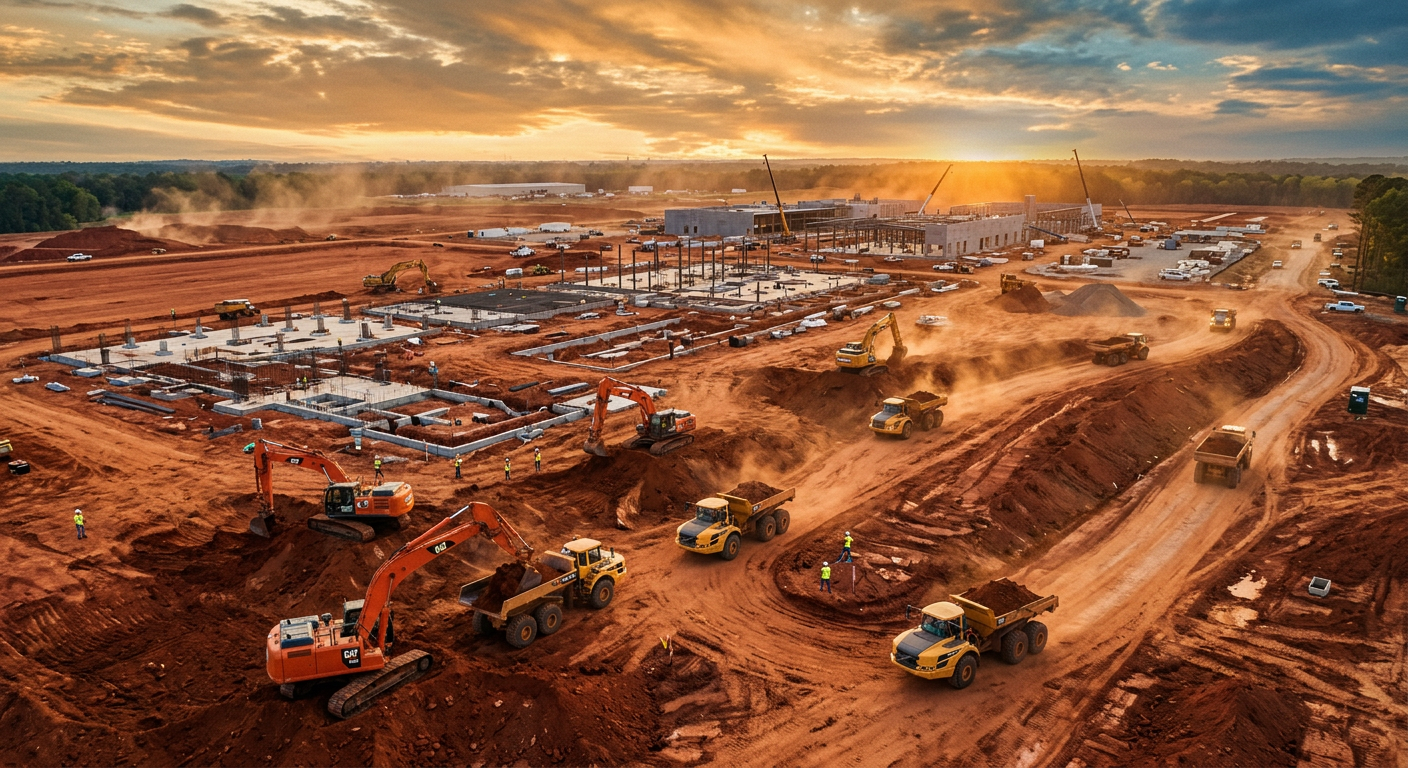
You’ve probably noticed something weird happening in your area. Massive sites getting cleared. Hundreds of acres graded flat. Utility corridors running for miles. And when you ask around, nobody’s building a warehouse or a subdivision. They’re building a data center.
This isn’t a trend anymore. It’s a land rush. And if you run heavy equipment, you need to understand what’s happening, because this is about to reshape who’s hiring, what they’re paying, and where the work is.
The numbers are staggering
Moody’s projects $3 trillion in global data center spending over the next five years. Just in 2026, the major hyperscalers — Amazon, Microsoft, Google, Meta, Oracle — are projected to spend more than $600 billion combined on AI infrastructure. The average data center construction cost has hit $11.3 million per megawatt, up 6% from last year. AI-optimized facilities push past $20 million per megawatt because of liquid cooling systems, higher-voltage power distribution, and denser equipment layouts.
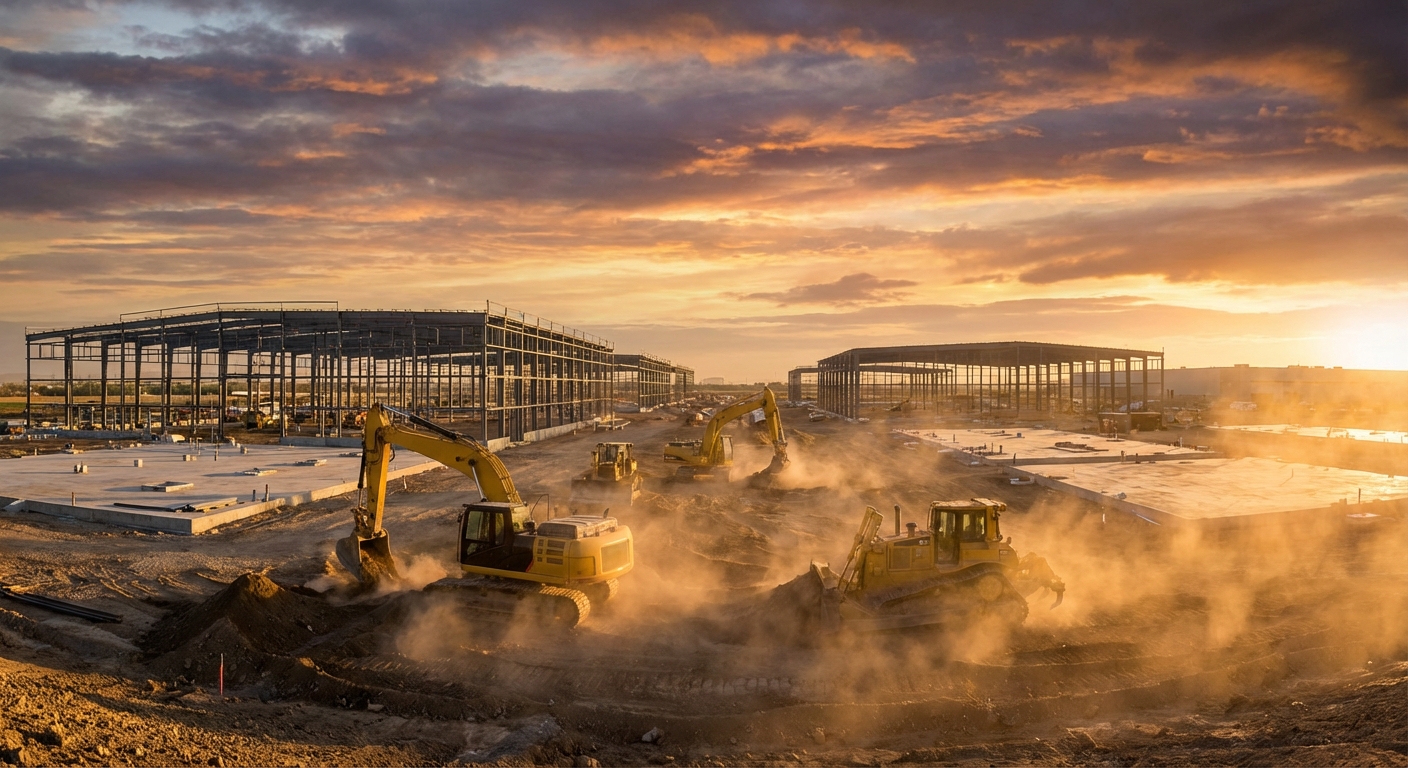
To put that in perspective: a single large data center campus can cover 100+ acres. Before anyone pours a foundation or pulls cable, somebody has to move dirt. A lot of it.
Editor’s Note: Tracking equipment hours and costs across multiple jobsites is hard enough on normal projects. Data center work, with its long timelines and strict documentation requirements, makes it even harder. FieldFix gives operators a simple way to log hours, track maintenance, and calculate true cost-per-hour across their fleet — which matters a lot when you’re bidding work that runs 12-18 months. Worth a look if you’re scaling up for bigger projects.
Where the work is
Data center construction isn’t spread evenly. It’s concentrated in specific corridors, and if you’re anywhere near one, you’ve already felt the pull.
Virginia remains the epicenter. Loudoun County alone hosts more data center capacity than most countries. But that market is getting saturated, and power availability is a growing problem. Dominion Energy has been telling developers that new connections could take years, not months.
That constraint is pushing construction into new territory. Texas has become a major hub — cheap land, cheap power, and fewer permitting headaches. Arizona, Georgia, Ohio, North Carolina, and Nevada are all seeing accelerating activity. Nearly two-thirds of new data center capacity is now being developed outside the traditional hubs, according to industry tracking data.
For equipment operators, this geographic spread is good news. It means data center work isn’t locked behind a few mega-contractors in Northern Virginia. Regional excavation companies, grading contractors, and utility installers are picking up projects they wouldn’t have had access to five years ago.
What the work actually looks like
If you’ve never done data center sitework, here’s what to expect. It’s not the same as grading a pad for a strip mall.
Scale. These sites are big. A 50-megawatt campus might cover 30-50 acres. A hyperscale facility can need 100+ acres just for the initial phase, with options on adjacent parcels for expansion. You’re moving serious volumes of earth.
Precision. Data centers need flat, stable building pads with tight tolerances. The structures house millions of dollars in servers, and even minor settling can cause problems with raised flooring systems and cable management. Compaction testing is strict. You’ll see more engineering oversight than on a typical commercial job.
Duration. These projects run long. Site preparation alone can take 6-12 months on a large campus. Total construction timelines of 18-36 months are common. That’s steady work, but it also means you need to plan for equipment maintenance and operator scheduling over a long horizon.
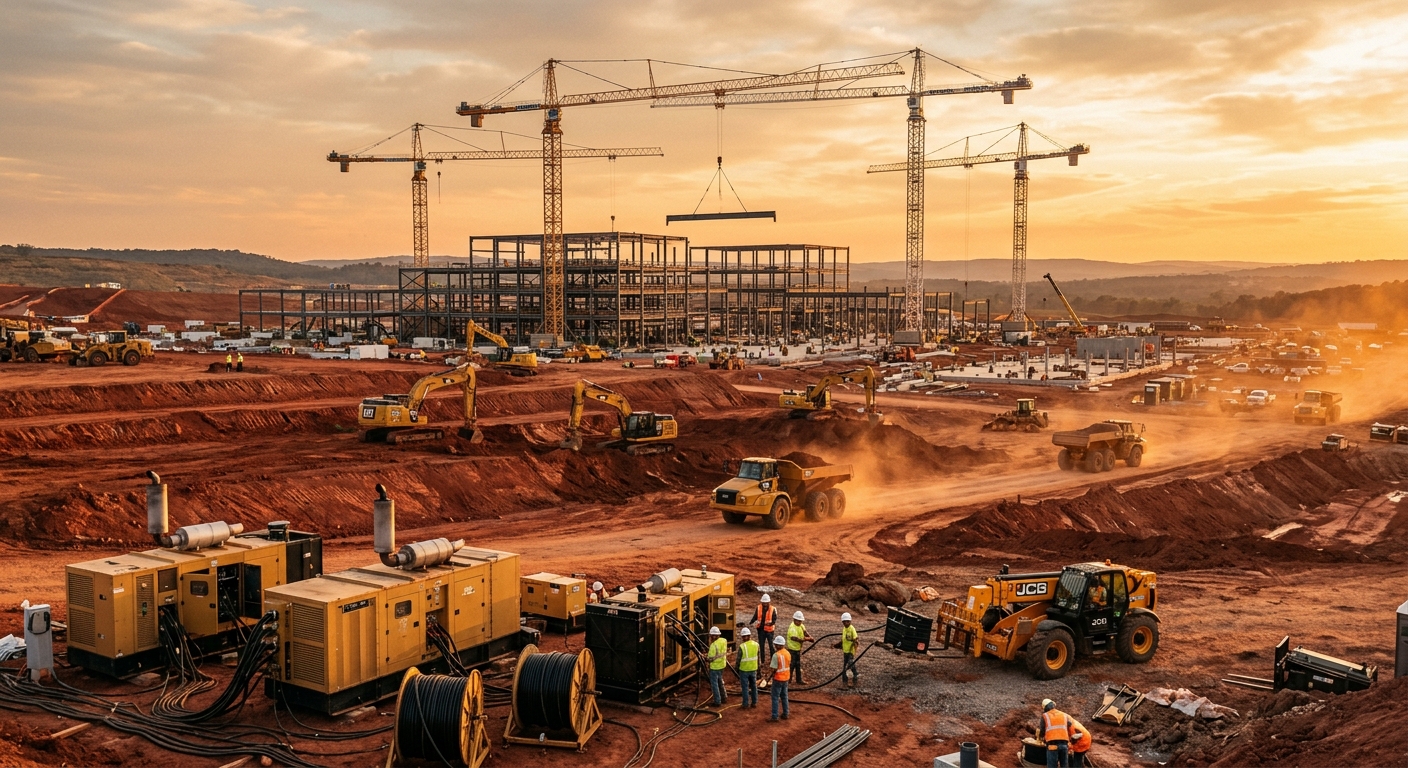
Utilities. Data centers are power-hungry. Really power-hungry. Running electrical infrastructure to the site — substations, transmission lines, redundant feeds — involves significant trenching and underground work. Water supply for cooling is another major utility run. There’s often more linear footage of utility corridor work than actual building pad preparation.
Security. Most data center operators require background checks for all site workers. Expect badge access, controlled entry points, and stricter site management than you’d see on a typical construction project. Some operators restrict cell phone use and photography on site.
The pay is different too
Data center work tends to pay better than standard commercial sitework. There are a few reasons for that.
First, the clients have deep pockets. When Amazon or Microsoft is funding the project, the general contractor isn’t squeezing every subcontractor to save $2 per yard on earthwork. Budgets are large and schedules are aggressive, which means they’ll pay more to get good crews locked in.
Second, the work is steady. A 12-month site prep contract beats chasing three-week jobs all year. Operators can plan around it. Equipment utilization goes up. Deadhead miles go down. The effective hourly rate improves even before you account for the premium billing.
Third, there’s competition for crews. The sheer volume of data center construction happening simultaneously means general contractors are fighting over qualified sitework subs. If you have the equipment, the operators, and a clean safety record, you have leverage right now. Use it.
Anecdotal reports from contractors working data center sites in Texas and Virginia suggest sitework rates running 15-25% above typical commercial rates in the same area. That premium exists because the demand is real and the available workforce hasn’t caught up yet.
What equipment you need
Data center sitework is primarily earthmoving and utility installation. The fleet requirements aren’t exotic, but they favor larger iron.
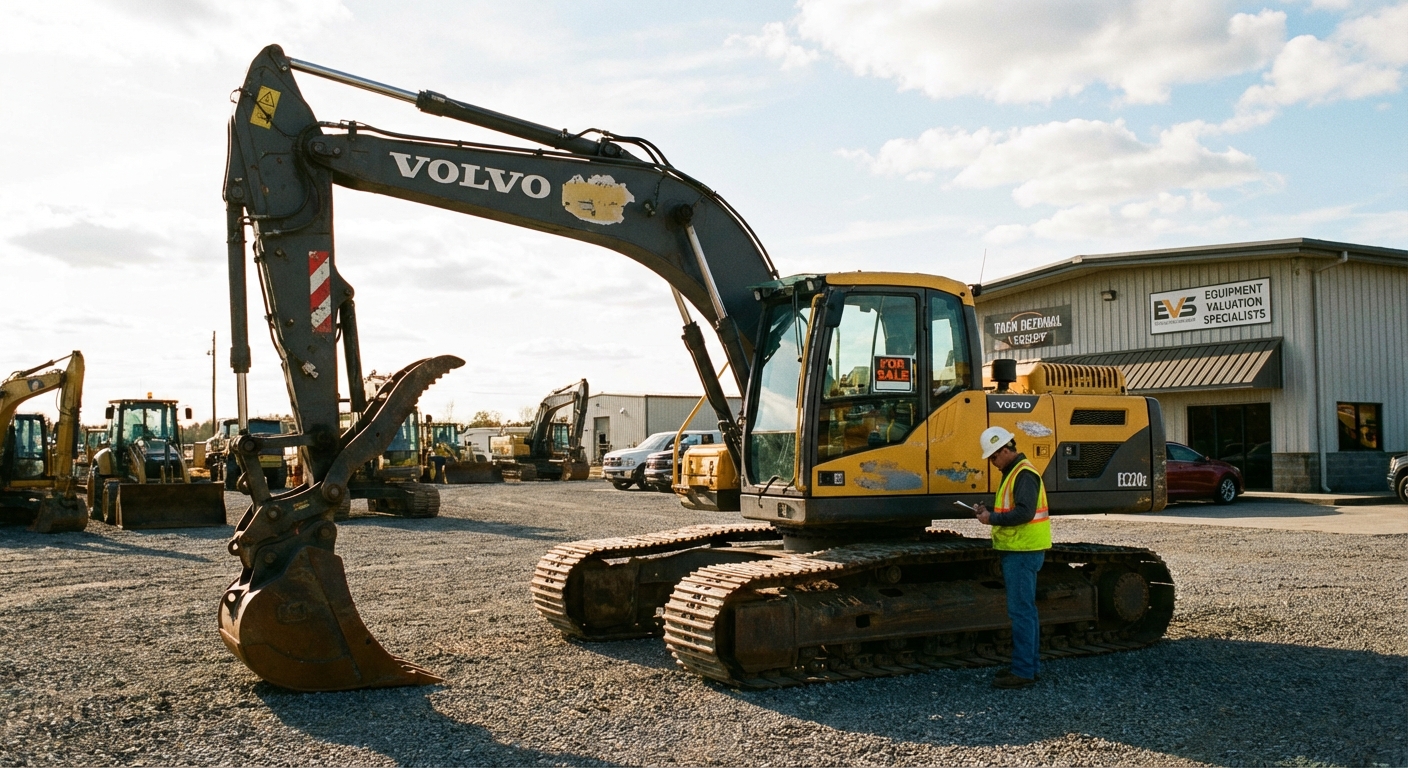
Excavators are the backbone. You’ll want 30-ton and up for mass excavation, plus smaller units (8-15 ton) for utility trenching. GPS grade control is becoming table stakes on these jobs. If your excavators aren’t equipped for it, you’re at a disadvantage when bidding.
Dozers for rough grading and bulk earthmoving. D6 and D8 class machines get the most use. Finish grading may call for smaller units with GPS.
Compaction equipment. Padfoot and smooth drum rollers, typically 10-ton and up. Intelligent compaction systems that generate pass-count and density maps are a plus. Documentation matters on these projects, and IC data gives the GC something to hand the engineer.
Articulated dump trucks for moving spoils, especially on larger sites where haul distances make it impractical to work with on-site stockpiles alone. A fleet of 30-ton ADTs can make or break your daily production numbers.
Utility installation equipment. Directional drills, track hoes with thumb attachments for pipe laying, compactors for trench backfill. The utility scope on data center projects is often larger than people expect.
The labor problem is your opportunity
Here’s the part that matters most for small and mid-size contractors. The construction industry is short nearly 500,000 workers heading into 2026. About 94% of contractors report difficulty filling open positions. Data centers are competing for the same labor pool as residential, commercial, and infrastructure projects.
That shortage creates a bottleneck. General contractors can’t self-perform all the sitework. They need subs. And they need subs who can show up with their own equipment, their own operators, and a track record of getting work done on time.
If you’re a regional earthmoving contractor with 3-5 machines and reliable crews, you’re exactly what these projects need. The barrier to entry isn’t having a $20 million fleet. It’s having competent people and equipment that runs. The GCs will figure out the rest.
This is especially true outside the established data center markets. In Virginia, the big boys have the sitework locked up. But in Ohio, Georgia, North Carolina, and the expanding Texas markets, there’s room for contractors who’ve never touched a data center project before.
Risks worth understanding
It’s not all upside. A few things to watch.
Client concentration. If you build your business around data center work and the AI investment cycle cools, you’re exposed. The hyperscalers are spending aggressively right now, but tech capital spending is cyclical. Diversification still matters.
Power constraints. Some projects are getting delayed or cancelled because the local grid can’t support them. If you’re counting on a job that hasn’t broken ground, make sure the power situation is resolved. A signed contract doesn’t mean much if the utility can’t deliver the megawatts.
Bonding and insurance. Larger data center GCs may require higher bonding limits and specific insurance coverage that smaller contractors haven’t needed before. Check the requirements before you invest time in the bid process.
Payment terms. Big projects sometimes mean longer payment cycles. Net-60 or Net-90 isn’t unusual. Make sure your cash flow can handle the gap between doing the work and getting paid. A $500,000 sitework contract is great right up until you’re floating $200,000 in fuel and payroll waiting for the check.
The bottom line
The data center construction wave is the biggest thing to happen to the sitework and excavation market in a generation. More money, longer projects, and better rates than most commercial work. The geographic spread means it’s not just a coastal phenomenon — it’s hitting the Midwest, the Southeast, and the Mountain West.
If you’re in the dirt business, this is worth paying attention to. Talk to the GCs in your area. Get on bid lists. Make sure your fleet is ready and your operators are qualified. The work is here, and there’s going to be more of it before there’s less.
Data centers might not be as sexy as a downtown high-rise or as visible as a highway project, but they’re putting a lot of equipment to work right now. And for contractors who position themselves correctly, it’s some of the best work available.