
The Data Center Gold Rush Is Rewriting the Equipment Playbook
An $86 billion wave of data center construction is reshaping what heavy equipment gets built, who buys it, and where the work is. Here's what it means for the industry.
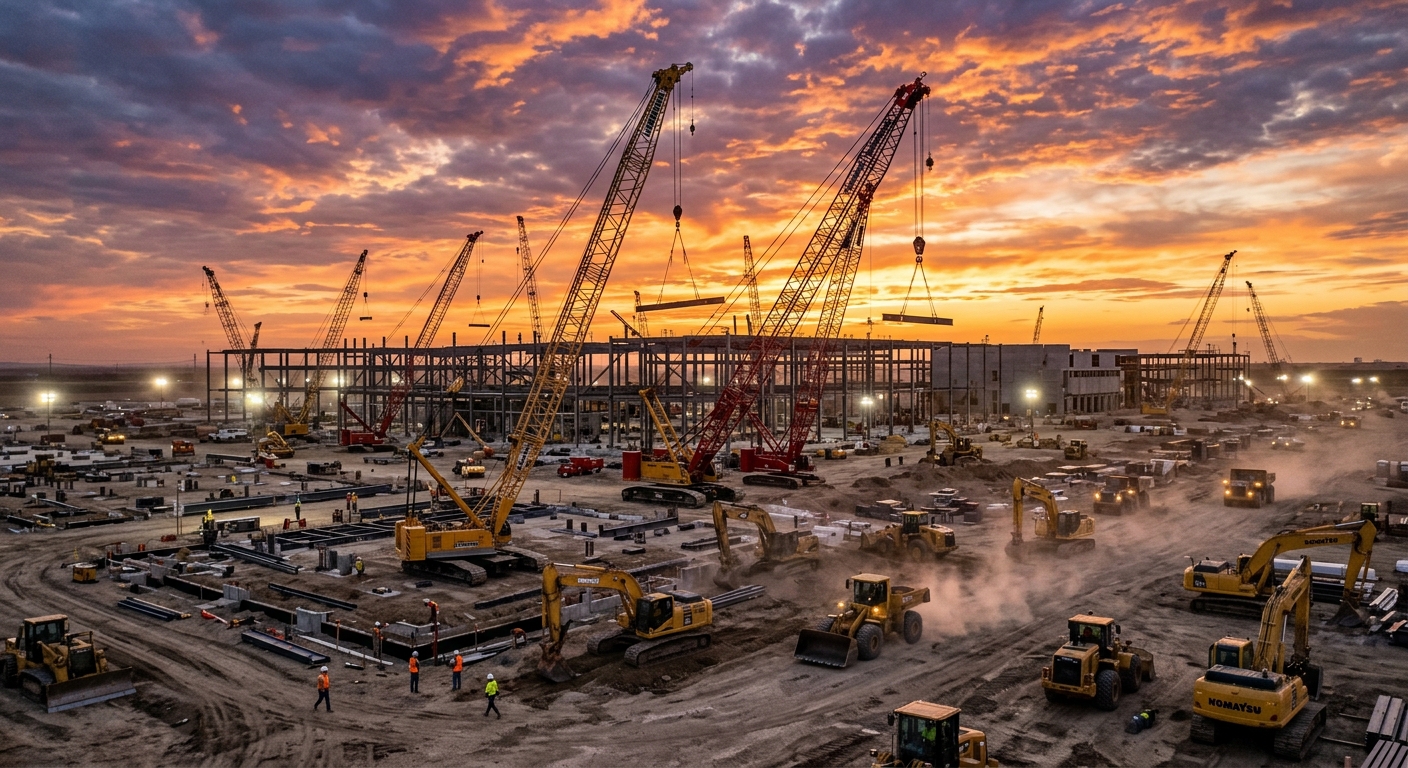
If you’ve been wondering why crawler cranes are booked out six months in advance and excavator lead times keep stretching, here’s your answer: the data center construction boom is eating heavy equipment capacity alive.
The U.S. data center construction market is on track to hit $86 billion in 2026. That’s an eightfold jump from 2022. And this isn’t speculative money floating around in PowerPoint decks. These are real projects, in the ground right now, burning through equipment hours at a rate the industry hasn’t seen since the shale oil build-out of the early 2010s.
Editor’s Note: Tracking equipment costs across projects like these is exactly why tools like FieldFix exist. When you’re running machines on a hyperscale site 12 hours a day, knowing your actual cost-per-hour isn’t optional. It’s the difference between making money and wondering where it went.
What’s Driving the Surge
The short version: artificial intelligence needs buildings full of computers, and those buildings need to sit on something.
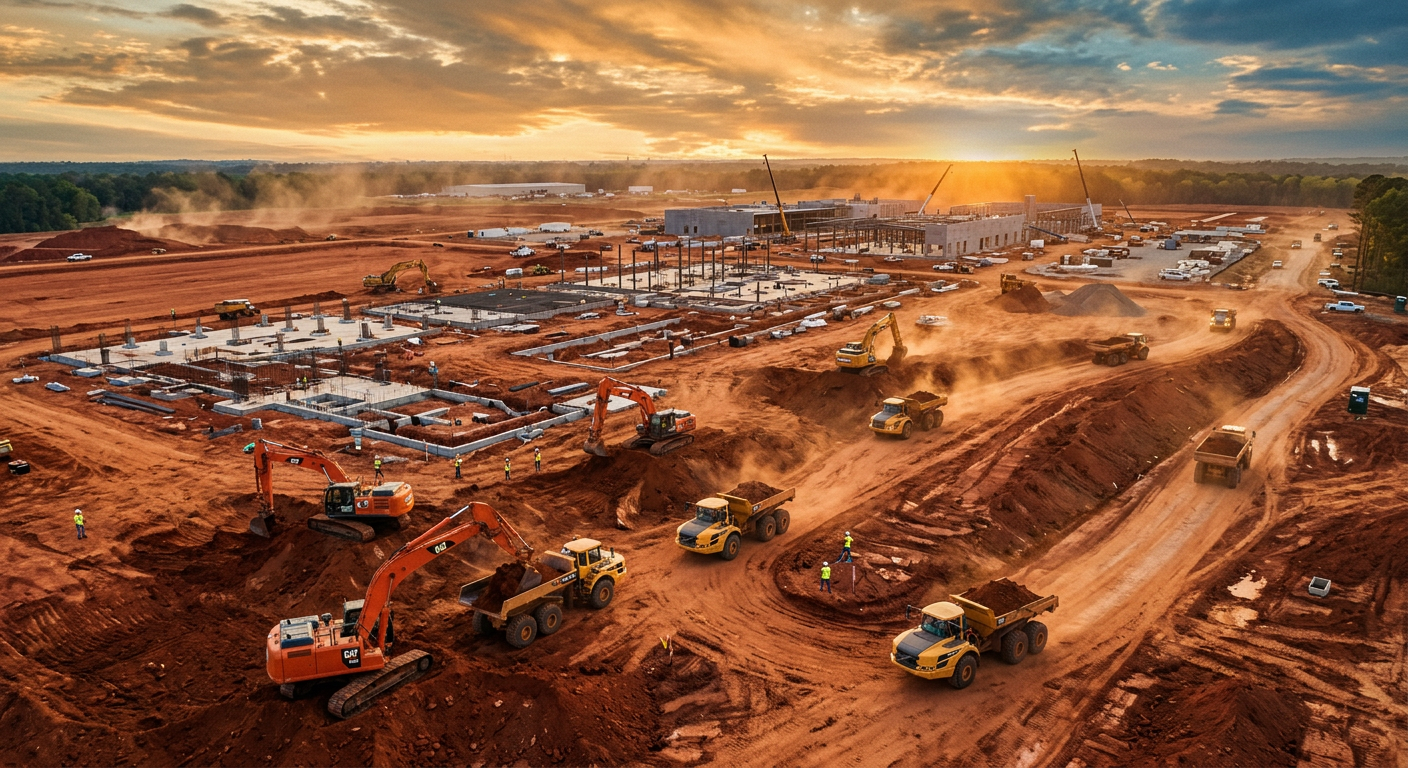
Every major tech company is racing to build AI training and inference capacity. Microsoft, Google, Amazon, Meta, and Oracle are all pouring billions into hyperscale facilities. These aren’t your standard server rooms. A single hyperscale data center campus can cover 100+ acres and require moving millions of cubic yards of dirt before a single rack goes in.
The math is straightforward. More AI models means more compute. More compute means more data centers. More data centers means more site work, more foundations, more structural steel, and more mechanical/electrical buildout. Every phase of that process needs heavy iron.
Where the Equipment Demand Is Hitting Hardest
Earthmoving
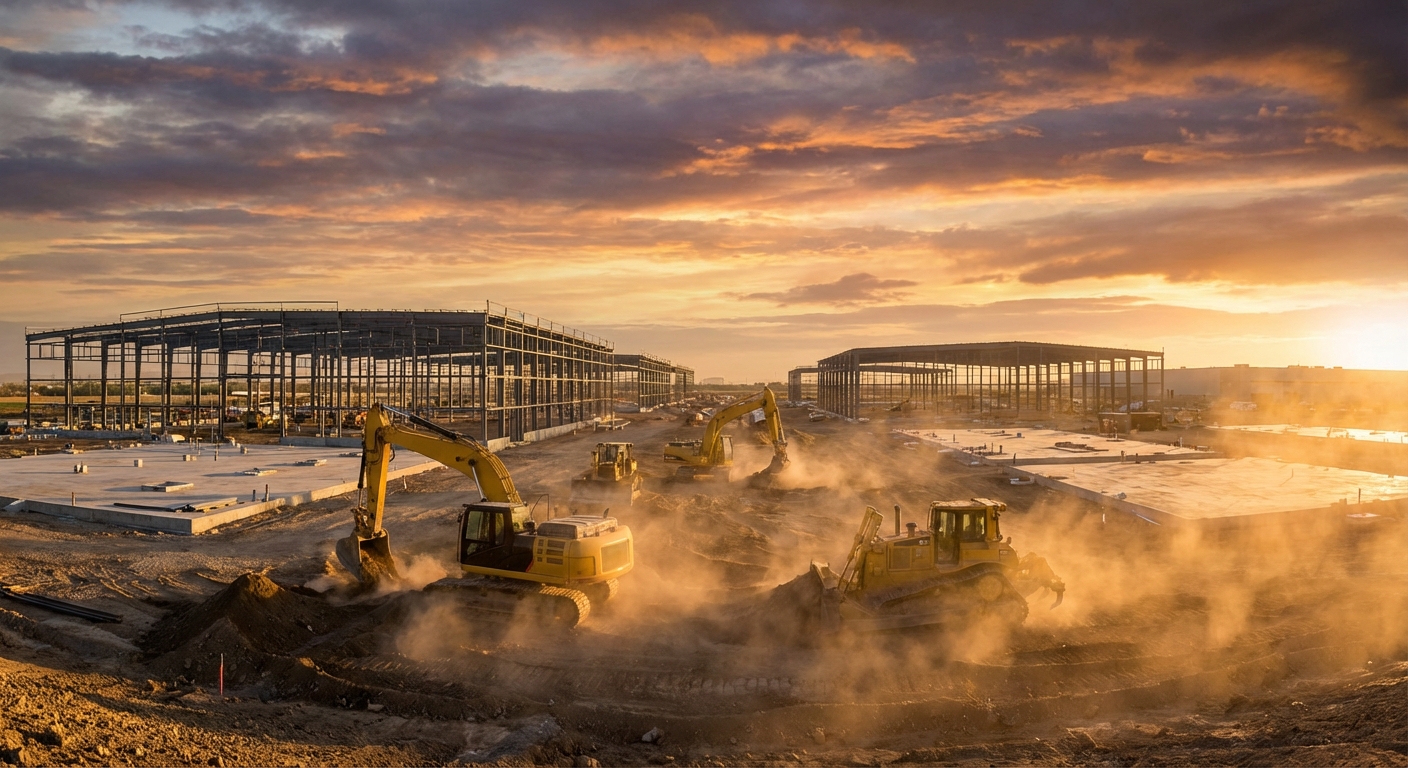
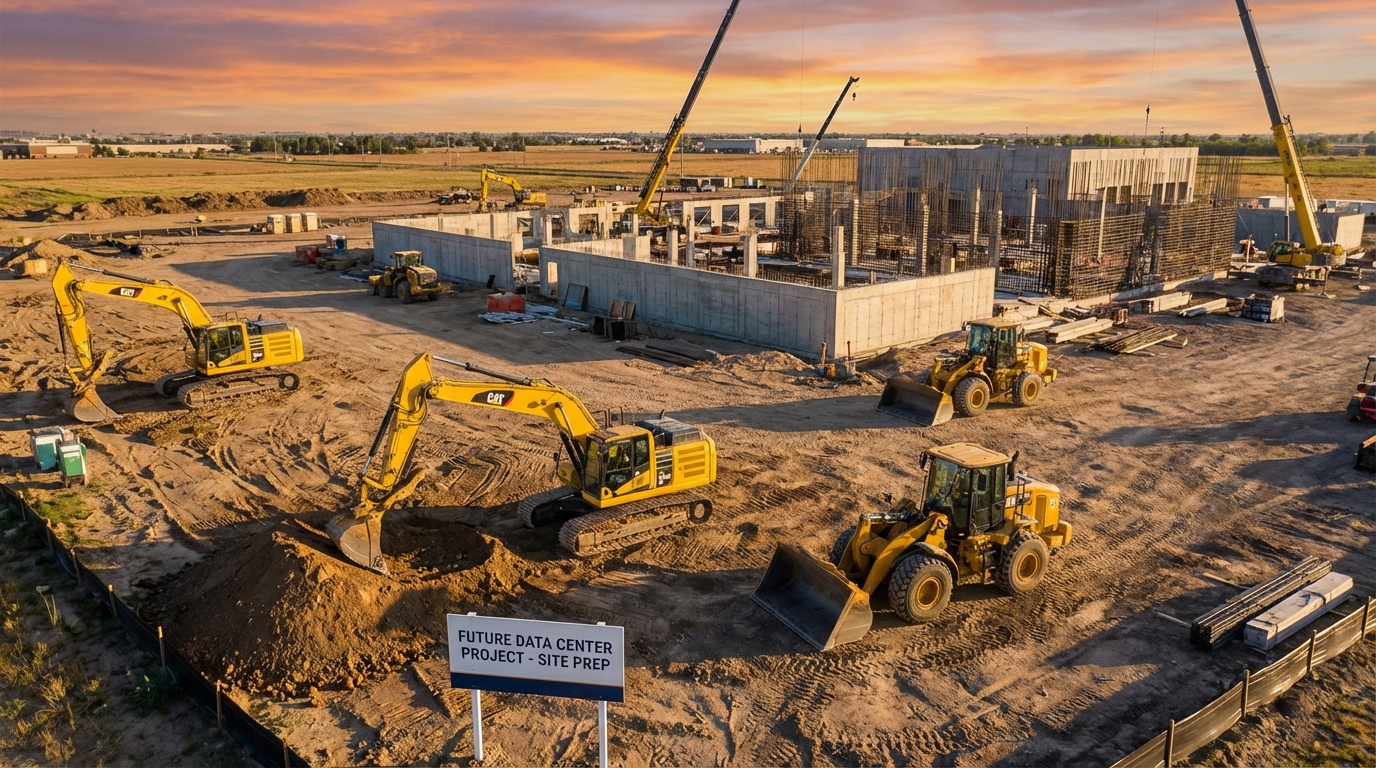
Data center sites are massive flat pads that need precise grading. A typical hyperscale campus starts with 6-12 months of earthwork before vertical construction begins. That means excavators, dozers, scrapers, and articulated dump trucks running at full utilization for extended periods.
The equipment mix skews toward larger classes. We’re talking 30-ton-plus excavators, D8-class dozers, and 40-ton ADTs. These aren’t residential subdivision jobs where a mini excavator and a skid steer get it done. The scale is different.
Cranes
This is where the demand crunch is most visible. Data centers are now the most crane-intensive growth sector in North America. The structural steel and precast concrete that makes up these facilities requires large crawler cranes (300-ton class and up) for the main lifts, plus mid-capacity rough-terrain cranes for the mechanical and electrical phases.
Atlanta has become the epicenter. The city leads U.S. data center markets in active construction capacity, and local crane fleets are stretched thin. Northern Virginia and Dallas are close behind. If you own a 300-ton crawler crane in any of those markets, your phone is ringing constantly.
Concrete and Foundations
Hyperscale data centers sit on massive mat foundations designed to handle the concentrated floor loads from rows of server racks and cooling systems. That means high-volume concrete pours and serious reinforcing steel. Concrete pumps, batch plants, and concrete trucks are all seeing elevated demand in data center corridors.
The Ripple Effect on Equipment Availability
Here’s what makes this interesting for anyone in the equipment world, even if you’ll never set foot on a data center site: the demand is pulling machines out of the general market.
When a rental company moves a fleet of 30-ton excavators to a 14-month data center project in Northern Virginia, those machines aren’t available for road work in Pennsylvania or site development in Ohio. The utilization spike at the top cascades down. Rental rates climb. Used equipment prices hold firm instead of softening like some analysts predicted for 2026.
The global heavy equipment market is projected to hit $242 billion by year-end, expanding at a CAGR of 8.7% through 2033. Data center construction is a big piece of that growth, but it’s not the only driver. Infrastructure spending from the IIJA is still flowing. Reshoring manufacturing projects are adding capacity needs. The equipment industry is in a demand cycle with multiple tailwinds.
Who’s Winning
Large OEMs are the obvious beneficiaries. Caterpillar, Komatsu, Deere, and Volvo CE all have product lines that map directly to data center work. Cat’s large excavator and dozer lines are running at high production rates. Komatsu’s intelligent machine control (iMC) excavators are getting pulled into data center earthwork because the grade precision matters on these pads.
Crane rental companies are in the best position they’ve been in for years. The rates for large crawler cranes on long-term data center projects are strong, and the commitments are long enough to support purchasing new iron. ALL Family of Companies, Maxim Crane Works, and Bigge are all expanding capacity to chase this work.
General contractors with heavy civil capabilities are printing money. Firms that can self-perform mass earthwork on these sites have a real advantage because they’re not fighting the subcontractor availability problem.
Attachment and work tool manufacturers are seeing the pull-through too. Hydraulic breakers for rock removal during site prep, compaction equipment for engineered fill, and material handling attachments for the steel erection phases are all in demand.
The Chinese Equipment Question
One wrinkle worth watching: Chinese heavy equipment manufacturers are making a play for this market. Companies like SANY and LiuGong are expanding their North American dealer networks and showed up strong at CONEXPO 2026. Their pitch is simple — comparable performance at lower price points, with improving quality and service support.
Whether tariff policy puts a ceiling on Chinese equipment imports is an open question. The current trade environment adds cost friction that partly offsets their price advantage. But the machines are getting better every year, and contractors are pragmatic. If a SANY excavator does the job for 25% less and parts support is there, some buyers will make that switch.
SANY America is projecting moderate growth in 2026, specifically citing data center and renewable energy projects as their target market. They’re not hiding the strategy.
The Labor Factor
Equipment demand only tells half the story. You still need operators, and the skilled labor pool hasn’t grown with the project pipeline. This is pushing two trends simultaneously.
First, it’s driving wages up for experienced operators. A good finish grade operator who can work to GPS machine control tolerances on a data center pad is earning more than they did two years ago. The contractors chasing this work are paying up to keep their crews.
Second, it’s accelerating adoption of machine control and semi-autonomous technology. When you can’t find enough skilled operators, you put technology in the cab to help less experienced operators do precision work. Caterpillar’s partnership with NVIDIA on AI-powered automation and Komatsu’s iMC 2.0 systems are both partly responses to this labor constraint.
What to Watch for the Rest of 2026
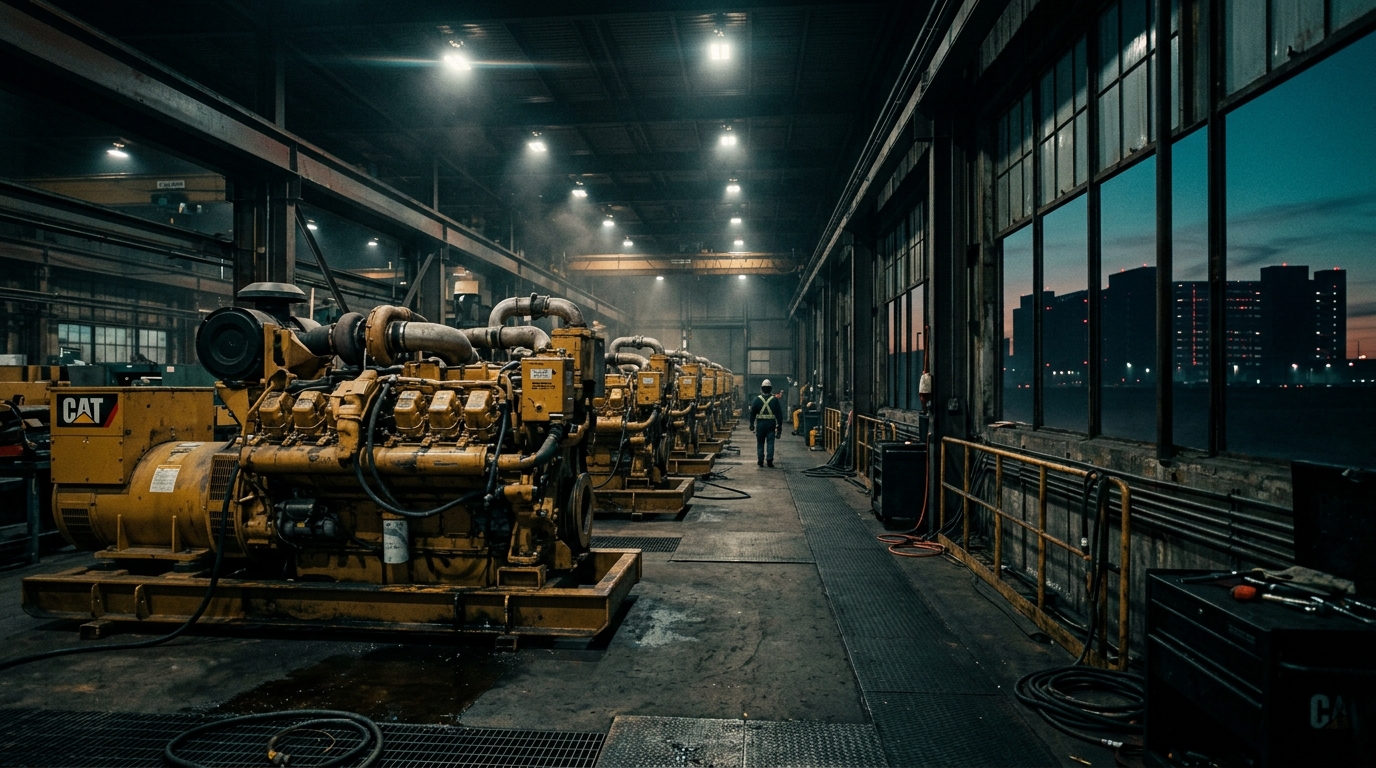
Power infrastructure. Data centers consume enormous amounts of electricity, and the power grid buildout that supports them is a whole separate construction segment. Expect increasing demand for equipment tied to substation construction, transmission line work, and on-site power generation facilities. Some data center campuses are building their own natural gas power plants on-site because the utility grid can’t deliver enough capacity fast enough.
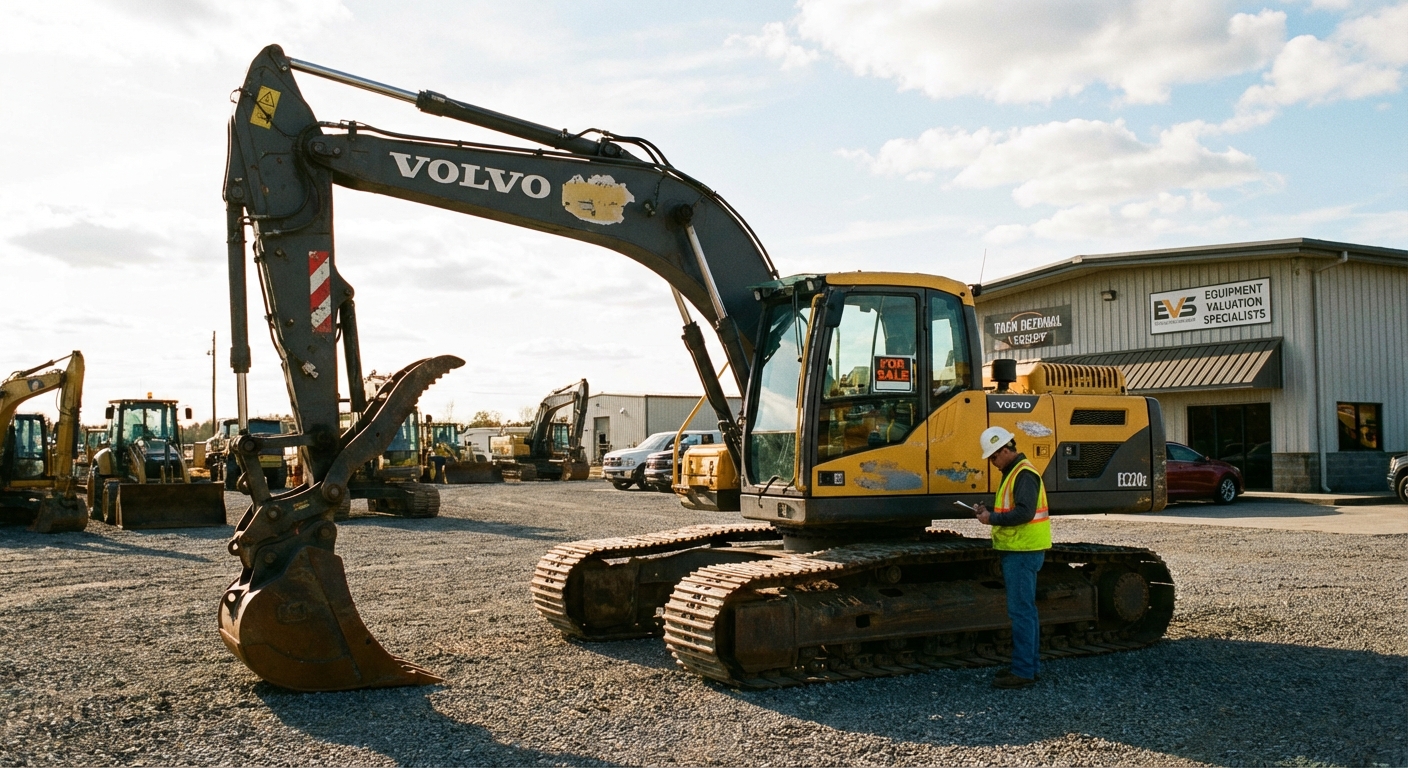
Used equipment pricing. If this demand holds (and there’s no sign it won’t), expect used equipment in the heavy categories — 30-ton+ excavators, large dozers, 300-ton+ crawler cranes — to hold value better than the market-wide average. The floor for late-model used machines in these classes is firmer than it’s been in years.
Regional hotspot shifts. Atlanta, Northern Virginia, and Dallas are the current leaders, but watch for new markets to emerge as hyperscalers look for available land, power, and water resources. Phoenix, Columbus (Ohio), and parts of the Midwest are seeing increased data center development activity.
Rental rate pressure. National rental companies are likely to push rate increases on large earthmoving equipment and cranes through the back half of 2026. The utilization numbers justify it, and the alternative for contractors is buying at elevated new equipment prices.
The Bottom Line
The data center construction wave isn’t a blip. It’s a structural shift in where construction spending goes, and it’s big enough to move the needle on equipment demand across the whole industry. If you’re in the equipment business — selling, renting, operating, or maintaining heavy iron — this trend is worth paying attention to.
The $86 billion being spent on data centers in 2026 needs to get moved, shaped, lifted, and poured by something. That something is heavy equipment, and there’s more demand for it right now than the industry has supply.