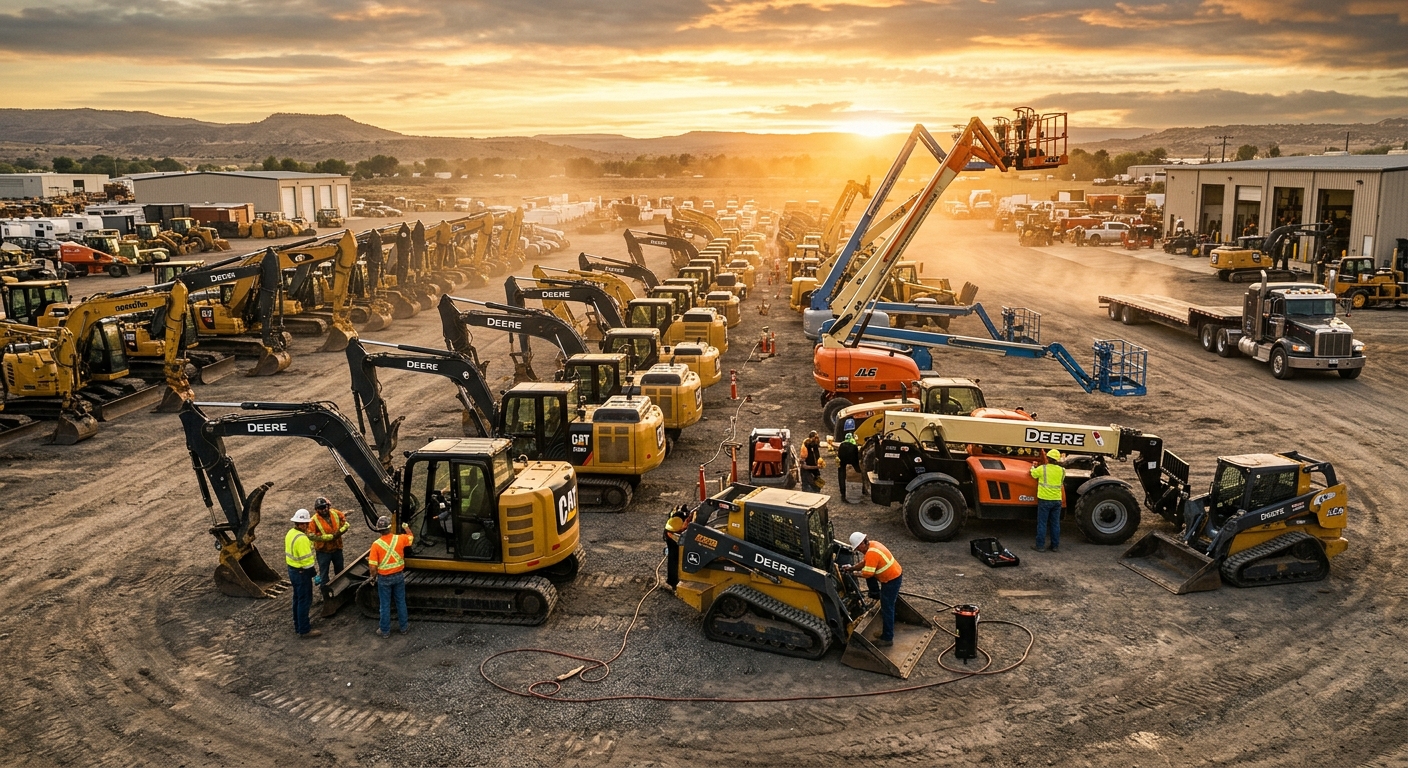
The $57.7 Billion Shift: Why More Contractors Are Renting in 2026
The construction equipment rental market is experiencing unprecedented growth as contractors navigate economic uncertainty, embrace new technology, and rethink asset ownership. Here's what's driving the transformation.
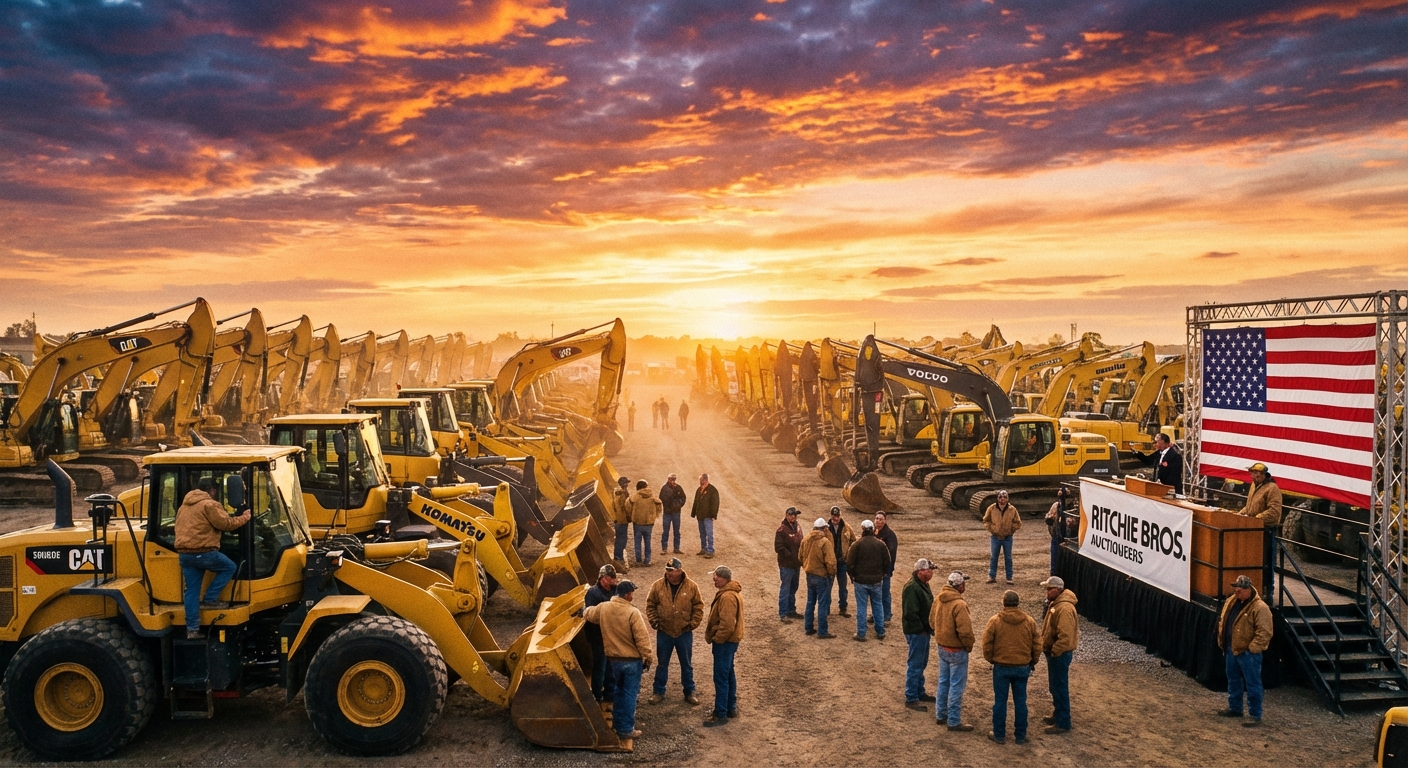
The heavy equipment rental industry has quietly become one of construction’s most dynamic sectors. In 2026, the U.S. market alone has reached an estimated $57.7 billion—and the trajectory shows no signs of slowing. According to recent industry analysis, the global construction equipment rental market is projected to grow from $211 billion in 2025 to $342 billion by 2033, representing a compound annual growth rate of 6.2%.
What’s fueling this shift? A perfect storm of economic pressures, technological innovation, and changing attitudes about asset ownership is reshaping how contractors equip their job sites.
The Economics of Uncertainty
The math is getting harder for equipment buyers. Steel prices remain elevated, component shortages persist, and imported machines carry premium price tags that show little sign of decreasing. For many contractors—especially small and mid-size operators—the capital required to purchase new equipment has become prohibitive.
Editor’s Note: Speaking of making equipment economics work—tracking cost-per-hour, maintenance intervals, and operating expenses is essential whether you rent or own. That’s exactly why we built FieldFix, our free fleet management tool. Know your numbers before you commit to any equipment decision.
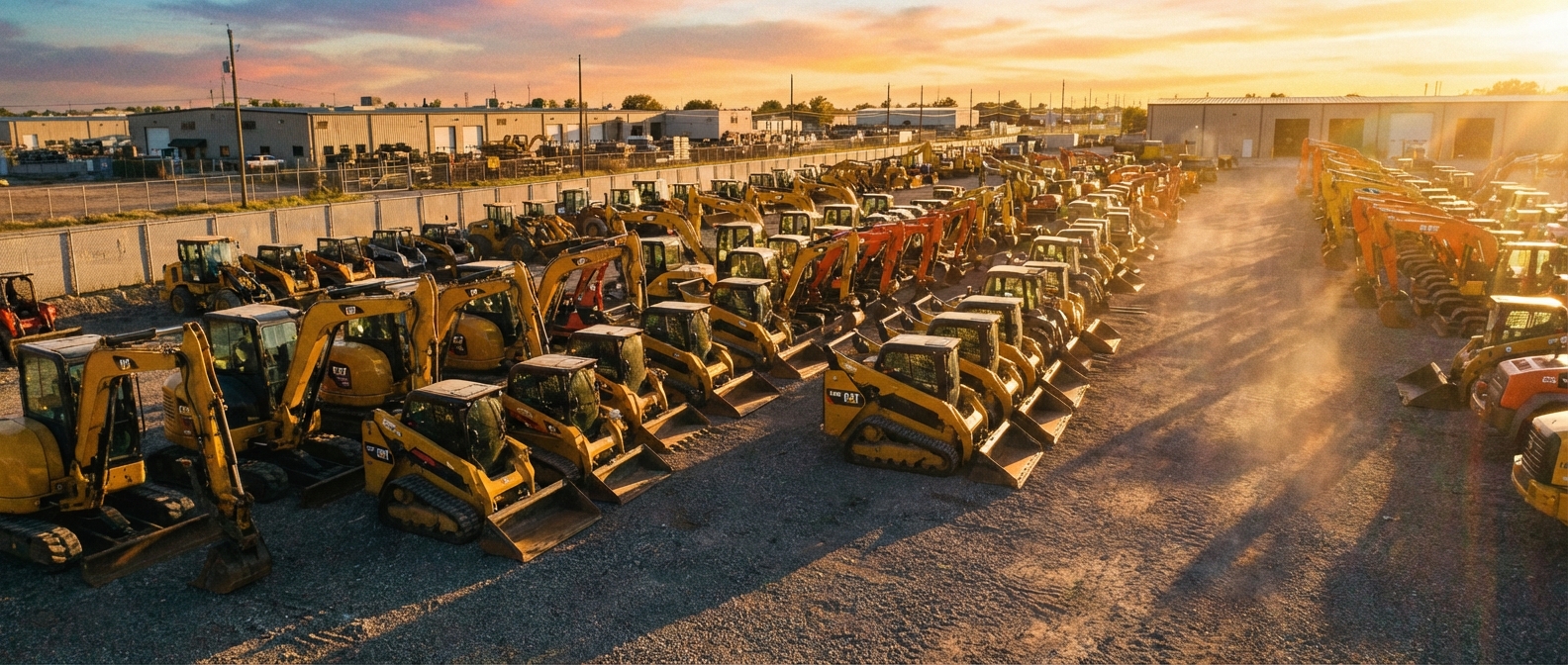
Renting allows contractors to conserve cash for labor and materials—two line items that demand immediate payment and offer no financing flexibility. When a $400,000 excavator sits idle between projects, it’s not generating revenue. But when that same machine is rented only for the duration of need, the economics shift dramatically.
The rental model also provides a hedge against economic volatility. With industry analysts split on whether 2026 will see growth or contraction—a recent Deloitte report predicts 1.8% growth while contractor surveys suggest ongoing tightness—the ability to scale equipment costs up or down with project flow has become invaluable.
Telematics: The Technology Transforming Rentals
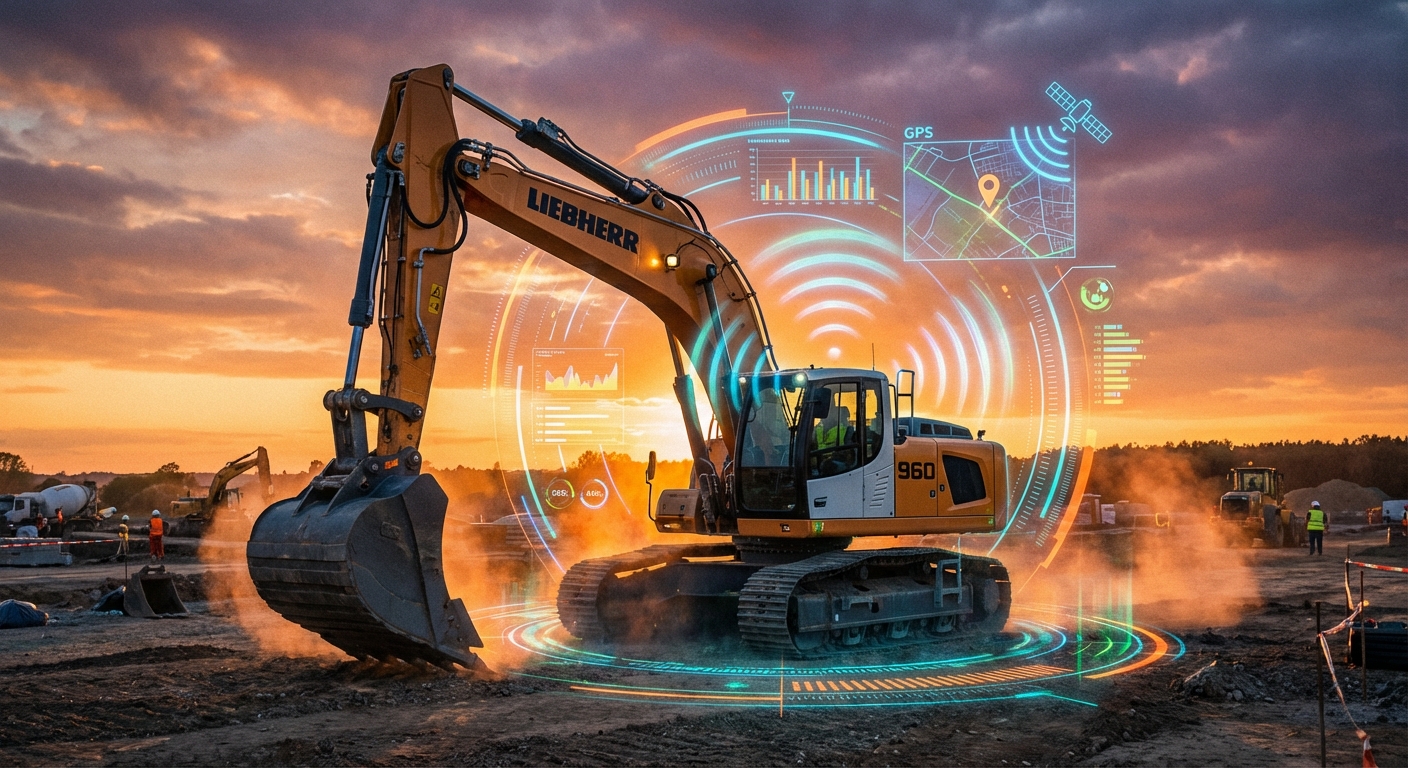
The construction telematics market is projected to reach $1.5 billion by the end of 2026, with growth rates exceeding 16% annually. This isn’t just about knowing where your equipment is—it’s about fundamentally changing how rental relationships work.
Modern telematics platforms provide real-time data on fuel consumption, equipment health, operator behavior, and utilization rates. For rental companies, this means:
Predictive maintenance capabilities that can anticipate failures before they strand equipment on a job site. Over 53% of fleet managers now cite predictive maintenance alerts as their most important feature when selecting a telematics vendor. The technology has matured to the point where AI-powered systems can achieve remarkable accuracy in predicting component failures, potentially eliminating a significant percentage of unexpected breakdowns.
Utilization optimization that ensures machines aren’t sitting idle. Real-time tracking allows rental companies to offer more competitive rates because they can maximize each unit’s productive hours across their fleet.
Transparent billing based on actual usage rather than calendar days. GPS-enabled tracking and hour meters provide irrefutable records of when and how equipment was used, reducing disputes and building trust between rental companies and contractors.
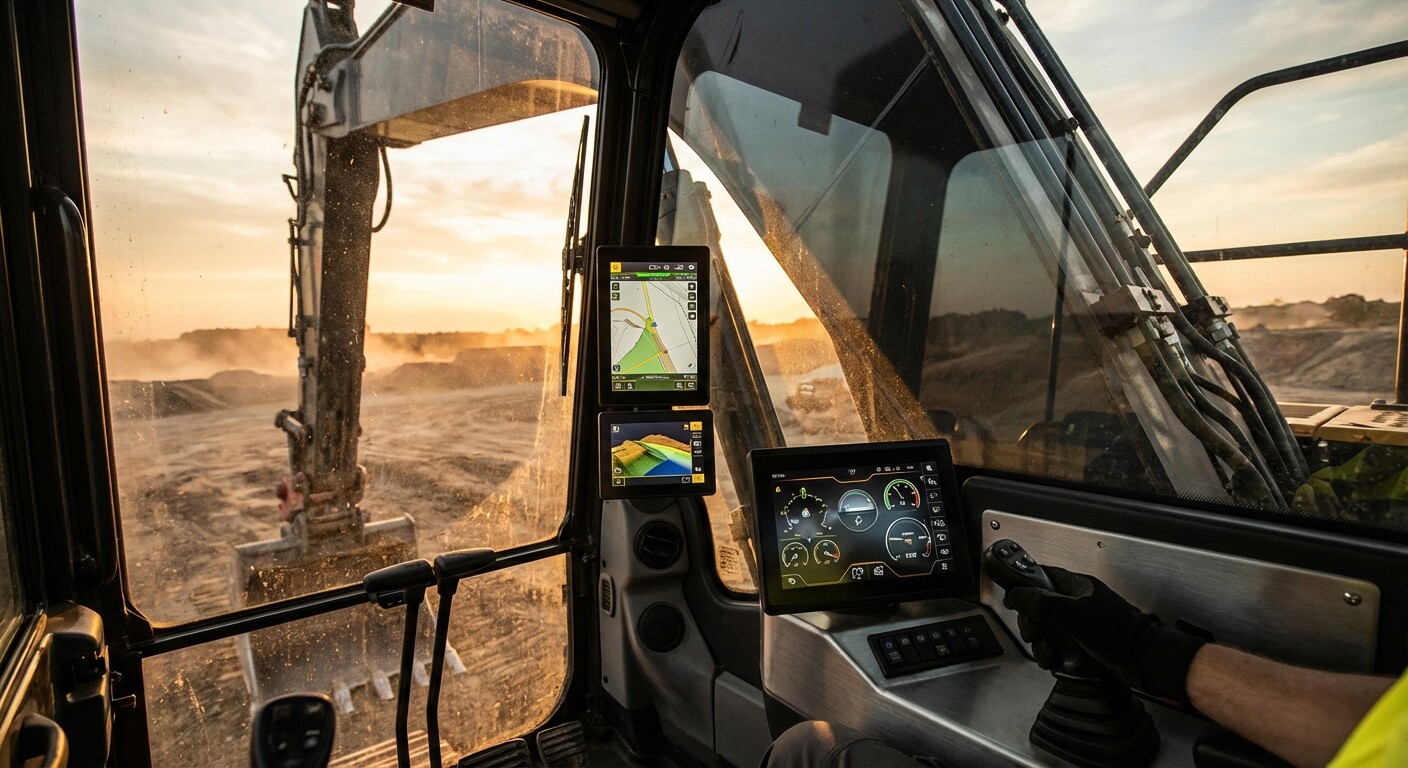
For contractors, telematics-equipped rental machines offer visibility into operations that was once impossible. Site managers can monitor fuel consumption, track idle time, and even receive alerts when equipment operates outside designated areas—all without owning the underlying asset.
The Labor Equation
Construction’s chronic labor shortage isn’t just about finding operators—it’s about finding qualified mechanics and service technicians. Equipment ownership requires maintenance capability, and that capability is increasingly hard to staff.
Rental shifts the maintenance burden to operators with dedicated service departments, trained technicians, and parts inventories. For a small contractor, the alternative—scrambling to find a competent mechanic when a hydraulic pump fails on a rented excavator they actually own—can mean days of costly downtime.
The labor calculation extends to equipment operation as well. Advanced telematics systems now offer in-cab coaching for operators, helping less experienced workers improve technique and efficiency. Rental companies can provide machines pre-configured with these systems, giving contractors access to training technology they might not otherwise invest in.
Autonomous Equipment: Rental’s Next Frontier
Self-driving dozers, excavators, and haul trucks are moving from experimental pilots to practical job site tools. While the technology remains expensive, rental offers a path to access without massive capital commitment.
For contractors curious about autonomous equipment but unwilling to bet hundreds of thousands of dollars on unproven technology, rental provides a low-risk trial. If the autonomous dozer delivers on its productivity promises, the contractor can explore purchase options. If it doesn’t fit their operation, they return it at the end of the rental period.
This try-before-you-buy dynamic is accelerating autonomous equipment adoption. Rental companies become the testing ground where contractors can evaluate emerging technology against their specific needs, job site conditions, and workforce capabilities.
Electric Equipment Enters the Fleet
Battery-electric construction equipment has reached a tipping point in 2026. Advances in battery technology have extended operating times, while expanding charging infrastructure makes electric equipment viable for more job sites.
The economics favor rental in the electric transition. Battery technology continues to improve rapidly—a machine purchased today may be obsolete in ways that a machine purchased three years from now won’t be. Rental allows contractors to access current-generation electric equipment without committing to technology that will inevitably be superseded.
Electric equipment also presents maintenance challenges that differ from diesel machines. Rental companies with dedicated electric service capabilities can maintain these machines more effectively than individual contractors building expertise from scratch.
For contractors facing emissions requirements on urban job sites or pursuing sustainability goals, electric equipment rental provides compliance without capital commitment.
Regional Variations in Rental Growth
The rental boom isn’t uniform across the country. The Southwest continues to see particularly strong demand, driven by extraction industries and ongoing construction activity. Infrastructure projects funded by federal investment programs have created multi-year demand visibility in several regions, encouraging rental operators to expand capacity.
Internationally, the Asia-Pacific region is experiencing the fastest growth in equipment rental, driven by urbanization and massive infrastructure development. The Middle East continues to offer substantial rental demand as megaprojects progress. These global trends influence domestic markets as well—equipment availability and pricing are increasingly connected across borders.
The Data Advantage
Perhaps the most significant shift in the rental industry is the growing sophistication of data collection and analysis. Modern rental operations generate enormous amounts of information about equipment performance, utilization patterns, maintenance needs, and operating costs.
This data creates value for everyone involved:
Rental companies can optimize their fleets, predict maintenance needs, and price services more accurately based on actual operating conditions rather than estimates.
Contractors gain access to benchmarking data that helps them understand how their operations compare to industry standards. Are they getting expected productivity from rented equipment? Is their fuel consumption in line with similar operations? Data answers these questions.
Manufacturers benefit from real-world performance data that flows back through rental channels, informing product development and identifying reliability issues faster than traditional warranty claims would reveal.
The construction equipment fleet management software market is projected to grow from $3.99 billion in 2024 to $7.49 billion by 2029—a clear indication that the industry sees data management as essential infrastructure.
Challenges Facing the Rental Model
The rental industry isn’t without headwinds. Acquisition costs for new equipment remain elevated, putting pressure on rental rates. Companies must balance competitive pricing against the capital required to maintain modern, well-equipped fleets.
Supply chain issues continue to affect equipment availability. While conditions have improved from peak disruption, lead times for certain machines and components remain extended. Rental companies with strong manufacturer relationships and diverse supplier networks hold significant advantages.
The technology investment required to remain competitive is substantial. Telematics systems, fleet management software, customer portals, and data analytics capabilities all require ongoing investment. Smaller rental operators may struggle to match the technological sophistication of larger competitors.
What This Means for Contractors
For contractors evaluating their equipment strategies in 2026, several principles emerge:
Know your utilization numbers. The rent-versus-buy calculation depends entirely on how many hours per year a machine will actually work. Honest utilization tracking—not optimistic projections—should drive the decision.
Consider the total cost of ownership. Purchase price is just the beginning. Maintenance, insurance, storage, depreciation, and the opportunity cost of capital all factor into true ownership costs. Rental rates may look high until you account for everything ownership requires.
Evaluate technology access. Rental can provide access to advanced telematics, operator assistance systems, and emerging technologies that might not justify purchase for a smaller operation.
Think about flexibility. Economic uncertainty favors businesses that can scale costs with revenue. Rental provides that flexibility in ways that ownership cannot.
Don’t forget the tax implications. Rental payments are typically fully deductible as operating expenses, while purchased equipment must be depreciated over time. Consult with an accountant about which approach optimizes your specific tax situation.
The Road Ahead
The construction equipment rental market’s growth reflects fundamental changes in how contractors think about assets, risk, and operations. Technology has transformed what rental relationships can offer—from simple machine access to comprehensive fleet management solutions.
For the industry as a whole, the rental sector’s expansion signals a maturation of construction operations. The cowboy era of equipment ownership, when contractors bought machines based on gut feeling and brand loyalty, is giving way to data-driven decision making that evaluates every asset against its actual contribution to profitability.
The $57.7 billion U.S. rental market isn’t just a number—it’s evidence that construction is evolving toward more efficient, more flexible, and more sophisticated approaches to equipment. Whether that evolution benefits individual contractors depends entirely on their willingness to understand the economics and embrace the possibilities.
Market data compiled from industry analyst reports including research from Mordor Intelligence, SkyQuest, Fortune Business Insights, IBISWorld, and The Business Research Company.