Used Heavy Equipment Market Outlook: What Buyers and Sellers Should Expect in 2026
A deep dive into the factors shaping used equipment values, auction dynamics, and strategic timing for contractors and fleet managers this year.
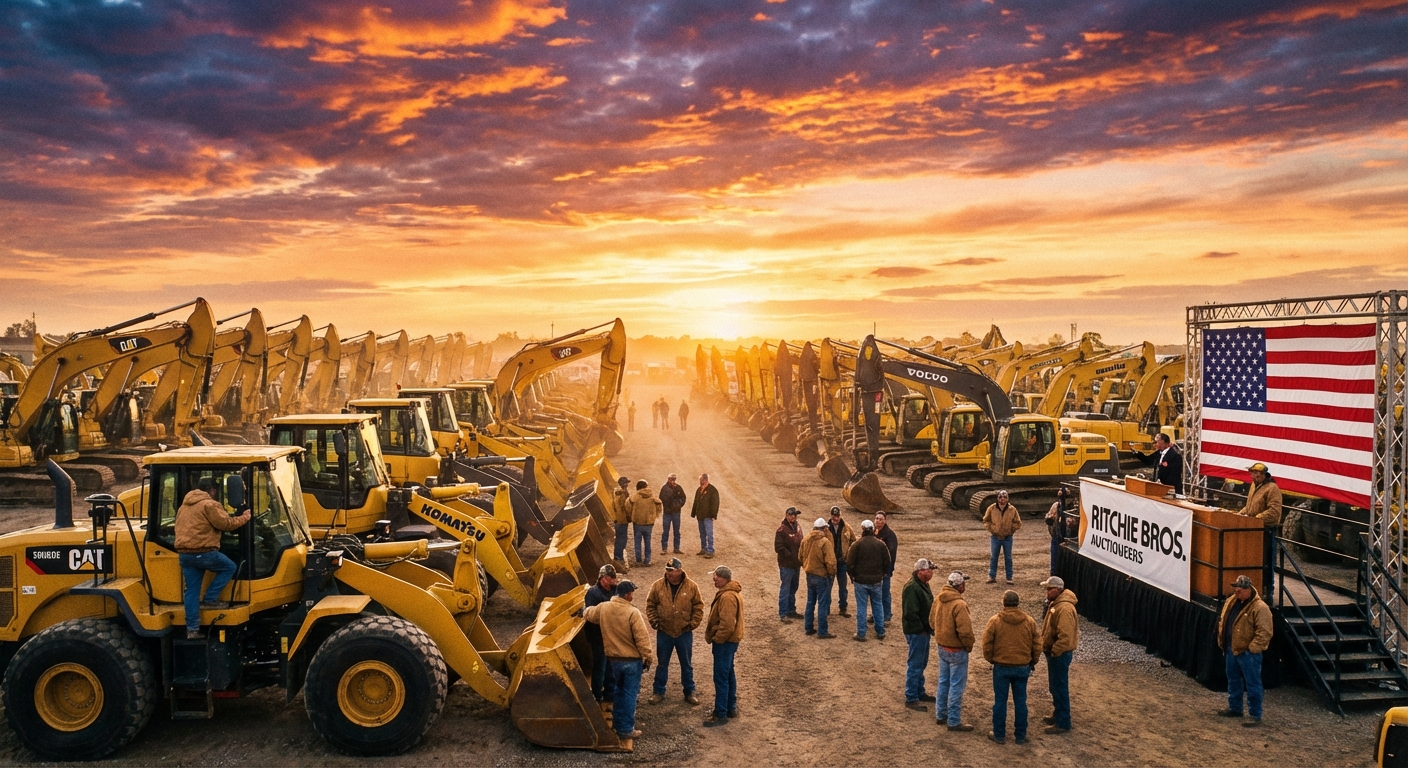
The used heavy equipment market has always been a reliable barometer of the broader construction and infrastructure economy. As we move deeper into 2026, a confluence of factors—from shifting interest rates to massive infrastructure spending—is creating a market environment that rewards informed decision-making and punishes complacency.
Whether you’re looking to expand your fleet, right-size for seasonal demands, or liquidate aging iron, understanding the current market dynamics is essential. Here’s what the data tells us about where used equipment values are headed and how savvy operators can position themselves for success.
Editor’s Note: Tracking Your Equipment’s True Cost
Understanding market values is only half the equation. Knowing what your equipment actually costs to operate—fuel, maintenance, repairs, downtime—determines whether you’re making money or losing it. FieldFix helps contractors and fleet managers track cost-per-hour metrics automatically, so you can make data-driven decisions about when to buy, sell, or trade. It’s free to start.
The Macro Picture: Infrastructure Spending Meets Fleet Renewal
The Infrastructure Investment and Jobs Act (IIJA), signed in late 2021, continues to pump billions into roads, bridges, utilities, and broadband. By the numbers, federal infrastructure spending has increased by approximately 35% since the law’s passage, with peak disbursements expected through 2027.
This sustained spending has created a dual effect on the used equipment market:
Demand-side pressure: Contractors need machines to fulfill federal and state contracts. New equipment lead times, while improved from the pandemic-era bottleneck, still average 4-6 months for popular models like mid-size excavators and compact track loaders. This pushes buyers toward the used market for faster availability.
Supply-side constraints: The same contractors executing these projects are running their fleets harder, accumulating hours at an accelerated pace. Machines that might have traded in at 5,000 hours are now pushing 7,000 or 8,000 before owners can justify the downtime of transitioning to new iron.
The result? A market characterized by steady demand but increasingly tired inventory. Late-model, low-hour machines command premium prices, while high-hour units face steeper discounts than historical norms.
Auction Market Dynamics: Q1 2026 Snapshot
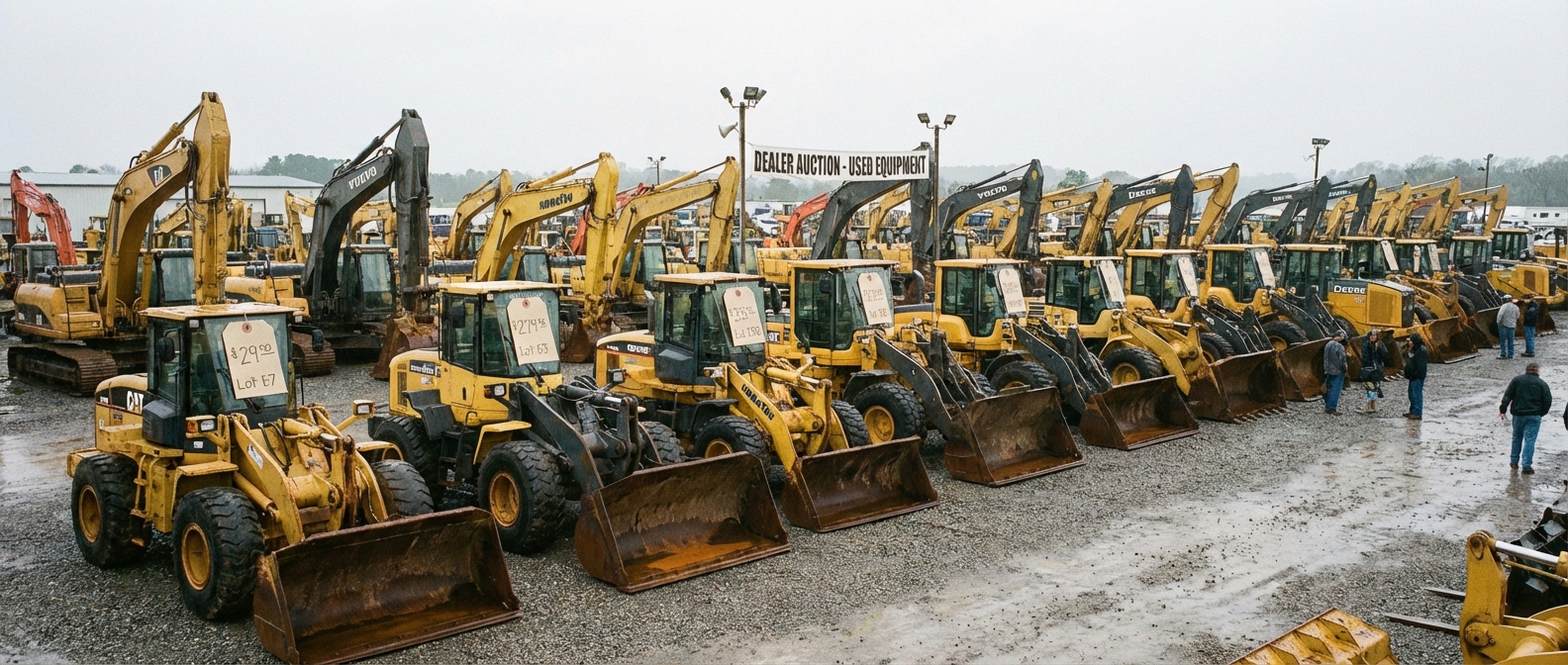
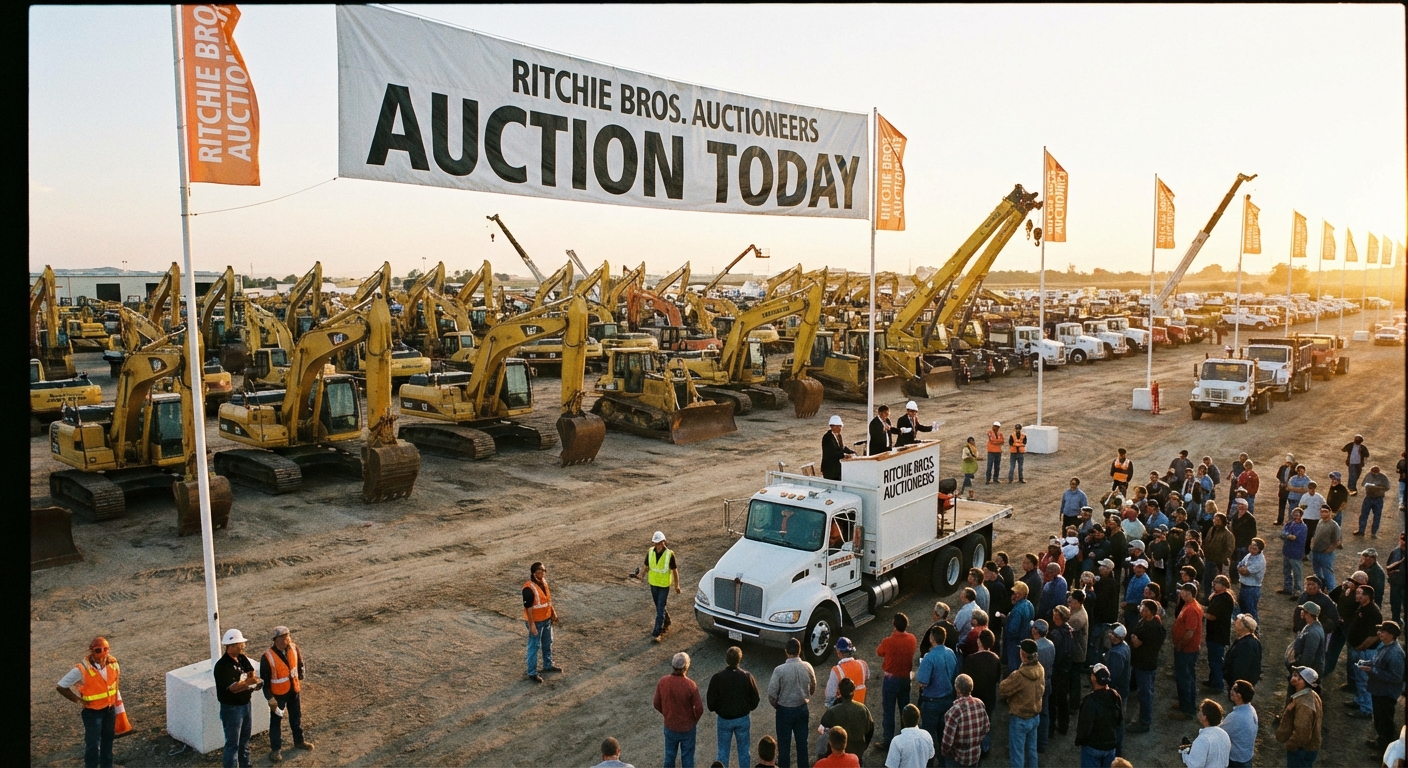
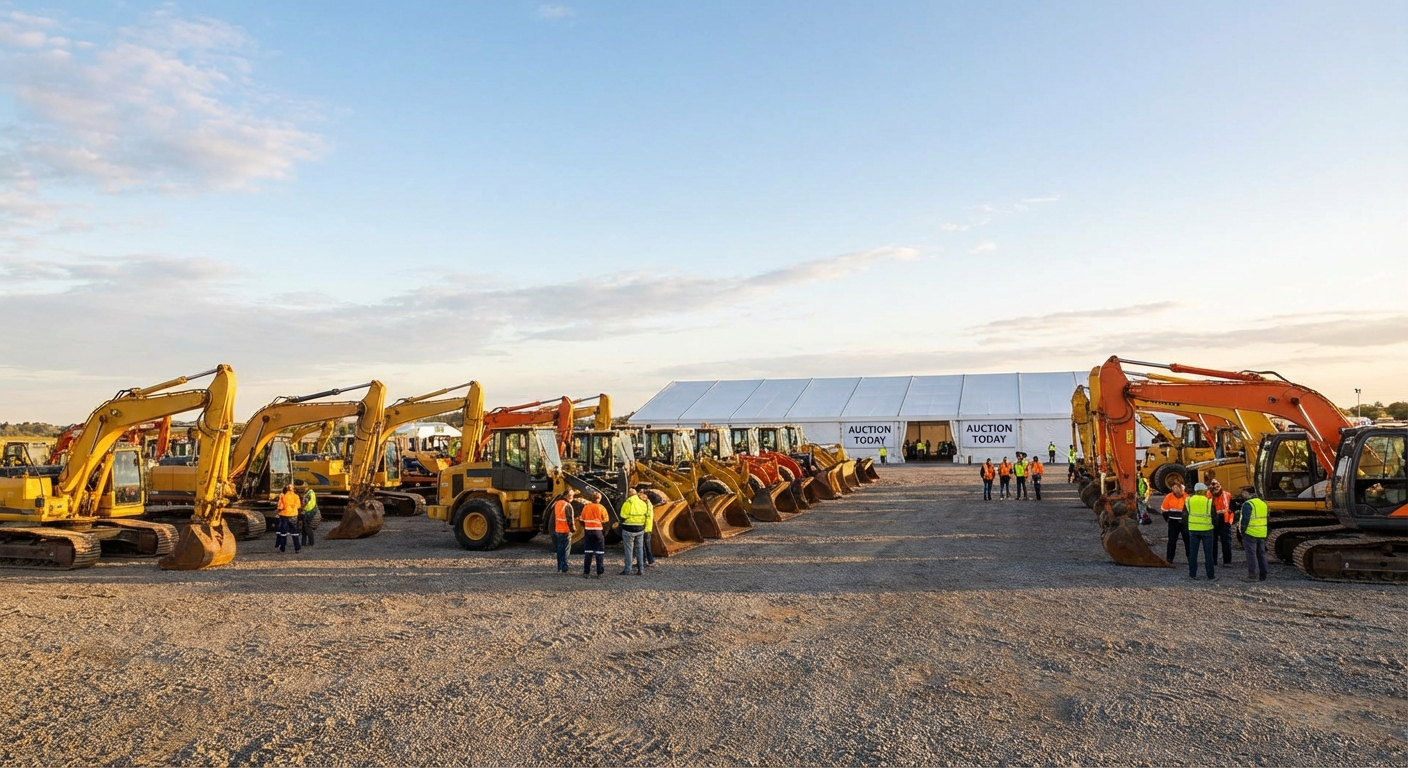
The major auction houses have reported robust activity through early 2026, with notable trends emerging:
Excavators remain king. The 20-35 ton class continues to see the strongest bidding activity, with clean units selling within 10-15% of new machine prices if hours are under 3,000. Compact excavators (under 6 tons) have seen particular strength, reflecting the ongoing mini-excavator boom in residential and utility work.
Compact track loaders hold value. CTLs in the 70-90 HP range are selling at historically high percentages of original MSRP. The rental market’s appetite for these machines keeps supply tight and values elevated.
Wheel loaders show softness. The 3-5 cubic yard class has experienced some price moderation, down approximately 5-8% from 2025 peaks. Analysts attribute this to increased availability as contractors complete large earthmoving phases of infrastructure projects.
Attachments are the wildcard. Premium attachments—mulching heads, hydraulic thumbs, tiltrotators—are seeing outsized value retention. A well-maintained forestry mulcher head can fetch 60-70% of its original price after several seasons of use, compared to the typical 40-50% for the carrier machine.
Interest Rates and Financing: The Hidden Variable
The Federal Reserve’s rate decisions ripple through the equipment market in ways that aren’t always obvious. As of early 2026, rates have stabilized in the 4-5% range after the volatility of previous years. This stability has provided some clarity for equipment financing, but the cost of capital remains meaningfully higher than the near-zero rates that prevailed from 2020-2022.
For used equipment buyers, this translates to:
Higher monthly payments on financed purchases, making the total cost of ownership calculation more complex. A $250,000 used excavator financed over 5 years costs roughly $4,500 per month at 5% APR—about $600 more monthly than at 2% rates.
Increased cash buyer advantage. Operators with strong cash positions can negotiate more aggressively, knowing that many competitors face higher financing hurdles.
Lease returns entering the market. The wave of equipment leased in 2021-2022 (during the low-rate environment) is now returning to dealers and auction houses. These machines often represent excellent value—typically well-maintained, moderate hours, and institutional ownership history.
Timing Your Buy: When to Strike
Market timing in used equipment isn’t about predicting peaks and valleys—it’s about understanding seasonal patterns and aligning your needs with natural supply fluctuations.
Spring (March-May): Highest competition, highest prices. Construction season ramps up, contractors scramble to add capacity, and auction prices reflect the urgency. Unless you have an immediate project need, this is generally a seller’s market.
Summer (June-August): Stable but active. Prices hold steady as equipment cycles through jobs. Rental companies making mid-season adjustments can create pockets of availability.
Fall (September-November): The sweet spot for many buyers. Project completions release machines back to market, contractors begin assessing year-end fleet needs, and motivated sellers emerge before winter. Auction attendance typically dips slightly, reducing bidding competition.
Winter (December-February): Best buyer opportunities in northern markets, where equipment goes idle and carrying costs motivate sales. Southern markets see less seasonal variation, but year-end tax considerations can create motivated sellers nationwide.
What to Watch: Equipment Condition Red Flags
In a market with constrained supply of prime units, the temptation to stretch on condition is real. Experienced buyers know where to focus their inspections:
Undercarriage (tracked machines): Still the single largest maintenance expense. Measure track wear, check roller condition, and calculate the cost to bring it to serviceable condition. A “good deal” can evaporate with a $40,000 undercarriage rebuild.
Hydraulic system: Look for leaks, listen for pump whine, check cycle times. Hydraulic repairs are expensive and indicative of overall maintenance quality.
Engine hours vs. calendar age: A 2020 machine with 8,000 hours has lived a different life than a 2018 machine with 4,000 hours. High hours on a younger machine may indicate rental or production fleet duty—not necessarily bad, but requiring closer inspection.
Attachment circuit condition: If the machine was used with demanding attachments (mulchers, hammers), the hydraulic system has worked harder than hours alone suggest. Check for heat damage and flow rate degradation.
Documentation: Maintenance records, repair history, and known issues should be available. Walk away from sellers who can’t or won’t provide service history.
Selling Strategies: Maximizing Your Iron’s Value
If you’re on the sell side, the current market rewards preparation and flexibility:
Time your sale thoughtfully. Listing a machine in January for a March sale captures pre-season demand without the Q4 lull. Avoid listing during major industry events when buyer attention is divided.
Invest in presentation. A thorough cleaning, minor touch-up paint, and professional photos can add 5-10% to sale price. Buyers respond to machines that look cared for.
Get an oil analysis. A clean oil sample report is cheap insurance that demonstrates engine and hydraulic health. It removes uncertainty that buyers otherwise price into their offers.
Consider multiple channels. Auctions offer certainty and speed but may not maximize value. Dealer trade-ins provide convenience but typically below-market prices. Private sales take more effort but often yield the highest returns for desirable units.
Be realistic on high-hour machines. The market efficiently prices in wear. A 12,000-hour excavator is not worth 80% of a 6,000-hour machine—the depreciation curve steepens significantly beyond typical trade-in points.
Technology’s Impact on Residual Values
Machines with factory-integrated technology—grade control, telematics, advanced hydraulic controls—are increasingly rewarded in the used market. Contractors recognize that retrofitting technology is expensive and complex compared to buying it built-in.
This trend is reshaping the value hierarchy:
Technology-enabled premium: A 2022 excavator with factory 2D grade control may fetch 10-15% more than an identical machine without it.
Aftermarket integration discount: Machines with third-party technology add-ons face skepticism about integration quality and ongoing support.
Telematics data as selling point: Sellers who can provide historical telematics data—utilization rates, idle time, maintenance alerts—differentiate their machines and build buyer confidence.
Looking Ahead: What 2026 May Bring
Several factors bear watching as the year progresses:
Interest rate trajectory: Further Fed cuts would stimulate equipment purchases across the board, potentially tightening used supply as buyers trade up to new iron.
Infrastructure spending cadence: As IIJA-funded projects move from planning to execution, regional demand variations will create localized market opportunities.
Electric equipment adoption: While still nascent, battery-electric compact equipment is entering fleets. This could accelerate depreciation on diesel compact machines as buyer preferences shift—though that transition remains years away for larger equipment classes.
Rental fleet disposition: Large rental companies’ fleet management decisions create waves in the used market. Monitor their public statements and auction consignment patterns for leading indicators.
The Bottom Line
The 2026 used heavy equipment market rewards informed participants. Buyers with clear requirements, thorough inspection processes, and timing flexibility will find opportunities. Sellers who prepare their machines properly and choose appropriate channels will capture fair value.
What hasn’t changed: the fundamentals of good equipment ownership. Machines that were maintained properly, operated carefully, and documented thoroughly command premium prices. Machines that were neglected find fewer buyers and steeper discounts.
In an industry where iron is capital, understanding these market dynamics isn’t optional—it’s the difference between building wealth and bleeding it.
Equipment Insider provides market intelligence for construction, forestry, and heavy equipment professionals. Subscribe to our newsletter for weekly analysis delivered to your inbox.