Used Heavy Equipment Market Reaches Inflection Point as New Machine Prices Climb
With new equipment prices up 18% since 2022 and lead times still extended, the used equipment market is seeing unprecedented demand and pricing shifts.
The heavy equipment industry is experiencing a fundamental shift in how contractors and fleet managers approach equipment acquisition. With new machine prices climbing an estimated 18-22% since 2022 and manufacturer lead times still stretching months beyond historical norms, the used equipment market has become the focal point of strategic purchasing decisions across the construction and land clearing sectors.
This isn’t simply a temporary market fluctuation. The convergence of inflation, supply chain normalization, and changing financing conditions has created a new equilibrium that’s reshaping how equipment changes hands across North America.
Editor’s Note: Managing equipment costs starts with knowing your true cost-per-hour. FieldFix helps contractors track maintenance, fuel, and operating expenses across their entire fleet—making buy vs. rent decisions clearer. Free for fleets under 3 machines.
The Numbers Tell the Story
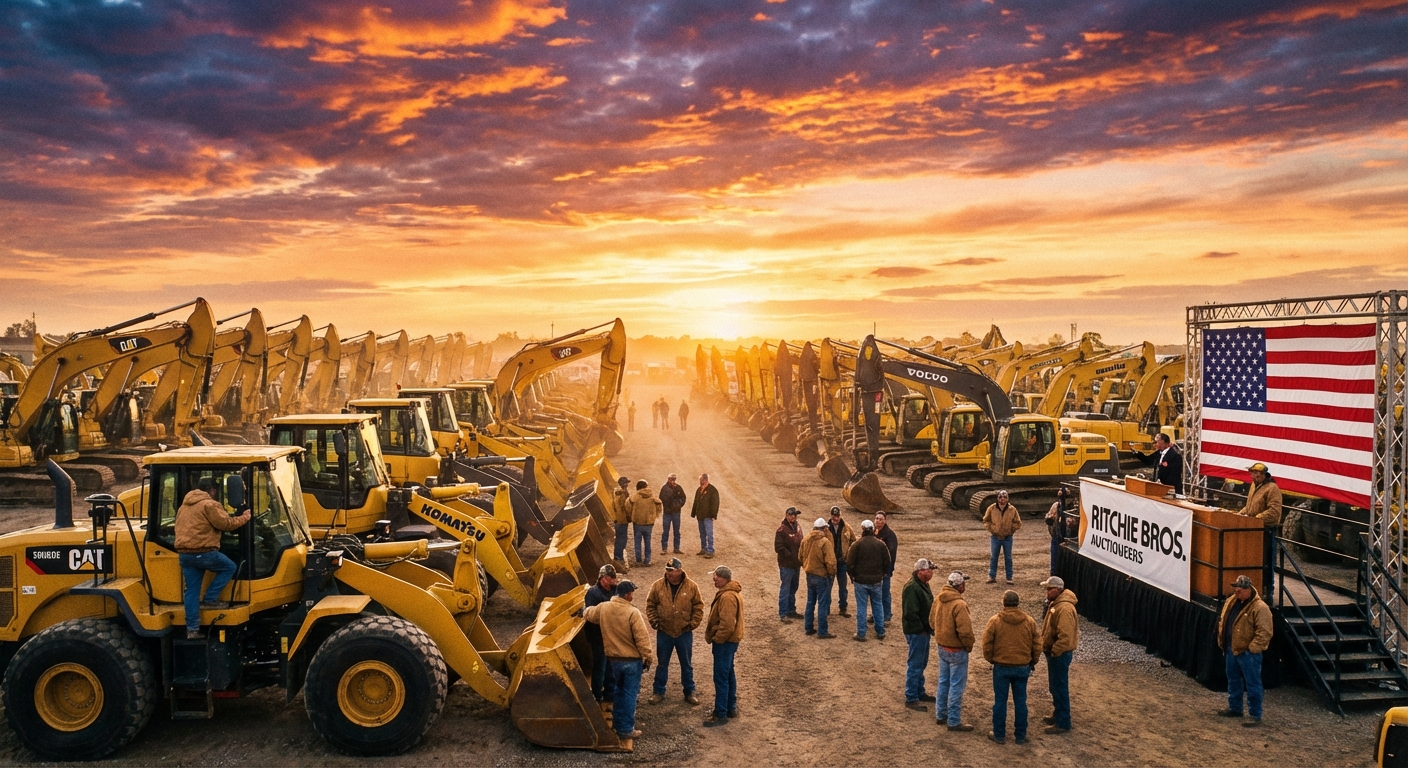
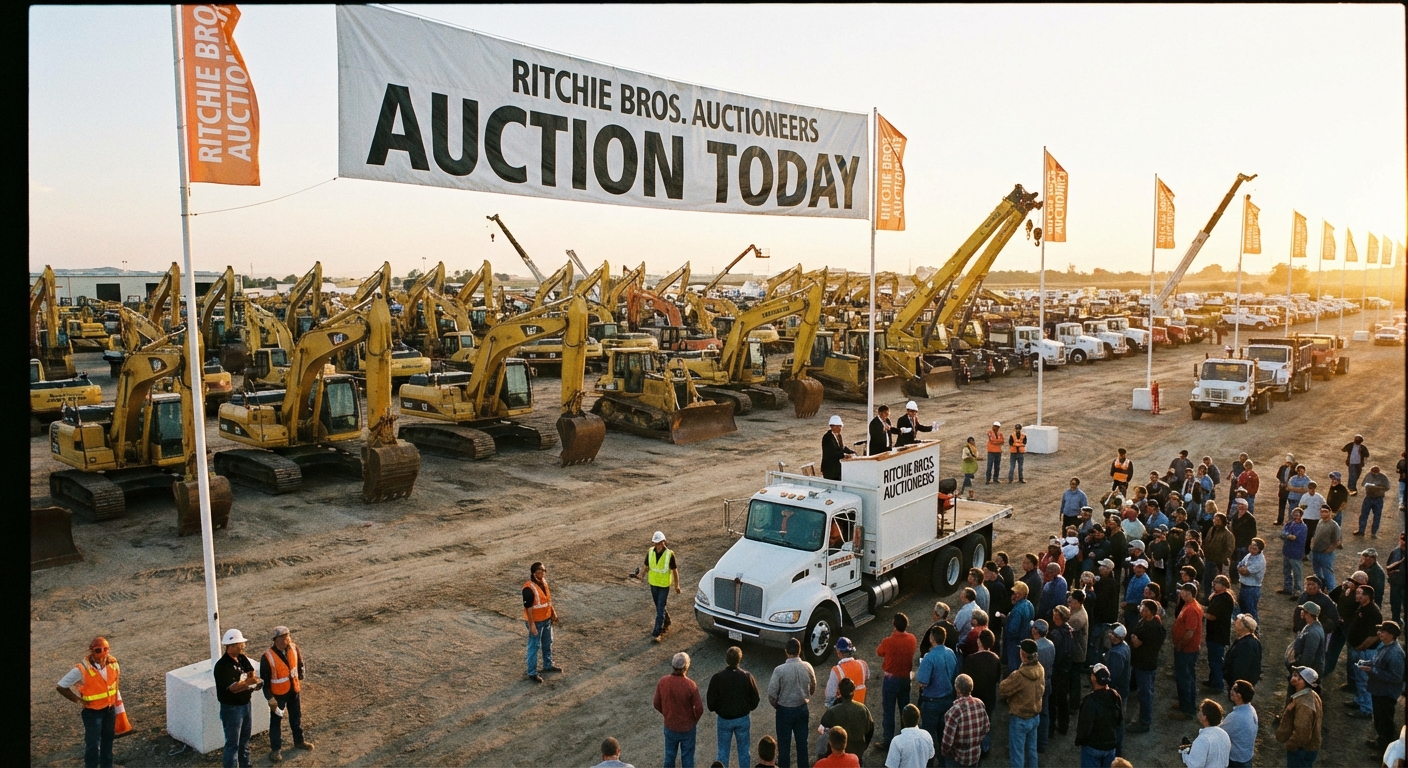
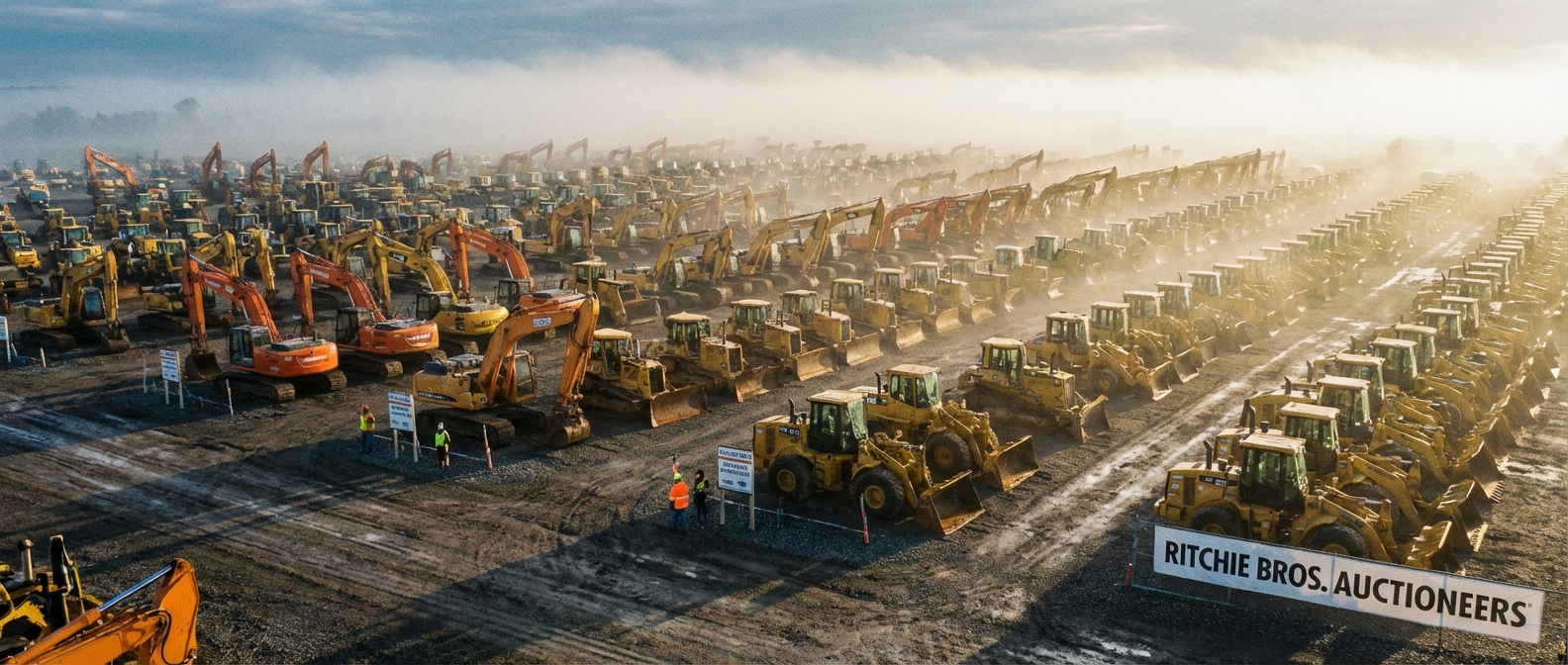
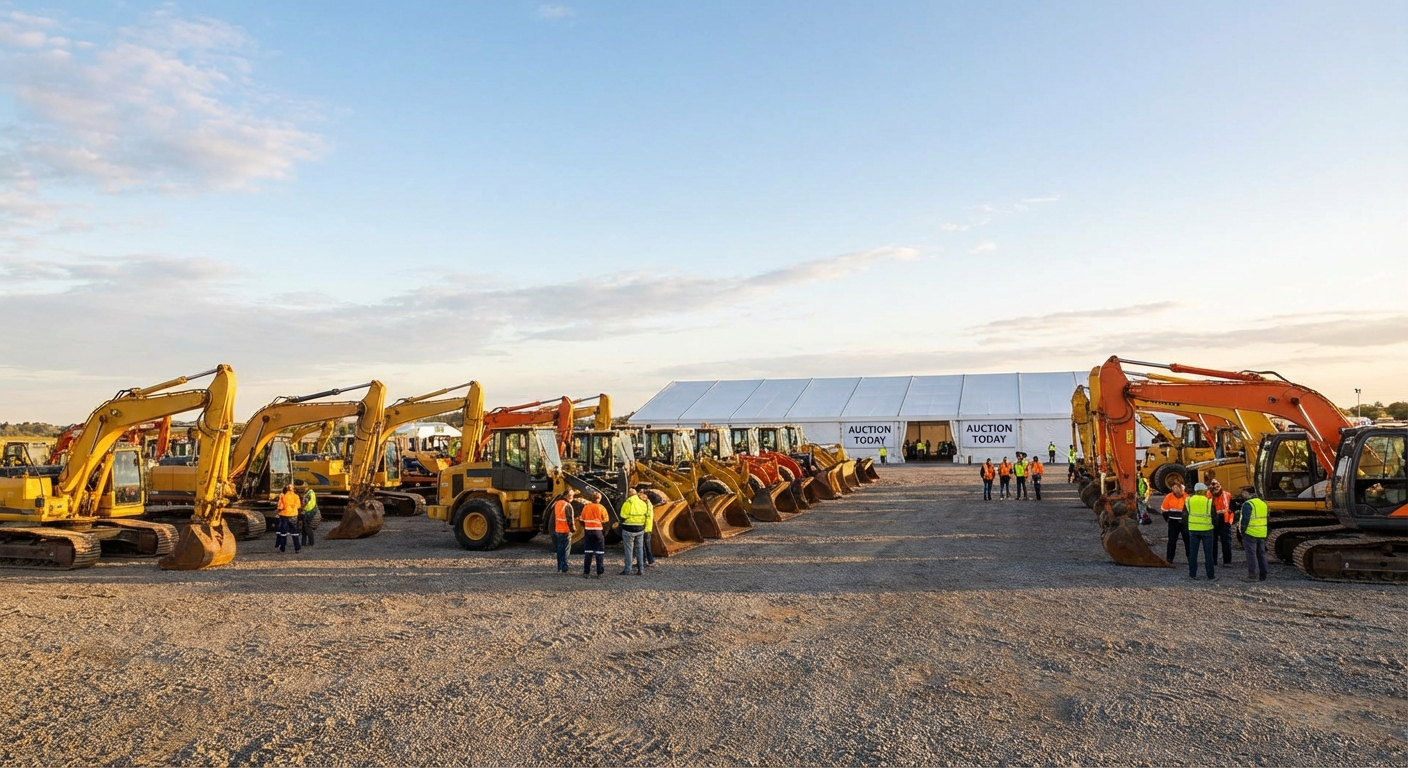
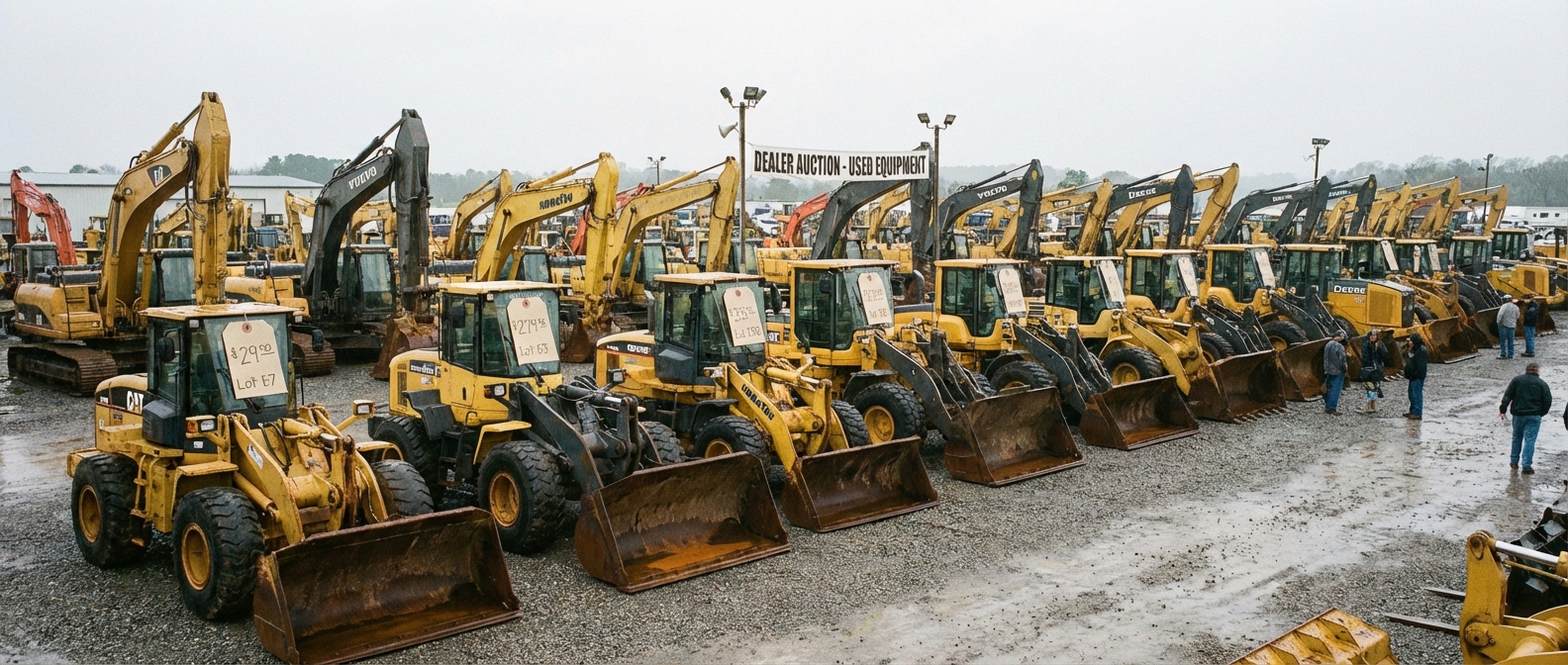
Industry auction data from late 2025 through early 2026 reveals a market in transition. According to Ritchie Bros. auction results and independent dealer surveys, average hammer prices for late-model excavators (2020-2023 model years) have stabilized at approximately 65-70% of equivalent new machine MSRPs—a significant premium compared to the historical norm of 50-55% for similar age equipment.
This compression of the new-to-used price gap reflects multiple pressures:
New Equipment Price Escalation: Major OEMs implemented multiple price increases throughout 2023-2025, with cumulative increases ranging from 15-25% depending on machine class and manufacturer. While supply chains have normalized, these prices have largely stuck.
Extended Useful Life: Modern Tier 4 Final and emerging Tier 5 machines are demonstrating longer service lives than predecessors, making well-maintained units with 5,000-8,000 hours increasingly attractive to value-conscious buyers.
Financing Rate Sensitivity: With equipment financing rates hovering between 7.5-9.5% for qualified buyers (up from the 4-5% range common in 2021), the total cost of ownership calculation favors lower upfront acquisition costs.
Segment-by-Segment Analysis
Compact Equipment: The Tightest Market
Mini excavators and compact track loaders remain the most supply-constrained segments in the used market. Machines in the 3-6 ton excavator class and 60-80 HP CTL range routinely command premiums that would have been unthinkable five years ago.
The dynamics are straightforward: These machine classes serve the broadest buyer base, from residential contractors to rental companies to municipalities. Meanwhile, manufacturers prioritized larger equipment during the supply chain crunch, creating a persistent inventory imbalance in the compact segments.
Auction data from January 2026 shows average realized prices for 2021-2022 model year compact track loaders running 72-78% of current new machine pricing. For operators considering a used CTL purchase, the math increasingly favors machines with verifiable maintenance histories over auction purchases with unknown service records.
Mid-Size Excavators: Stabilizing at New Levels
The 20-30 ton excavator class—workhorses of commercial construction—has seen pricing stabilize after the dramatic increases of 2022-2023. Current values sit approximately 15-20% above pre-pandemic levels when adjusted for age and hours, but the rapid appreciation has ended.
This segment benefits from higher trade-in volumes as contractors upgrade fleets, creating more inventory movement than the compact categories. Dealers report more normalized turn rates on mid-size excavator inventory, though premium units with low hours and full service documentation continue commanding strong money.
Large Equipment: Regional Variations Emerge
For machines above 50 tons, the market tells a more nuanced story with significant regional variation. Areas with strong infrastructure and mining activity—the Mountain West, Gulf Coast, and portions of the Midwest—show sustained demand and pricing. Markets more dependent on commercial real estate development have seen softening.
The Infrastructure Investment and Jobs Act continues driving demand for earthmoving and road-building equipment, but the projects are concentrated geographically. Contractors in active regions report continued difficulty sourcing quality used large equipment, while dealers in slower markets are moving iron through wholesale channels.
Auction Dynamics: A Buyer’s Strategy Guide
The auction landscape has evolved considerably over the past three years. Online-only auction formats, accelerated during the pandemic, now represent an estimated 60-70% of auction volume by transaction count. This shift has implications for both buyers and sellers.
For Buyers:
- Online auctions typically attract more bidders, potentially pushing prices higher on desirable units
- The inability to physically inspect before bidding makes condition reports and hour meter verification critical
- Regional auctions can still offer value, particularly for larger equipment where transportation costs limit bidder pools
For Sellers:
- Consignment timing matters more than ever; spring auctions (February-April) consistently outperform fall events by 8-12% on equivalent equipment
- Complete documentation packages—service records, hour logs, known repairs—can add 5-10% to realized prices
- Certified pre-inspection programs offered by major auction houses reduce buyer hesitation and often justify their cost
The Dealer Market: Certified Pre-Owned Expansion
Recognizing the opportunity in the current market, major dealers have expanded certified pre-owned programs significantly. These programs typically include multi-point inspections, limited warranties, and service history verification—addressing the primary concerns of used equipment buyers.
The premium for certified inventory varies by machine class and dealer, but typically runs 8-15% above comparable non-certified units. For risk-averse buyers or those financing through dealer channels, this premium often proves worthwhile given the warranty coverage and streamlined financing.
Several regional dealer groups have launched or expanded rental-to-own programs that offer another path to equipment acquisition. These programs allow contractors to apply rental payments toward purchase, testing equipment on actual jobs before committing to ownership.
Financing Considerations in the Current Rate Environment
The interest rate environment fundamentally changes used equipment economics. At current rates, a contractor financing $250,000 over 60 months at 8.5% will pay approximately $56,000 in interest—compared to roughly $33,000 at the 5% rates common three years ago.
This reality is driving several behavioral shifts:
Shorter Finance Terms: Contractors with adequate cash flow increasingly opt for 36-48 month terms despite higher payments, reducing total interest expense.
Larger Down Payments: Used equipment purchases increasingly involve 20-30% down payments rather than the minimal-money-down structures that dominated in the low-rate era.
Cash Purchases Increasing: For contractors with available capital, cash purchases of used equipment eliminate financing costs entirely while often creating negotiating leverage with sellers.
Lease Structures Gaining Favor: For equipment with predictable utilization, leasing can provide cash flow advantages and eliminate residual value risk, even at current rates.
What’s Ahead: Market Projections
Several factors will shape the used equipment market through 2026 and into 2027:
Interest Rate Trajectory: Federal Reserve policy remains the dominant variable. Any meaningful rate cuts would likely trigger rapid appreciation in used equipment values as financing costs decrease and buyer pools expand.
New Equipment Production: Manufacturers have returned to more normal production levels, which will gradually increase trade-in volumes and moderate used prices over time. However, no return to oversupply conditions appears imminent.
Infrastructure Spending Peak: IIJA-funded projects are projected to peak in 2026-2027, sustaining demand for earthmoving and road-building equipment through this period.
Technology Transition Pressure: The gradual introduction of alternative-power equipment (battery-electric, hydrogen fuel cell) may begin affecting residual values for diesel machines, though this impact remains speculative for most machine classes.
Practical Guidance for Buyers
For contractors navigating today’s used equipment market:
-
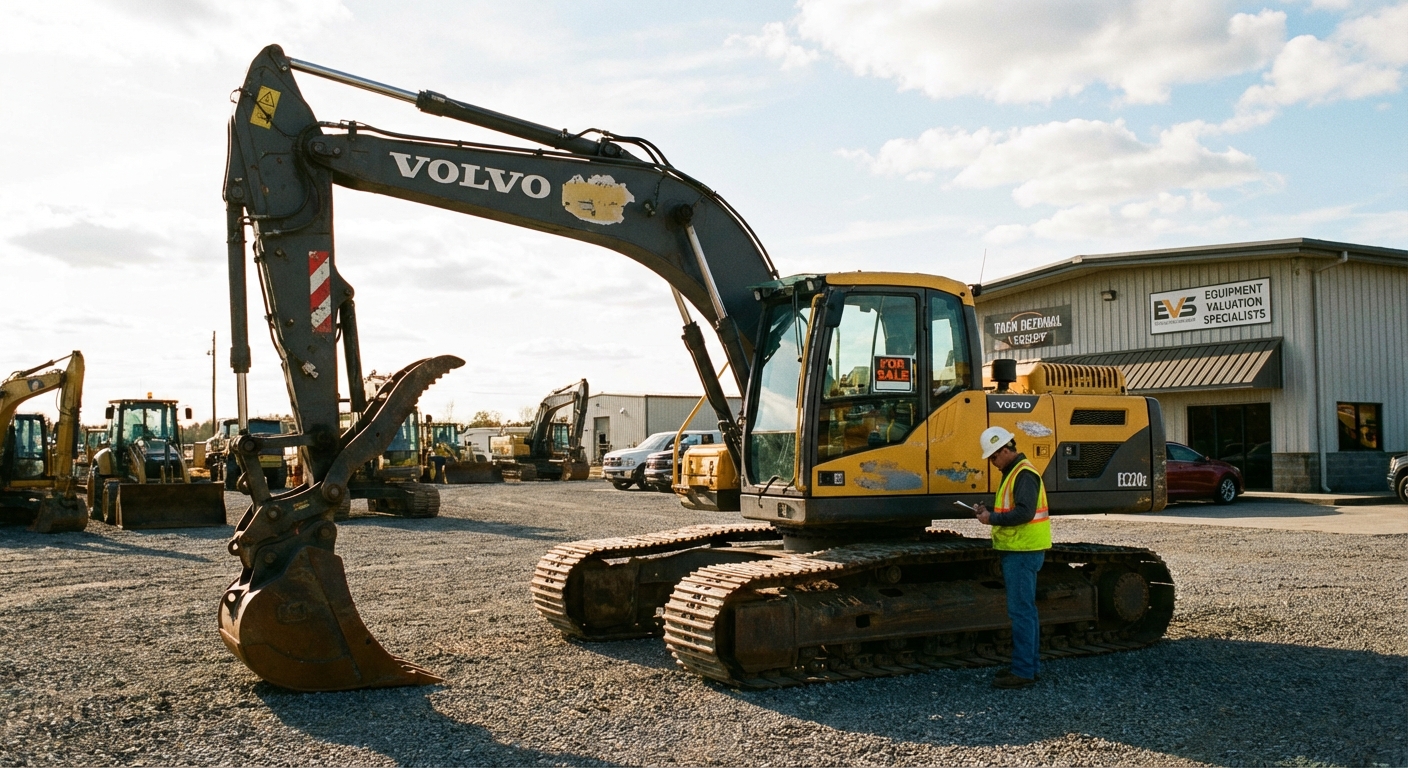
Document Everything: Demand complete service records and independently verify hour meters. The premium for documented machines reflects real risk reduction.
-
Consider Total Cost: A $180,000 machine with verifiable low hours and full service history often represents better value than a $150,000 unit with gaps in documentation.
-
Build Dealer Relationships: Established customers often get first access to quality trade-ins before public listing.
-
Time Major Purchases: If possible, avoid peak spring buying season when competition intensifies. Late fall and early winter typically offer better buyer leverage.
-
Factor Operating Costs: Newer used equipment with current emissions technology and improved fuel efficiency may justify premium pricing through lower operating costs.
The Bottom Line
The used heavy equipment market has found a new equilibrium at pricing levels that would have seemed aggressive just a few years ago. This isn’t a bubble waiting to pop—it’s a structural adjustment reflecting the true cost of new equipment, current financing conditions, and sustained demand from infrastructure investment.
For contractors and fleet managers, success in this market requires more rigorous due diligence, stronger dealer relationships, and more sophisticated total-cost-of-ownership analysis than the more forgiving market of the past decade. Those who adapt their acquisition strategies to current realities will find quality equipment available; those expecting a return to pre-pandemic conditions may be waiting indefinitely.
The equipment is out there. The deals require more work to find. And the margin for error on major purchases has narrowed considerably.
Equipment Insider provides independent analysis of the heavy equipment industry. For real-time fleet cost tracking and maintenance management, visit FieldFix.