The Rental Tipping Point: Why More Contractors Are Ditching Ownership in 2026
Equipment rental is projected to hit $159 billion globally this year. Rising machine prices, tighter credit, and better rental platforms are pushing contractors away from ownership faster than anyone expected.
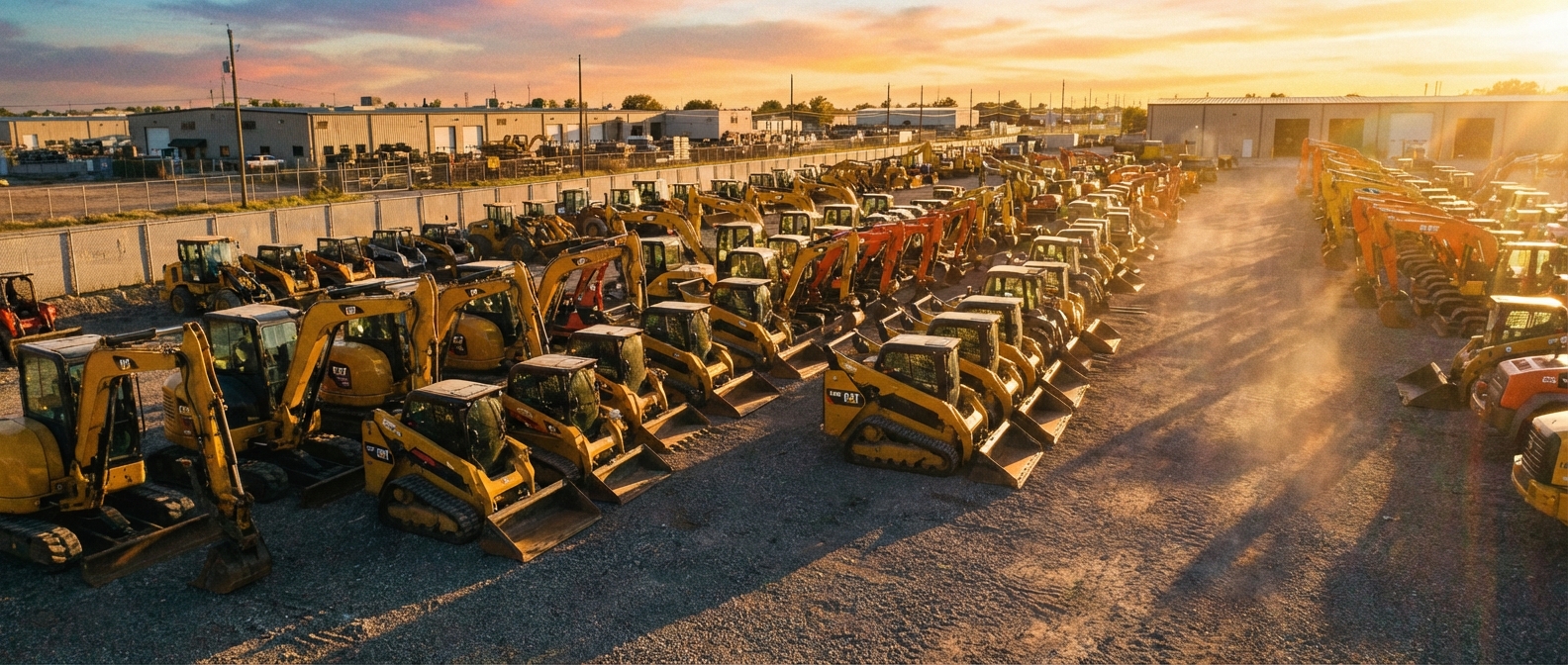
There’s a number making the rounds in equipment circles right now: $159 billion. That’s the projected size of the global construction equipment rental market in 2026, according to multiple industry research firms. If it holds, that figure represents a fundamental change in how contractors think about the machines they use every day.
The rental-vs.-own debate isn’t new. Contractors have been running those spreadsheets for decades. But something shifted in the past 18 months, and the math increasingly favors renting for a wider range of jobs, company sizes, and equipment types than it used to.
Here’s what’s driving the change — and why it matters for everyone from one-truck landscapers to mid-size earthwork contractors.
📊 Manage Your Fleet Like the Pros
Whether you own, rent, or run a mixed fleet, tracking hours, maintenance costs, and utilization rates is what separates profitable contractors from the rest. FieldFix helps you see exactly what each machine costs you — so you can make smarter rent-vs.-own decisions with real data. Start your free trial today.
Machine Prices Haven’t Come Back Down
If you bought a compact track loader in 2019, you probably paid somewhere around $55,000-$65,000 for a mid-spec unit. That same machine today? You’re looking at $75,000-$90,000, depending on the brand and options. Some models have crept past six figures with the Tier 4 Final / Stage V emissions packages, telematics, and the creature comforts operators now expect.
The price increases weren’t sudden. They crept in through steel cost surcharges in 2021 and 2022, supply chain premiums that never fully unwound, and genuine technology improvements that do add value — but also add cost. The net effect is that the capital outlay to own a piece of equipment has grown 25-40% in roughly five years for many popular categories.
For a contractor running three or four machines, that increase alone can represent $100,000+ in additional capital tied up in iron. Money that could be working on bonding capacity, materials purchasing, or just keeping the lights on during a slow month.
Interest Rates Turned the Screws
The pricing increase would be manageable if financing were cheap. It’s not.
Equipment loan rates that hovered around 4-5% in 2020-2021 have settled into the 7-9% range for most borrowers. That’s not catastrophic, but it meaningfully changes the total cost of ownership. A $85,000 loader financed over 60 months at 8% costs about $17,200 in interest alone. Add insurance, maintenance, and the depreciation hit when you go to trade it in, and the true five-year cost of owning that machine can exceed $120,000.
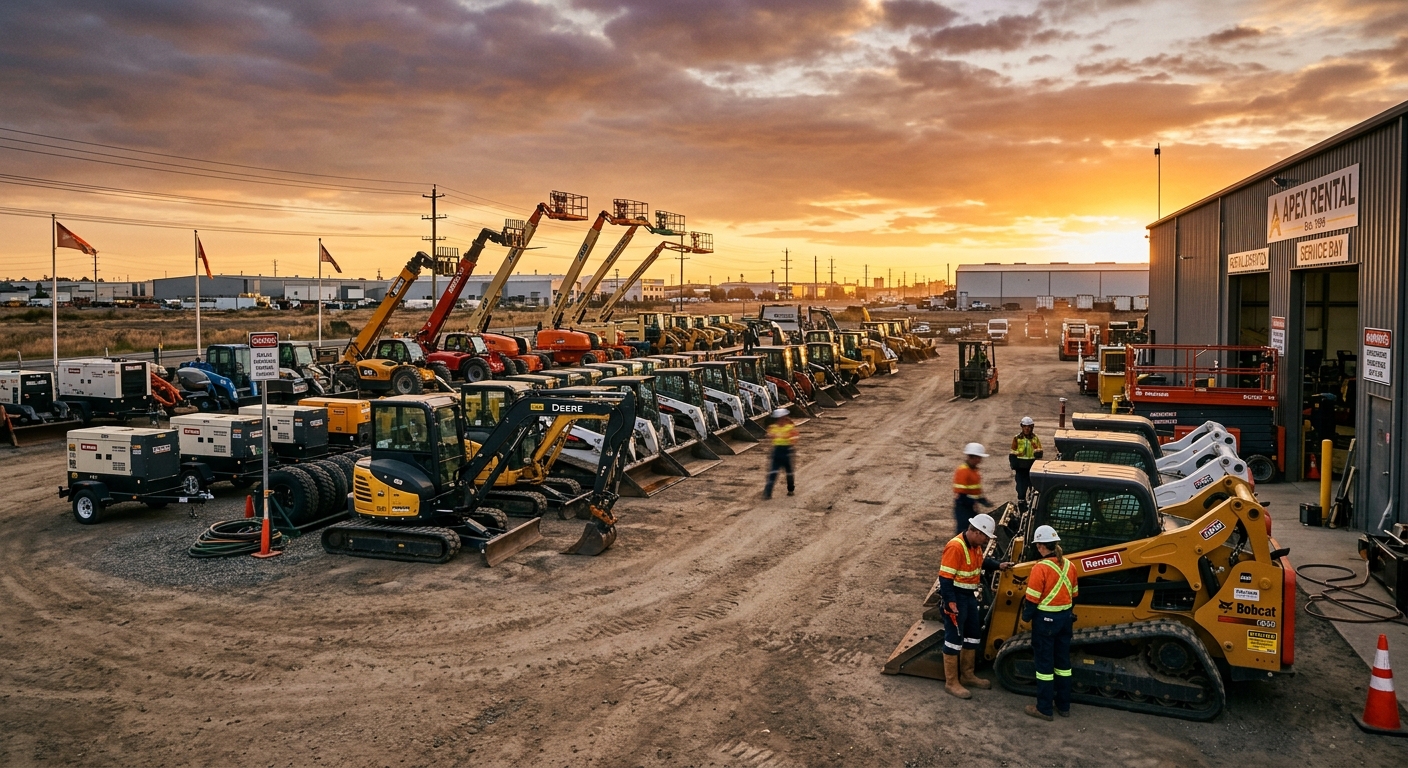
Meanwhile, renting that same class of machine runs roughly $2,500-$3,500 per month depending on the market. If you only need it eight months out of the year, you’re at $20,000-$28,000 annually with zero maintenance responsibility, no insurance carrying cost, and no residual value risk. Over five years, the rental path costs roughly the same as ownership — but with far less risk and far more flexibility.
The breakeven utilization rate — the point where owning beats renting — has shifted. It used to sit around 60-65% for most equipment classes. Now it’s closer to 70-75%, and that’s a threshold many contractors don’t consistently hit on every machine in their fleet.
The “Mixed Fleet” Is Becoming the Default
The binary own-or-rent framing is outdated. What’s actually happening on the ground is more nuanced.
Smart contractors are keeping a core fleet of owned machines — the ones they use every day, the ones central to their identity and capability — and renting everything else. Need a larger excavator for a three-month bridge job? Rent it. Got a demolition phase that requires a breaker you’ll use for six weeks? Rent it. Picking up a winter snow removal contract that needs a wheel loader with a pusher? Rent it.
This mixed approach lets contractors bid on a wider range of work without overcommitting capital. It’s especially powerful for companies in the $2-15 million revenue range, where the difference between owning eight machines and owning twelve can determine whether the company survives a downturn.
The rental companies have noticed. United Rentals, Sunbelt, and the other national players have all invested heavily in their specialty and earthmoving fleets over the past two years. Herc Rentals expanded its specialty equipment offerings specifically to capture this mid-market contractor segment. The inventory is there in ways it wasn’t five years ago.
Digital Platforms Changed the Experience
One of the quieter shifts in the rental space is how much easier it’s gotten to actually rent equipment.
Five years ago, renting a machine meant calling three or four dealers, negotiating rates, dealing with inconsistent delivery logistics, and hoping the unit showed up in decent condition. It was enough friction to make many contractors just buy the machine to avoid the hassle.
That friction has dropped sharply. Platforms like BigRentz, DOZR, and the digital storefronts from the major rental companies now let contractors compare availability, pricing, and specs across multiple suppliers in minutes. Some offer same-day or next-day delivery in major metro areas. Rate transparency has improved. The experience is closer to booking a hotel room than it is to the phone-tag ordeal it used to be.
This matters more than it sounds. In a business where time is money and downtime is the enemy, the convenience factor in the rent-vs.-own calculation carries real weight. If renting is easy, fast, and predictable, more contractors will do it.
What This Means for Dealers
The rental shift creates some interesting dynamics for equipment dealers.
On one hand, every machine rented is a machine not sold. Dealers dependent on new equipment sales are watching their core market erode at the margins. The contractor who used to buy a new excavator every four years might now buy one every six — and rent to fill the gaps.
On the other hand, used equipment values remain strong because fewer machines are hitting the market. Contractors holding onto their core fleet longer means less trade-in inventory, which supports residual values. That benefits anyone who does own.
Some dealers are adapting by building out their own rental fleets, either independently or through partnerships with rental companies. The dealerships that figure out how to serve both the ownership and rental customer — offering flexible arrangements, rent-to-own programs, and hybrid fleet management — will be the ones that thrive.
There’s also a parts and service angle. Rental companies are some of the biggest buyers of parts and maintenance services. A dealer that loses a machine sale but picks up a maintenance contract on a fleet of 50 rental units might come out ahead.
Regional Variations Matter
The rental math doesn’t work the same everywhere.
In dense metro markets with high rental availability and strong competition — think Dallas, Atlanta, Phoenix, the I-95 corridor — rental rates are competitive and delivery is fast. The case for renting is strongest here.
In rural markets, it’s different. Rental availability drops off. Delivery surcharges eat into the cost advantage. And if a machine goes down on a jobsite two hours from the nearest rental yard, you could lose days waiting for a swap. For contractors in these areas, ownership still makes sense for a larger share of the fleet.
The Asia-Pacific region is where the rental market is growing fastest, with a projected 44.8% share of the global market. Infrastructure spending in India, Southeast Asia, and Australia is driving rental demand in places where equipment ownership was historically the only option. North America still holds the largest dollar-value market, but the growth rates are shifting east.
Where This Goes Next
A few trends to watch through the rest of 2026 and into 2027:
Rental rate inflation. As demand grows, rates will rise. Several major rental companies signaled pricing discipline on their recent earnings calls — code for “we’re not going to race to the bottom.” If rental rates climb 5-10% this year, some of the math shifts back toward ownership for high-utilization machines.
Used equipment pricing. The tight supply of quality used machines keeps values elevated, which ironically makes renting more attractive for contractors who can’t find good used iron at reasonable prices.
Technology as a differentiator. Rental companies are starting to compete on tech — telematics, fleet management dashboards, predictive maintenance. The rental experience is getting more sophisticated, and that pulls more contractors into the rental ecosystem.
OEM rental programs. Cat, Deere, and others have expanded their dealer rental programs. OEM-backed rental offers the latest models with factory support, bridging the gap between contractor skepticism about rental quality and the premium ownership experience.
The $159 billion number isn’t just a market stat. It represents millions of individual decisions by contractors who ran the numbers and decided that flexibility, lower risk, and reduced capital exposure beat the comfort of having their name on the title. That calculation will keep shifting — and the companies that understand which way it’s moving will be the ones that win.
For most contractors, the smart play isn’t all-in on either side. It’s knowing exactly where your breakeven sits for each machine class, tracking your utilization honestly, and being willing to change your approach when the numbers change. Because right now, the numbers are changing fast.