Contractors Are Buying Equipment Again. The Smart Ones Are Still Acting Broke.
Equipment World's 2026 contractor survey shows most buyers are back in the market, but the real story is more cautious than the headline. Financing is still tight, replacement windows are longer, rental is absorbing risk, and in-house maintenance is now part of the buying decision.
The headline number looks bullish. The behavior underneath it does not.
Equipment World’s latest 2026 Tech & Spec Survey found that 83% of responding contractors plan to buy at least one piece of construction equipment this year. That sounds like a market snapping back. Dealers can put that number in a sales meeting and feel pretty good for about thirty seconds.
Then the rest of the survey starts talking.
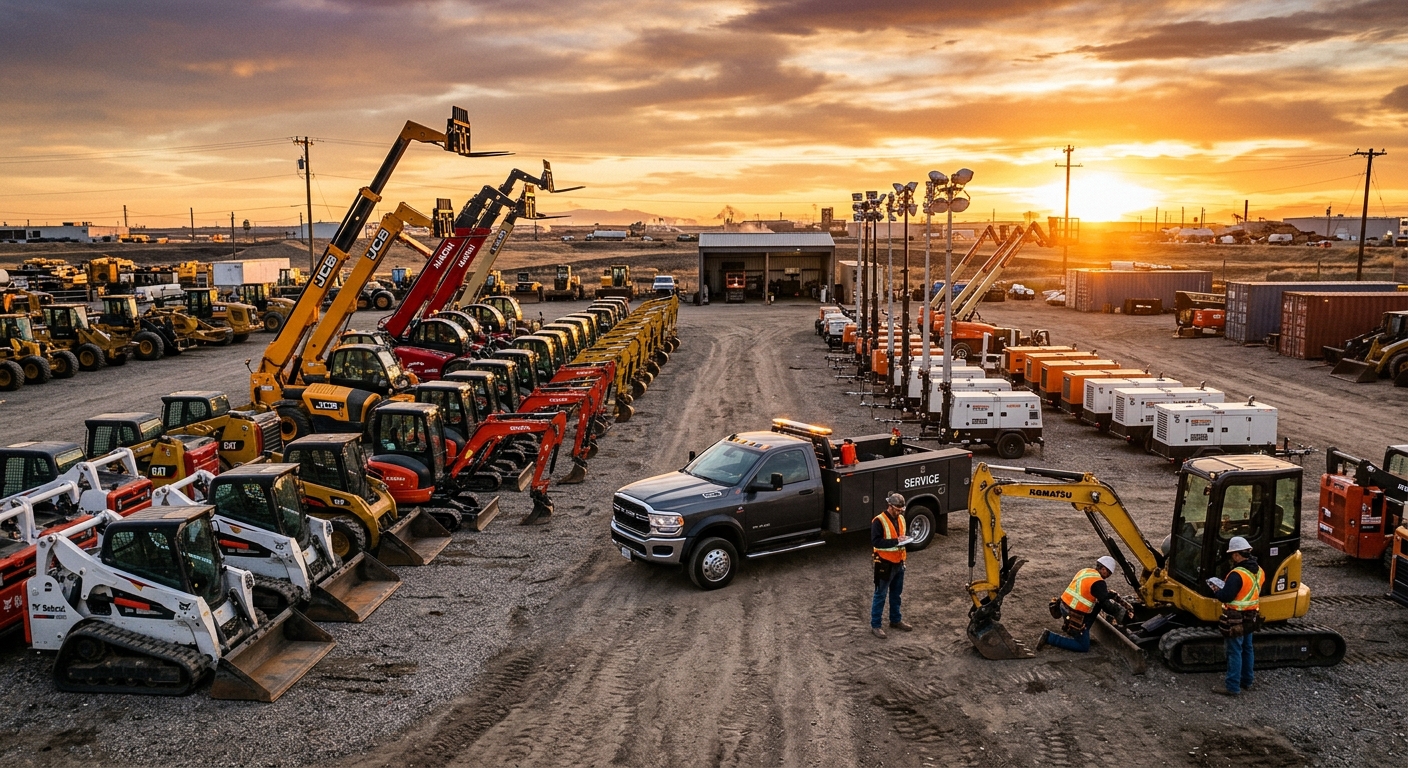
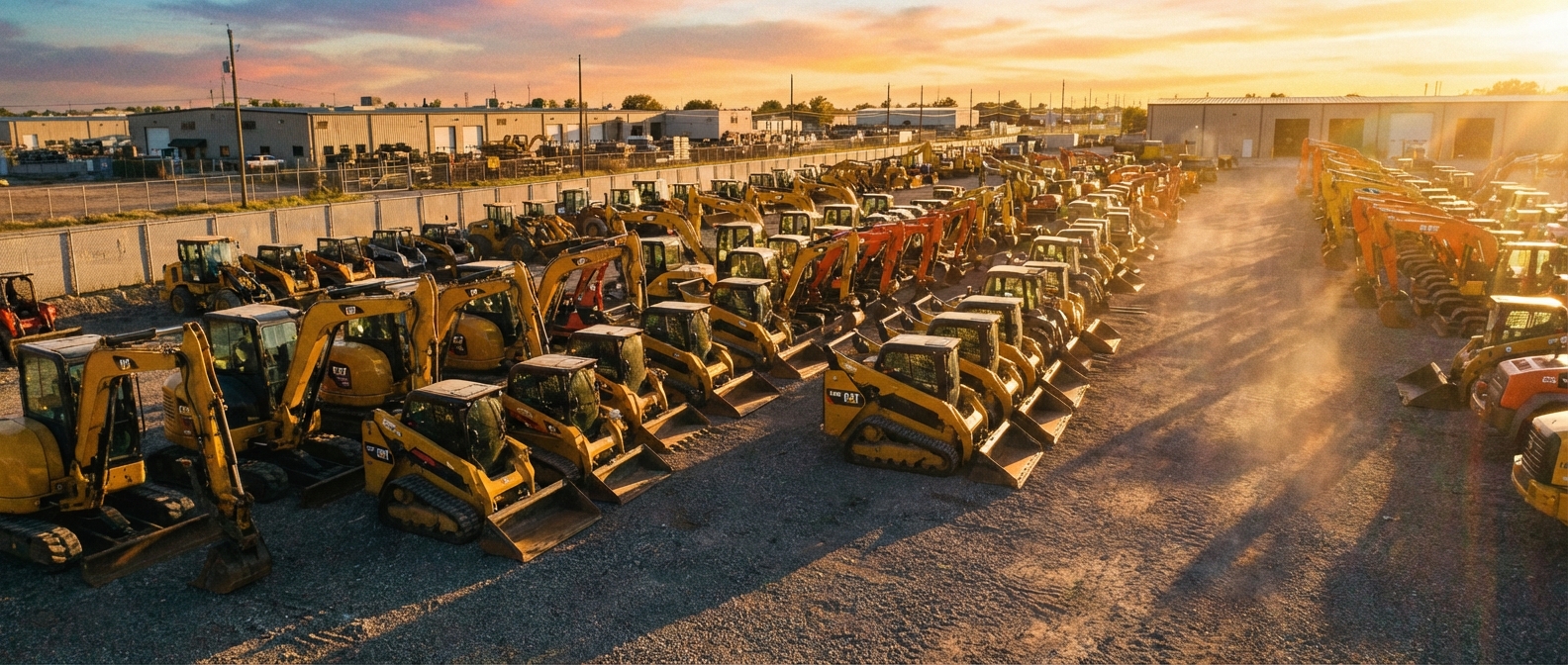
The largest group of buyers, 38%, only plans to buy one or two machines. Financing is the top purchase method at 42%, with cash close behind at 37%. Lease-to-purchase and rent-to-purchase together account for 17%. Compact track loaders and skid steers are commonly being replaced between 2,000 and 6,000 hours, while excavators, dozers, and backhoes are being stretched closer to 8,000 to 10,000 hours.
That is not reckless expansion. That is selective replacement.
The 2026 contractor is buying iron, but he is not buying the fantasy that every parked machine deserves a younger sibling. He is trying to keep crews productive without letting interest expense, insurance, parts, and idle hours eat the company alive. That is a different kind of market from the one manufacturers got used to when cheap money and long backlogs made every purchase easier to justify.
FieldFix Editor’s Note: Buying discipline only works if the fleet numbers are real. A machine that looks cheap on the payment can still be expensive per hour once repairs, downtime, fuel, and underuse show up. FieldFix helps contractors track service history, operating cost, and cost per hour so replacement decisions are based on the machine’s actual behavior, not gut feel.
This is a replacement market, not a shopping spree
The best way to misread the current equipment market is to treat planned purchases as pure growth.
Some of that buying is growth, sure. Data center work, utility work, energy projects, road jobs, and manufacturing reshoring are putting real strain on fleets in certain regions. AEM’s November market outlook noted that infrastructure activity remained one of the stronger construction segments, and that AI-related data center construction had become a rare bright spot in a softer North American market. AEM also pointed to tariff pressure, delivery delays, and supply-chain strain as reasons the broader construction economy still felt uneven. You can read the AEM analysis here.
That split matters. A contractor in a hot utility corridor may be adding excavators because backlog demands it. A sitework contractor tied to private commercial work may be replacing one aging loader and praying the bid board improves. Both show up as buyers in a survey. They are not living in the same market.
The survey’s hour ranges tell the quieter story. Contractors are not dumping machines at the first sign of wear. They are holding compact equipment into the 2,000-to-6,000-hour zone and running larger iron much longer. Wheel loaders are commonly being pushed to 10,000 to 12,000 hours. Articulated dump trucks go even longer, with the highest share of respondents replacing them at 12,000 to 14,000 hours.
That behavior says something blunt: contractors still want new machines, but they need the old ones to earn a lot more before they leave.
Financing is still the shadow hanging over every deal
The split between financing and cash is one of the most interesting parts of the Equipment World survey.
Financing came in as the top purchase option at 42%. Cash was not far behind at 37%. In a normal growth cycle, heavy financing can mean confidence. Contractors borrow because the work is there, utilization is clear, and the machine can pay for itself.
In 2026, the signal is messier.
Rates are still high enough to matter. Insurance is ugly. Labor is not cheap. Parts pricing has not magically returned to 2019 levels. A machine payment is only one line in the ownership cost, and it is not always the scariest one.
Cash buyers are not necessarily stronger buyers either. Some are using cash because they hate the rate environment. Some are doing it because they have been burned by leverage. Some are buying only one machine because that is what the balance sheet can handle without taking on more debt.
This is why dealers should be careful with the lazy version of optimism. Yes, buyers are active. No, that does not mean every buyer wants to be talked into a bigger package. The contractor walking into a dealership this spring may already know exactly which underperforming machine is getting replaced and exactly which purchase number kills the deal.
The pitch that works in this market is not “new is better.” The pitch is “here is how this unit lowers your cost per billed hour.”
That requires more than a brochure.
Rental is not just a fallback anymore
ARA’s Q3 forecast put U.S. construction and general tool rental revenue growth at 3.9% for 2025, reaching $80.9 billion, with 2.9% growth projected for 2026. The association also noted that construction and industrial rental revenue was projected at $63.8 billion for 2025. The full ARA forecast summary is here.
Those are not explosive numbers. They are steady numbers in a cautious market. That is the point.
Rental has become the pressure valve for contractors who need capacity but do not trust the next twelve months enough to own every machine they might touch. It is also the workaround when a project requires a specialty machine for six weeks and nobody wants to marry it for five years.
This is especially true for equipment sitting at the edge of a contractor’s core work. A grading contractor may own dozers and excavators but rent rollers, trenchers, brooms, or larger wheel loaders when the job calls for them. A land-clearing contractor may own CTLs and mulchers but rent a dozer or excavator when the site gets heavier than expected. Rental keeps the company from turning one weird job into a permanent payment.
Rent-to-purchase and lease-to-purchase still showed up in the Equipment World survey, but they were smaller pieces of the mix. That fits the mood. Contractors want options. They are not all ready to convert options into ownership.
Maintenance is now a buying criterion
One of the most practical findings in the Equipment World survey was not about brand preference. It was about who turns the wrench.
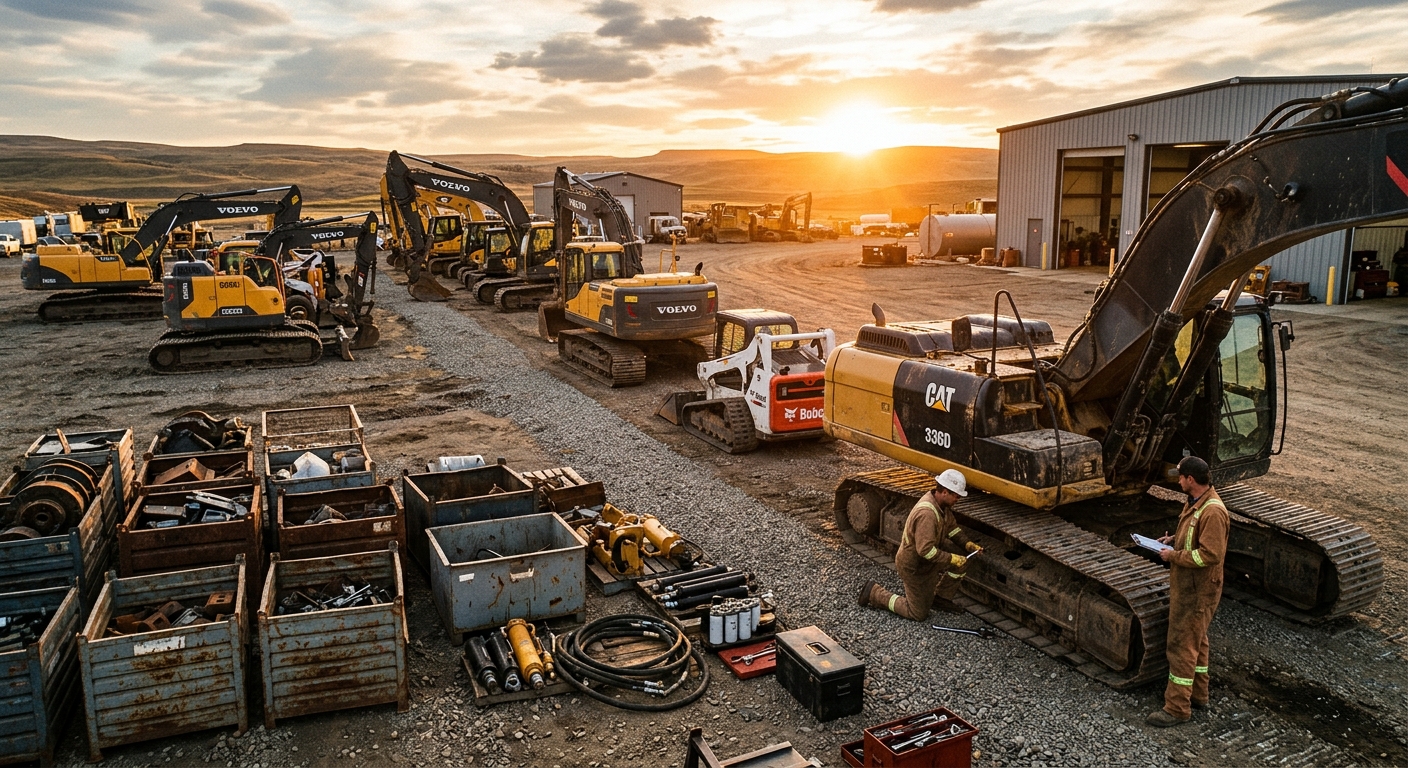
The survey found that 83% of respondents perform at least small repairs and preventive maintenance in-house. That should change how manufacturers and dealers think about product support.
Contractors are not just asking whether a machine is powerful, comfortable, and available. They are asking whether their own people can keep it alive. They care about access panels, service intervals, diagnostic clarity, filter placement, grease points, parts availability, fault codes, and whether a minor issue requires a laptop and a dealer truck.
This is where the right-to-repair debate stops being political and starts being operational. If a contractor’s shop handles PMs and small repairs, then diagnostic friction has a real cost. Waiting two days for a dealer visit to clear a fault code is not a philosophical problem. It is a schedule problem.
That does not mean every contractor wants to rebuild engines in-house. Most do not. It means the line between owner maintenance and dealer maintenance needs to be honest. Contractors need to know what they can handle, what they cannot, and what the machine will demand from them over the next 5,000 hours.
A machine that is slightly cheaper up front but harder to service may be a worse deal than the expensive one. That has always been true. It is just harder to ignore now.
Brand loyalty is real, but it is not invincible
The survey’s brand data will not shock anyone. Caterpillar, John Deere, Bobcat, Case CE, and Kubota sat near the top of respondent fleets. Big brands have big footprints, strong dealer networks, parts depth, resale value, and decades of trust.
But the market is not frozen.
When buyers are replacing selectively, every purchase has more weight. A contractor buying one excavator this year instead of three is going to scrutinize that unit harder. A rental house adding a batch of CTLs is going to care about acquisition cost, warranty behavior, residual value, telematics, service access, and how operators treat the cab. Dealer support can win the deal. A bad support experience can lose the next ten.
This is where challengers have an opening. They do not need to convince every contractor to switch the whole fleet. They need to win one category where the incumbent has become expensive, hard to get, or annoying to support. Compact equipment is especially vulnerable to this because contractors are already used to mixed fleets. A sitework company may run Cat excavators, Deere dozers, Bobcat CTLs, and Kubota minis without losing sleep.
Still, challengers should not mistake curiosity for conversion. Contractors may demo the cheaper or newer brand. They will not stay if parts are slow, resale is weak, or the dealer disappears after delivery.
In a cautious market, trust is not soft. It is financial.
The real question is utilization
Every buying decision in 2026 comes back to the same uncomfortable question: will this machine work enough to deserve being owned?
That question sounds simple. Most contractors still answer it badly. They know the payment, the purchase price, and roughly what the machine bills for. They often do not know the true cost per hour after fuel, maintenance, repairs, insurance, hauling, idle time, interest, and downtime are included.
That is why this market is going to punish sloppy fleet math.
The contractor who tracks utilization and cost per hour can buy with confidence. He knows which machine is overloaded, which one is sitting, which one is due for a major repair, and which one should be sold before the next failure. The contractor who guesses will either overbuy because he feels busy or underbuy because he is scared. Both mistakes are expensive.
Dealers can help here if they stop selling only the machine and start selling the ownership case. Rental companies can help by being transparent about when renting beats owning and when it does not. Software companies can help by making fleet numbers usable for normal contractors, not just enterprise asset managers.
The market does not need more vague optimism. It needs cleaner math.
What this means for 2026
The 83% purchase-intent number is good news. Nobody should pretend otherwise. Contractors are still buying equipment. Fleets are not frozen. Work exists. Replacement demand is real.
But the character of the buying matters more than the headline.
This is a disciplined market. Contractors are replacing what has earned replacement. They are renting around uncertainty. They are stretching machines longer. They are doing more maintenance themselves. They are watching finance costs. They are less willing to own equipment just because a job might appear.
That is healthier than a boom, even if it feels less exciting.
Boom markets hide bad habits. They let contractors overpay, overfinance, ignore downtime, and call every busy month proof that the fleet is working. Disciplined markets expose the math. The operators who know their numbers will still buy iron this year. They will just buy it like people who remember what a bad payment feels like in February.
That is probably the right mood for 2026.