2026 Construction Equipment Market Outlook: Data Centers Drive Demand Amid Economic Headwinds
Where the industry sees growth, how tariffs and interest rates are reshaping buying decisions, and why alternative power technology is accelerating faster than expected.
The construction equipment industry enters 2026 navigating a complex landscape where explosive demand from data center and energy infrastructure projects collides with persistent economic pressures from tariffs, elevated interest rates, and lingering inflation. The picture emerging across the industry is one of cautious optimism—pockets of remarkable strength balanced against macro headwinds that are reshaping how contractors approach major equipment purchases.
The consensus view: expect rental activity to surge as contractors hedge against near-term risk, while manufacturers race to meet specialized demand from the AI infrastructure boom that shows no signs of slowing.
Editor’s Note: Tracking equipment utilization, maintenance costs, and total cost of ownership becomes critical during economic uncertainty. FieldFix helps contractors monitor cost-per-hour on every machine—essential data for deciding whether to buy, rent, or hold. Visit fieldfix.ai to see how operators are making smarter fleet decisions.
Data Centers and Energy Infrastructure: The Demand Engine
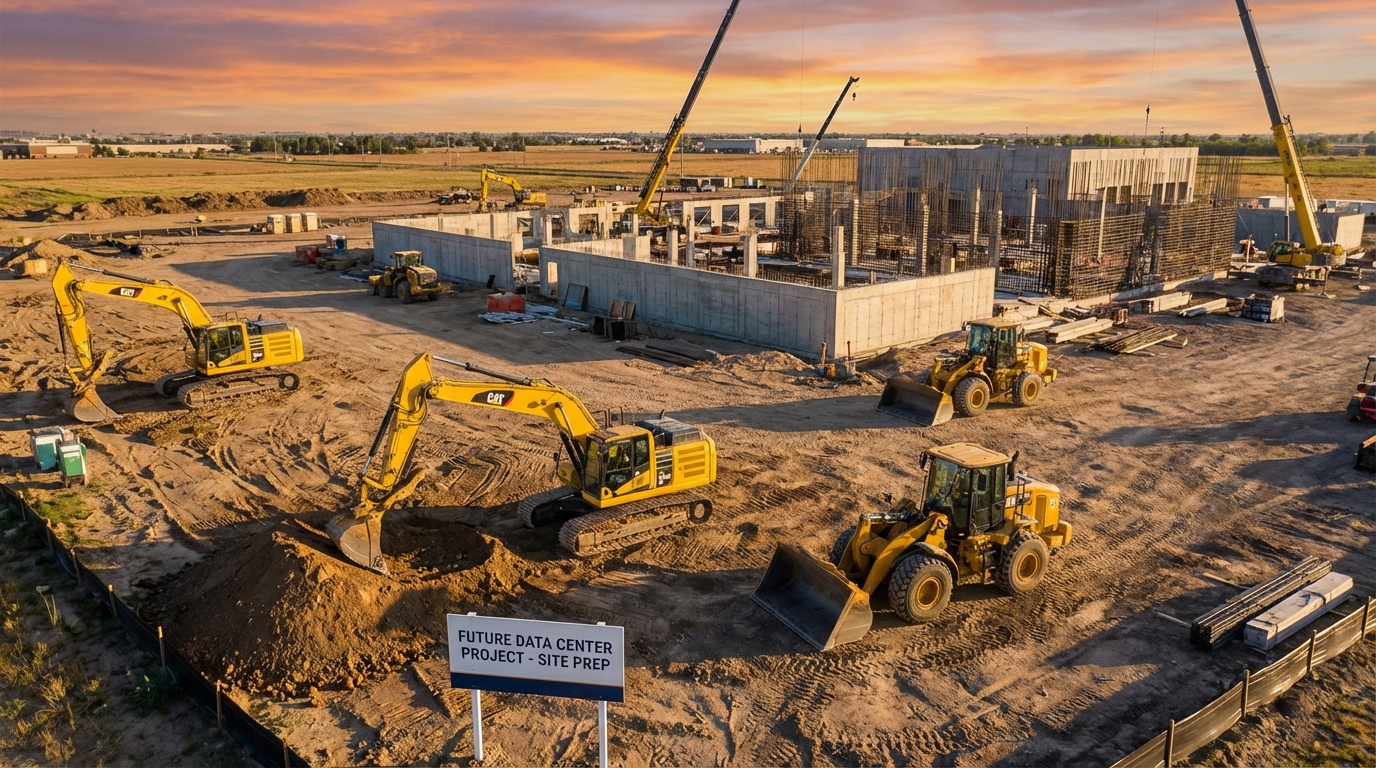
If there’s a single theme dominating the 2026 outlook, it’s the AI-driven infrastructure build-out. Hyperscale data centers require massive earthmoving operations, and the supporting energy infrastructure—from transmission lines to power generation facilities—creates sustained demand across equipment categories.
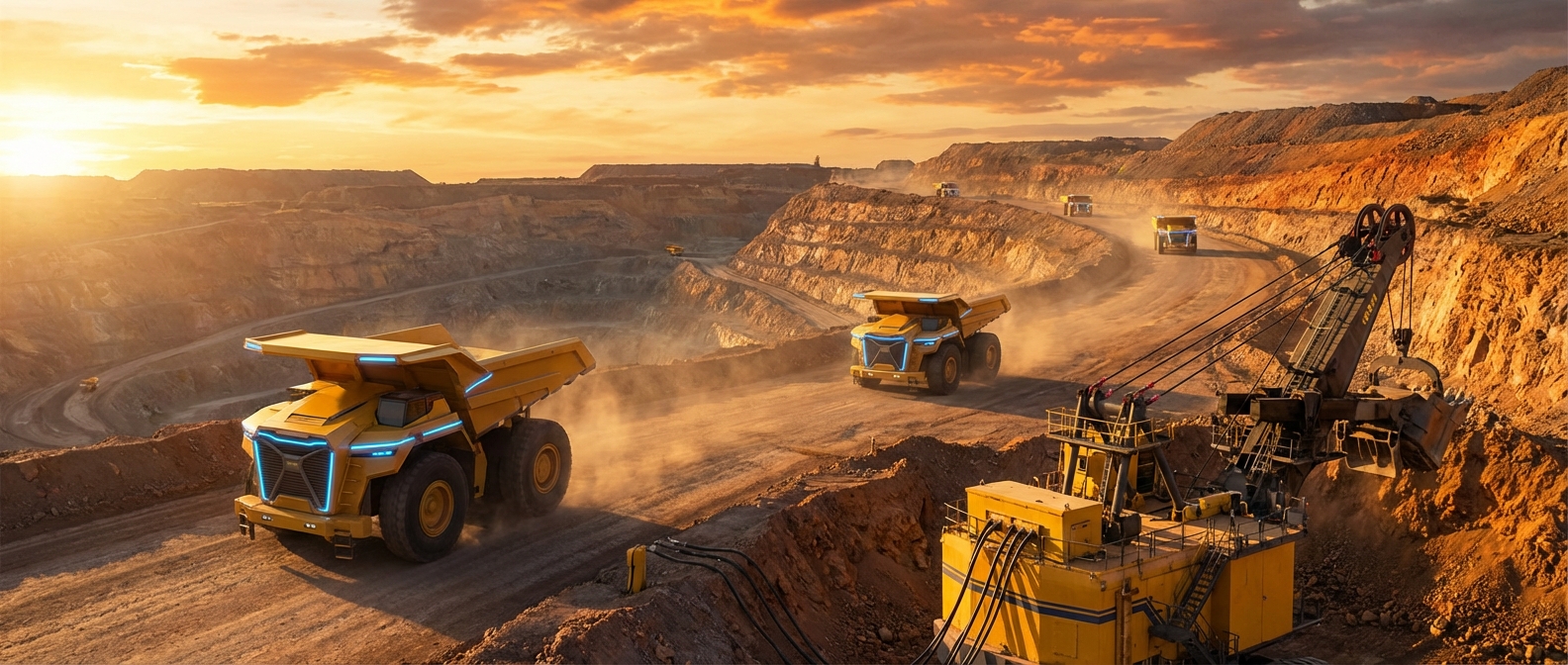
Industry analysts point to strong demand expectations from quarry/aggregate and mining operations, as well as infrastructure development related to energy and data center projects. The commercial and residential construction segments, particularly in the southern United States, continue showing resilience.
Major infrastructure and energy-related “mega” projects continue driving steady need for large machines across excavator, loader, and hauler categories.
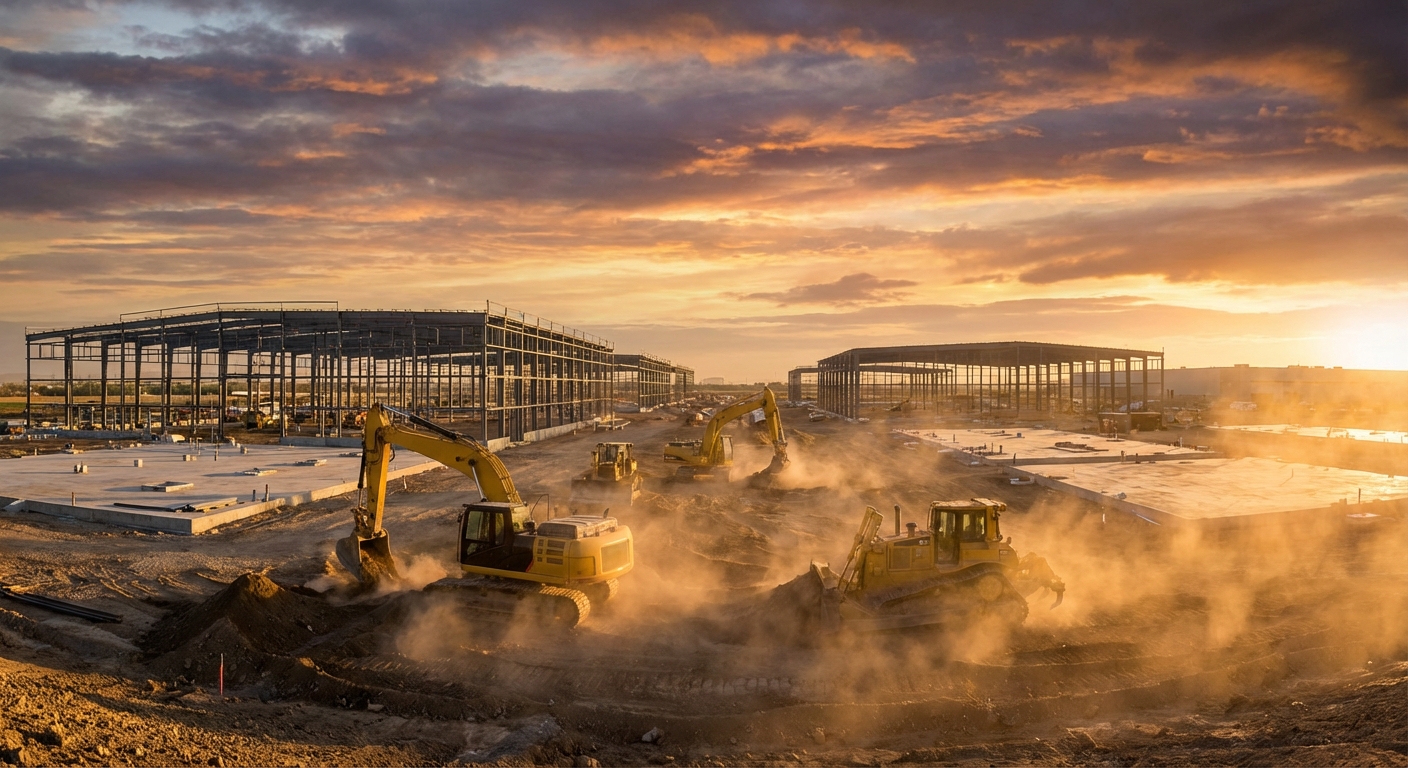
The data center construction pipeline remains robust. According to industry analysts, North American data center construction starts exceeded $30 billion in 2025, with 2026 projections suggesting continued acceleration as tech giants compete to build AI training and inference capacity. This translates directly into demand for excavators, wheel loaders, articulated dump trucks, and the full complement of earthmoving equipment.
Economic Pressures Reshaping Buying Behavior
Despite sectoral bright spots, the broader economic environment is forcing contractors to recalibrate their equipment strategies. The combination of tariffs—both enacted and anticipated—high interest rates that have stubbornly resisted Federal Reserve pivot expectations, and accumulated inflation in equipment costs is creating a more cautious buyer.
Industry surveys indicate that tariffs, high interest rates, and inflation may cause contractors to delay big purchases and increase equipment rentals to reduce near-term risk. Tariffs, infrastructure funding, and political factors remain key considerations in planning processes across the industry.
This uncertainty is manifesting in several ways:
Extended Equipment Life Cycles: Contractors are keeping machines longer, investing in maintenance and rebuilds rather than replacing with new units. The average age of equipment in North American fleets has crept upward over the past 18 months.
Rental Surge: Equipment rental companies report elevated utilization rates as contractors opt for operational expense flexibility over capital commitments. This shifts risk management from the contractor’s balance sheet to the rental house, at the cost of higher per-hour operating costs.
Selective Capital Deployment: When contractors do purchase, they’re prioritizing machines with the best total cost of ownership profiles—fuel efficiency, maintenance accessibility, and resale value carry more weight in purchasing decisions than in recent years.
Financing Sensitivity: With rates remaining elevated, monthly payment calculations have become a more significant decision factor. Some contractors are delaying purchases in anticipation of eventual rate cuts, though timing remains uncertain.
Regional Outlook: South Leads, Infrastructure Plays Dominate
Geographic demand patterns continue to favor the Sun Belt, with the southern United States leading equipment demand growth. Population migration, commercial development, and the physical requirements of data center construction (which often locate in areas with lower energy costs and available land) concentrate activity in these regions.
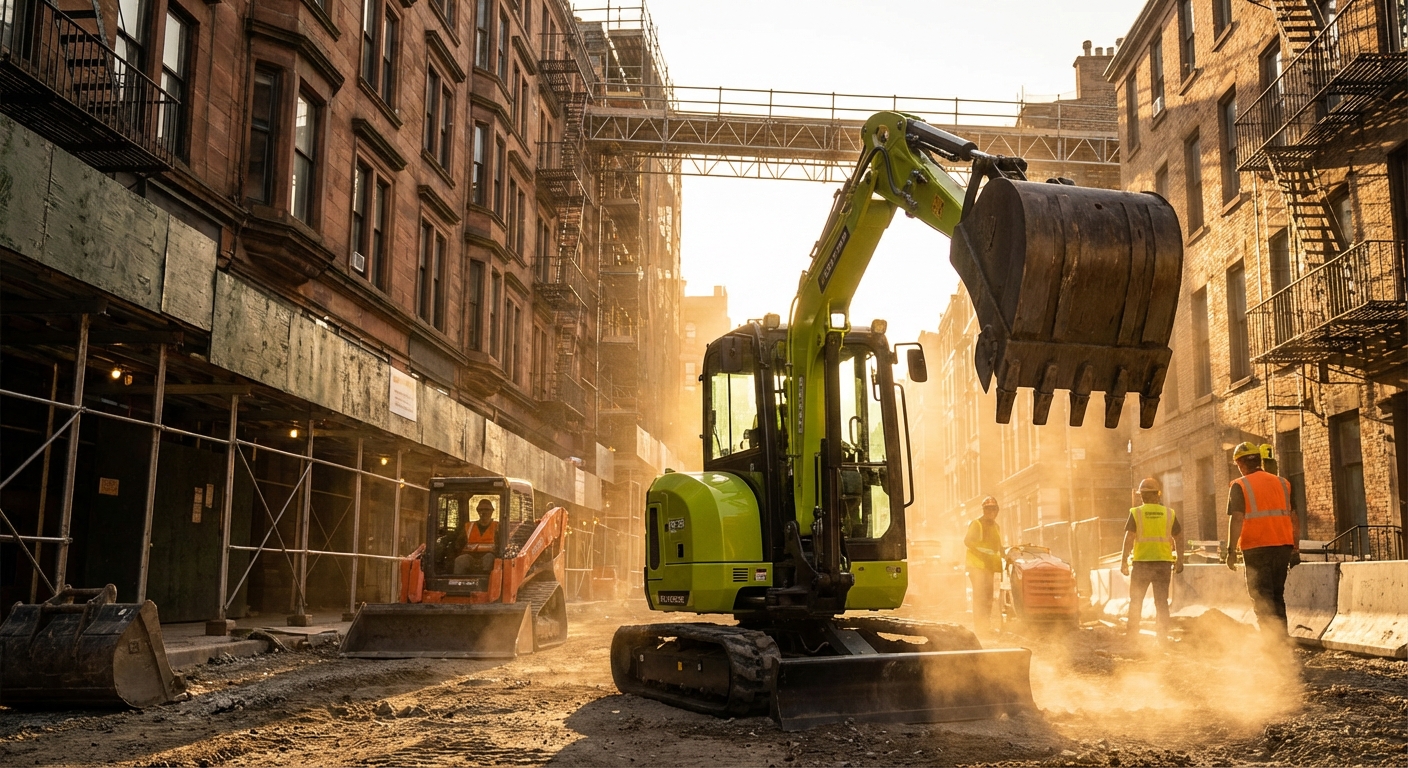
Compact equipment is expected to see strong growth in the southern U.S., driven in part by large infrastructure projects anticipated throughout the year. Areas experiencing population growth and commercial development acceleration remain especially active.
The Infrastructure Investment and Jobs Act continues working through the pipeline, with state departments of transportation maintaining robust letting schedules. Roadbuilding, bridge replacement, and utility infrastructure projects provide base-load demand even as commercial and residential segments experience more volatility.
Technology Acceleration: From Telematics to Autonomy
The technology arms race in construction equipment shows no signs of cooling. The growing importance of telematics, machine control, and data-driven site management has transitioned these capabilities from nice-to-have features to core purchasing criteria.
Customers increasingly make business and jobsite decisions based on data provided by telematics, machine control systems, and site management tools. These services have become as important as the machines themselves, integrated into R&D processes across major manufacturers.
Fleet management solutions now allow customers to see the location of all machines on their site regardless of brand, providing actionable data to optimize traffic flow, enhance safety, and improve productivity.
On the automation front, the industry perspective remains nuanced. Autonomous operations, reliable connectivity, and remote software download are increasingly important, but these technologies must work together—automation relies on robust connectivity and data. Importantly, automation doesn’t have to mean full-machine automation. Any capabilities that improve efficiencies and move a good operator to a great operator are valued by customers.
Alternative Power: Electric Expands, Hydrogen Emerges
The electrification wave continues building momentum. Volvo CE maintains its industry-leading position with eight electric models in its lineup, having announced additions of larger machines including a 23-ton excavator (EC230) and mid-size wheel loader (L120), expanding viable use cases for battery-electric equipment.
The future will include a variety of power sources rather than one solution, with manufacturers developing diverse product lineups that let customers choose the right fleet mix for their needs.
Perhaps more interesting is the emergence of hydrogen technology. Liebherr recently completed a successful test of what the company calls “the world’s first prototype large wheel loader with a hydrogen engine”—the L 566 H, tested at a gravel plant in Munich, Germany.
What makes the hydrogen wheel loader notable is that it can be used in exactly the same way as a conventional diesel machine. No special deployment planning is required, as the loader can work a full shift and be ready again after a quick refueling of just 10-15 minutes.
The test involved not just the L 566 H, but also hydrogen-powered trucks from Daimler (Mercedes-Benz Arocs) and MAN (hTGX), demonstrating the potential for fully hydrogen-powered construction sites.
Liebherr views hydrogen as particularly suited for large heavy-duty equipment where battery-electric technology faces efficiency challenges. Hydrogen offers large storage capacity for long operations, and its main emission is water vapor. However, for this to become common practice, a comprehensive H2 infrastructure network is needed.
Supply Chain Stability Returns
After years of disruption, supply chain conditions appear to have normalized. Current indicators suggest that supply chain conditions will remain relatively steady through the foreseeable future, with no major supply chain impacts expected for 2026.
This stability allows manufacturers to focus on execution rather than scrambling for components—a welcome development that should help restore normal inventory levels and delivery timelines across the industry.
Manufacturing Investment Continues
Despite economic uncertainty, major OEMs are continuing to invest in North American manufacturing capacity. Volvo CE is expanding its Shippensburg, Pennsylvania production facility, adding crawler excavators and large wheel loaders to a production line that currently manufactures soil and asphalt compactors and mid-size wheel loaders.
This follows John Deere’s recent announcements regarding domestic manufacturing expansion and workforce recalls at several facilities—a sign that manufacturers remain committed to North American production despite tariff uncertainty.
Competitive Landscape: Pressure from All Directions
The competitive environment remains intense, with established OEMs, international new entrants, and technology companies all jockeying for position.
Production capacity has caught up with industry demand, and competitive pressures have shifted over the past few months as product has become more readily available. New entrants to the market have created some buzz, but established OEMs continue to carry most of the business.
The focus remains on quality at competitive price points with low total cost of ownership—customers understand the value in that approach. New entrants coming from overseas have emerged in recent years, adding to competitive dynamics.
The technology dimension adds another competitive axis. With construction and mining becoming increasingly high-tech and data-driven, manufacturers have emphasized developing services that help customers work smarter—sometimes putting them in competition with different companies than in the past.
Dealer Network: The Differentiator
In uncertain times, dealer relationships become more critical. Investments in dealer networks ensure parts availability, service capability, and customer support.
Aftersales support remains one of the most important topics customers consider when making purchasing decisions. Expanding parts availability and enhancing service training programs helps keep machines running and customers satisfied.
Manufacturers work closely with dealer networks, meeting customers where they are in their buying journey. Customers come into the buy/rent/lease process with more information than ever before, wanting answers to their specific questions on their timeline.
The Bottom Line: Cautious Optimism
Looking three to five years ahead, there’s reason for measured confidence. Key growth drivers globally include infrastructure development, urbanization, and advancements in technology and machine power sources.
In the compact construction segment specifically, cautious optimism about future sustained growth in the market appears warranted.
The 2026 construction equipment market emerges as a tale of two realities: robust demand driven by transformative infrastructure investment, tempered by macroeconomic pressures that are making every equipment decision more consequential. For contractors, the imperative is clear—maximize uptime, minimize total cost of ownership, and maintain the flexibility to capture opportunities as they emerge.
The winners will be those who can navigate uncertainty while positioning for the infrastructure build-out that shows every sign of defining this decade.