The Data Center Construction Boom Is Eating Up Equipment and Labor
With $3 trillion in data center spending projected through 2030, heavy equipment demand is surging in ways most contractors didn't see coming.
If you run heavy equipment and you’re not paying attention to data centers, you’re missing the biggest demand driver in construction right now.
Not roads. Not housing. Data centers.
The numbers are staggering. Moody’s projects $3 trillion in global data center spending over the next five years. The global data center sector is expected to expand at a 14% compound annual growth rate through 2030, potentially doubling worldwide capacity with nearly 100 GW of new facilities. That’s not a forecast from some tech blog — it’s what the financial institutions underwriting these projects are telling their investors.
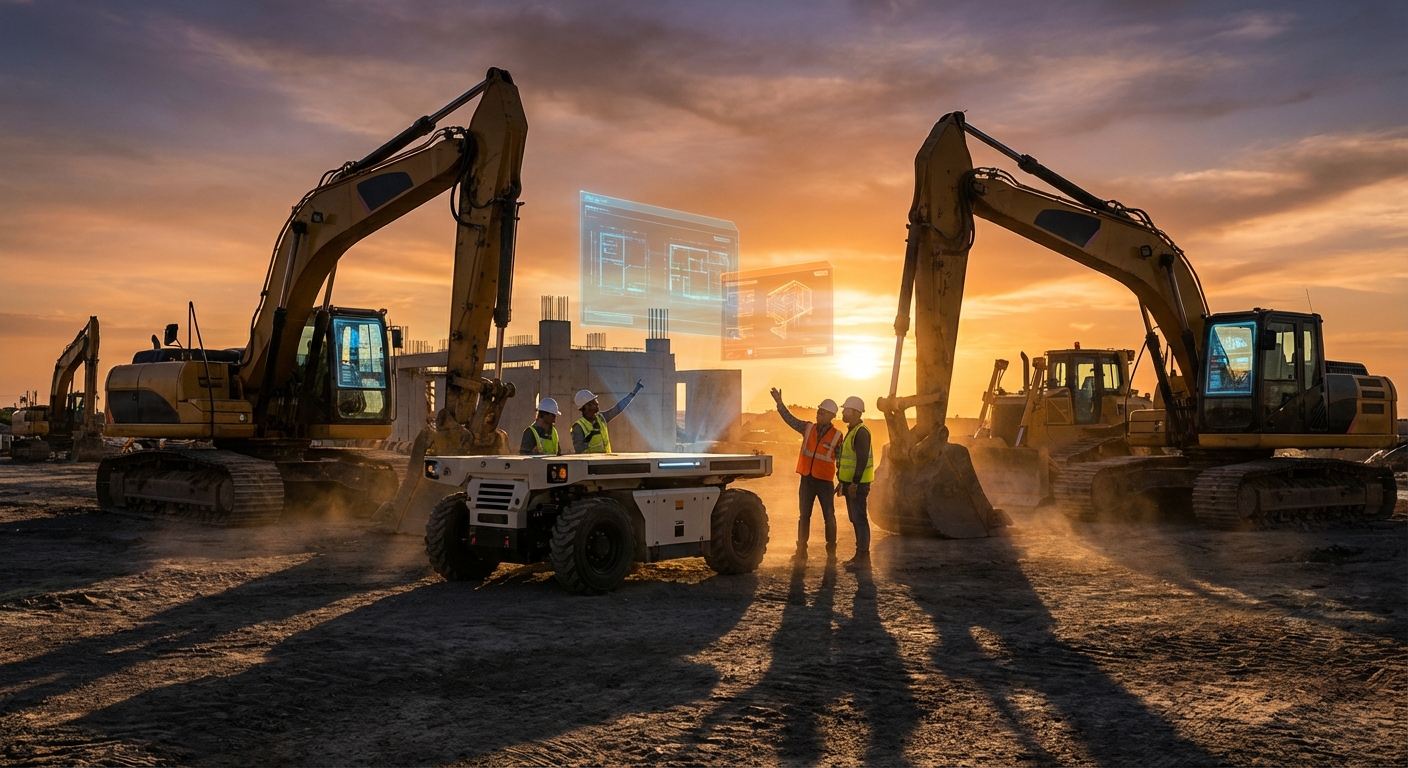
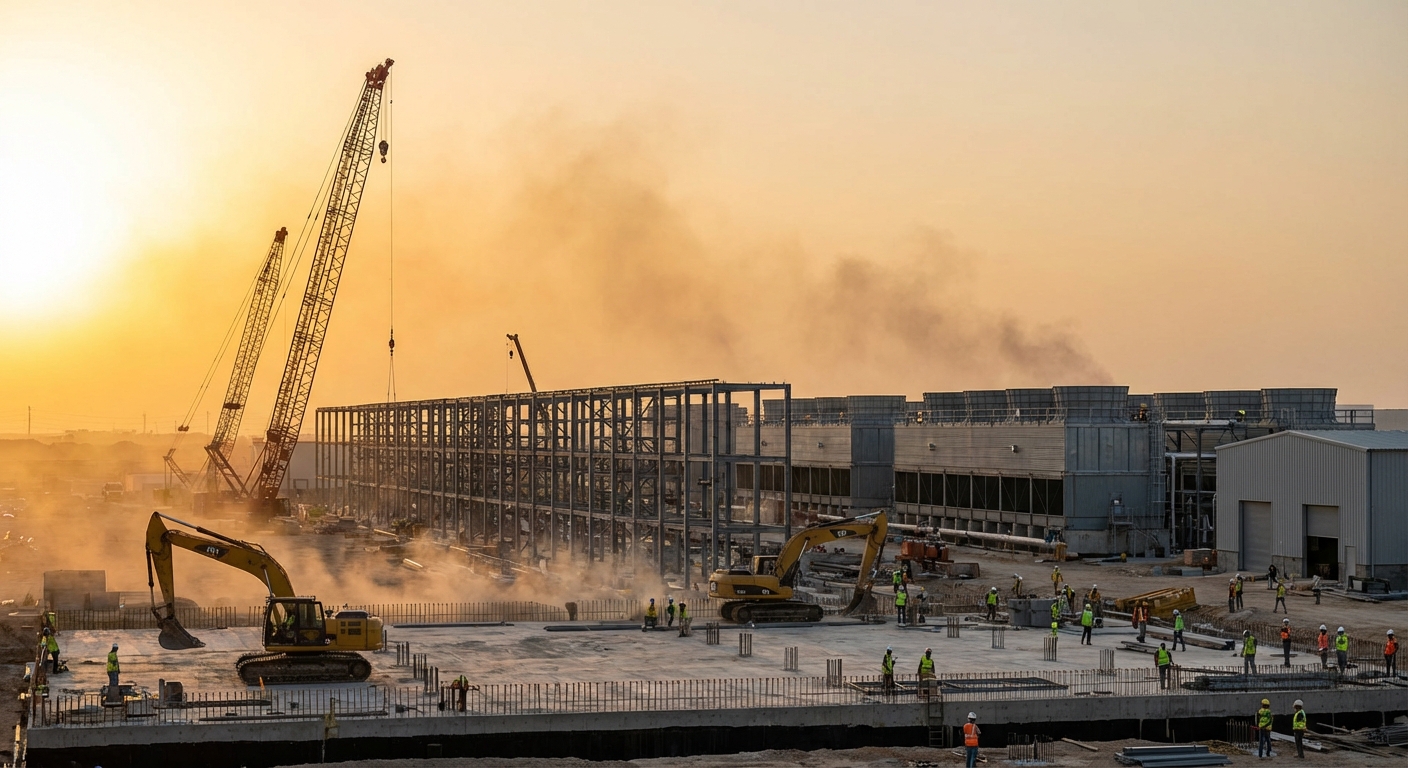
And every one of those facilities needs dirt moved, concrete poured, steel erected, and utilities trenched. That means excavators, dozers, cranes, loaders, and a small army of skilled operators to run them.
How We Got Here
The AI explosion changed everything. Five years ago, data centers were big server rooms for cloud storage and streaming. Today, they’re purpose-built power plants for artificial intelligence. New facilities are being engineered around GPU-centric layouts with rack densities that would’ve been unthinkable in 2020. By 2030, AI could represent half of all data center workloads.
📋 FieldFix Editor’s Note: More equipment running more hours means maintenance schedules get compressed fast. Whether you’re running a fleet on data center sites or traditional construction, tracking service intervals and cost-per-hour across every machine keeps you from getting blindsided by downtime. FieldFix makes that dead simple.
That shift has real consequences for the dirt side of the business. These aren’t your standard 50,000-square-foot commercial buildings. Hyperscale data centers from the likes of Microsoft, Google, Amazon, and Meta are massive campus developments — often 500,000 square feet or more — with dedicated substations, cooling infrastructure, and redundant utility connections. The site work alone on a single hyperscale campus can take 12 to 18 months and consume dozens of machines.
Construction costs per megawatt have climbed from $7.7 million in 2020 to $10.7 million in 2025. For 2026, the average global cost is forecast to jump another 6% to $11.3 million per MW. That cost increase isn’t just materials and labor — it’s demand outstripping the supply of contractors and equipment capable of handling these projects.
Where the Equipment Goes
Data center construction is equipment-intensive in ways that surprise people outside the sector.
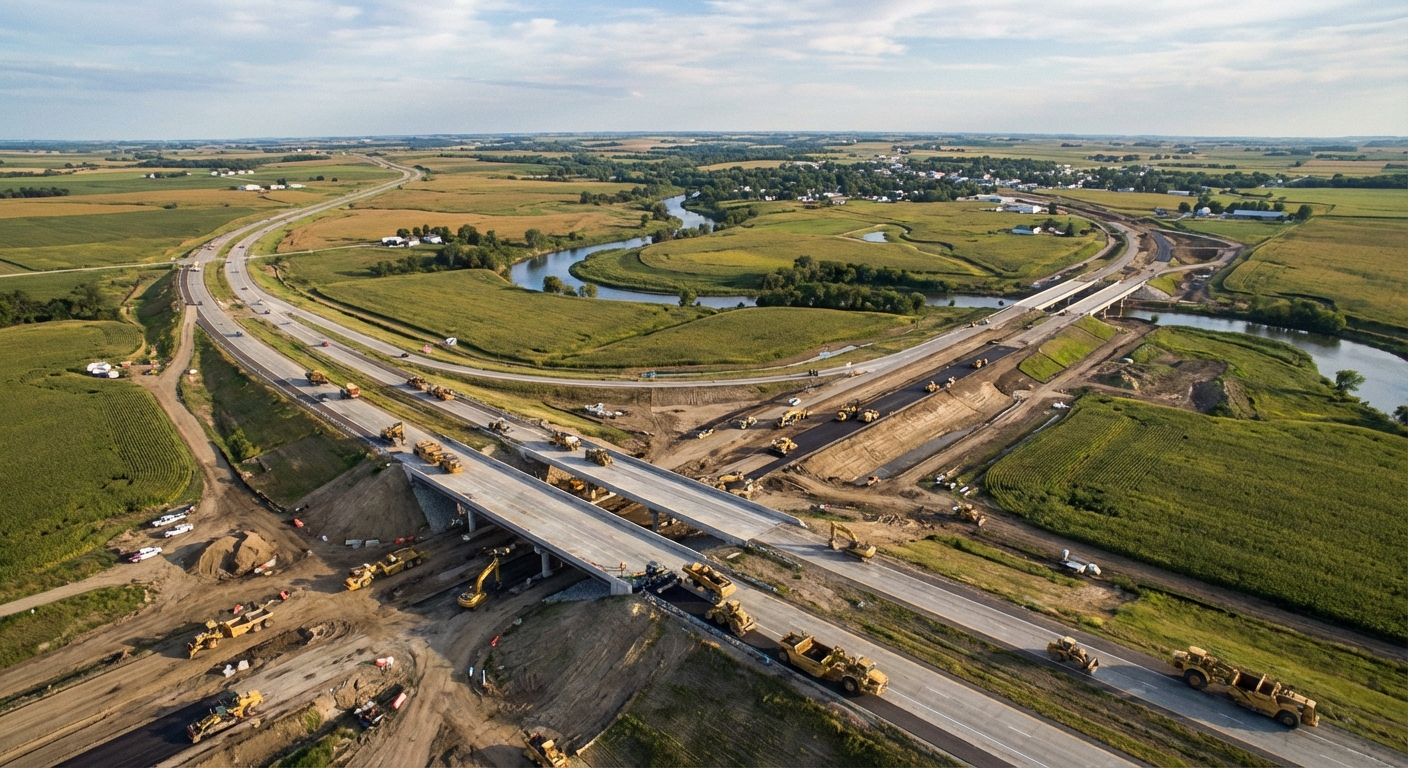
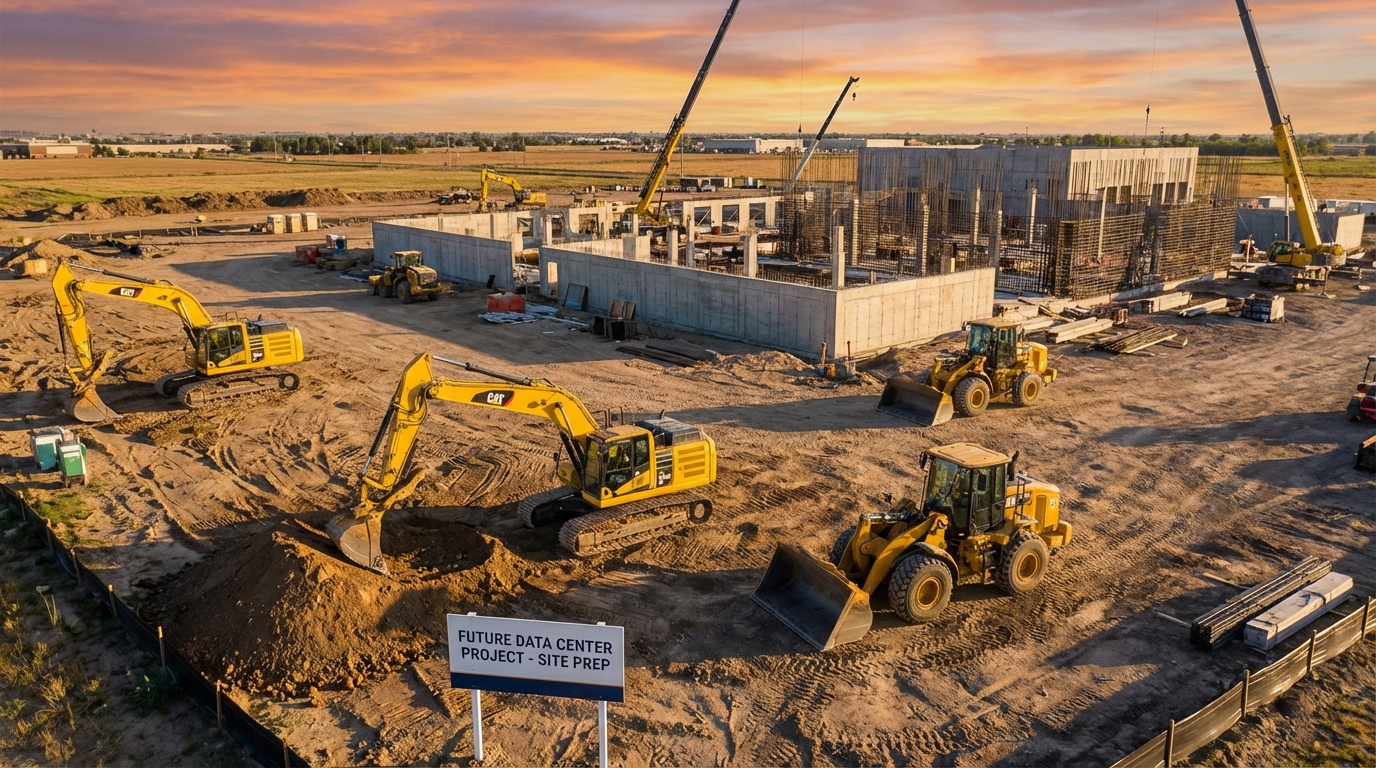
Site preparation is the first bottleneck. Hyperscale campuses often go up on greenfield sites that need significant grading, rock removal, and drainage work. That’s dozers, excavators, rock trucks, and compaction equipment running for months before a single foundation gets poured.
Underground utilities are another major equipment draw. Data centers need massive power and fiber connections, water lines for cooling systems, and redundant utility routing. Trenchers, mini excavators, and directional drills stay busy throughout the project lifecycle.
Concrete work is enormous. The foundations, raised floors, and structural elements of a hyperscale facility require continuous concrete pours that keep mixer trucks, pumps, and finishing equipment booked solid.
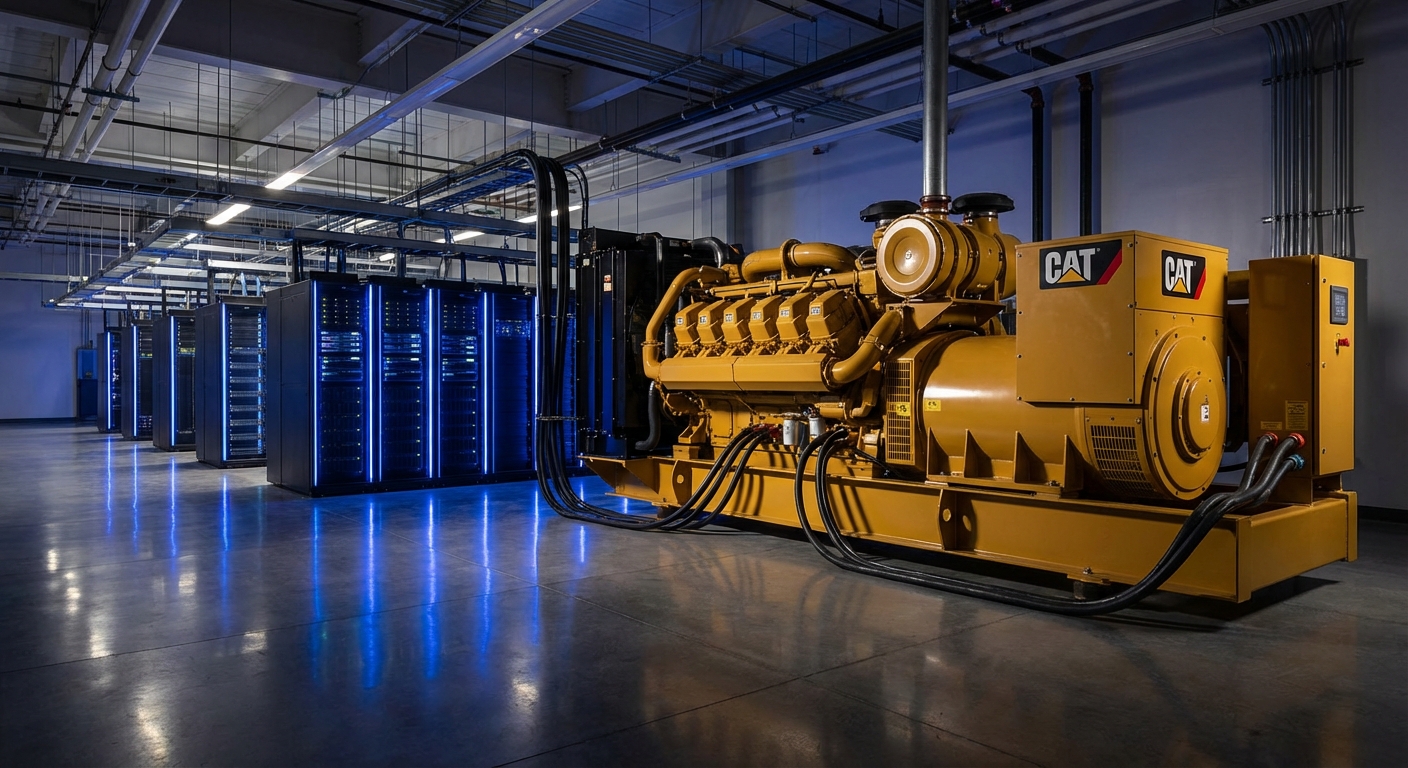
Crane demand has been particularly acute. The mechanical and electrical equipment going into modern data centers — generators, transformers, cooling towers, uninterruptible power supplies — is heavy and expensive. The crane market was already tight before data centers started competing for available units.
The Labor Problem Gets Worse
The construction industry already needed to add roughly 349,000 workers in 2026 just to keep pace with existing demand. Data centers are making that gap wider.
These projects pay well. A skilled heavy equipment operator on a data center site in Virginia, Texas, or Arizona can earn $35 to $50 an hour, plus overtime. That’s pulling operators away from residential and commercial projects where the pay is lower and the work is less consistent.
The talent shortage extends beyond operators. Project managers, electricians, ironworkers, and concrete crews are all getting stretched. Some general contractors report turning down data center work because they can’t staff it, which would’ve been unthinkable two years ago.
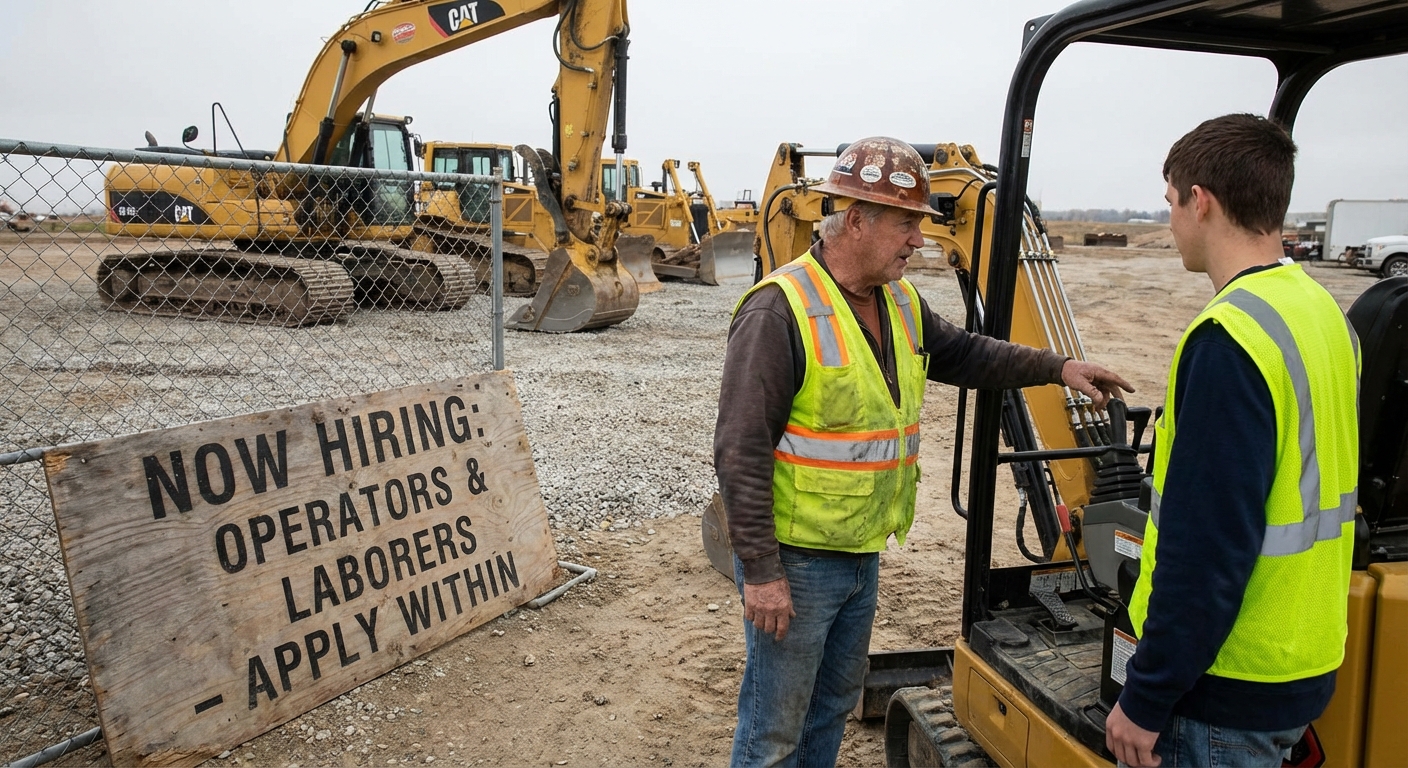
For small and mid-size contractors, this creates both a problem and an opportunity. The problem: your best operators might leave for better-paying data center gigs. The opportunity: if you can staff up and get qualified, data center site work is steady, high-margin, and growing.
Geography Matters
Data center construction isn’t evenly distributed. It clusters around power availability, fiber connectivity, and favorable tax treatment.
Northern Virginia remains the epicenter. Loudoun County alone hosts more data center capacity than most countries. But land and power constraints are pushing development into neighboring counties and states.
Texas — particularly the Dallas-Fort Worth metroplex and San Antonio — has become the second-largest data center market. Cheap power, available land, and business-friendly regulation keep attracting developers.
Arizona, Ohio, Indiana, and Georgia are all seeing rapid growth. Meta’s $10 billion-plus investment in multiple U.S. data center campuses has spread construction activity across several states.
International markets are booming too. Southeast Asia, the Middle East, and Northern Europe are all building capacity as fast as local infrastructure allows.
For equipment dealers and rental companies in these regions, the demand spike is real and measurable. Rental utilization rates on earthmoving equipment in Northern Virginia have been running above 85% for over a year.
What This Means for Equipment Markets
The data center boom is one of several forces tightening equipment supply right now. Combined with infrastructure spending from the IIJA, reshoring of manufacturing, and steady commercial construction, there simply aren’t enough machines to go around in some markets.
This is showing up in several ways:
Rental rates are climbing. National rental companies have been pushing rate increases of 5 to 8% annually, and local markets near data center clusters are seeing even higher premiums.
Used equipment inventory is shrinking. As we reported earlier this week, used heavy equipment listings dropped over 13% year-over-year. Data center demand is part of that story — contractors are holding onto machines longer because they need them, and fewer units are cycling back to market.
Lead times on new equipment remain extended. While OEMs have worked through the worst of the post-COVID supply chain mess, delivery times for popular models — especially large excavators and cranes — are still running 4 to 8 months in some cases.
Telematics adoption is accelerating. When every machine-hour counts and downtime costs real money, fleet managers are investing in tracking, predictive maintenance, and utilization data. The heavy equipment telematics market is projected to hit $3.2 billion by 2032, growing at over 13% annually.
The Modular Wild Card
One trend worth watching: modular data center construction. Instead of building everything on-site, some developers are prefabricating data center components in factories and assembling them on location. This approach can cut construction timelines significantly and reduce the amount of on-site equipment needed.
But modular doesn’t eliminate site work. You still need grading, foundations, utilities, and infrastructure. And the factories building modular components need their own heavy equipment for material handling and logistics.
If modular takes a bigger share of the market, it could shift where equipment demand shows up — from the construction site to the manufacturing facility. Either way, the machines are still needed.
What Contractors Should Do Now
If you’re running equipment anywhere near an active data center market, here’s the practical takeaway:
Understand the opportunity. Data center GCs and developers are actively looking for qualified earthwork, utility, and concrete subcontractors. If you have the equipment and the crews, there’s work available at margins most contractors would love.
Lock in your people. The labor competition from data center projects is real. If you’re not paying competitive wages and offering steady hours, you’ll lose operators to someone who is.
Watch your equipment utilization. With rental rates climbing and used inventory thinning, every machine-hour matters more than it did two years ago. Know your true cost-per-hour and make sure you’re billing accordingly.
Think about fleet strategy. If you’re in a data center growth market and your fleet is aging, now is the time to evaluate whether to buy, rent, or lease additional capacity. Waiting until peak season to scramble for machines is a losing play.
The data center boom isn’t slowing down. If anything, the AI arms race among tech giants is accelerating it. For the heavy equipment industry, that means more demand, tighter supply, and a reshuffling of where the best opportunities are. Pay attention.