The $49 Billion Compact Equipment Boom: What's Driving Growth in 2026
Mini excavators, compact loaders, and electrification are reshaping the construction equipment landscape. Here's what contractors and dealers need to know about the compact market surge.
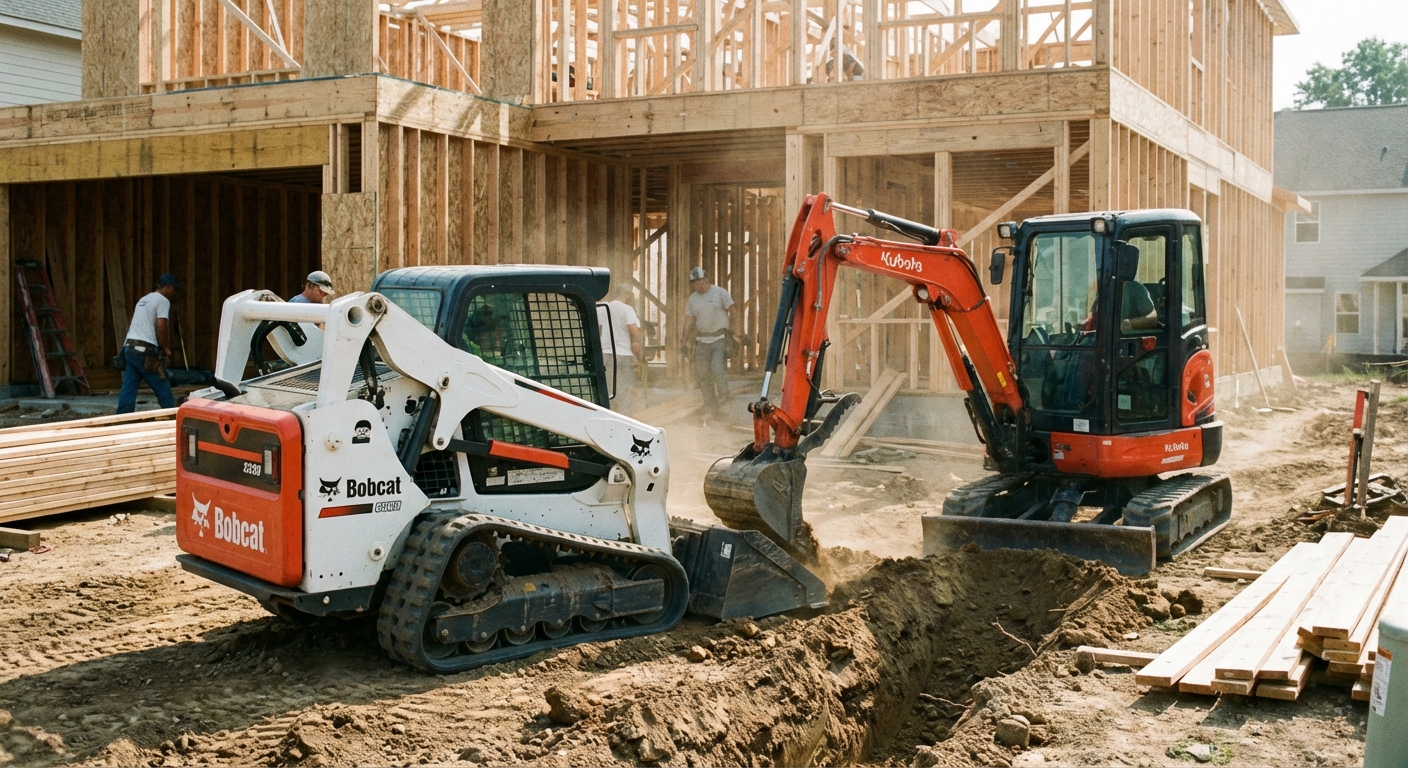
The compact construction equipment market isn’t just growing—it’s exploding. Industry analysts project the global market will reach $49.09 billion in 2026, up from $46.68 billion in 2025, representing a 5.2% compound annual growth rate that shows no signs of slowing.
For contractors who’ve watched their compact fleets become increasingly central to daily operations, these numbers confirm what they already know: smaller machines are doing bigger things than ever before. And the transformation is just getting started.
Editor’s Note: Tracking equipment hours and maintenance across a mixed fleet—especially when compact machines cycle through different job sites weekly—creates real operational headaches. FieldFix offers heavy equipment fleet management with digital service logs and cost-per-hour analytics that work as well for mini excavators as they do for 50-ton dozers. Worth checking out if fleet visibility is a pain point.
The Numbers Behind the Boom
Multiple market research firms have converged on similar projections, lending credibility to the compact equipment growth story. According to recent analysis from Research and Markets, the compact construction equipment sector could reach $59.35 billion by 2030, representing consistent mid-single-digit growth throughout the decade.
The mini excavator segment specifically—machines under 6 metric tons—is tracking toward $14.46 billion by 2035, growing at approximately 4.2% annually. That’s substantial given the segment’s already mature presence in developed markets.
What’s driving these numbers? Several converging factors that smart contractors and dealers are already positioning to exploit.
Urbanization: The Unstoppable Force
The math is simple: as more of the world’s population concentrates in urban areas, construction projects increasingly happen in tight spaces where full-size equipment simply cannot operate.
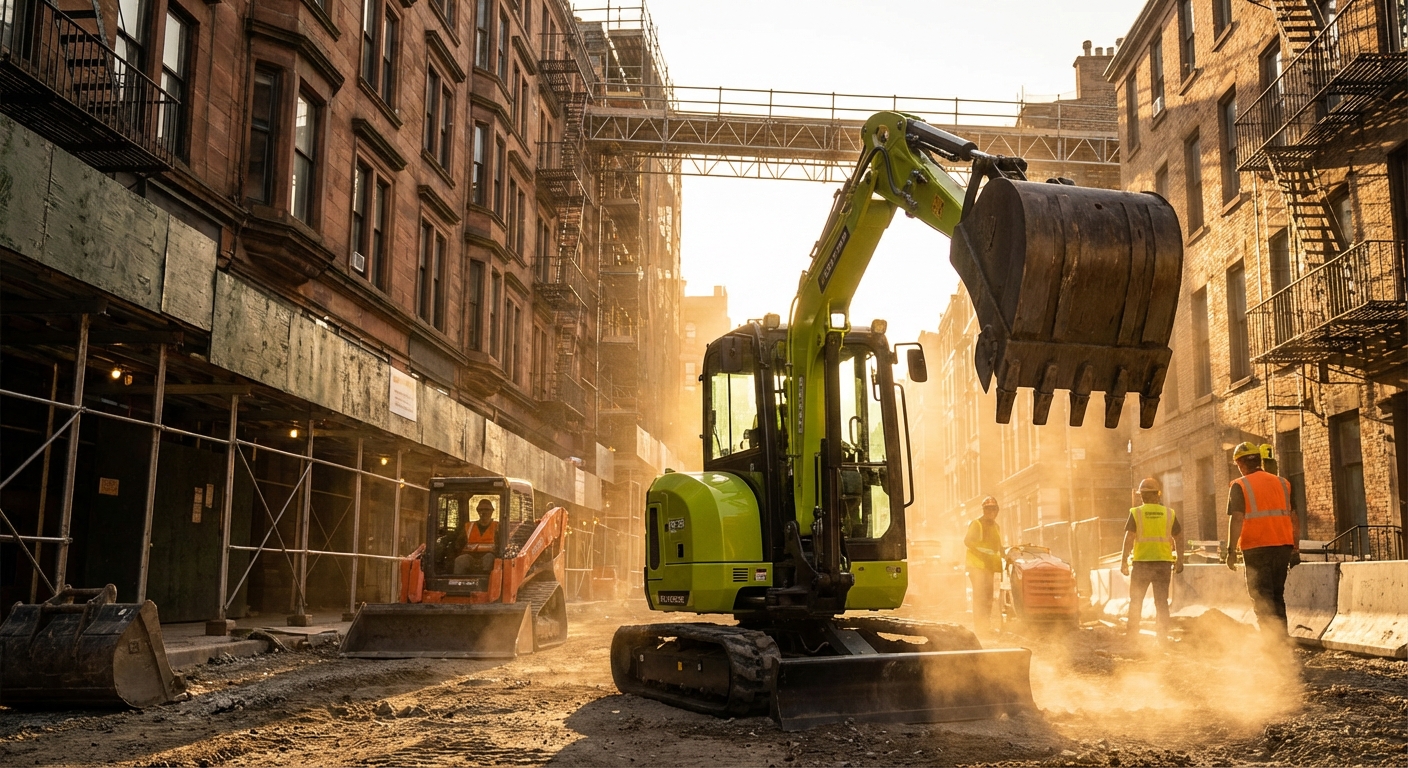
Consider the typical urban infill project. A contractor bidding a foundation excavation on a 40-foot-wide lot sandwiched between existing structures doesn’t have the luxury of bringing in a 30-ton excavator. The access constraints alone—narrow driveways, weight-restricted streets, overhead utilities—mandate compact solutions.
This isn’t a trend that’s going to reverse. The United Nations projects that 68% of the global population will live in urban areas by 2050, up from 55% today. Every percentage point shift represents millions of construction projects that require smaller, more maneuverable machines.
Electrification: From Gimmick to Game-Changer
Perhaps no trend in compact equipment has moved faster from novelty to necessity than electrification. What started as compliance-driven machines for indoor demolition and European emission zones has evolved into a genuine performance alternative.
The compact electric construction equipment market is valued at $69.49 billion in 2026 and is forecast to reach $140.49 billion by 2031—more than doubling in just five years. That growth rate far outpaces the overall compact segment, signaling a fundamental shift in how contractors view electric power.
The value proposition has evolved beyond “zero emissions.” Modern electric compact equipment offers:
Reduced Operating Costs: No diesel fuel, fewer fluids to change, and regenerative systems that capture energy during operations like boom lowering. Contractors running electric minis in controlled environments report 40-60% lower daily operating costs compared to diesel equivalents.
Noise Reduction: Electric compact excavators operate at conversation-level volumes, opening up job sites that would otherwise be restricted. Early morning starts in residential areas, hospital campus renovations, school additions during session—these projects become viable when the equipment doesn’t announce itself to everyone within a quarter mile.
Indoor Capability: Basement excavation, parking garage demolition, warehouse modifications—any interior work that previously required elaborate ventilation systems becomes straightforward with zero-emission machines.
Operator Preference: This one surprises some fleet managers, but operators who’ve run electric machines consistently prefer them. Less noise, no vibration from an idling diesel, no exhaust exposure—the operator experience genuinely improves.
The charging infrastructure question that plagued early electric equipment adoption is finding practical answers. Many contractors have discovered that overnight charging meets their operational needs, and job site power—especially on commercial projects—is increasingly robust enough to support daytime top-offs.
Smart Machines: Telematics Goes Standard
The technology integration happening in compact equipment would have seemed like science fiction a decade ago. GPS-guided grade control, real-time telematics, predictive maintenance alerts, and increasingly sophisticated machine control systems are migrating from options lists to standard equipment.
For fleet managers, this means unprecedented visibility into how compact machines actually perform in the field. Idle time, fuel consumption, operating hours, geographic positioning—data that required manual collection now flows automatically to central dashboards.
The implications extend beyond simple monitoring. Contractors using telematics data effectively report:
Optimized Utilization: When you can see that a mini excavator sat idle for three hours while another job site waited for equipment, scheduling decisions become obvious. Many contractors discover their utilization rates are 20-30% lower than assumed once they have real data.
Predictive Maintenance: Instead of calendar-based service intervals, smart machines signal when they actually need attention. This prevents both premature maintenance (wasting money) and delayed maintenance (causing expensive failures).
Theft Recovery: Compact equipment’s portability is a double-edged sword. The same machines that slip easily onto job sites also slip easily onto thieves’ trailers. Telematics with geofencing provides rapid theft detection and recovery capability.
Operator Accountability: Not in a punitive sense—good operators appreciate having data that demonstrates their careful machine handling. Fleet managers can identify training opportunities and recognize top performers.
The Attachment Revolution
Compact equipment has always been versatile, but the current generation of quick-coupler systems and specialized attachments pushes that versatility further than ever.
The trend toward multi-functionality is accelerating, with manufacturers developing sophisticated quick-attach systems that allow operators to swap from bucket to breaker to grapple in minutes rather than the hours that full hydraulic changes once required.
Consider a landscape contractor arriving at a residential project with a single compact track loader. That one machine, with the right attachment complement, might:
- Clear brush with a forestry mulching head
- Grade the site with a 4-in-1 bucket
- Trench for irrigation with a dedicated trenching attachment
- Spread topsoil with a grading beam
- Load materials with pallet forks
Five different operations, one machine, one operator. The efficiency gains compound when you factor in reduced trailer trips, lower fuel consumption, and simplified scheduling.
Regional Growth Patterns
While North America and Europe remain the largest markets for compact equipment in absolute terms, the growth story is increasingly written in Asia-Pacific.
India demonstrates particularly strong potential. Urban housing improvement schemes, major infrastructure development programs, and ambitious smart city targets are driving demand for construction equipment at all sizes. The compact segment benefits specifically because India’s urban construction challenges—tight spaces, limited access, mixed-use neighborhoods—mirror conditions that made compact equipment essential in developed markets.
China’s compact equipment demand, while massive, shows signs of maturation in certain segments. The opportunity for Western manufacturers and dealers lies in higher-specification machines with advanced features that Chinese domestic production doesn’t yet match.
What This Means for Contractors
For construction business owners evaluating equipment investments in 2026, the compact market trends suggest several strategic considerations:
Embrace Electric for the Right Applications: The technology is proven, the economics increasingly favorable. If you’re running compact equipment in noise-sensitive environments, on projects with indoor components, or on job sites with reliable power access, electric options deserve serious evaluation.
Invest in Versatility: The ROI on quick-coupler systems and attachment inventories has never been stronger. A compact machine that can perform three different functions justifies its ownership costs more easily than single-purpose equipment.
Demand Telematics: If you’re purchasing new compact equipment without telematics capability, you’re buying yesterday’s technology. The fleet visibility and operational insights that smart machines provide have become essential to competitive operations.
Watch the Used Market: The compact equipment boom means a corresponding wave of late-model machines entering the used market as contractors trade up. For budget-conscious operators, this creates opportunities—but also requires careful evaluation of remaining useful life, especially for electrics where battery condition matters significantly.
What This Means for Dealers
Equipment dealers face both opportunity and challenge in the compact market surge.
The opportunity is obvious: a growing market means more machines to sell, more parts to stock, more service work to perform. Dealers positioned with strong compact lines and the expertise to support them will capture their share of market growth.
The challenge is less visible but equally real. Compact equipment customers increasingly expect a different buying experience than traditional heavy equipment purchasers. They’re often smaller contractors, sometimes owner-operators, making decisions faster with less formal procurement processes.
Winning in compact equipment sales means:
Accessible Inventory: Compact buyers often need equipment quickly. Having machines available—not requiring weeks or months on factory order—wins deals.
Attachment Expertise: Selling a compact machine without understanding the customer’s application needs is leaving money on the table. Dealers who consult on attachment selection, offer bundled packages, and stock commonly needed implements outperform those treating attachments as afterthoughts.
Service Speed: A contractor with one mini excavator cannot wait weeks for parts or service. The compact equipment customer expects responsiveness that matches their business pace.
Looking Ahead
The $49 billion compact equipment market of 2026 is just a waypoint. Industry projections consistently show continued growth through the end of the decade and beyond, driven by fundamental shifts in where and how construction happens.
Electrification will continue its march from option to expectation. Autonomy features will migrate from concept videos to production machines. Integration between compact equipment and broader job site systems—surveying, project management, safety monitoring—will deepen.
For contractors and dealers alike, the message is clear: compact equipment isn’t the little sibling of the heavy equipment world anymore. It’s increasingly central to how construction gets done—and the businesses that recognize this early will position themselves for the growth ahead.
Equipment Insider provides market analysis and industry coverage for construction and heavy equipment professionals. For fleet management solutions that help you track costs and maintenance across your equipment lineup, visit FieldFix.