
The Mini Excavator Arms Race: Why Every OEM Is Fighting Over Your Backyard
ConExpo 2026 was a coming-out party for micro and mini excavators. From Cat's 1-ton 301 CR to Kioti's surprise debut, here's why the smallest machines are driving the biggest competition.
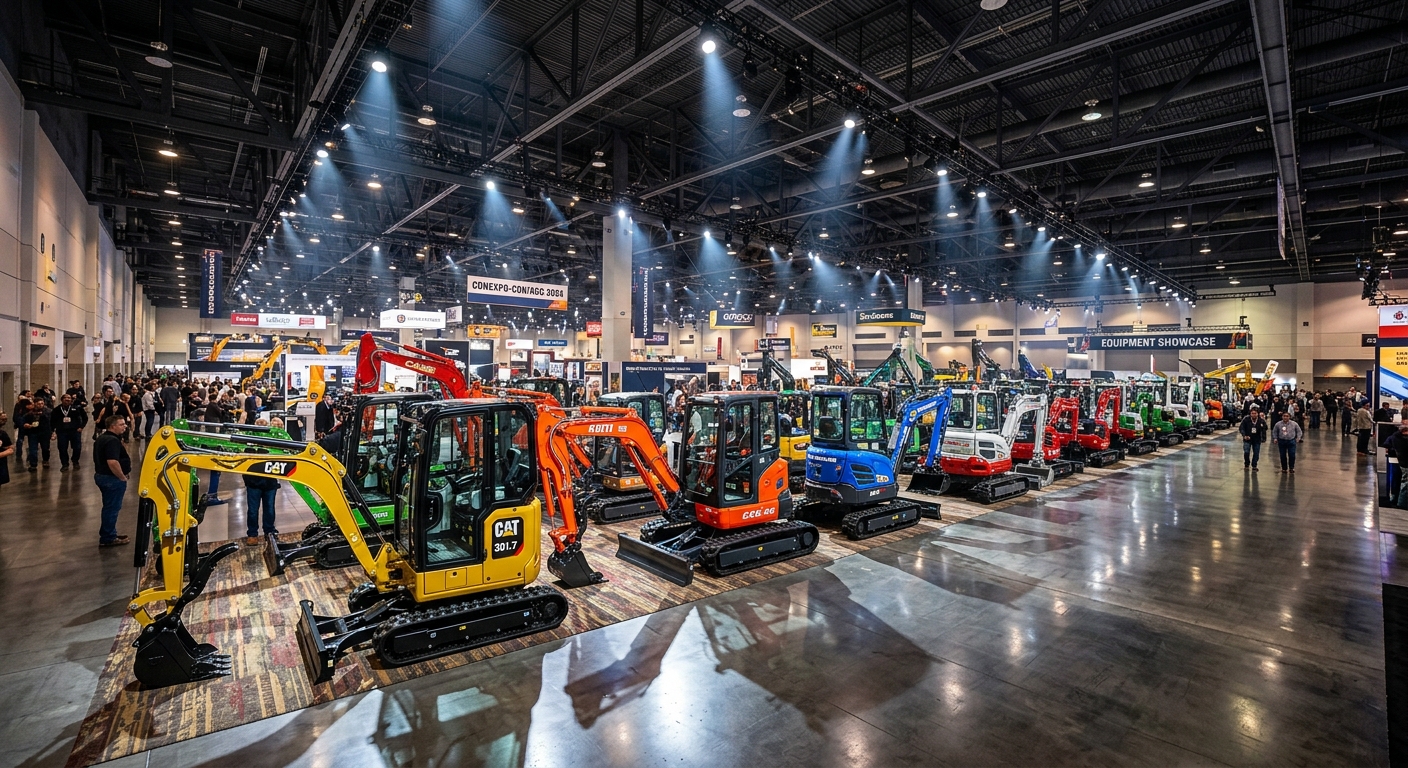
Walk into any equipment dealer right now and count the mini excavators. Then count them again in six months. The number is going up.
ConExpo 2026 confirmed what anyone watching the compact equipment market already suspected: mini excavators are the hottest segment in construction equipment, and every OEM with a pulse is scrambling to get a piece. Caterpillar unveiled its smallest machine ever. Kioti shocked the show floor with a surprise debut. New Holland rolled out five new models in a single announcement. And that’s just the headline names.
The question isn’t whether mini excavators are popular. That’s obvious. The question is why this particular segment is attracting so much investment right now, and what it means for the contractors and small operators who actually buy these machines.
Editor’s Note: Tracking equipment across a growing fleet? FieldFix helps contractors log maintenance, monitor costs per hour, and keep service records digital — so nothing falls through the cracks as you scale up.
The Numbers Tell the Story
Mini excavators are the second-highest selling equipment category in North America, according to Fusable’s EDA equipment finance data. More than 33,000 new financed units sold in 2025 alone. That’s not a niche. That’s a full-blown market pillar.
And the growth isn’t coming from traditional heavy construction buyers upgrading their fleets. It’s coming from landscapers buying their first excavator instead of renting. From utility contractors replacing hand labor. From homeowners who watched one too many YouTube videos and decided they could dig their own pool. The buyer profile for a 1-to-5-ton machine looks nothing like it did a decade ago.
This expanding buyer base is exactly why OEMs are piling in. The addressable market keeps getting bigger because the use cases keep multiplying.
Cat Goes Small — Really Small
Caterpillar’s 301 CR is a 1-ton machine with a 29-inch retractable undercarriage. That’s narrow enough to fit through a garden gate. It replaces the 300.9D in Cat’s lineup and targets utility work, landscaping, demolition, and trenching.
The specs are purposefully modest: 15.7 horsepower from a Cat C1.1 engine, 71.7-inch dig depth, 124-inch max reach. But the real story is the feature set Cat packed into something this small. Seat-mounted pilot controls. Reclining seat with adjustable armrests. Two-speed travel at 2.2 mph. A folding ROPS. First and second auxiliary hydraulics. Cat ProductLink telematics with GPS tracking.
That’s a long feature list for a machine that weighs 2,900 pounds. Cat is clearly betting that small contractors and rental houses want the same technology they’d expect in a 20-ton machine, just scaled down. The 301 CR also shares its engine platform with multiple other Cat compact models, which simplifies service and parts inventory for dealers. That kind of platform thinking matters when you’re selling into a rental fleet that needs easy maintenance.
Kioti’s Surprise Entry
If Cat’s announcement was expected, Kioti’s was a genuine shock. The South Korean manufacturer — best known for tractors, UTVs, and zero-turn mowers — literally dropped a curtain at their ConExpo booth to reveal three mini excavators: the MX 350A, MX 350AE, and MX570.
Kioti entered the compact track loader and skid steer markets in 2023. The mini excavator play follows the same strategic logic: give their dealer network more products to sell, so a customer can buy a tractor, a UTV, a CTL, and now an excavator all from one dealership.
The MX 350A is a 23-horsepower machine at 8,501 pounds with standard features that would be options on many competing brands: angle blade, hydraulic thumb, mechanical quick coupler, Bluetooth radio, and A/C. The MX 570 steps up for heavier work. All three models are set for spring 2026 launch.
Kioti’s pitch is simplicity. Their product development team emphasized that buyers shouldn’t need to navigate an options sheet just to get a usable machine. Everything comes standard. That “ready to work out of the box” approach plays well with first-time buyers who don’t know what they don’t know about spec’ing an excavator.
New Holland Goes Wide
New Holland took a different approach: flood the zone. They introduced five new D Series models at ConExpo — the E12D, E19D, E30D, E38D, and E60D — covering 1.3 to 6 metric tons. All feature zero tail swing.
The E12D, at 1.3 metric tons and 11.8 horsepower, targets the same micro-excavator space as Cat’s 301 CR. The E60D sits at the upper end of the mini range, built for contractors who need genuine digging capability but still want compact dimensions.
Standard features across the lineup include first and second auxiliary hydraulics, pattern changers, rearview cameras, and LED work lights. The cab-equipped models get attachment flow and pressure settings that save between tool changes. New Holland also rolled out factory-installed attachment packages — buckets, thumbs, couplers, hammers, compaction plates, grapples, augers, mowers, and mulchers. Some models even get a dedicated mulcher hydraulic line for higher flow.
Five models at once is aggressive. It signals that New Holland sees mini excavators as a growth engine for their dealer network, not just a complementary product line.
Why Now? Three Forces Driving the Boom
The labor math changed. A mini excavator replaces two or three workers with shovels, and it doesn’t call in sick. As hourly labor costs have climbed and finding workers has gotten harder, the payback period on a $30,000-$60,000 mini excavator has shrunk. For a lot of small operations, the machine pays for itself in months.
Rental normalized the category. National rental companies have invested heavily in mini excavator fleets over the past five years. That did two things: it introduced the machines to buyers who’d never used one, and it proved the demand was real. Contractors who rented a mini excavator for a few jobs eventually bought their own. Home Depot and Sunbelt helped create millions of first-time operators.
Attachments turned mini excavators into Swiss Army knives. A mini excavator with a thumb, a bucket, an auger, and a breaker can handle work that used to require three different machines (or three different subcontractors). The attachment ecosystem has matured enough that a single mini excavator can be genuinely versatile, not just a hole digger.
The Rental Factor
Rental companies are arguably the single biggest driver of this boom. When a rental house evaluates a new equipment purchase, they look at utilization rates, maintenance costs, and time-to-return. Mini excavators score well on all three.
They rent constantly. Utilization rates for mini excavators at major rental companies run north of 65%, which is excellent. They’re relatively cheap to maintain compared to larger iron. And their purchase price means they can generate positive returns quickly.
For OEMs, a single order from a national rental chain can move hundreds of units. That volume is a powerful incentive to invest in new models, better features, and competitive pricing. When United Rentals or Sunbelt says “we want a 1-ton machine with telematics and two-speed travel,” OEMs listen.
What This Means for Buyers
If you’re shopping for a mini excavator right now, the competition is working in your favor. More models means more choices, better standard features, and downward pressure on pricing. Ten years ago, buying a mini excavator with a thumb, coupler, A/C, and telematics meant checking a lot of option boxes and writing a bigger check. Today, several manufacturers include all of that as standard equipment.
The downside of a crowded market is decision fatigue. When every booth at ConExpo has a new mini excavator, how do you pick? A few things matter more than spec sheets:
Dealer support. The best machine in the world is worthless if your nearest dealer is three hours away. Before you fall in love with a brand, check who services it locally.
Attachment compatibility. If you already own attachments, make sure the new machine’s coupler system matches. Switching from pin-on to a proprietary quick-attach system means re-buying buckets and tools.
Resale value. Established brands like Cat, Deere, and Kubota hold their value better on the secondary market. Newer entrants like Kioti will need time to prove their resale numbers.
Total cost of ownership. Purchase price is just the start. Factor in warranty length, maintenance intervals, parts availability, and fuel consumption. A cheaper machine that costs more to own over five years isn’t actually cheaper.
Where the Market Goes From Here
The mini excavator segment isn’t slowing down. If anything, the ConExpo 2026 launches are just the first wave. Expect more electric and hybrid models in the 1-to-3-ton range as emissions regulations tighten and jobsite noise restrictions spread. Cat’s 301 CR doesn’t have an electric variant yet, but it’s built on a platform that could support one.
Expect continued blurring between “construction equipment” and “property maintenance tools.” Kioti’s presence in this market is a direct result of the overlap between landscaping, hobby farming, and light construction. Brands that traditionally sold to farmers and homeowners now see construction contractors as a growth opportunity, and vice versa.
The OEMs betting on this segment are betting on a structural shift — not a cycle. The idea that a mini excavator belongs on every job trailer, in every rental yard, and in every well-equipped landscaper’s fleet isn’t going away. The question is just how many brands the market can support.
Right now, the answer seems to be: more than you’d think.