Compact Equipment Market 2026: Skid Steers, CTLs, and Mini Excavators Poised for Growth
The compact equipment segment continues its upward trajectory as contractors embrace versatility, technology integration, and new power options in smaller machines.
The compact equipment market enters 2026 with strong momentum, driven by a combination of infrastructure spending, labor shortages pushing contractors toward more versatile machines, and technological innovations that make smaller equipment more capable than ever. Industry analysts project continued growth across the skid steer, compact track loader (CTL), and mini excavator segments, though the mix is shifting as contractors reassess their fleet strategies.
Market Overview: Numbers Tell the Story
The North American compact equipment market reached approximately $12.8 billion in 2025, with projections pointing toward $14.2 billion by the end of 2026—representing roughly 11% year-over-year growth. This outpaces the broader construction equipment market’s projected 6-7% growth, highlighting contractors’ continued preference for versatile, lower-cost machines that can handle multiple applications.
Editor’s Note: Tracking equipment utilization and maintenance costs is crucial for understanding your compact equipment ROI. Tools like FieldFix help contractors monitor cost-per-hour across their entire fleet, from mini excavators to full-size dozers.
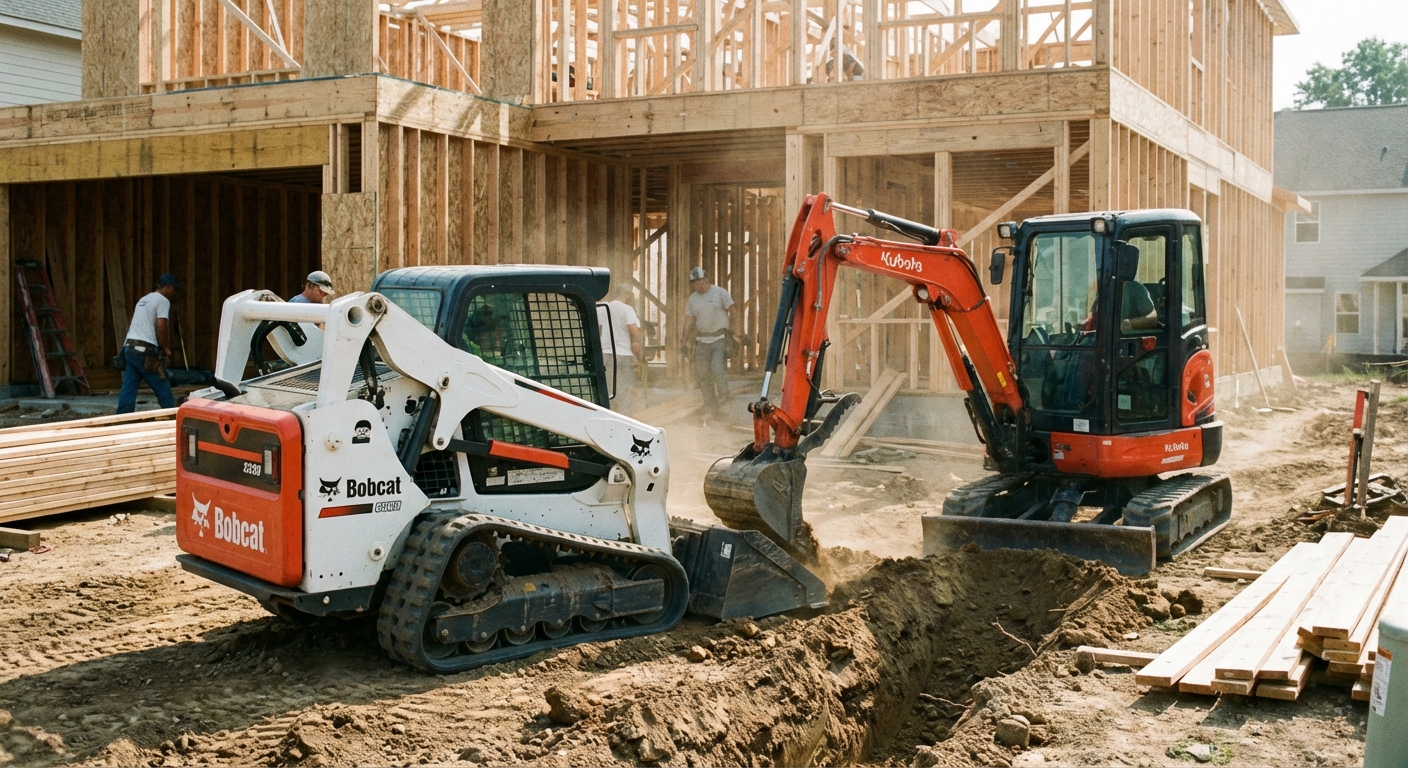
Mini excavators continue to dominate unit sales, representing approximately 45% of all compact equipment sold in North America. Compact track loaders have steadily gained ground against traditional skid steers, now commanding roughly 65% of the combined SSL/CTL market—a figure that’s climbed from under 50% just a decade ago.
The CTL vs. Skid Steer Debate: Market Dynamics
The ongoing shift from wheeled skid steers to tracked compact loaders reflects changing job site realities. With more residential construction occurring on previously undeveloped or challenging terrain, the flotation and stability advantages of rubber tracks have proven decisive for many contractors.
Insurance and liability concerns have also played a role. Tracked machines cause significantly less damage to finished surfaces, lawns, and existing landscaping—reducing callbacks and claims that eat into contractor margins. Several major landscape contractors have reported going “all CTL” specifically to eliminate turf damage disputes.
However, skid steers maintain strongholds in specific applications:
- Agricultural operations where higher travel speeds between work areas matter
- Snow removal operations requiring wheel-mounted tire chains
- Demolition and recycling facilities with abrasive surfaces that accelerate track wear
- Urban contractors who need maximum maneuverability in tight spaces
The price premium for CTLs—typically 15-20% over equivalent skid steers—remains a barrier for some buyers, though declining undercarriage maintenance costs have narrowed the total cost of ownership gap considerably.
Mini Excavators: The Versatility Champions
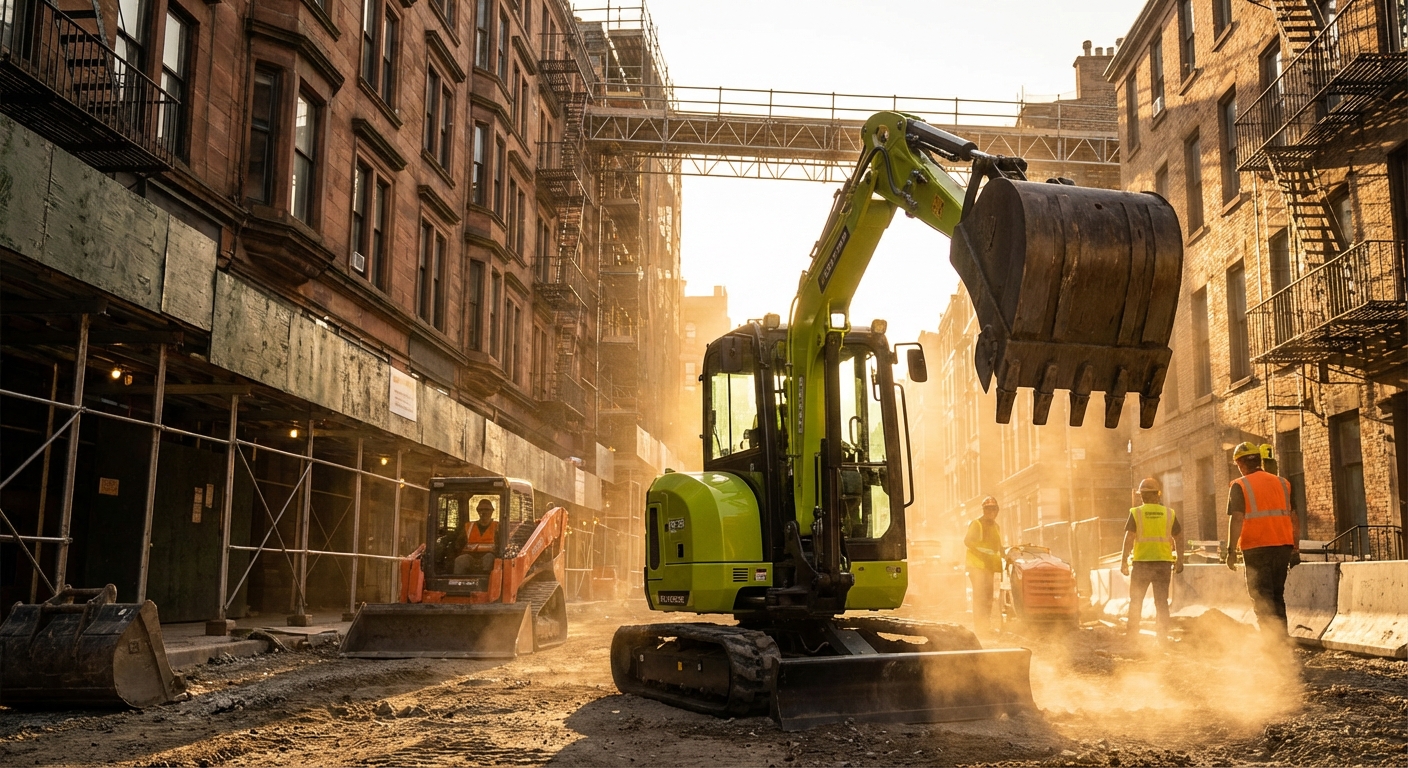
The mini excavator segment has evolved far beyond simple digging machines. Today’s compact excavators regularly serve as:
- Primary trenching units for utility contractors
- Material handling machines with hydraulic thumbs and grapples
- Brush clearing tools with rotary cutter attachments
- Precision grading equipment with GPS/machine control integration
The 3-6 ton class has emerged as the sweet spot for contractor adoption, offering enough dig depth and lift capacity for most residential and light commercial applications while remaining towable with standard equipment trailers. Machines in this range typically feature:
- Zero or reduced tail swing configurations for close-quarters work
- Auxiliary hydraulic circuits for attachment versatility
- Climate-controlled cabs with improved operator comfort
- Telematics systems for remote monitoring and diagnostics
Several manufacturers have introduced “big excavator” features to their compact lines, including pattern changers (allowing operators to switch between ISO and SAE control patterns), automatic hydraulic oil warm-up cycles, and integrated camera systems for improved visibility.
Technology Integration Accelerates
Perhaps no trend has impacted the compact equipment market more significantly than technology integration. Features that were luxury options or unavailable five years ago have become standard or near-standard:
Machine Control and GPS
Compact equipment manufacturers have partnered with grade control specialists to bring precision technology to smaller machines. Entry-level 2D systems now appear on machines as small as 5-ton excavators, while full 3D GPS/GNSS systems are available for compact equipment previously considered too small to justify the investment.
The ROI argument has shifted dramatically. Contractors report that automated grade control systems can increase production by 30-50% on precision grading applications while virtually eliminating costly over-excavation or material replacement.
Telematics and Fleet Management
Remote monitoring has become table stakes for compact equipment fleets. Every major manufacturer now offers some form of telematics system, providing:
- Real-time location tracking
- Operating hour monitoring
- Fuel consumption data
- Diagnostic code alerts
- Maintenance scheduling reminders
Fleet managers increasingly use this data to make decisions about equipment allocation, optimal trade cycles, and operator training needs. The data shows clear patterns—contractors who actively monitor telematics consistently achieve higher utilization rates and lower maintenance costs.
Electrification Progress
Electric compact equipment has moved from concept to reality, with multiple manufacturers now offering production-ready electric skid steers, compact track loaders, and mini excavators. The current generation of machines addresses many early concerns:
- Runtime: Battery packs now deliver 4-8 hours of typical operation
- Charging: Fast-charge options can restore 80% capacity during lunch breaks
- Performance: Electric motors provide instant torque and often outperform diesel equivalents in breakout force
- Noise: Indoor and noise-sensitive applications benefit enormously from 90%+ noise reductions
The premium for electric equipment remains substantial—often 40-60% over diesel equivalents—but total cost of ownership calculations increasingly favor electric options for high-utilization applications, particularly those involving indoor work, noise restrictions, or emissions-regulated environments.
Attachment Ecosystem Expansion
The compact equipment attachment market has grown into a multi-billion-dollar industry segment, with some contractors investing more in attachments than in carrier machines. Key growth categories include:
Forestry and Land Clearing
Compact forestry mulchers have opened new markets for landscapers and property maintenance contractors. Machines in the 75-100 HP range can now run capable mulching heads that handle brush and small trees—work that previously required specialized equipment or subcontractors.
Concrete and Demolition
High-flow hydraulic systems on modern CTLs and skid steers support professional-grade concrete mixing, pumping, and placement attachments. The same machines serve demolition applications with hydraulic breakers and concrete crushers.
Material Handling
Grapple, fork, and specialty lifting attachments have transformed compact loaders into multipurpose material handlers. Purpose-built attachment solutions for specific industries—from nurseries to building materials—continue proliferating.
Regional Market Variations
Market conditions vary significantly by region:
Southeast United States: Strong residential construction and limited contractor labor availability drive robust demand. Hurricane recovery work creates periodic demand spikes.
Northeast: Seasonal rental patterns dominate, with contractors preferring to rent specialized compact equipment rather than commit capital. Snow removal capabilities remain important purchase considerations.
Midwest: Agricultural crossover applications remain significant. Contractors serving both farm and construction markets favor versatile machines with extensive attachment options.
Western States: Fire restoration and mitigation work has emerged as a significant market driver. Compact equipment capable of creating defensible space around structures sees strong demand in wildfire-prone areas.
Canada: Extended winter seasons and remote work sites favor tracked machines and cold-weather packages. Arctic-rated options see meaningful adoption in northern regions.
Supply Chain and Pricing Outlook
The supply chain disruptions that plagued the industry from 2020-2023 have largely resolved, though lead times remain longer than pre-pandemic norms. Most manufacturers now quote 60-120 day delivery for popular compact equipment configurations, compared to 30-60 days historically.
Pricing has stabilized after several years of increases. Industry data suggests compact equipment prices rose approximately 18-22% from 2020-2025, with manufacturers citing component costs, labor expenses, and technology content as primary drivers. Most analysts expect modest 3-5% price increases in 2026—roughly tracking inflation.
The used equipment market has normalized following the unprecedented pricing of 2021-2023. Quality used compact equipment now trades at more traditional depreciation curves, making used purchase and certified pre-owned programs more attractive to budget-conscious buyers.
Labor Market Influence
Perhaps no external factor influences compact equipment purchasing decisions more than the ongoing skilled labor shortage. Contractors consistently report difficulty finding qualified operators, particularly for specialized equipment.
This reality has driven several market trends:
Easier Operation: Manufacturers have invested heavily in simplified controls and operator assistance features that reduce training time and improve novice operator productivity.
Reduced Crew Sizes: Versatile compact equipment allows smaller crews to accomplish more work, reducing dependence on hard-to-find labor.
Technology Training: Dealers and manufacturers offer expanded training programs, recognizing that well-trained operators maximize equipment productivity and minimize costly repairs.
What to Watch in 2026
Several developments bear watching as the year progresses:
CONEXPO-CON/AGG Impact: The March trade show will unveil numerous new compact equipment models and technologies. Historically, show announcements influence purchasing decisions throughout the following year.
Interest Rate Effects: Construction equipment financing closely tracks interest rates. Any Federal Reserve policy changes will impact equipment purchasing and leasing decisions.
Infrastructure Project Awards: As Infrastructure Investment and Jobs Act projects move from planning to execution, demand patterns may shift regionally based on project locations.
Rental Fleet Investments: Major rental companies are significant compact equipment purchasers. Their fleet investment decisions often signal broader market direction.
Conclusion
The compact equipment market enters 2026 with healthy fundamentals and continued growth prospects. Technology integration, attachment versatility, and new power options have expanded the capabilities of smaller machines while addressing workforce challenges. For contractors, the question increasingly isn’t whether to invest in compact equipment—it’s which machines and technologies deliver the best returns for their specific applications.
Smart fleet management, ongoing operator training, and attention to total cost of ownership metrics will separate the most successful compact equipment operations from their competitors. The machines keep getting better. The contractors who keep pace with these improvements will find themselves best positioned to capture market opportunities.
Equipment Insider provides analysis and news for professionals in the heavy equipment industry. For fleet management solutions that help track compact equipment performance and costs, visit FieldFix.