Tariff Turbulence: How Trade Policy Is Reshaping Equipment Acquisition in 2026
New industry data reveals 10% of fleet managers delayed acquisitions due to tariffs. Large fleets hit hardest as supply chains strain under policy uncertainty.
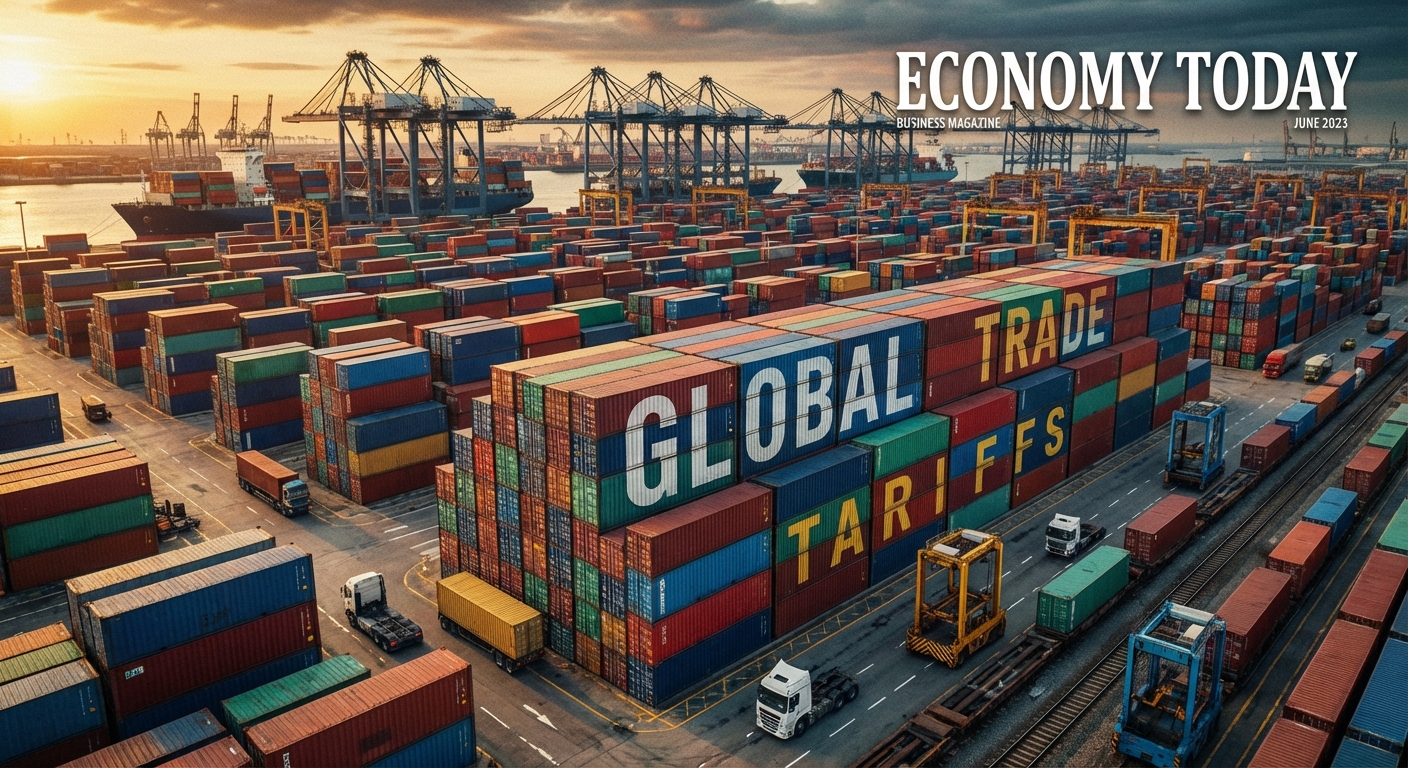
The heavy equipment industry entered 2026 navigating a landscape transformed by trade policy uncertainty. New data from Construction Equipment magazine’s 2026 Annual Report & Forecast paints a revealing picture: one in ten fleet managers has delayed equipment acquisition plans specifically because of tariffs, while the largest operations report supply disruptions and price increases that significantly outpace inflation.
“Not only are the amounts of tariffs somewhat unknown, but valuations of existing assets are more uncertain,” one equipment appraiser told researchers, capturing the sentiment that has equipment managers across North America recalibrating their replacement strategies.
The numbers tell a story of cautious optimism tempered by policy-driven hesitation—a complex dynamic that will shape fleet decisions throughout 2026.
Editor’s Note: Managing fleet assets during periods of economic uncertainty requires reliable data on equipment location, utilization, and condition. FieldFix provides fleet tracking built specifically for heavy equipment operations, helping managers make informed decisions regardless of market conditions.
The Tariff Effect: Quantifying the Impact
The data is striking: 10% of fleet managers surveyed reported that tariff concerns have directly caused them to delay acquisition plans. But this headline figure masks significant variation based on fleet size.
The largest fleets—those with estimated replacement values (ERV) exceeding $10 million—are bearing the brunt of tariff impacts:
- 14.0% of large fleets have delayed acquisitions (versus 10.3% overall)
- 24.6% report price increases above inflation rate (versus 17.9% industry-wide)
- 45.6% have experienced supply delays (versus 28.6% for all fleets)
These disparities make sense when you consider that larger operations typically have more complex supply chains, longer lead times on specialized equipment, and greater exposure to international manufacturing dependencies. A delay on a $500,000 mining truck hits different than a delay on a $50,000 skid steer.
Fleet Replacement Rates Hit Headwinds
The tariff effect shows clearly in replacement rates. Fleet managers reported actually replacing 9.2% of their equipment in 2025—significantly below the expected rate of 10.9% and down sharply from 2024’s decade-high rate of 11.0%.
The historical norm for equipment replacement hovers around 10%. The 2025 shortfall suggests that roughly $2 billion in planned equipment purchases across the industry were pushed into the future, kept running past their optimal replacement point, or simply cancelled.
For 2026, managers expect a replacement rate of 9.7%—still below historical norms, indicating that the tariff overhang continues to dampen modernization plans.
The size disparity persists here too. Fleets with ERV below $500,000 reported a 2025 replacement rate of just 7.6%, while the largest operations ($10 million-plus ERV) achieved 11.0%. Larger fleets have more financial flexibility to absorb price uncertainty; smaller contractors often don’t have that luxury.
Acquisition Strategies Shift Dramatically
Perhaps the most dramatic change revealed in the data involves how contractors are financing equipment purchases. The share of respondents purchasing equipment outright jumped from 51.1% in 2024 to 60.2% in 2025—the highest level in recent years.
This shift appears counterintuitive at first. Why would more buyers pay cash during a period of uncertainty?
Several factors likely drive this trend:
Locking in current prices: Cash buyers can move quickly when favorable deals appear, avoiding the risk of prices increasing during a financing approval process.
Hedging against interest rate volatility: Equipment financing rates have fluctuated significantly, making cash purchases more predictable.
Avoiding residual value risk: Leasing puts buyers at the mercy of future equipment values. If tariffs push new equipment prices higher, lease residuals become more unpredictable.
Tax optimization: Immediate ownership provides depreciation benefits and avoids lease treatment complexities.
The flip side of this cash surge: rental-purchase arrangements dropped from 16.7% to 13.0%, and short-term rental declined from 14.4% to 10.0%. Nearly one in five respondents (18.6%) said they decreased short-term rental machine hours in 2025.
Optimism Despite Uncertainty
Against this backdrop of tariff-driven caution, the industry paradoxically enters 2026 with significant optimism. Fleet managers rated 2025 as a “good” year, and expectations for 2026 have improved to “very good.”
Contract volume expectations are the most positive since 2019—before COVID disrupted everything. Nearly half of respondents (48.9%) expect contract volume to grow in 2026, with only 10.3% expecting decline.
What explains this optimism?
Infrastructure spending: Federal infrastructure dollars continue flowing into state DOT budgets and local projects. The lag between appropriation and groundbreaking means 2026 will see significant project activity from funds allocated years earlier.
Reshoring momentum: Ironically, the same tariff policies creating supply chain difficulties are also driving manufacturing reshoring, which generates construction work for factories, data centers, and industrial facilities.
Pent-up demand: Delayed projects from 2024-2025 remain in the pipeline, waiting for clearer cost signals before breaking ground.
Labor stabilization: While skilled worker shortages persist, the pace of wage inflation has moderated, making project budgeting more predictable.
The larger the fleet, the more positive the outlook. More than half of fleets with ERV above $1 million expect contract volume to grow in 2026. Among smaller operations (under $1 million ERV), that number drops to about one-third.
Fleet Health Concerns Emerge
One troubling signal in the data: fleet health continues to weaken. Only 6.9% of respondents rated their fleet condition as “excellent”—the lowest percentage since 2019.
This metric matters enormously for equipment managers and their customers. Equipment breakdowns drive project delays, safety incidents, and cost overruns. Deferred maintenance and delayed replacements compound over time.
The trend line is concerning:
- “Excellent” condition ratings: Down to 6.9%
- “Fair” or “poor” ratings: Improved slightly to 9.5% (from 12.3% in 2024)
- Combined “excellent” + “very good”: 45.6%
The shift from “excellent” to “very good” suggests fleets are aging but remaining serviceable. This pattern emerges when replacement cycles stretch: equipment remains operational but loses the reliability margins that “excellent” implies.
The Dealer Relationship Factor
As fleets age and tariff uncertainty delays replacements, the relationship between equipment owners and their dealer networks becomes increasingly critical.
The survey found that nearly half (44.8%) of respondents rated their primary dealer’s ability to partner on service and support as “excellent” or “very good.” But 12.3% rated dealer support as “fair” or “poor”—a significant minority experiencing service friction at exactly the wrong time.
The most pressing challenges fleet managers identified:
- Finding skilled technicians: More than half of respondents cite this as a 2026 challenge
- Dealer support with machine data: 19.9% say data management support is difficult
- Parts availability: Supply chain disruptions continue affecting parts inventories
As fleets age beyond optimal replacement points, parts availability becomes more critical. A five-year-old excavator running on borrowed time needs parts today, not next month. Dealers with strong inventory positions and parts logistics create significant competitive advantages for their customers.
Regional and Segment Variations
The survey revealed important variations by contractor type and region.
General building contractors—those handling both highway/heavy and general building construction—showed the most positive outlook for 2026. This likely reflects diversification benefits; contractors active in multiple segments can shift resources toward whichever markets show strength.
Highway/heavy construction respondents also showed strong optimism, likely reflecting infrastructure spending confidence. This segment benefits most directly from federal and state transportation budgets, which tend to be less sensitive to tariff-driven material cost increases than private construction.
The geographic concentration of tariff impacts deserves attention. Contractors in border states with significant cross-border supply chain dependencies report greater disruption than those in interior regions. Similarly, operations dependent on European or Asian equipment face different tariff exposures than those running primarily domestic iron.
What Smart Fleet Managers Are Doing
The data suggests several strategic responses gaining traction:
Accelerating domestic equipment sourcing: Where equivalent machines are available from U.S. manufacturing, buyers increasingly specify domestic to avoid tariff uncertainty.
Building parts inventory buffers: Rather than just-in-time parts procurement, some operations are pre-purchasing critical parts to hedge against supply disruptions and price increases.
Extending equipment life strategically: Rather than simply running equipment longer, proactive managers are investing in midlife rebuilds and technology retrofits to maintain capability while deferring full replacement.
Diversifying dealer relationships: Operations dependent on single dealer relationships are adding secondary sources for parts and service, reducing vulnerability to any single supplier’s inventory position.
Improving fleet data management: Better data on equipment condition, utilization, and total cost of ownership enables more precise replacement timing—avoiding both premature replacement and expensive over-running.
Looking Ahead: The 2026 Outlook
The construction equipment market enters 2026 in a peculiar position: fundamentally healthy demand meets structurally constrained supply chains, all overlaid with policy uncertainty that makes planning difficult.
For equipment manufacturers, this creates both challenges and opportunities. The challenges are obvious—demand signals are noisy, production planning is complicated, and channel inventory management is treacherous.
The opportunities are less obvious but significant. Manufacturers who can deliver from domestic production, maintain parts availability, and provide transparent pricing will capture share from competitors struggling with these fundamentals.
For dealers, 2026 will test service capabilities. Aging fleets mean more repair revenue but also more pressure on parts availability and technician capacity. Dealers who invested in technician training and parts logistics during recent years will reap benefits; those who didn’t will struggle to meet customer needs.
For contractors, the message is clear: uncertainty rewards flexibility. Fleets with diverse equipment sources, strong dealer relationships, and good data on their equipment will navigate 2026 more successfully than those without these advantages.
The tariff turbulence isn’t over—if anything, policy uncertainty may increase as political dynamics evolve. Equipment managers who build organizational capabilities to adapt quickly will outperform those betting on a return to pre-tariff “normal.”
Normal isn’t coming back. The equipment industry is adapting to a new environment where trade policy is a permanent variable in fleet planning. The data from Construction Equipment’s 2026 forecast shows this adaptation in progress—challenging, disruptive, but ultimately manageable for those who approach it strategically.
Data cited from Construction Equipment magazine’s 2026 Annual Report & Forecast survey of fleet managers and equipment professionals.