The 2026 Equipment Buying Paradox: Tariffs Force Caution While AI Infrastructure Demands Action
Fleet managers face a difficult choice in 2026: delay purchases amid tariff uncertainty or capitalize on the largest infrastructure investment cycle in a generation.
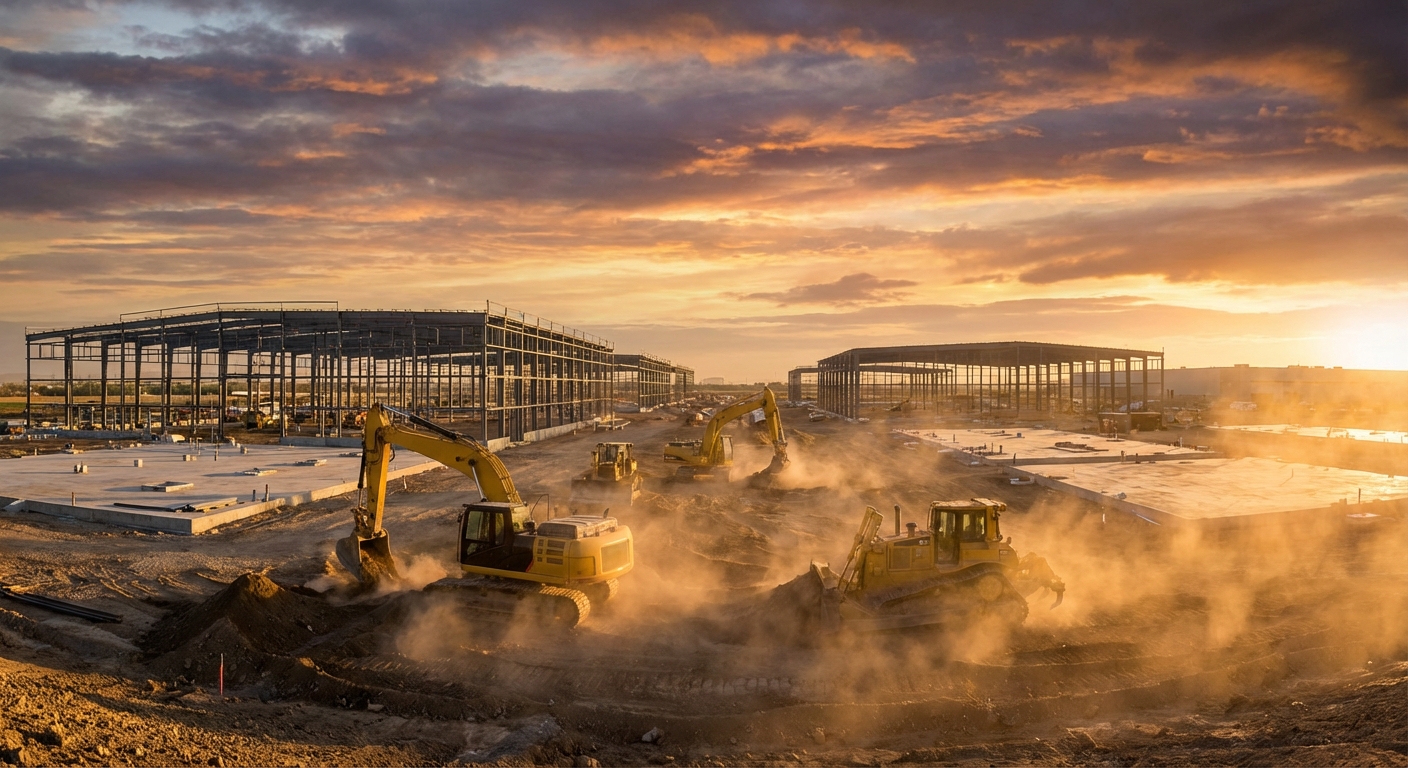
The construction equipment industry finds itself caught between two powerful forces in 2026. On one side, tariff uncertainty is causing fleet managers to delay acquisitions and hold onto aging equipment longer than planned. On the other, the artificial intelligence infrastructure boom is creating the largest wave of construction investment in decades—and contractors need machines to capture that work.
This paradox is defining equipment purchasing decisions across the industry, forcing owners to weigh short-term cost volatility against long-term opportunity costs.
Editor’s Note: Managing fleet costs during uncertain times requires accurate data. FieldFix helps equipment owners track maintenance costs, service history, and utilization rates so they can make informed decisions about repairs versus replacements—whether tariffs are up or down.
Tariffs Are Slowing Replacement Cycles
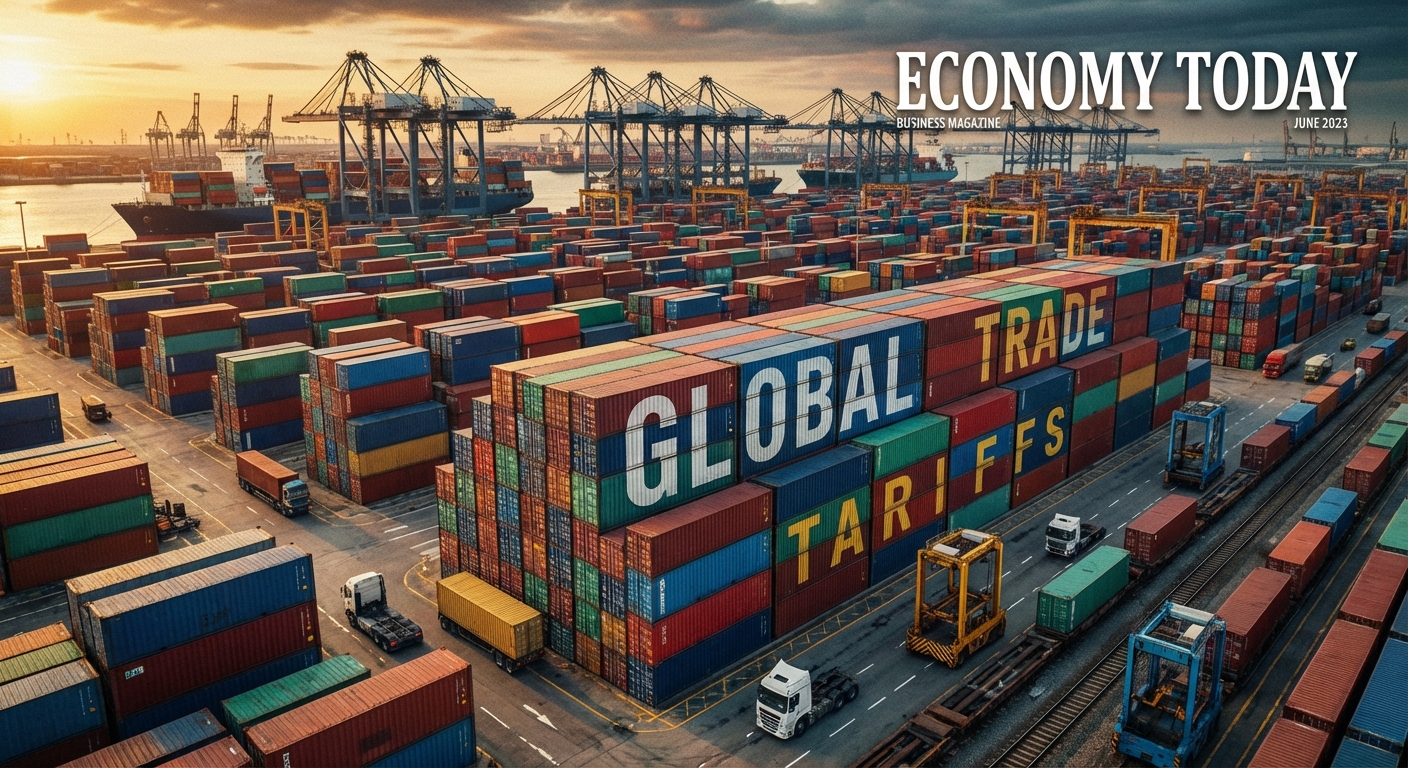
According to Construction Equipment Magazine’s 2026 Annual Report & Forecast, 10% of fleet managers have delayed acquisition plans specifically because of tariffs. For larger fleets with estimated replacement values above $10 million, that number jumps to 14%.
The impact shows in the data. Fleet replacement rates fell from 11.0% in 2024 to just 9.2% in 2025—significantly below the 10.9% that managers had projected. For 2026, expectations remain conservative at 9.7%.
“Not only are the amounts of tariffs somewhat unknown, but valuations of existing assets are more uncertain,” one equipment appraiser told the publication. This uncertainty makes it nearly impossible to calculate true replacement economics.
The tariff situation has hit different segments unevenly. Manufacturers and dealers handling Chinese construction equipment now face tariffs exceeding 100% on their goods, according to Equipment World’s reporting. Even domestic manufacturers aren’t immune—steel and component price fluctuations ripple through supply chains regardless of where final assembly occurs.
HD Hyundai Construction Equipment’s Senior Vice President addressed the challenge directly in the company’s 2026 outlook: “Tariffs and the uncertainties around tariff rates are already impacting machine pricing, and if the uncertainty continues, we will see an even greater impact on equipment sales, with customers holding off decisions for renewing their fleets.”
The AI Infrastructure Counter-Force
While tariffs push toward restraint, the data center construction boom pulls in the opposite direction with staggering force.
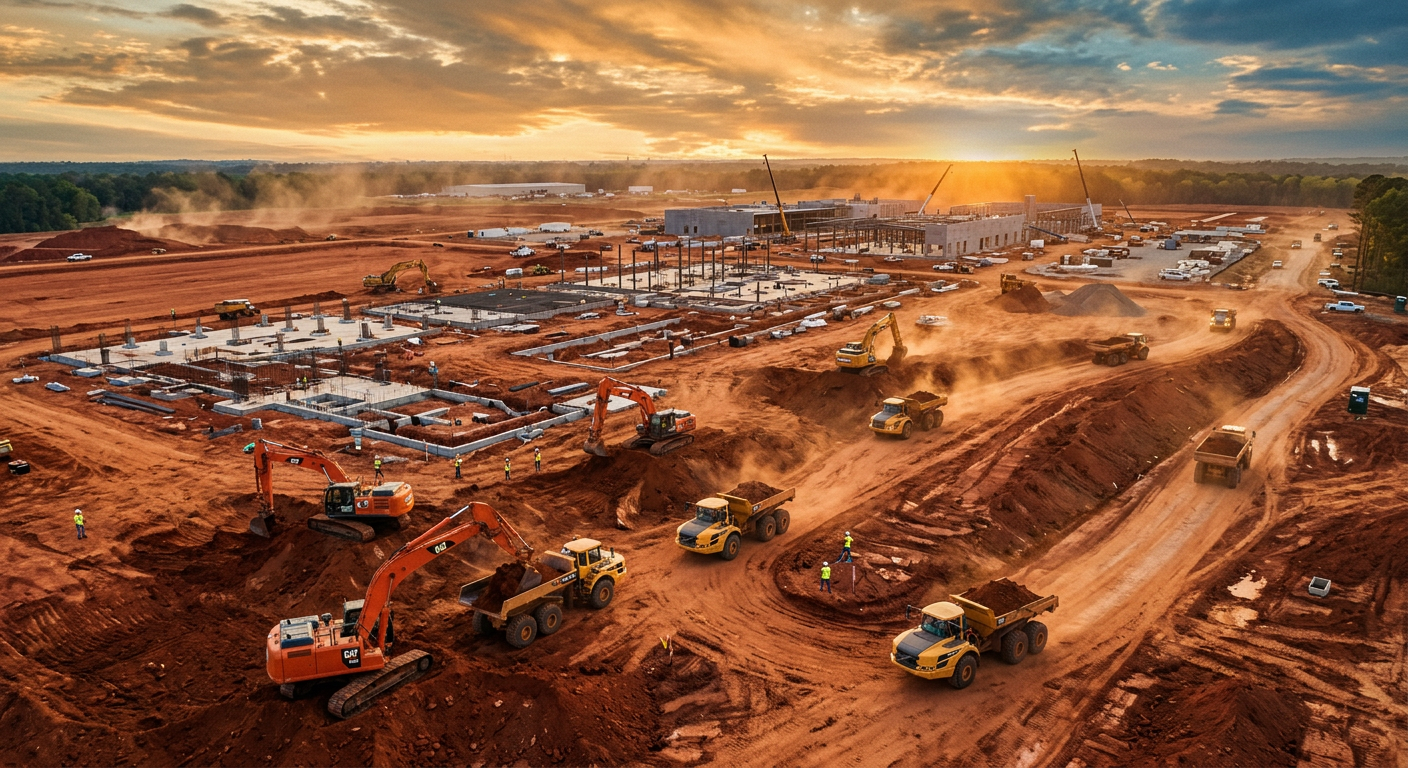
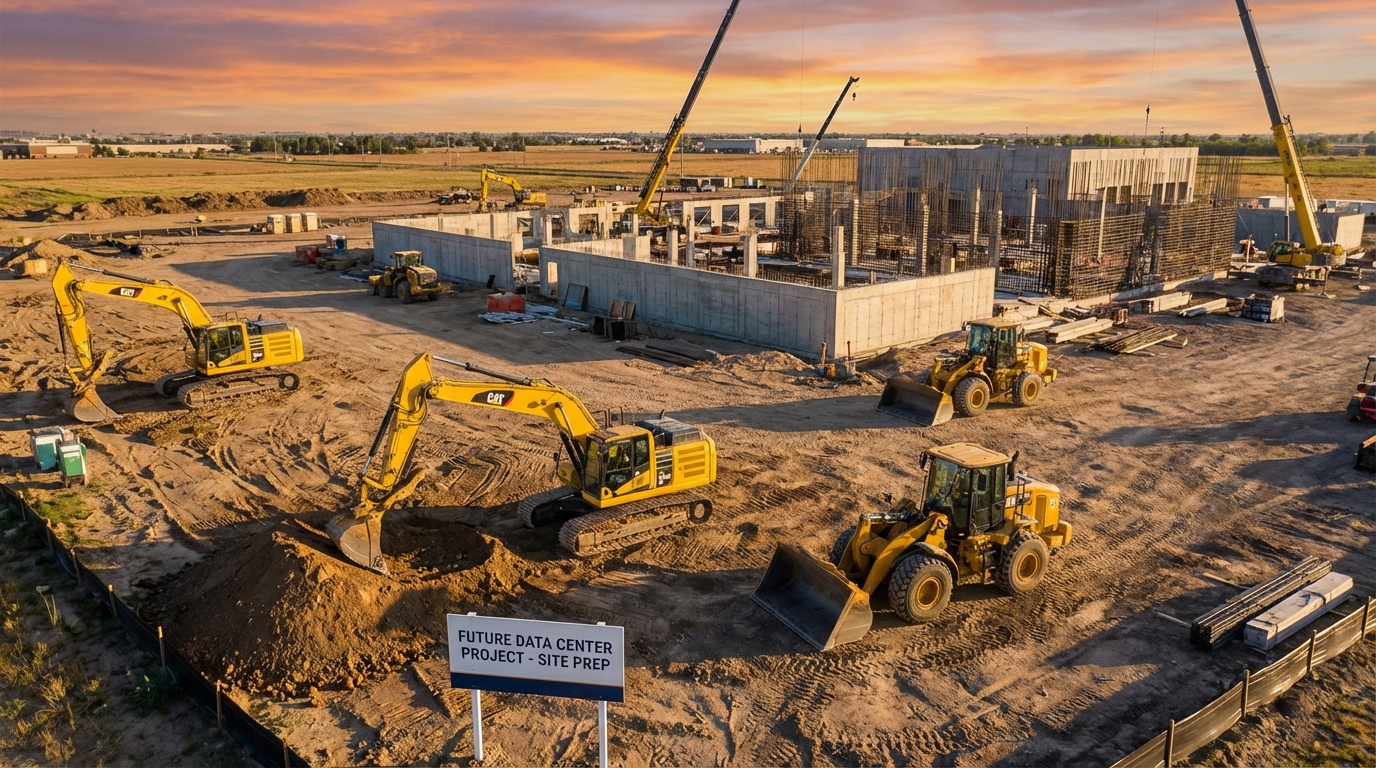
Total spending on U.S. data center construction starts reached an estimated $77.7 billion in 2025—a 190% year-over-year increase, according to ConstructConnect’s February 2026 report. Average monthly spending on data center starts jumped from around $500 million in mid-2021 to $6.5 billion by December 2025.
And 2026 is set to eclipse even those numbers. ConstructConnect is tracking 76 data center projects set to start in the U.S. in the next six months, valued at over $88 billion. That’s a 13% increase over all of 2025’s data center spending—in just half a year.
The Associated General Contractors’ 2026 Construction Outlook survey found that 65% of contractors expect data center project values to increase this year. Only 8% expect a decline. That net 57% positive outlook is the highest of any construction category in the survey, well above the second-place category of power infrastructure at 34%.
Credit rating agency Moody’s projects $3 trillion in global spending over the next five years to support data center expansion and AI capacity demand.
Regional Hot Spots Emerge
The geographic distribution of this investment is creating distinct equipment demand clusters. Virginia led data center construction starts in 2025 at $15.3 billion, followed by Louisiana at $15 billion, Mississippi at $13.9 billion, and Texas at $13.4 billion.
But the demand extends beyond traditional tech corridors. The Stargate Project—the $500 billion joint venture between OpenAI, SoftBank, Oracle, and MGX announced in January 2025—has announced buildouts in Texas, New Mexico, Ohio, and throughout the Midwest.
HD Hyundai specifically called out the Southeast and South Central regions as growth areas: “Given population growth trends and favorable investment climates, we expect Florida, Georgia, the Carolinas, Texas and Louisiana will continue to be high-demand areas for construction equipment for the foreseeable future.”
The Rental Bridge
For contractors caught between tariff caution and infrastructure opportunity, the rental market is providing a middle path.
Rather than committing capital to purchases amid pricing uncertainty, many contractors are increasing rental utilization to handle data center and AI infrastructure projects. This allows them to capture the work without taking on equipment value risk.
The strategy makes particular sense for specialized equipment needed on data center sites—larger excavators for mass grading, specialty attachments for utility installation, and heavy haulers for site work—that might not be needed once a particular project wave passes.
However, this creates its own challenge. As more contractors pursue the rental path, availability tightens and rental rates increase. Contractors with owned fleets gain competitive advantages through lower mobilization costs and guaranteed availability.
What Fleet Managers Are Actually Doing
Despite the headline caution around tariffs, the underlying business outlook remains strong. Construction Equipment Magazine’s survey found that fleet managers rated 2025 as “good” and expect 2026 to be “very good”—with larger fleets showing the most optimism.
Contract volume expectations for 2026 show a net 38.6% anticipating increases, the most positive forecast since 2019 (before COVID’s economic impact). Among fleets with estimated replacement values above $1 million, more than half expect contract volume to grow.
This creates an interesting dynamic: confidence in work availability is high, but commitment to equipment investment remains cautious.
The result is that fleet expansion continues, just at a slower pace than the work pipeline might suggest. For 2026, 31.5% of fleet managers expect to increase machine counts while only 5.1% expect decreases—a net expansion of 26.4%.
Technology Becomes the Differentiator
With machine pricing volatile and availability variable, contractors are increasingly looking to technology to maximize productivity from existing fleets.
HD Hyundai noted that 15-20% of buyers now request equipment with integrated machine guidance and machine control systems—and that percentage continues climbing. The company highlighted telematics, automation capabilities, and enhanced safety features as key differentiators in the current market.
This aligns with broader industry trends. Contractors believe AI will fundamentally change their businesses, according to a Dodge Construction Network survey. AI-based technologies and robotics captured $2.22 billion in built environment funding through Q3 2025, according to Nymbl Ventures.
The contractors who thrive in 2026 may not be those with the largest fleets, but those extracting the most productivity from every machine through technology adoption.
Strategic Implications
For equipment owners navigating this paradox, several strategies emerge:
Hold strategic reserves. Tariff uncertainty makes timing large purchases risky. Maintaining cash reserves to move quickly when pricing stabilizes—or when must-have equipment becomes available—provides optionality.
Focus on utilization over expansion. Before adding machines, maximize productivity from current fleet through technology upgrades, improved maintenance practices, and better scheduling. The cost-per-hour metrics matter more than headline machine counts.
Target geographic hot spots. The data center boom isn’t evenly distributed. Contractors in Virginia, Texas, Louisiana, and emerging Midwest locations have different calculus than those in slower markets. Equipment purchases should align with where the work actually is.
Build rental relationships. For project-specific needs or capacity surges, having established relationships with rental houses provides flexibility without capital commitment. Negotiate rates before peak season.
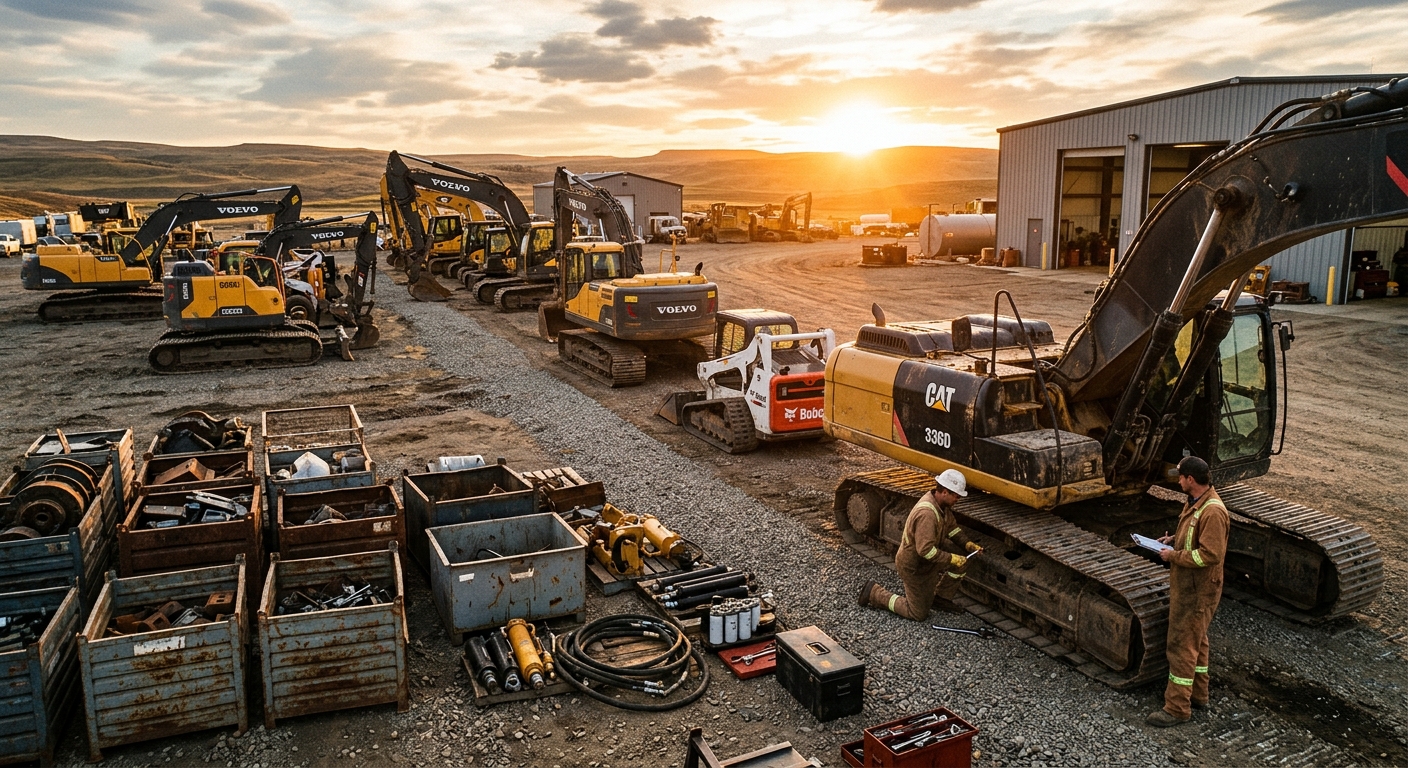
Track replacement economics constantly. With price volatility on both new and used equipment, the repair-versus-replace calculation changes frequently. Maintaining accurate maintenance cost data becomes critical for making sound decisions.
The Bottom Line
The 2026 equipment market rewards neither pure caution nor aggressive expansion. Contractors who delay all purchases risk missing the largest infrastructure investment cycle in a generation. Those who buy aggressively face potential stranded costs if tariff impacts worsen.
The winning approach likely involves selective, strategic purchases of high-utilization machines while using rental and technology to handle variability. Data-driven decision making—knowing exactly what each machine costs to operate and what it produces—becomes the competitive advantage when market conditions are uncertain.
The paradox won’t resolve quickly. Tariff policy remains volatile, and AI infrastructure investment shows no signs of slowing. Equipment owners who build flexible operations capable of thriving in either scenario position themselves to win regardless of which force ultimately dominates.
Equipment Insider delivers daily analysis of trends shaping the heavy equipment industry. Follow us on X and LinkedIn for real-time updates.