
Electric Compact Equipment Just Hit Its Tipping Point
Battery costs are falling fast, every major OEM has skin in the game, and rental fleets are buying in. The electric compact equipment market isn't coming — it's here.
For years, electric construction equipment was a trade show curiosity. OEMs would wheel out a yellow-painted concept, someone would take a photo with it, and everyone went back to buying diesel. That era is over.
The global electric construction equipment market hit $14.5 billion in 2024 and is projected to reach $29 billion by 2029, according to Mordor Intelligence. That’s a compound annual growth rate of 20.7%. And the compact segment is leading the charge — the compact electric equipment market alone is predicted to grow from $69.5 billion in 2026 to $140.5 billion by 2031.
Those aren’t speculative numbers. They’re backed by machines that are actually shipping, rental companies that are actually buying them, and contractors who are actually putting hours on them.
Editor’s Note: Whether you’re running electric or diesel, knowing your real cost-per-hour is what separates guessing from managing. FieldFix tracks fuel, maintenance, and operating costs across your whole fleet — so you can make equipment decisions based on data, not gut feeling.
The Battery Math Finally Works
The single biggest factor behind this shift is battery cost. Prices have dropped from roughly $500 per kilowatt-hour to around $300/kWh in recent years. Argonne National Laboratory projects they’ll fall to $86/kWh by 2035, and potentially $56/kWh with U.S. tax credits as early as 2029.
That matters because battery cost has always been the gap between “interesting prototype” and “makes financial sense.” When you’re paying $500/kWh, an electric mini excavator is a science project. At $300/kWh, it starts penciling out for specific applications. At $86/kWh, it’s going to be hard to justify diesel on many compact machines.
The operating cost picture already favors electric in a lot of use cases. A 20-tonne electric excavator can save roughly $12,600 per year in fuel costs alone. Maintenance costs run up to 50% lower than diesel equivalents — fewer moving parts, no oil changes, no diesel particulate filters. The upfront premium is real, but the total cost of ownership gap is shrinking fast.
CONEXPO Proved This Isn’t Vaporware
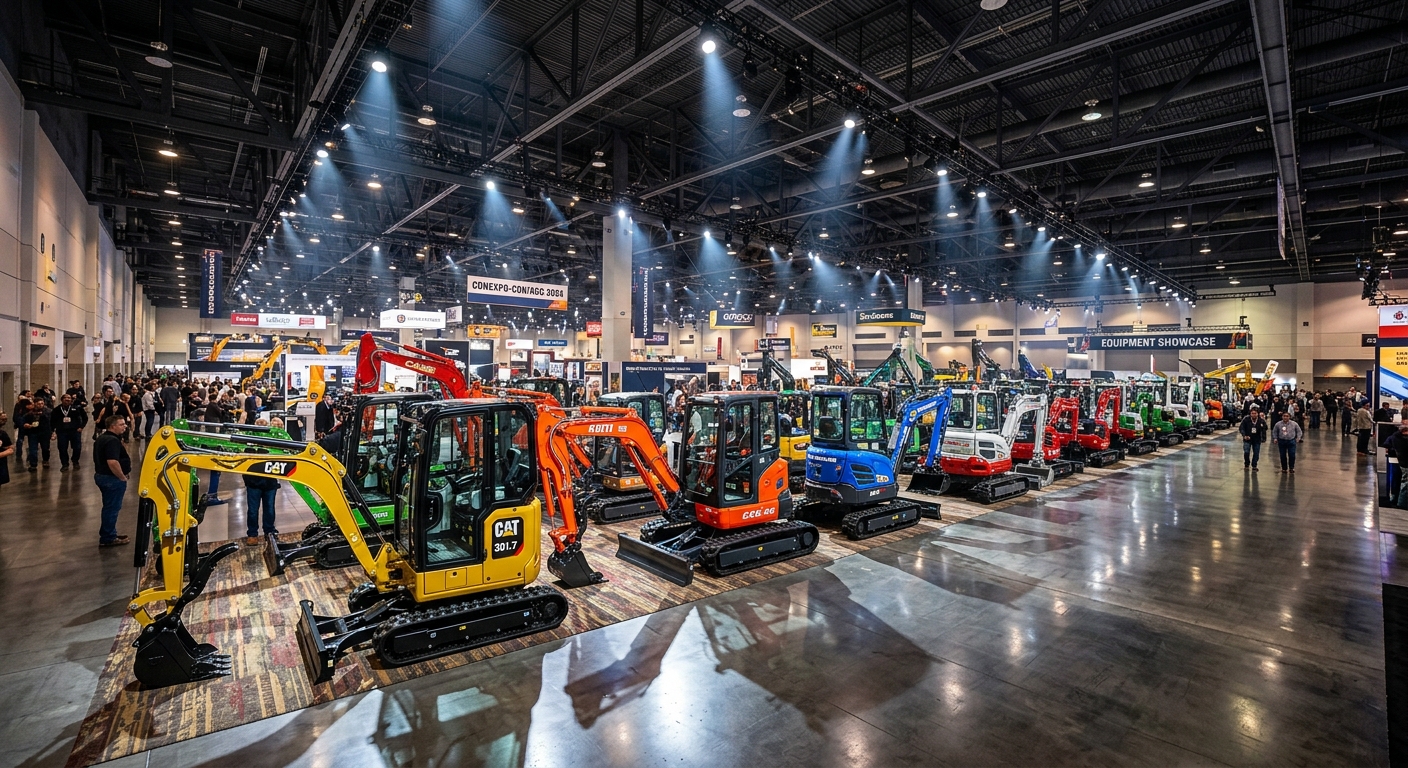
If there was any remaining doubt about OEM commitment, CONEXPO-CON/AGG 2026 killed it. Walk any aisle in Las Vegas this month and the message was consistent: every major manufacturer has electric compact machines either in production or very close to it.
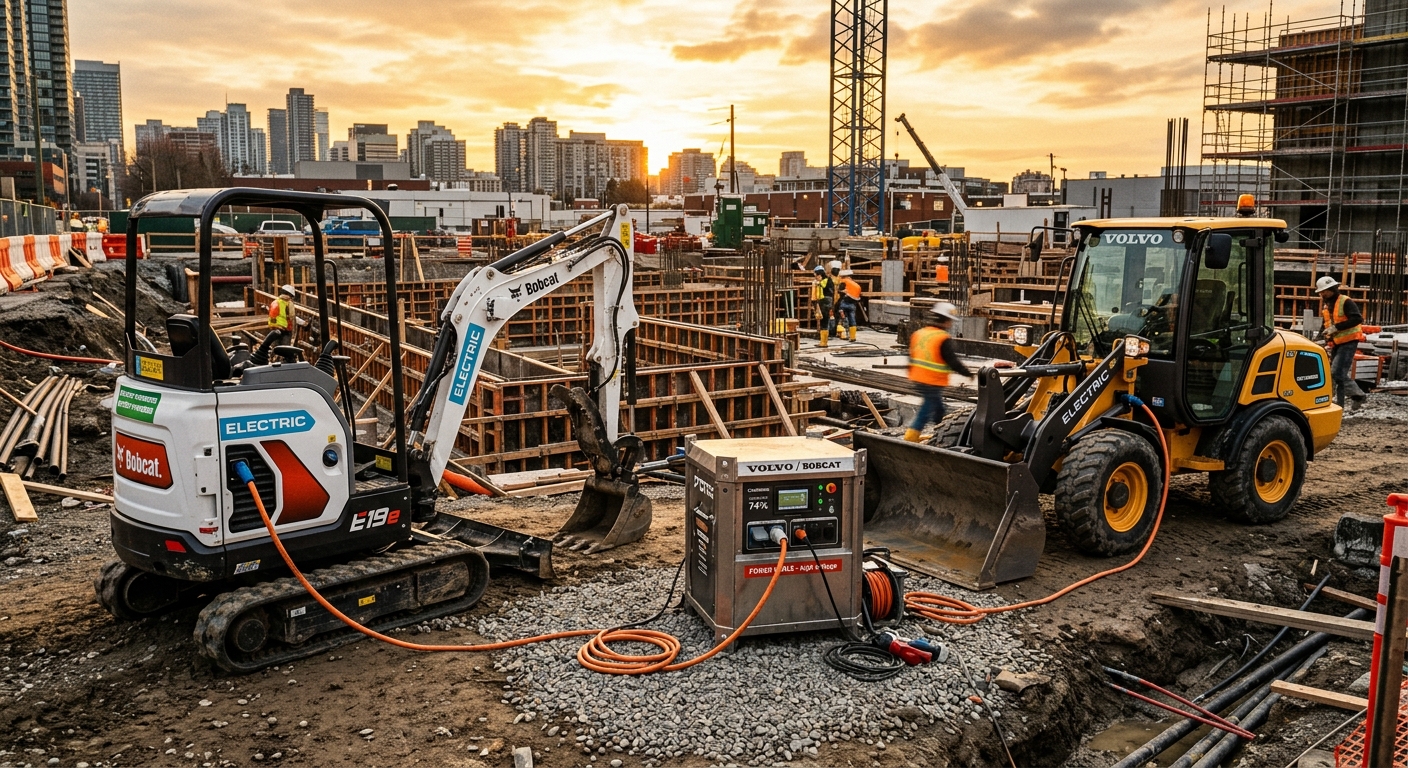
CASE debuted the TL100EV, an electric mini track loader. New Holland brought the C314X Electric Mini Track Loader and the E25X Electric Mini Excavator. Bobcat continues expanding around the T7X all-electric CTL and its E10e and E19e electric minis. Caterpillar has the 320 Electric excavator in its lineup. Komatsu is pushing the PC210E. Takeuchi added the TB20e electric mini excavator. Volvo CE has the EC230 Electric excavator and L90 Electric wheel loaders in production.
That’s not one or two companies testing the waters. That’s the entire industry moving in the same direction at the same time.
And it’s not just the big names. LiuGong now has over 40 electric models in its global lineup, including the 922FE excavator and 870HE wheel loader. Chinese manufacturers, flush with experience from the world’s largest electric vehicle market, are pushing aggressively into electric construction equipment — and their price points are forcing Western OEMs to take the segment seriously.
Where Electric Machines Actually Make Sense Today
The honest take: electric equipment isn’t ready to replace diesel everywhere. Not yet. But the list of applications where it works well is growing quickly.
Indoor and enclosed work is the obvious one. Zero tailpipe emissions mean electric machines can operate in warehouses, tunnels, parking structures, and basements without ventilation concerns. If you’re running a diesel mini ex inside a building, you’re spending money on fans and ducting that you wouldn’t need with an electric machine.
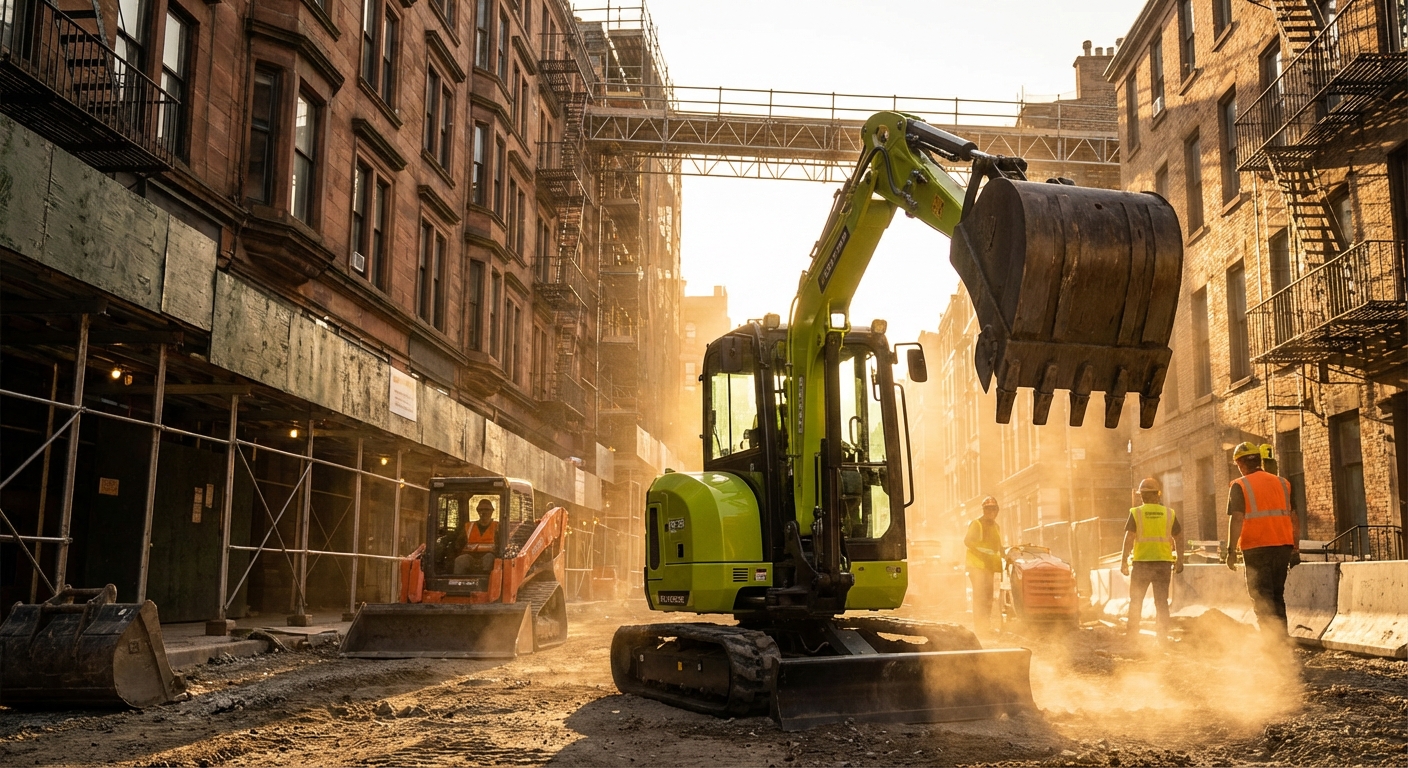
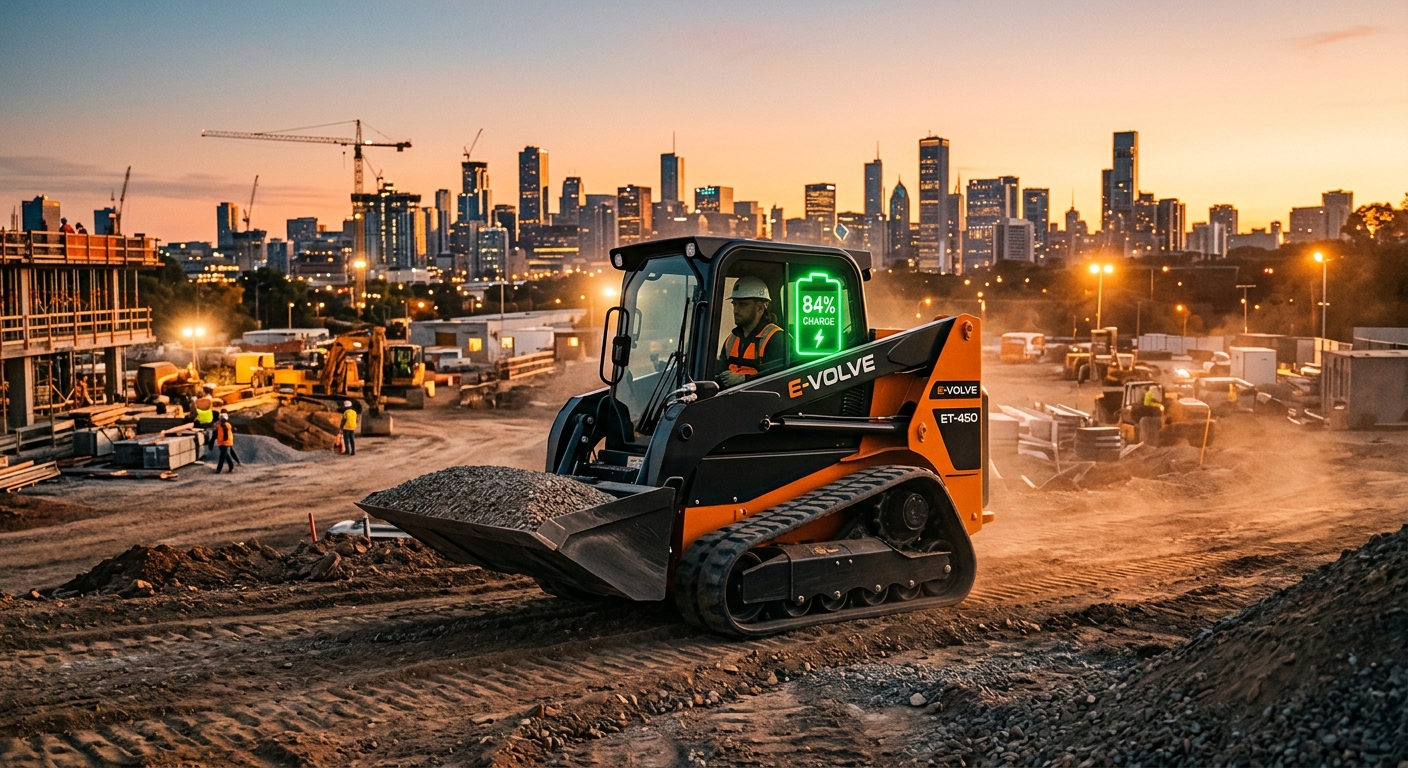
Urban jobsites are another strong fit. Noise ordinances are tightening in cities across the country. An electric CTL runs dramatically quieter than its diesel counterpart — some contractors report being able to start work hours earlier because neighbors don’t complain. In markets like New York, San Francisco, and Boston, where noise restrictions are strict, that’s not a nice-to-have. It’s billable hours.
Environmentally sensitive sites near waterways, wetlands, or residential areas benefit from zero on-site emissions and reduced fluid leak risk. Some municipalities and agencies are already writing electric equipment preferences into bid specs.
Utility work is a growing niche. JDC (Jack Doheny Company) is expanding its fleet of electric utility trucks, and the compact equipment that goes with them is following suit.
The Runtime Question Has Answers
The biggest practical objection to electric equipment has always been runtime. “How long can it run?” is the first question every operator asks.
For compact machines, the answer is now “long enough for most applications.” Current battery technology delivers full-shift performance on typical compact equipment duty cycles. You’re not running a mini excavator at full power every second of an eight-hour shift — there are breaks between cycles, repositioning, waiting for trucks. Real-world duty cycles are less demanding than worst-case lab tests.
Mid-size machines typically get 6 to 8 hours of runtime, which covers a standard work shift on most sites.
Charging solutions have also caught up. Options range from overnight depot charging (plug in when you park it, start full in the morning) to lunch-break fast charging for machines that need a midday top-off. Mobile megawatt charging systems exist for remote sites without grid access.
The cold weather penalty is real — expect 10 to 20% reduced battery performance in winter conditions. But for the majority of compact equipment applications, the runtime math works in 2026 in ways it didn’t in 2022.
Rental Fleets Are Voting With Their Wallets
If you want to know whether electric equipment has arrived, watch the rental companies. They don’t buy machines because they look good in press releases. They buy machines that rent.
Sunbelt Rentals has built the largest fleet of Bobcat T7X electric CTLs in the country. They’re also expanding their electric compact excavator inventory. United Rentals is making similar moves. When the two largest rental companies in North America both invest in electric iron, that’s a market signal worth paying attention to.
For small and mid-size contractors, rental is likely the entry point to electric equipment. It eliminates the upfront cost premium, lets crews test the machines on real jobs, and gives owners data before committing to a purchase. That rental-first adoption path is the same one that popularized GPS grade control, and it works.
The Price Gap, Honestly
Electric compact equipment still costs more upfront than diesel. That’s just the truth. The premium varies by machine class and manufacturer, but expect to pay 20 to 40% more for a battery-electric compact machine compared to its diesel equivalent.
Government incentives help close the gap. California’s CORE program offers point-of-sale discounts on qualifying zero-emission equipment. Similar programs exist or are developing in other states. If you’re buying electric equipment in a state with incentive programs, the effective premium drops significantly.
The total cost of ownership calculation — factoring in fuel savings, reduced maintenance, and longer component life — starts favoring electric machines within 3 to 5 years in many cases. But that requires running enough hours to accumulate savings. A machine sitting in the yard saves you nothing regardless of its fuel source.
For contractors doing the math: electric works best on machines that run consistent hours, operate in areas where fuel delivery is expensive or inconvenient, and work in noise- or emissions-restricted environments. If your mini excavator runs 1,500+ hours per year, the numbers look good. If it runs 400 hours, diesel is probably still cheaper.
What This Means for Small Fleets
If you’re running a small fleet of compact equipment, here’s the practical playbook:
Don’t rush to replace working machines. The used market for diesel compact equipment is healthy, and your current machines aren’t becoming worthless overnight. Electric equipment isn’t diesel’s funeral — it’s a new option in the toolbox.
Rent electric for the right jobs. Find a project where electric makes sense — indoor work, noise-restricted site, emissions requirements — and rent an electric machine for it. Get your operators comfortable with it. See how it performs against your diesel numbers.
Watch battery prices. The $300/kWh we’re at today is already a massive improvement. If prices hit the $86/kWh projection by 2035, the upfront premium essentially disappears. Timing your first electric purchase to catch the next price drop is a reasonable strategy.
Upgrade your shop electrical. This one catches people off guard. If you’re going to charge electric equipment at your yard, you need adequate electrical service. Talk to your electrician about what a Level 2 or DC fast charger would require before you need it. Running a 200-amp panel upgrade is a lot cheaper when you plan for it.
Track your actual operating costs. You can’t evaluate electric versus diesel without knowing what diesel actually costs you. Not just fuel — maintenance, downtime, DPF regens, the whole picture. If you’re guessing at your cost-per-hour, you have no way to compare options.
The Bigger Picture
The electric compact equipment market is past the early-adopter phase and entering mainstream adoption. Every major OEM is invested. Rental companies are buying. Battery costs are falling on a predictable curve. Infrastructure is expanding.
Does that mean diesel compact equipment is dead? No. The installed base is enormous, the refueling infrastructure is universal, and runtime on diesel is still unlimited. Diesel machines will be in production, and profitable, for years to come.
But the trajectory is clear. Five years from now, buying a compact machine without at least considering the electric option will feel as outdated as buying a truck without considering fuel efficiency. The technology has caught up. The economics are catching up. The question isn’t whether electric compact equipment will be mainstream — it’s how quickly the transition happens.
And if CONEXPO 2026 was any indication, it’s happening faster than most people expected.