The Electric Heavy Equipment Revolution: Where the Industry Stands in 2026
From battery-powered excavators to electric wheel loaders, the construction industry's electrification push is accelerating. We break down the technology, the economics, and what contractors need to know.
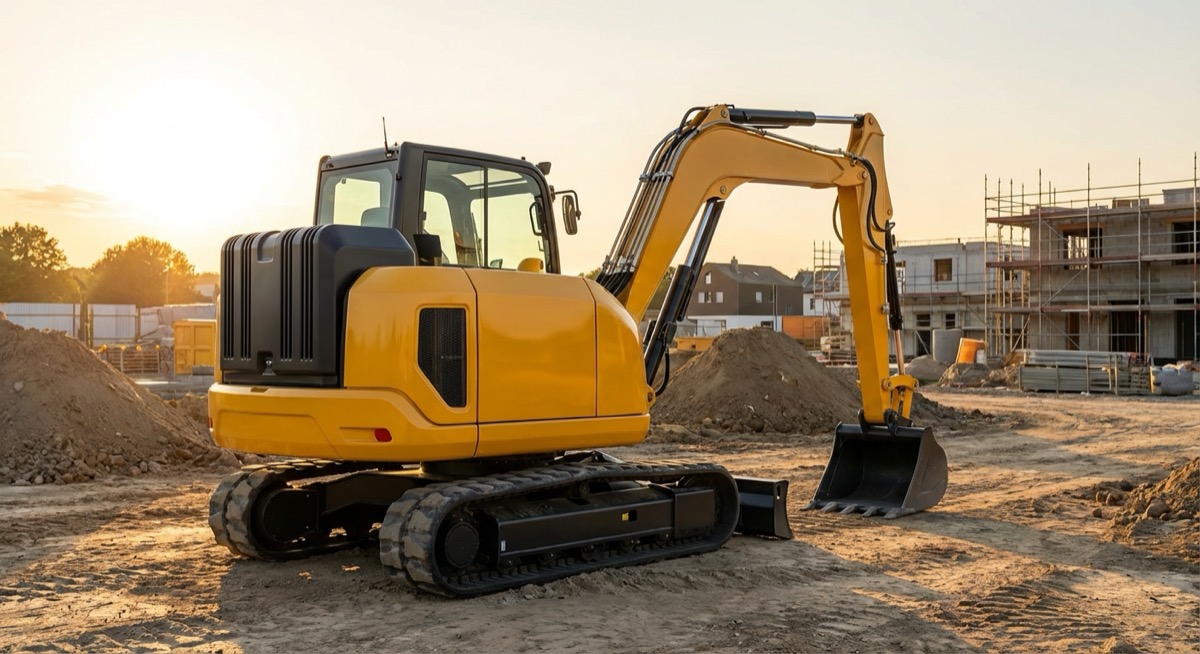
The Quiet Transformation Reshaping Construction Sites
Walk onto a modern construction site in 2026, and you might notice something unexpected: silence. Where diesel engines once roared, electric motors now hum. The heavy equipment industry—long dominated by internal combustion—is in the midst of its most significant technological transformation since the introduction of hydraulics.
This isn’t a distant future scenario. It’s happening now. Caterpillar, Volvo CE, Komatsu, John Deere, and virtually every major OEM have moved beyond prototypes to production-ready electric machines. The question for fleet managers and contractors is no longer whether electric equipment will arrive, but when it makes sense for their operations.
FieldFix Editor’s Note: Managing equipment hours effectively is crucial for fleet operations. Tools like FieldFix help operators track equipment usage in hours rather than miles—a game-changer for heavy equipment businesses.
The Current State of Electric Heavy Equipment
What’s Actually Available
The electric equipment market has matured dramatically over the past two years. Here’s what’s currently in production or nearing dealer availability:
Compact Equipment (Most Advanced Segment)
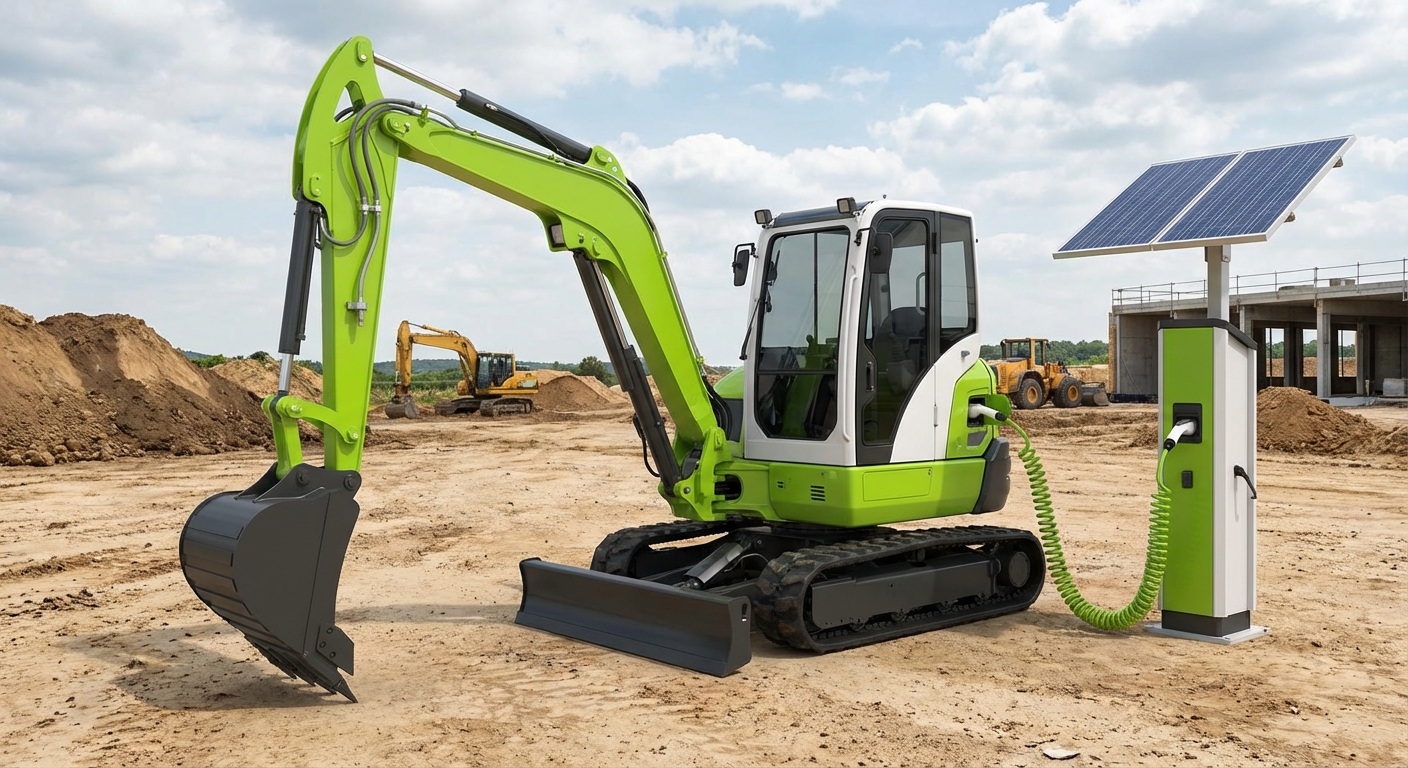
- Caterpillar offers the 301.9 and 302 CR electric mini excavators, with the 906 compact wheel loader joining the lineup
- Volvo CE leads with the EC18, ECR18, ECR25, and L20 Electric—all in full production since 2024
- JCB pioneered the segment with the 19C-1E, 22Z-1E, and 525-60E telehandler
- Bobcat entered with the E10e and E19e electric excavators
- Kubota launched the K008-3e, targeting the rental market
Mid-Size Equipment (Emerging Segment)
- Caterpillar’s 320 Electric prototype has evolved into limited production units for select customers
- Komatsu is delivering the PC138E-11 electric excavator to key markets
- Volvo CE expanded with the EC230 Electric, their largest electric excavator to date
- Hitachi introduced the ZX120-6EB battery-electric excavator in partnership with ABB
Large Equipment (Early Stage)
- Liebherr is testing the R 9150e mining excavator with mine operators
- Komatsu continues development of the PC4000E electric mining shovel
- Underground mining has seen faster adoption with multiple manufacturers offering battery-electric loaders and haul trucks
The Technology Behind the Machines
Modern electric construction equipment relies on lithium-ion battery technology similar to electric vehicles, but engineered for the unique demands of heavy work cycles. Key specifications across current offerings:
Battery Capacity: Ranges from 16 kWh in mini excavators to over 300 kWh in mid-size machines and beyond for mining equipment.
Runtime: Most compact electric machines achieve 4-8 hours of typical operation on a single charge. Mid-size equipment varies widely based on application intensity.
Charging: Level 2 (AC) charging typically provides overnight recovery, while DC fast charging can achieve 80% capacity in 1-2 hours on compatible machines.
Performance: Electric machines match or exceed their diesel counterparts in terms of power delivery. Electric motors provide instant torque, often translating to faster cycle times and more precise control.
The Economics: Does Electric Make Financial Sense?
The purchase price gap between electric and diesel equipment remains significant—often 30-50% higher for comparable electric models. But focusing solely on sticker price misses the larger financial picture.
Total Cost of Ownership Analysis
A fleet running a Volvo ECR25 Electric versus the diesel ECR25D offers a real-world comparison:
Fuel/Energy Costs The diesel ECR25D consumes approximately 1.8-2.2 gallons of diesel per hour under typical conditions. At $3.50 per gallon, that’s $6.30-$7.70 per operating hour.
The ECR25 Electric uses roughly 12-15 kWh per operating hour. At commercial electricity rates averaging $0.12/kWh, that’s $1.44-$1.80 per hour—a 75-80% reduction in energy costs.
Maintenance Costs Electric machines eliminate oil changes, fuel filter replacements, diesel particulate filter (DPF) regeneration, and exhaust after-treatment maintenance. Conservative estimates suggest 30-40% lower maintenance costs over the machine’s life.
Lifespan and Residual Value Electric motors have fewer moving parts and typically last longer than diesel engines. Battery degradation is a consideration, but most manufacturers now warranty batteries for 8-10 years or thousands of operating hours. Residual values remain uncertain as the market matures.
The Break-Even Calculation
For a contractor operating equipment 1,500 hours annually:
| Factor | Diesel | Electric | Annual Difference |
|---|---|---|---|
| Energy/Fuel | $10,500 | $2,400 | -$8,100 |
| Maintenance | $3,000 | $1,800 | -$1,200 |
| Annual Savings | — | — | $9,300 |
With a $50,000 price premium, break-even occurs around year 5-6. For operations running equipment more intensively (2,000+ hours), payback comes faster. Add incentives, grants, or carbon credit programs, and the math becomes more compelling.
Where Electric Already Wins
Certain applications favor electric equipment today:
Indoor and Enclosed Spaces: Warehouses, tunnels, and indoor demolition eliminate ventilation costs and health concerns from diesel exhaust.
Urban Construction: Noise ordinances limiting work hours can be bypassed with quiet electric machines. Some cities now require zero-emission equipment on public projects.
Sensitive Environments: Hospitals, schools, and residential areas benefit from zero tailpipe emissions and reduced noise.
Rental Operations: Rental companies are adding electric units to capture premium day rates and attract sustainability-focused customers.
Regulatory Drivers Accelerating Adoption
The push toward electric isn’t solely market-driven. Regulatory mandates are creating hard deadlines for fleet transitions.
California’s Clean Fleet Rules
The California Air Resources Board (CARB) has implemented the Advanced Clean Fleets regulation, requiring state and local government fleets to transition to zero-emission equipment. The construction sector faces increasing restrictions on diesel equipment in non-attainment areas.
By 2030, many public works contracts in California will mandate zero-emission equipment for certain size classes.
European Regulations
The European Union’s Stage VI emission standards, taking effect in phases through 2028, impose the strictest limits yet on non-road diesel engines. Several European cities have established low-emission zones that effectively ban older diesel equipment, with electric requirements expanding annually.
Federal Policy Signals
While federal mandates have been less aggressive than state-level requirements, the EPA’s updated Tier 5 standards (under development) signal tighter emissions limits ahead. Tax incentives for clean equipment purchases and infrastructure funding tied to sustainability goals are creating financial pathways for fleet electrification.
Challenges and Limitations
Electric equipment isn’t the right solution for every application—at least not yet. Understanding the limitations helps contractors make informed decisions.
Battery Weight and Capacity
Battery packs are heavy. In larger equipment classes, battery weight can reduce payload capacity or require structural redesign. Energy density improvements are occurring rapidly, but today’s batteries remain heavier than equivalent diesel fuel capacity.
Charging Infrastructure
Remote job sites without reliable electrical service present challenges. Contractors have addressed this with:
- Portable diesel generators (reducing but not eliminating fossil fuel use)
- Mobile battery storage units
- Solar charging stations for extended projects
- Overnight charging at established yards
Most compact equipment can charge from standard commercial outlets, but mid-size and larger machines require 480V three-phase power or DC fast chargers.
Climate Considerations
Battery performance degrades in extreme cold. Machines operating in sub-freezing temperatures may experience reduced runtime and longer charging times. Manufacturers are implementing thermal management systems, but cold-weather performance remains a consideration for northern contractors.
Supply Chain Reality
Lead times for electric equipment currently exceed diesel counterparts. Battery supply chain constraints and production ramp-up timelines mean orders placed today may not arrive for 12-18 months for certain models.
What the Major OEMs Are Saying
The industry’s largest manufacturers have made clear commitments to electrification:
Caterpillar announced plans to offer electric or hydrogen-powered alternatives across its entire product line by 2030. The company has invested over $2 billion in alternative power development and established the Cat Electric division.
Volvo CE committed to 35% of its sales being electric by 2030, with the compact equipment segment leading the transition. CEO Melker Jernberg has stated the company will offer electric alternatives for every product line by 2030.
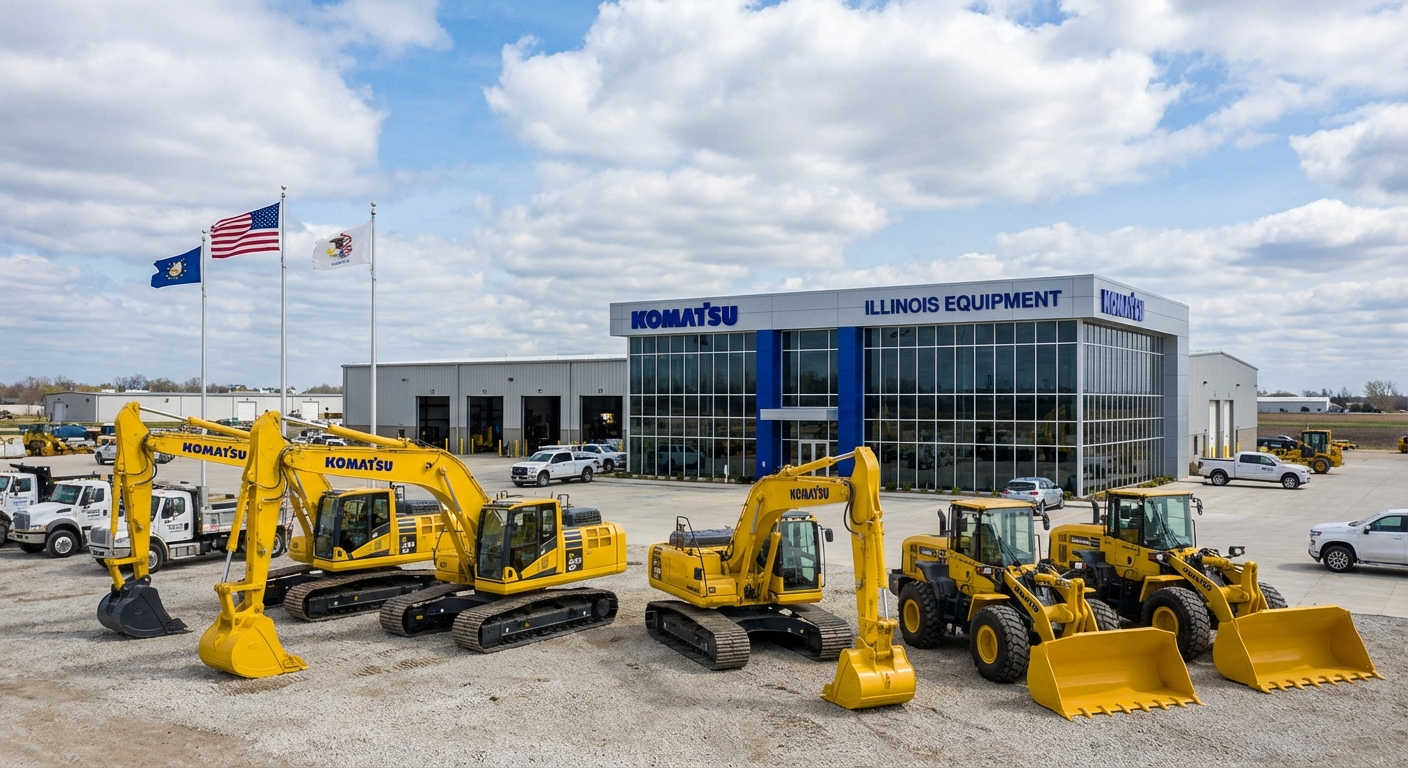
Komatsu is pursuing a multi-pathway approach including battery-electric, hydrogen fuel cells, and diesel-electric hybrids. The company’s KOMTRAX telematics platform is being enhanced to optimize electric fleet management.
John Deere has focused on battery-electric compact track loaders and upcoming electric tractor platforms transferring technology from its agricultural division. The company acquired Kreisel Electric to accelerate battery development.
Hitachi is leveraging its heavy industries expertise in electric power systems, partnering with ABB for charging infrastructure and developing hybrid and full-electric excavators across size classes.
Practical Steps for Fleet Managers
Whether you’re planning an immediate purchase or preparing for future transitions, several actions make sense today:
Assess Your Current Operations
Audit your fleet’s operating hours, job site locations, and application requirements. Identify machines operating under 1,500 hours annually in applications where electric technology is mature (compact excavators, wheel loaders, telehandlers).
Evaluate Your Infrastructure
Review electrical capacity at your yard and typical job sites. Understand the costs of electrical upgrades and whether your utility offers commercial charging programs or incentives.
Talk to Your Dealer
Major dealers now have electric equipment specialists. Request demonstrations, review total cost of ownership analyses specific to your operation, and understand warranty terms and service capabilities.
Consider Rental First
Before committing to a purchase, rent electric equipment for a project. Real-world experience reveals operational considerations that specifications cannot capture.
Plan for the Transition
Develop a 5-10 year fleet replacement strategy that accounts for regulatory timelines in your markets, equipment lifecycle schedules, and anticipated technology improvements.
The Road Ahead
The heavy equipment industry’s electric transformation won’t happen overnight, but the trajectory is clear. Battery costs continue to decline—falling approximately 15% annually—while energy density improves. Charging infrastructure is expanding. Regulatory pressure is intensifying.
For contractors and fleet managers, the question isn’t whether to consider electric equipment, but how to time the transition strategically. Those who understand the technology, assess their operations honestly, and plan proactively will be positioned to capture both the economic and competitive advantages that electrification offers.
The machines are here. The economics are improving. The regulations are coming. The electric revolution in heavy equipment is no longer a question of if—it’s a matter of when.
Have questions about electric equipment for your fleet? Reach out to Equipment Insider’s team at editorial@equipmentinsiderhq.com.