Autonomous Construction Equipment Market Hits Inflection Point: Why 2026 Changes Everything
With the market projected to reach $18.16 billion this year and a 2.2 million worker shortage looming in North America, autonomous construction equipment is moving from experimental pilot programs to essential infrastructure.
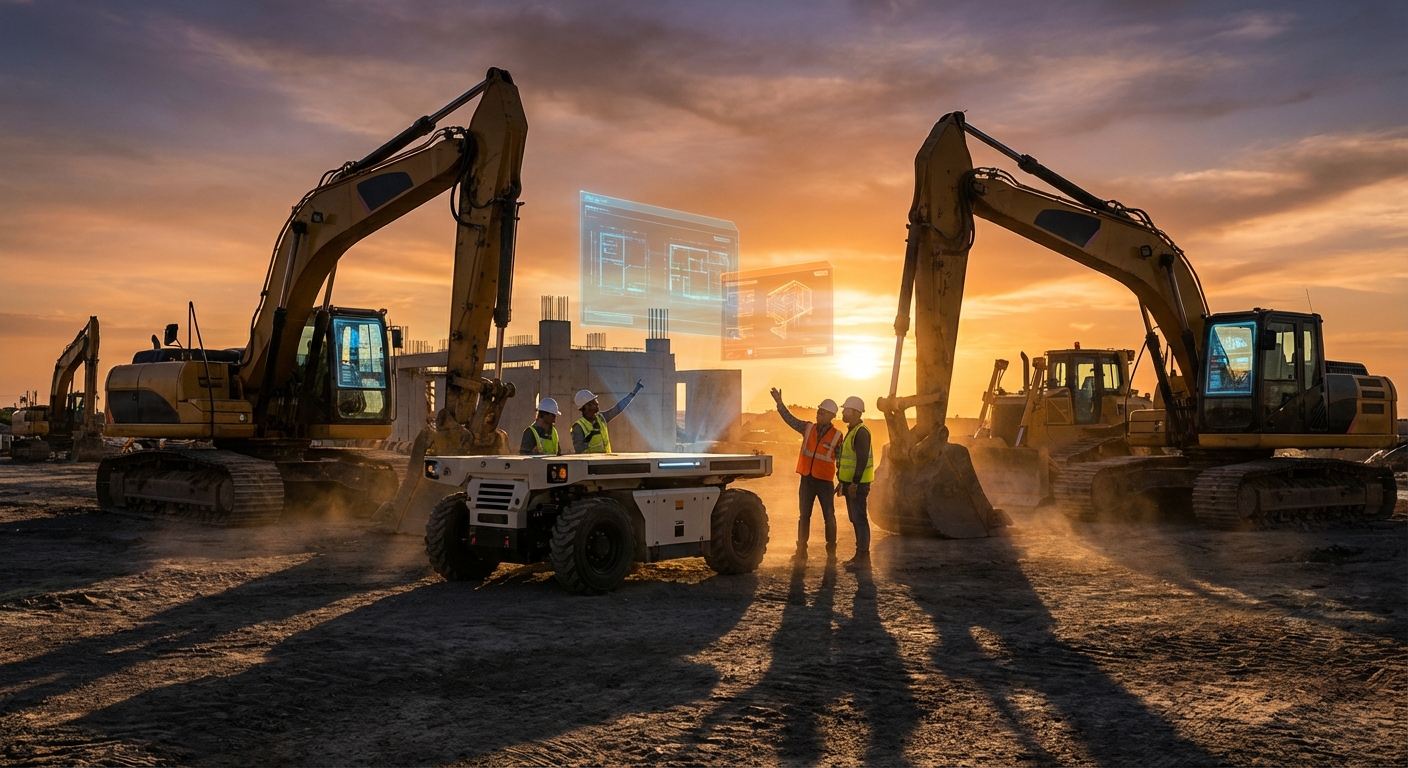
The construction industry has reached an inflection point. After years of pilot programs, proof-of-concept demonstrations, and cautious adoption, autonomous construction equipment is transitioning from technological curiosity to operational necessity. The numbers tell the story: the global autonomous construction equipment market is projected to reach $18.16 billion in 2026, up from $16.64 billion in 2025, representing a compound annual growth rate of 9.1%.
But the real driver isn’t just technology maturation—it’s mathematics. North America alone faces a projected 2.2 million worker shortage by the end of this year, and no amount of recruitment campaigns or wage increases can close that gap. Autonomous equipment isn’t replacing workers; it’s filling positions that simply cannot be filled.
Simplify Your Fleet Management with FieldFix
Tracking equipment maintenance and expenses shouldn’t require a PhD. FieldFix gives contractors a dead-simple way to log service records, monitor machine hours, and catch problems before they become expensive repairs. Built by contractors, for contractors.
The Market in Numbers
The data from multiple research firms paints a consistent picture of accelerating growth. According to The Business Research Company, the autonomous construction equipment market was valued at $16.43 billion in 2025 and is on track to reach $35.22 billion by 2034—more than doubling in less than a decade.
Several key metrics stand out:
Current Market Size (2026): $18.16 billion globally, with the U.S. market alone expected to reach $2.85 billion. Europe follows as the second-largest market at approximately $4.44 billion.
Growth Rate: The market is expanding at a CAGR between 9.0% and 12.3%, depending on the research methodology and segment analyzed. Either way, it’s growing nearly twice as fast as the traditional construction equipment sector.
Adoption Breakdown: Fully autonomous equipment is expected to capture 60.42% of the market share in 2026, driven by its superior operational capabilities and easier remote monitoring. Semi-autonomous systems account for the remainder, often serving as transitional technology for contractors still building operational expertise.
These aren’t speculative projections—they reflect orders already placed, projects already contracted, and equipment already deploying to job sites across North America, Europe, and Asia Pacific.
Why Now? The Convergence of Four Forces
The autonomous equipment moment didn’t arrive because of any single breakthrough. Instead, four independent forces have converged to create conditions where autonomous adoption has become not just feasible but economically imperative.
1. The Labor Crisis Has No Traditional Solution
Construction worker shortages have been building for over a decade, but 2026 represents a tipping point. The industry lost a generation of workers during the 2008 financial crisis and never recovered. Apprenticeship programs have declined. Younger workers have gravitated toward technology careers. Immigration policy shifts have reduced the available labor pool.
The result: there simply aren’t enough humans available to operate the equipment needed to complete contracted projects. Autonomous systems don’t solve the entire problem, but they extend the productive capacity of existing crews. A single operator can now supervise multiple autonomous machines, effectively multiplying their output.
2. Technology Has Matured Beyond Proof-of-Concept
Five years ago, autonomous construction equipment required constant human supervision, struggled with unstructured environments, and broke down frequently. That’s no longer true.
Modern autonomous systems incorporate multiple redundant sensor arrays—LiDAR, GPS-RTK, computer vision, radar, and ultrasonic sensors—that enable reliable operation in the chaotic, constantly-changing environment of active construction sites. Machine learning algorithms have been trained on millions of hours of real-world operation data.
Equally important, the support infrastructure has matured. Telematics platforms can monitor entire autonomous fleets in real-time. Remote intervention capabilities allow operators to take control when needed. Predictive maintenance systems anticipate failures before they occur.
3. Insurance and Regulatory Frameworks Have Caught Up
One of the underappreciated barriers to autonomous equipment adoption has been uncertainty around liability. Who’s responsible when an autonomous dozer damages a utility line or injures a worker?
That uncertainty is resolving. Insurance carriers have developed autonomous equipment-specific policies based on several years of actuarial data. Regulators in most jurisdictions have established clear frameworks for autonomous equipment operation, typically requiring geofenced operation zones, emergency stop capabilities, and documented safety protocols.
The regulatory picture isn’t perfectly uniform—requirements vary by state and municipality—but contractors can now obtain clear guidance on compliance requirements in most markets.
4. Economics Have Flipped
The final piece is pure mathematics. When autonomous equipment required premium pricing, constant supervision, and frequent repairs, the total cost of ownership exceeded conventional alternatives. That equation has inverted.
Modern autonomous systems command roughly a 15-25% premium over conventional equipment with equivalent specifications. But they operate longer hours (machines don’t take breaks, don’t call in sick, and can run night shifts without lighting or hazard pay). They consume less fuel (algorithms optimize operational efficiency in ways human operators cannot match). They incur less maintenance cost (smoother operation reduces component wear).
For many applications, autonomous equipment now delivers lower total cost of ownership than conventional alternatives—before accounting for the labor shortage.
Where Automation Is Gaining Ground
Not all construction tasks are equally suited to automation. The current generation of autonomous equipment excels in specific applications while remaining impractical for others.
Earthmoving and Grading
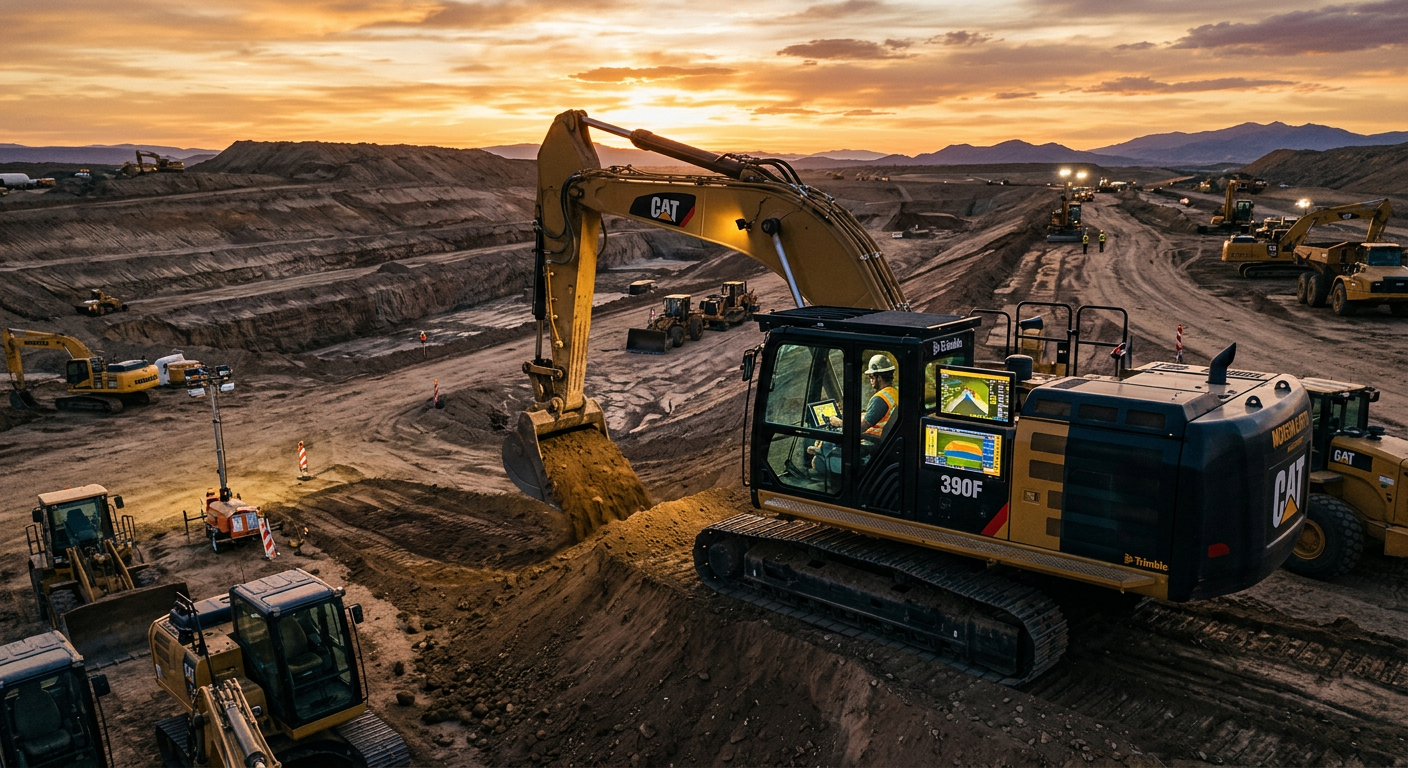
This is the heartland of construction automation. Autonomous dozers, scrapers, and graders have proven highly effective at bulk earthmoving and precision grading operations. The work is repetitive, takes place in controlled environments, and follows predictable patterns—ideal conditions for automation.
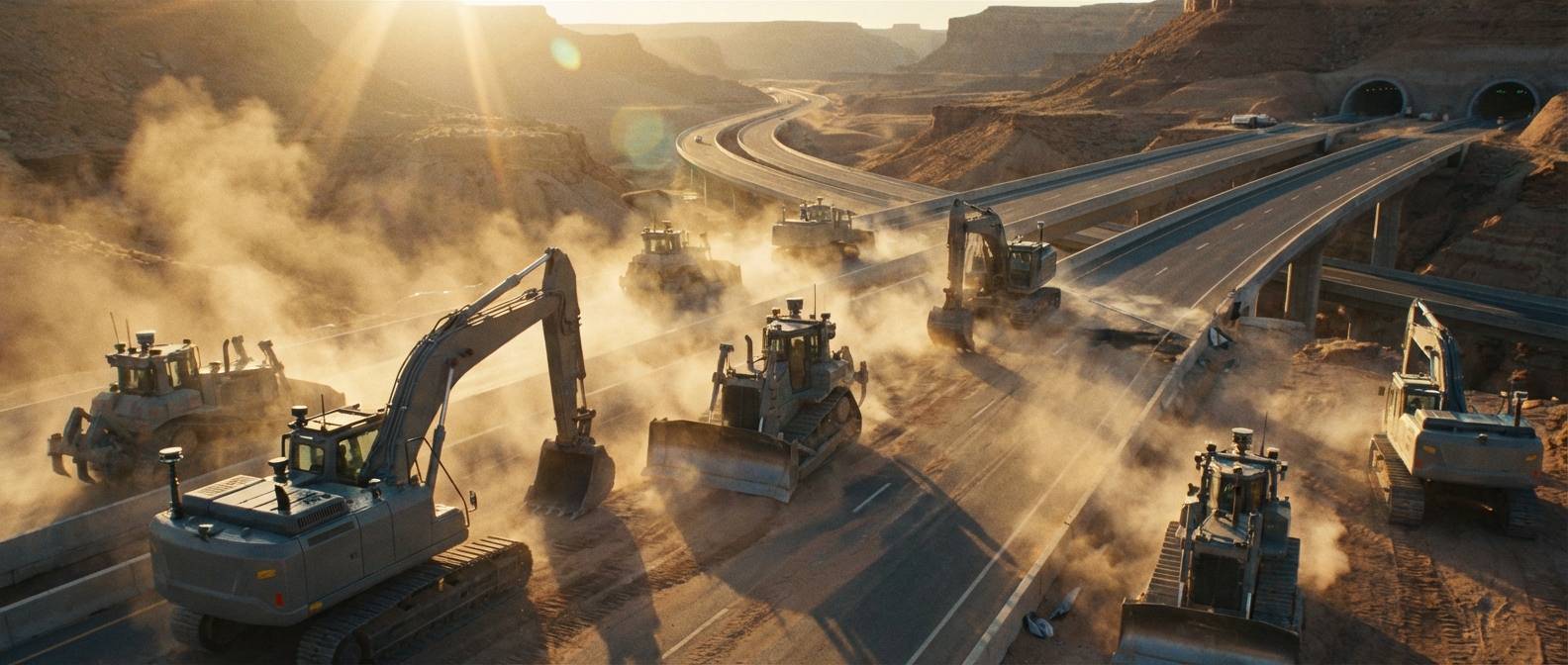
Several major infrastructure projects have deployed fully autonomous earthmoving fleets, including highway construction, mining operations, and large-scale site development. The technology works, and contractors who’ve deployed it report productivity gains of 20-40% compared to conventional operations.
Compaction
Autonomous compactors represent another mature application. These machines follow predetermined patterns, make multiple passes over defined areas, and require minimal real-time decision-making. Intelligent compaction systems can optimize pass counts based on real-time density measurements, reducing both time and fuel consumption.
Material Handling
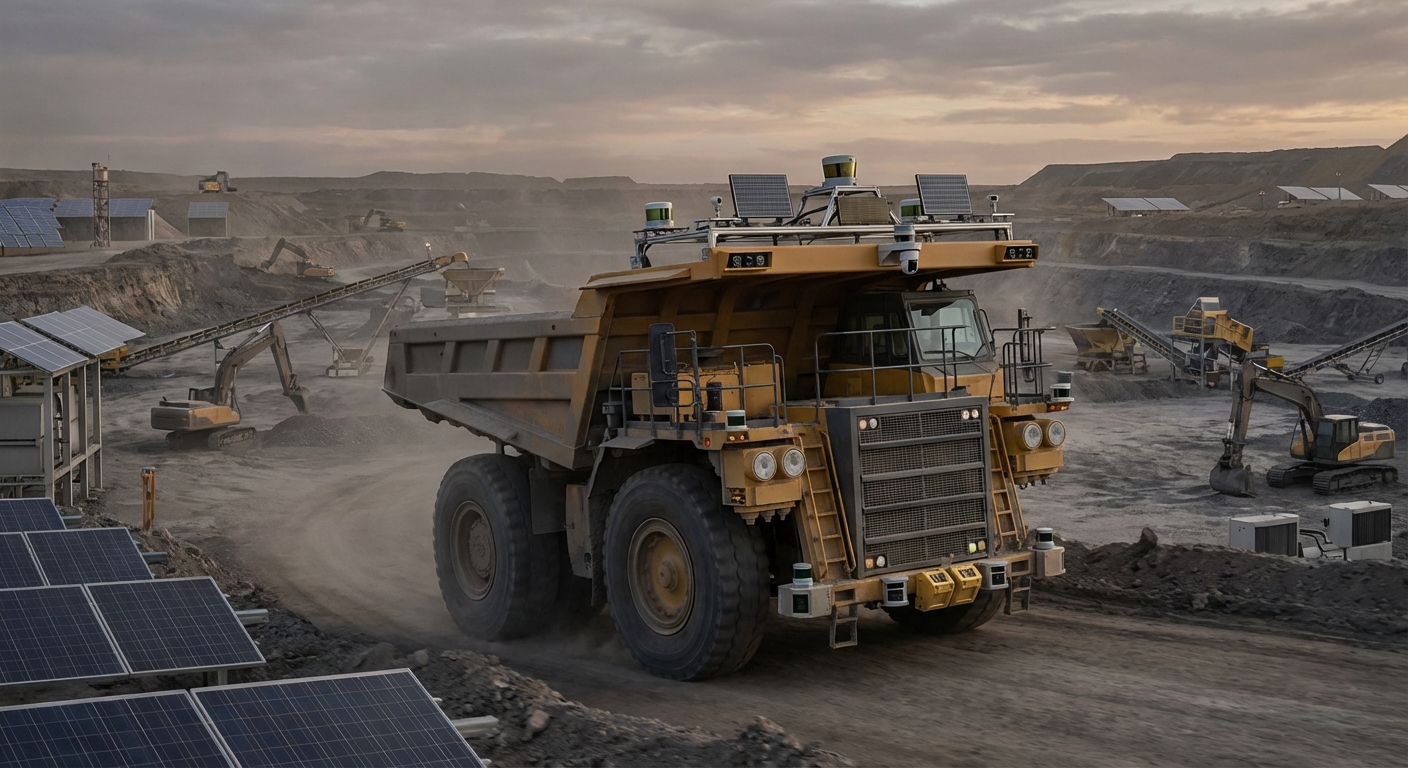
Autonomous haul trucks have operated in mining applications for over a decade, and that technology is migrating to construction. Autonomous articulated dump trucks are now available for construction applications, handling repetitive material transport between loading and dumping zones.
Where Humans Still Dominate
Some construction tasks remain stubbornly resistant to automation. Operations requiring complex real-time judgment—working in proximity to other trades, operating near existing structures, tasks requiring constant adaptation to unpredictable conditions—still require human operators.
Crane operations, for example, involve continuous judgment calls about load dynamics, wind conditions, and proximity to other workers. Demolition work requires constant assessment of structural conditions. Finish work of any kind remains human territory.
The smart contractors aren’t trying to automate everything. They’re identifying the repetitive, predictable operations where autonomous equipment excels and reallocating their human operators to tasks where judgment and adaptability matter.
Regional Dynamics: Who’s Leading, Who’s Following
The autonomous construction equipment market isn’t developing uniformly around the world. Regional differences in labor costs, regulatory environments, and construction activity levels are creating distinct adoption patterns.
Asia Pacific: The Growth Engine
Asia Pacific is expected to post the highest growth rate at 12.51% CAGR, driven by a combination of massive infrastructure investment, severe labor shortages in developed markets like Japan and South Korea, and supportive government policies.
China dominates the regional picture in absolute terms, though adoption rates vary significantly by province. Government infrastructure spending programs have created demand for construction equipment of all types, and autonomous systems have found particular traction in mega-projects where scale justifies the investment.
Japan represents perhaps the most sophisticated market for autonomous construction equipment, driven by extreme demographic challenges. The country’s construction workforce is aging rapidly, with inadequate replacement by younger workers. Autonomous equipment isn’t a choice for Japanese contractors—it’s a survival strategy.
North America: Mature Market, Accelerating Adoption
North America leads the global market in absolute terms due to its advanced technological base, established equipment financing infrastructure, and massive construction backlog. The U.S. market alone is expected to reach $2.85 billion in 2026.
American adoption has been driven primarily by the labor shortage rather than government mandate. Contractors have adopted autonomous equipment because they can’t find operators for conventional machines. This bottom-up adoption pattern has proven durable—once contractors experience the productivity benefits, they rarely return to fully manual operations.
The Infrastructure Investment and Jobs Act continues to drive public construction spending, creating demand for equipment of all types. Autonomous systems are capturing a disproportionate share of that demand as contractors seek ways to complete projects despite workforce constraints.
Europe: Regulatory Leadership, Steady Adoption
Europe represents the second-largest market at approximately $4.44 billion, with adoption driven by a combination of labor costs, environmental regulations, and safety requirements. European regulators have often led the world in establishing frameworks for autonomous equipment operation.
The European market is notable for its emphasis on electric autonomous equipment, reflecting the continent’s broader commitment to decarbonization. Several major equipment manufacturers have introduced autonomous electric compact equipment specifically targeting European urban construction applications.
What This Means for Contractors
For contractors evaluating autonomous equipment, 2026 represents an optimal entry point. The technology has matured beyond early-adopter risk. Financing options have proliferated. Support infrastructure exists. The economics work.
But successful adoption requires realistic expectations. Autonomous equipment delivers its benefits in specific applications—repetitive operations, predictable environments, tasks that don’t require constant human judgment. Contractors who deploy autonomous systems for appropriate applications will see significant productivity and cost benefits. Those who expect autonomous equipment to solve all their problems will be disappointed.
The practical adoption path for most contractors involves three phases:
Phase 1: Semi-Autonomous Features Most new equipment now includes some level of automation—grade control, automated compaction monitoring, telematics-based maintenance alerts. Contractors can begin building operational expertise with these features without committing to fully autonomous systems.
Phase 2: Supervised Autonomous Operations The next step involves deploying fully autonomous equipment in controlled applications with human supervision. An operator might supervise two or three autonomous machines rather than operating one conventional machine. This captures much of the productivity benefit while maintaining human oversight.
Phase 3: Fleet-Scale Autonomous Operations The final phase involves deploying multiple autonomous machines as an integrated fleet, managed by remote operators from a central location. This represents the full realization of autonomous equipment benefits but requires significant organizational capability.
Most contractors will find themselves somewhere in this progression by the end of 2026. The question isn’t whether to adopt autonomous equipment but how quickly and in which applications.
The Road Ahead
The autonomous construction equipment market’s 9.1% growth rate may actually understate the transformation underway. The technology improvements arriving over the next several years—better sensors, more sophisticated AI, improved connectivity—will expand the range of applications where autonomous equipment can operate effectively.
More importantly, the labor shortage driving adoption shows no signs of resolving. The demographic and economic forces that created the current worker gap will persist for at least another decade. Autonomous equipment isn’t a temporary solution to a temporary problem—it’s a permanent adaptation to permanent conditions.
For equipment dealers, this creates both opportunity and challenge. The opportunity lies in autonomous equipment sales and the service revenue that accompanies complex technology. The challenge lies in building the technical capabilities to support autonomous fleets—capabilities that differ significantly from traditional equipment support.
For contractors, the message is clear: the autonomous equipment era has arrived, not as a future possibility but as a present reality. The contractors who learn to integrate autonomous systems into their operations will maintain competitiveness in a labor-constrained market. Those who don’t will find themselves increasingly unable to staff projects, meet schedules, and compete for work.
The $18.16 billion market isn’t a projection anymore. It’s 2026, and the machines are already running.