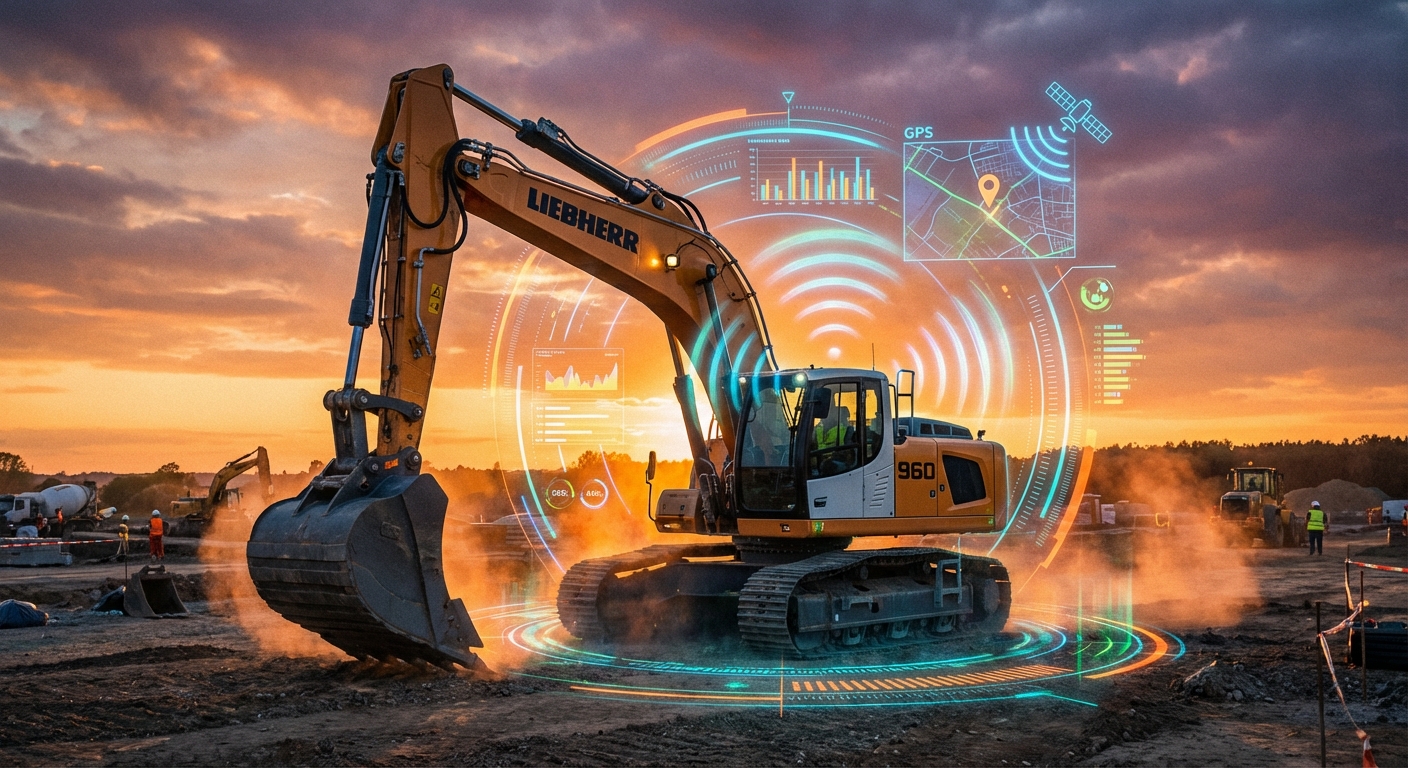
The 500,000 Worker Gap: How Construction's Labor Crisis Is Forcing an Automation Reckoning
The construction industry needs nearly half a million new workers in 2026. It's not going to get them. Here's how that reality is reshaping what equipment manufacturers build and what contractors buy.
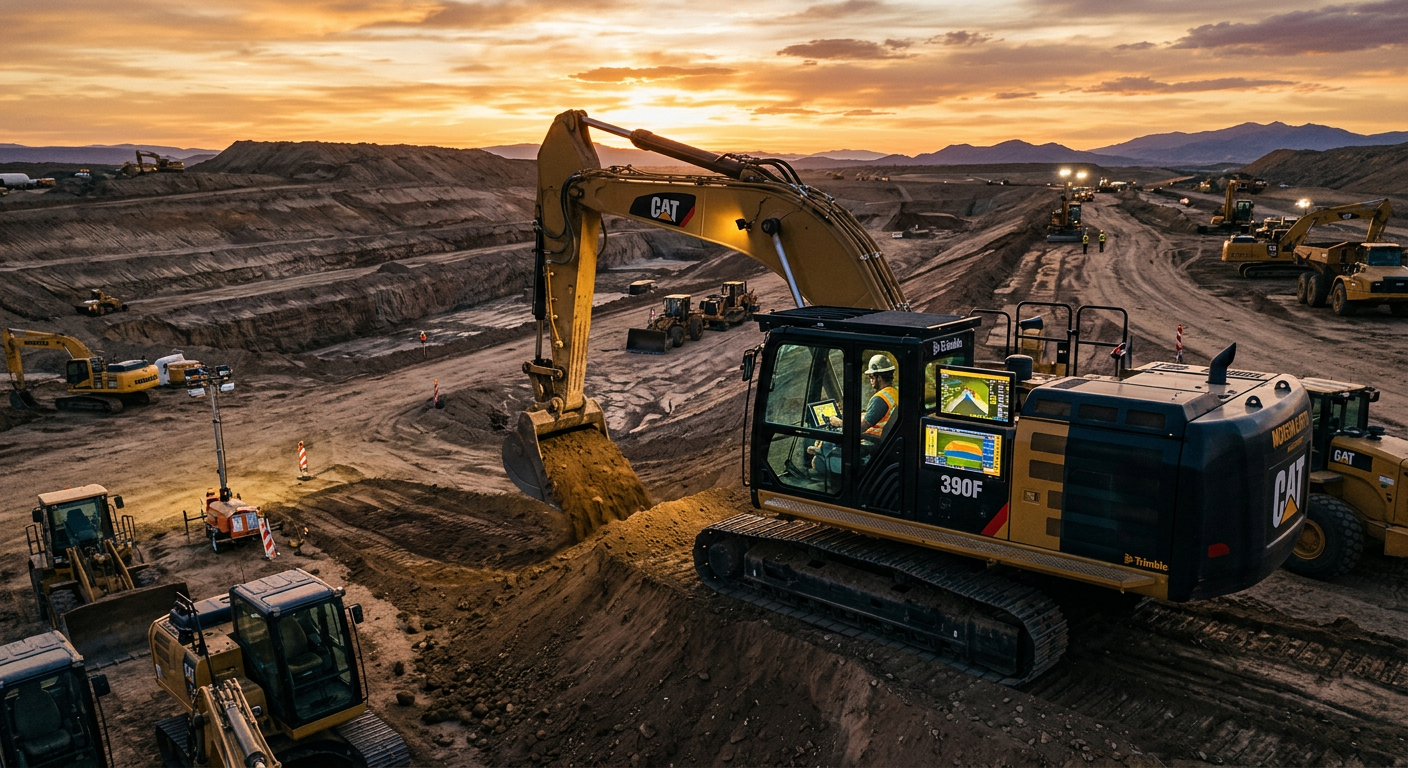
Walk the floor at CONEXPO 2026 and the message was impossible to miss. Every major OEM had some version of the same pitch: our machines do more so your crew can do less. Not less work — less headcount.
That’s not a coincidence. It’s a response to math that isn’t getting better.
The Numbers Are Brutal
The Associated Builders and Contractors (ABC) estimates the U.S. construction industry needs to attract nearly 500,000 new workers in 2026 just to keep pace with current demand. That’s on top of the 8.3 million already employed — and it’s a number that’s been climbing every year.
FieldFix Editor’s Note: When you’re running fewer operators across more machines, tracking each unit’s hours, maintenance windows, and cost-per-hour stops being optional. It’s how you keep a lean crew productive instead of stranded. Try FieldFix free to get that visibility across your whole fleet.
The hiring picture looks fine from a distance. Construction added 33,000 jobs in January 2026. But zoom in and the cracks show up fast. Job openings sat at 231,000 at the end of January — a slight dip from last year, but still a massive backlog. The hiring rate is slower than anything we saw before 2020.
And here’s the stat that should keep fleet managers up at night: roughly 41% of the current construction workforce is expected to retire by 2031. That’s not a projection built on pessimistic assumptions. It’s just demographics. The average age of a skilled equipment operator has been creeping up for two decades, and the pipeline of replacements never materialized.
Why the Workers Aren’t Coming
This isn’t a new problem. The industry has been talking about labor shortages since at least 2015. But the solutions haven’t kept pace with the losses.
Young workers aren’t choosing construction at the rates the industry needs. Part of it is perception — the trades still carry a stigma in some circles, despite wages that beat plenty of four-year-degree jobs. Part of it is competition. Warehousing, logistics, and manufacturing are all chasing the same pool of workers, often with indoor jobs and more predictable schedules.
Immigration policy hasn’t helped either. A meaningful chunk of the construction workforce has historically come from immigrant labor, and tighter enforcement has shrunk that pipeline in some regions.
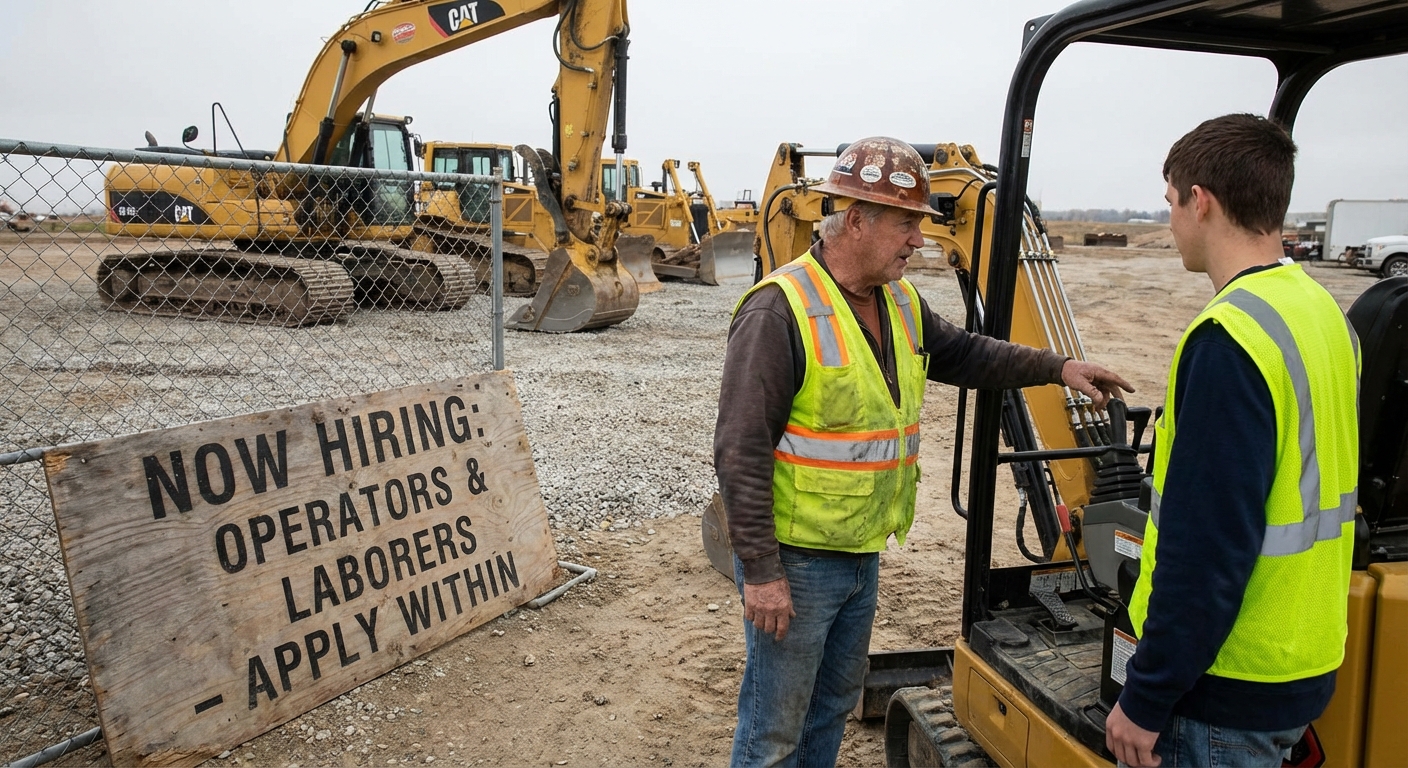
The result: contractors aren’t just competing for projects. They’re competing for the people to do the projects. And when they can’t find operators, jobs stall.
CONEXPO’s Answer: Make the Machine Smarter
If you walked CONEXPO 2026 looking for a theme, “making operators more productive” was it. Not replacing them — not yet, at least — but getting more output from fewer people.
Here’s what that looked like in practice:
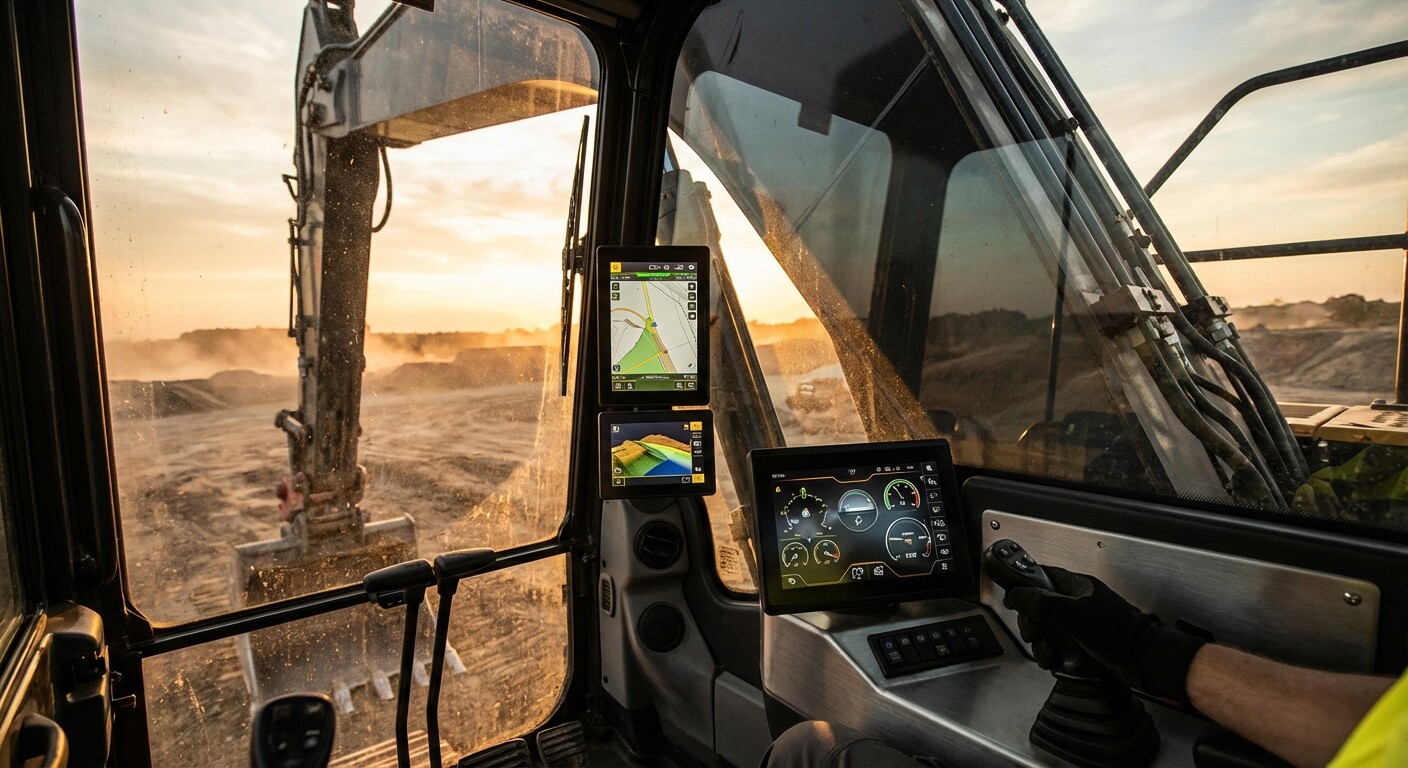
Caterpillar leaned hard into operator assist technology. Their new machines use AI-powered cameras and in-cab systems to help less experienced operators work closer to the precision of a 20-year veteran. The Cat 319 compact radius excavator, for example, packages sophisticated machine control into a frame that fits tighter jobsites — the kind of work that used to require a senior operator to navigate without clipping utilities or structures.
Komatsu pushed its intelligent machine control (iMC) system further into its excavator and dozer lines. Their pitch is straightforward: an operator with iMC can hit finish grade in fewer passes, with less rework, than a skilled operator without it. The new WA475-11 wheel loader added automation features like auto-idle shutdown and an economy mode that reduces fuel burn without requiring the operator to manage engine settings manually.
CASE previewed its N Series dozers (650N, 750N, 850N), expected in late 2026, with Universal Machine Control built in from the factory. That means compatibility with Topcon, Trimble, and Leica right out of the box — no aftermarket installs, no integration headaches. For a contractor trying to train new operators quickly, that’s a real advantage.
Bobcat rolled out its R-Series compact loaders with new electro-hydraulic controls. The T86-2, their flagship compact track loader, features controls that are more intuitive for operators who didn’t grow up running skid steers. That’s a deliberate design choice aimed at lowering the learning curve.
The Real Shift: From “Nice to Have” to “Have To”
Five years ago, machine control and automation features were selling points for contractors who wanted to run leaner. Today they’re becoming requirements for contractors who literally can’t fill their crews.
The economics have flipped. When you could hire an experienced grading operator for $28/hour, spending $40,000 on GPS grade control for your dozer was a calculation you could delay. When that operator wants $42/hour and you can’t find them anyway, the grade control system pays for itself on the first job because you can put a less experienced operator in the seat and still hit spec.
This dynamic is showing up in dealer conversations across the country. Machine control attachment and integration sales are growing faster than base machine sales. Telematics adoption — once resisted by small contractors who didn’t want Big Brother watching — is climbing because owners need to know which machines are running, which are idle, and where the bottlenecks are when they can’t afford to have a foreman on every site.
What This Means for Small and Mid-Size Contractors
The labor shortage isn’t hitting everyone equally. Large contractors with established training programs, competitive benefits, and brand recognition have an advantage in recruiting. Small and mid-size operators — the one-to-five crew outfits that make up the bulk of the industry — are getting squeezed hardest.
For these contractors, the automation wave creates both opportunity and risk.
The opportunity: Technology is a legitimate equalizer. A two-person crew with grade control, telematics, and well-maintained modern equipment can outproduce a four-person crew running older iron with manual methods. That’s not marketing speak — it’s playing out on jobsites right now.
The risk: The upfront cost is real. A new compact track loader with full machine control integration runs $80,000-$120,000. For a small contractor already tight on cash flow, that’s a serious commitment. And the technology only works if you actually use it — which means investing time in training, not just writing a check.
The contractors who will thrive in this environment are the ones treating their equipment as a strategic investment, not just a tool purchase. They’re tracking hours and costs per machine, scheduling preventive maintenance before breakdowns strand a crew, and making buying decisions based on total cost of ownership rather than sticker price.
The Training Gap Nobody Talks About
There’s another problem buried inside the automation push: the industry is building smarter machines faster than it’s training people to use them.
A touchscreen display with 47 configurable settings doesn’t help an operator who’s used to mechanical levers. Machine control that requires proper setup and calibration is useless if nobody on the crew knows how to do it.
Manufacturers are starting to address this. Caterpillar and Komatsu both run operator training programs, and dealer networks are expanding their training offerings. But the capacity isn’t there yet. A dealer might have one or two trainers covering a multi-state territory. That works for their biggest customers. It doesn’t work for the small contractor who bought one machine and needs help getting it dialed in.
This is a gap that’s going to get filled by third parties — independent training providers, YouTube creators (some of the best machine control tutorials are already on YouTube, not dealer websites), and peer-to-peer knowledge sharing.
Where This Goes Next
The labor shortage isn’t cyclical. It’s structural. Even in a construction slowdown, the demographic math doesn’t change — older workers are still aging out, and the replacement rate still falls short.
That means the automation push at CONEXPO 2026 wasn’t a fad or a marketing cycle. It’s the beginning of a permanent shift in how equipment gets designed, sold, and operated.
Over the next three to five years, expect:
Machine control to become standard, not optional. CASE’s Universal Machine Control approach — factory-installed, multi-brand compatible — is where the whole industry is heading. Within two model cycles, buying a dozer or excavator without integrated grade control will feel like buying a truck without a backup camera.
Telematics to evolve from monitoring to management. Right now most telematics platforms tell you what happened. The next generation will tell you what to do about it — predictive maintenance alerts, automated service scheduling, and real-time fleet optimization that routes machines and operators based on project timelines.
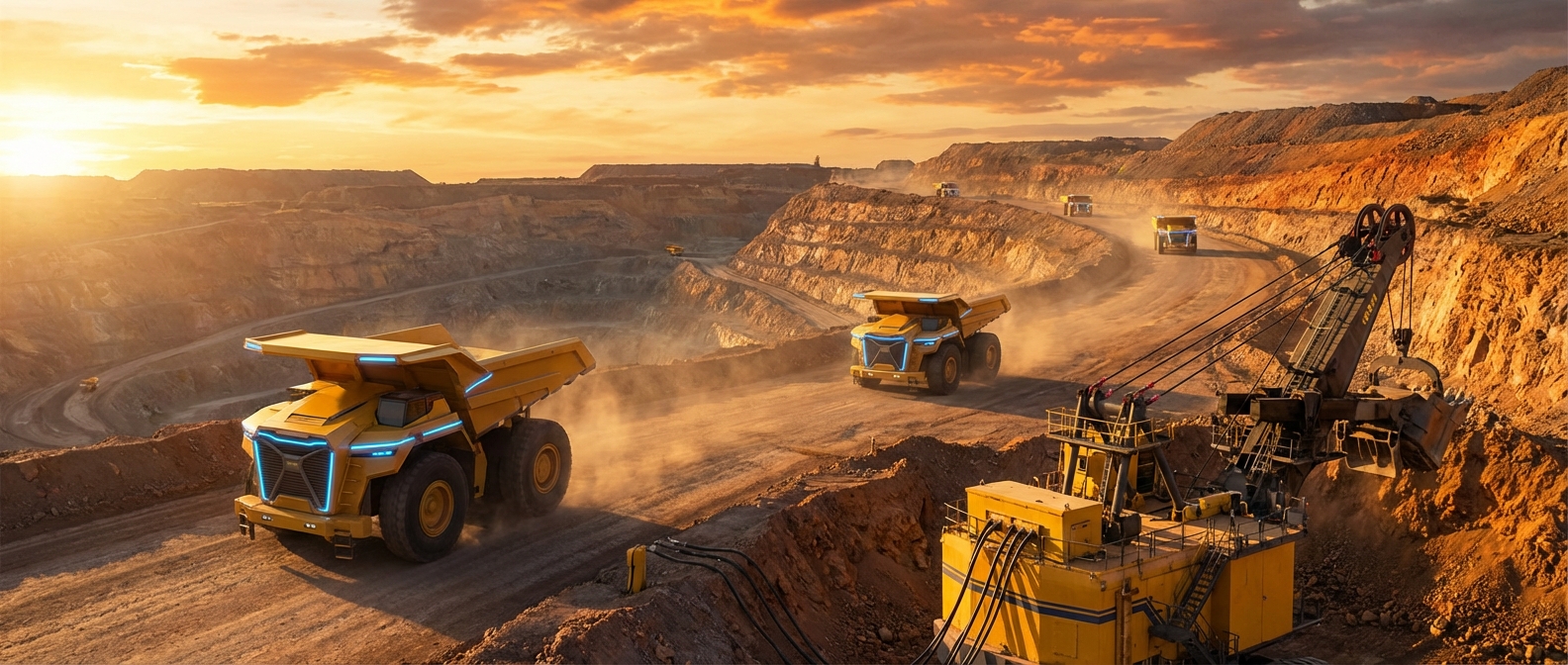
Autonomous and semi-autonomous operation to expand beyond mining. Caterpillar and Komatsu already run autonomous haul trucks in mines. The technology for semi-autonomous dozing and compaction on construction sites exists today. Regulatory and liability questions will slow adoption, but the labor math is going to push contractors past their hesitation faster than most analysts expect.
Used equipment values to bifurcate. Machines with integrated technology and telematics will hold value better than comparable units without. Contractors are already paying premiums for used machines with machine control wiring and brackets pre-installed.
The Bottom Line
The construction industry’s labor problem isn’t going to be solved by recruiting harder. The workers it needs don’t exist in sufficient numbers, and that reality is baked in for the rest of the decade.
What is changing is the industry’s response. CONEXPO 2026 made that clear. Every major manufacturer is building equipment that assumes fewer, less experienced operators — and trying to make those operators as productive as possible through technology.
For contractors, the takeaway is practical: the machines you buy in the next two to three years will either set you up to run lean and productive, or leave you scrambling when you can’t fill your last operator seat. Choose accordingly.