Mining Equipment Market Poised for $194 Billion Future as Electrification and Automation Reshape Industry
New analysis projects the global mining equipment sector will reach $194.2 billion by 2033, driven by battery-electric vehicles growing at double the rate of diesel and autonomous systems becoming standard across operations.
The global mining equipment market stands at a pivotal inflection point. According to new market research released this week, the sector is projected to grow from $140.8 billion in 2026 to $194.2 billion by 2033—a compound annual growth rate of 4.7% that belies the revolutionary changes happening beneath the surface.
This isn’t incremental growth. It’s a fundamental transformation of how mining equipment is designed, powered, and operated. Battery-electric vehicles are growing at nearly double the rate of internal combustion models. Autonomous haulage systems are moving from pilot programs to standard deployments. And the traditional cyclical capital goods model is giving way to service-led revenue streams and modular platform strategies.
Editor’s Note: Tracking equipment costs and maintenance across mixed fleets—diesel, electric, hybrid—is becoming increasingly complex. FieldFix helps operators monitor cost-per-hour metrics and service intervals regardless of power source, providing the data clarity needed to make informed fleet electrification decisions.
The $53 Billion Opportunity
Between 2026 and 2033, the mining equipment market is expected to create approximately $53.4 billion in absolute dollar opportunities. That’s new value entering the ecosystem—not merely replacing aging iron, but expanding capabilities and addressing previously unserved needs.
Surface mining equipment will continue dominating revenue, accounting for roughly 60% of the market. Excavators, loaders, haul trucks, crushers, and drills remain the workhorses of open-pit operations. But underground equipment is experiencing a surge as operators chase higher-grade deposits in more challenging conditions where surface methods can’t reach.
Metal mining represents the fastest-growing application segment, fueled by a 30% increase in copper and lithium projects globally. The irony isn’t lost on industry observers: the equipment needed to extract battery minerals is itself increasingly battery-powered.
Electrification: No Longer Optional
The shift to electric and hybrid mining equipment has moved beyond environmental posturing into hard economics. Diesel-powered equipment still dominates the installed base, but new orders tell a different story. Regulatory pressure around decarbonization and mine-site sustainability is accelerating adoption of alternative powertrains, while rising fuel costs and carbon pricing make the business case increasingly compelling.
Electric and hybrid equipment currently represents less than 15% of the global installed base. But that percentage is misleading—it reflects legacy fleets, not purchasing trends. Among new equipment orders, electric and hybrid units are capturing market share at unprecedented rates.
The technology is maturing rapidly. Higher energy density batteries, fast-charging systems, and improved cycle life are addressing the range and uptime concerns that once made operators hesitant. For underground operations in particular, the elimination of diesel emissions translates directly into reduced ventilation costs and improved worker safety.
Power Output Trends
Medium-to-high power output equipment in the 500kW to 2,000kW range leads current sales, aligned with the majority of mining operations globally. However, the high-output category above 2,000kW is experiencing above-average growth as large-scale open-pit operations pursue economies of scale.
The power output distribution reveals an industry bifurcation: smaller operations are optimizing with right-sized, efficient machines, while mega-mines are investing in ever-larger equipment to maximize productivity per operator.
Autonomy Moves from Pilot to Production
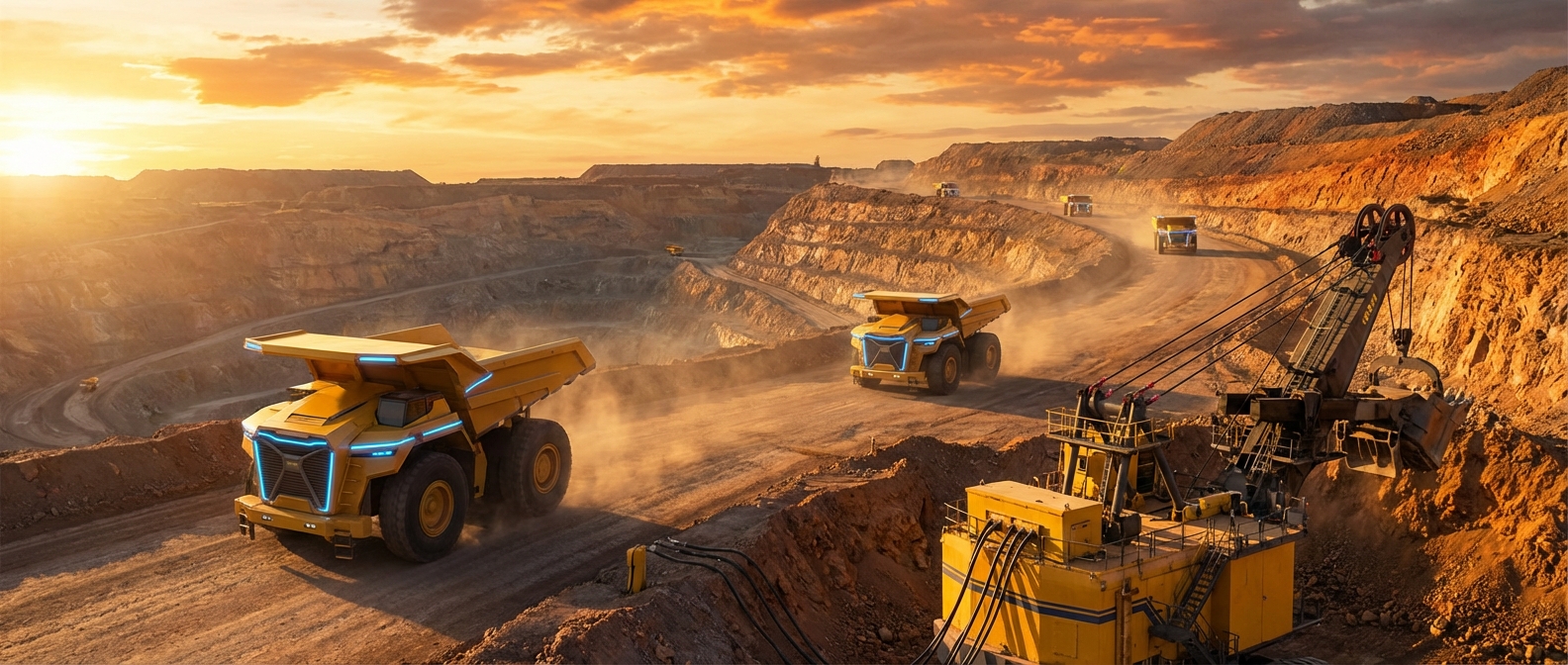
Autonomous haulage systems have graduated from experimental curiosity to operational necessity. Mines are moving into increasingly hazardous or remote territories—locations where human operators face elevated risks or simply aren’t available due to labor shortages.
The value proposition has crystallized around three factors: safety improvements, operational efficiency, and labor availability. Autonomous trucks don’t get tired, don’t require shift changes, and can operate continuously in conditions that would be dangerous or impossible for human operators.
What’s emerging now is “autonomy-as-a-service”—OEMs and technology providers offering autonomous capabilities as a packaged solution rather than a pure equipment sale. This shift mirrors broader trends in industrial automation and creates new revenue streams while lowering barriers to adoption.
Remote-operated drilling rigs represent another growth frontier. Underground drilling in particular benefits from removing operators from hazardous locations while maintaining productivity through sophisticated teleoperation systems.
Competitive Intensity Increases
Traditional OEMs like Caterpillar and Komatsu are engaging in technology-driven mergers and acquisitions to acquire software and automation capabilities. The mining equipment business is becoming as much about data and algorithms as it is about steel and hydraulics.
This M&A activity reflects a recognition that the competitive battleground is shifting. Equipment differentiation increasingly depends on the intelligence embedded in machines—predictive maintenance, autonomous operation, fleet optimization, and integration with mine planning systems.
Smaller technology companies with specialized automation, sensing, or software capabilities have become acquisition targets for established players seeking to accelerate their technology roadmaps. The alternative—building these capabilities organically—risks falling behind competitors who are buying their way to the frontier.
Geographic Dynamics
Asia-Pacific remains the dominant investment hotspot, driven by nickel expansions in Indonesia and ongoing coal mining activity in India and Australia. The region’s combination of active mine development and infrastructure investment creates sustained demand for new equipment.
Chile continues as a key opportunity market for mining equipment manufacturers, though the country’s recently-passed royalty reforms are creating some uncertainty around project economics. Australia’s stable regulatory environment and sophisticated mining industry make it a favored destination for deploying advanced equipment.
Headwinds and Constraints
Despite the optimistic trajectory, significant barriers remain. High upfront equipment costs, long replacement cycles, and the green premium on electric and autonomous equipment create challenges, particularly for mid-tier operators who lack the capital resources of major mining houses.
Infrastructure gaps present another obstacle. Many remote mine sites in South America and Africa lack the grid infrastructure required to support fully electrified fleets. Diesel generators powering electric equipment defeats much of the environmental benefit and complicates the economic case.
Supply chain disruptions and geopolitical tensions add layers of risk to equipment procurement and deployment. The concentration of battery material production in certain regions creates vulnerabilities that equipment manufacturers and mine operators are only beginning to address.
What This Means for Operators
For mining companies evaluating fleet investments, the strategic calculus is shifting. Total cost of ownership increasingly favors electric and hybrid equipment in applications where the technology is mature. Autonomous systems offer compelling returns in suitable operations, but require significant upfront investment in infrastructure and operator training.
The traditional approach of purchasing equipment and running it until replacement is giving way to lifecycle thinking—equipment designed for rebuilds, service-led relationships with OEMs, and modular platforms that can be updated as technology advances.
Operators who view equipment purchases as strategic decisions rather than commodity transactions will be better positioned to capture the productivity and cost benefits that new technologies offer. Those who continue treating mining equipment as a purely cyclical capital expenditure risk being left behind as the industry transforms.
CONEXPO 2026 Preview
The mining equipment sector’s transformation will be on full display at CONEXPO-CON/AGG 2026 in Las Vegas this March. Major OEMs are expected to showcase their latest electric and autonomous offerings, with several significant product announcements anticipated.
Industry observers expect electrification to dominate the conversation, with multiple manufacturers unveiling new battery-electric models across weight classes. Autonomous systems and advanced telematics platforms will feature prominently, as will modular equipment designs intended to extend service life and reduce lifecycle costs.
The trade show will serve as a barometer for how quickly the industry is moving beyond diesel-dominated fleets and toward the electrified, autonomous future that market analysts are projecting.
The Path Forward
The mining equipment market’s projected growth to $194.2 billion by 2033 reflects more than simple expansion—it represents a fundamental repositioning of the industry. Equipment manufacturers are transitioning from cyclical capital goods providers to technology and service companies. Operators are shifting from equipment ownership to fleet optimization. And the equipment itself is evolving from mechanical workhorses to intelligent, connected systems.
The companies that thrive in this environment will be those that embrace the transition rather than resist it. The $53 billion in new value being created represents opportunity for innovators and risk for incumbents who fail to adapt.
The transformation won’t happen overnight, and diesel equipment will remain the backbone of mining operations for years to come. But the direction of travel is clear: electrification, automation, and intelligence are reshaping mining equipment from the ground up. The market projections simply quantify what industry participants already know—the future of mining equipment looks nothing like its past.
Market data cited in this article comes from Market Minds Advisory research released February 10, 2026.