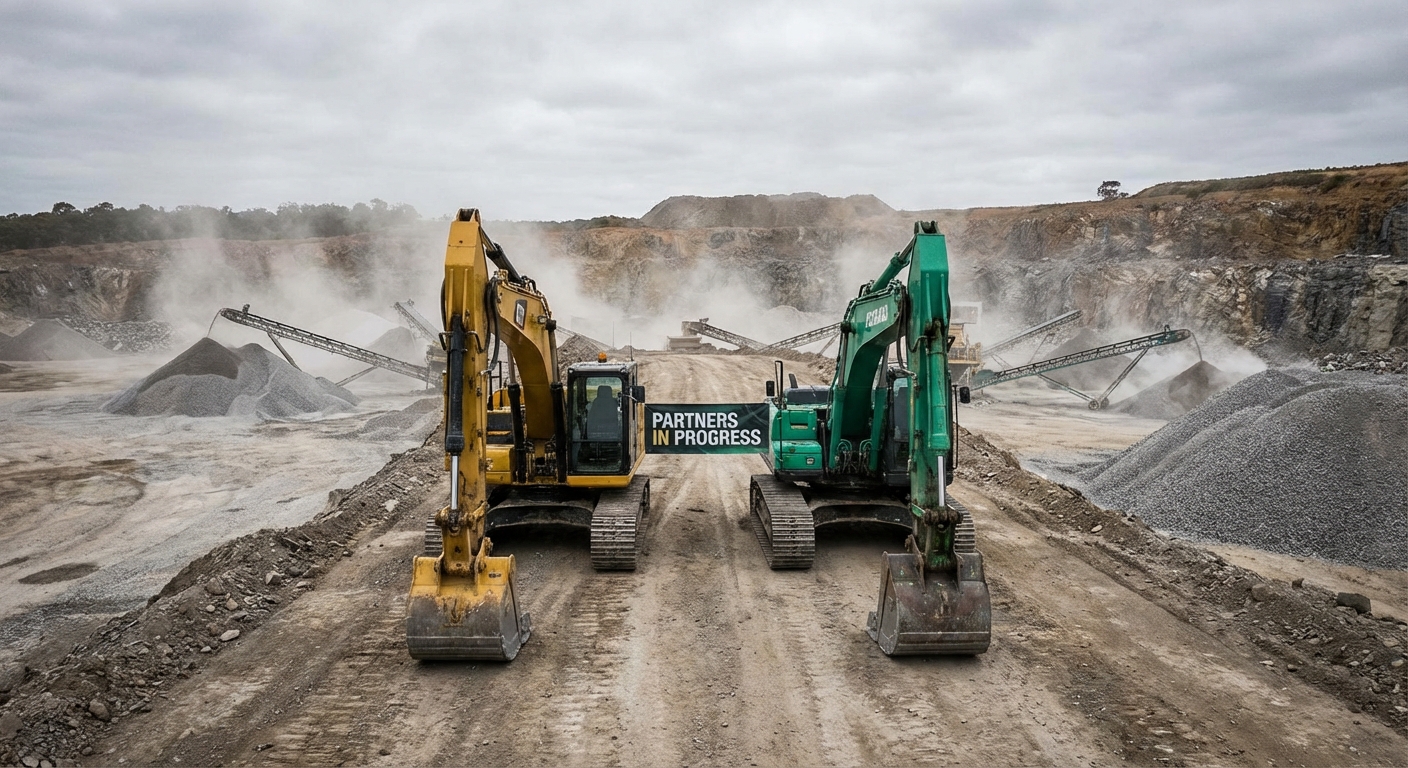
Ferronordic's U.S. Beachhead Expands: Rudd Equipment Acquires Housby's Iowa Dealer Network
The Swedish equipment giant's American subsidiary adds three Iowa locations and 26 employees in a $17.7 million deal that signals accelerating European consolidation of the U.S. dealer landscape.
When Ferronordic — a Stockholm-listed equipment dealer with roots in Russia, Central Asia, and the Nordics — acquired Louisville-based Rudd Equipment Company for $95 million in November 2023, industry watchers called it one of the more audacious cross-border dealer plays in recent memory. A European firm, best known for selling Volvo trucks and construction equipment across markets most American operators couldn’t point to on a map, was suddenly planting its flag in Kentucky, Ohio, and Indiana.
Now that flag is spreading further west.
Editor’s Note: Whether you’re running machines for a single-branch dealer or managing a fleet across multiple states, tracking equipment costs matters. FieldFix helps dealers, contractors, and operators log maintenance, monitor expenses, and calculate true cost-per-hour — free for fleets up to three machines.
The Housby Deal: What Happened
On January 30, 2026, Rudd Equipment Company — Ferronordic’s wholly owned American subsidiary — completed the acquisition of Housby Heavy Equipment’s construction equipment business through an asset purchase deal valued at approximately $17.7 million. Of that total, $17.3 million went toward machines and spare parts inventory.
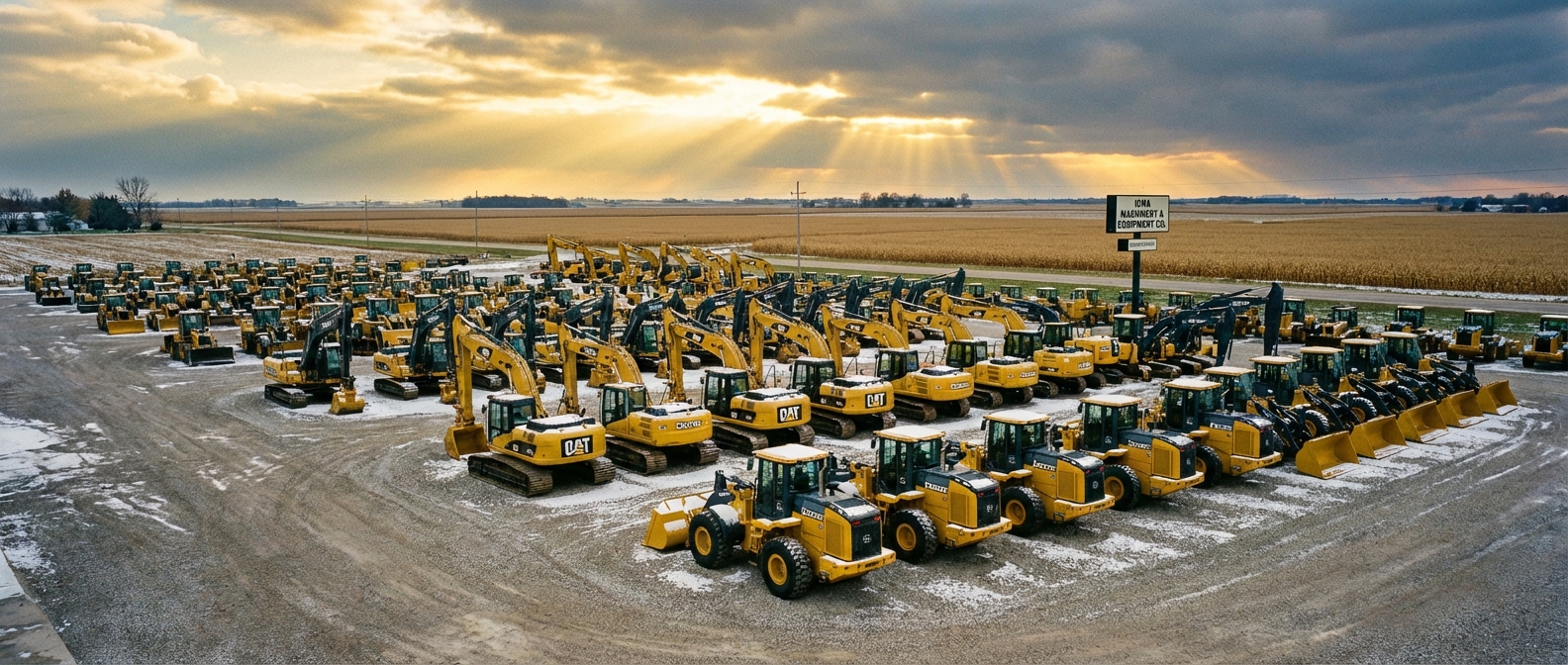
The deal brings three Iowa dealership locations and 26 employees into Rudd’s fold. According to Ferronordic’s official press release issued February 3, Rudd intends to retain all 26 Housby employees working in the acquired business. The locations will be integrated into Rudd’s existing branch network, each operating under its own Branch Vice President with support from Rudd’s corporate office in Louisville.
Critically, this was not a blanket acquisition of Housby Heavy Equipment as a whole. Housby’s Mack Trucks business and other product lines were not part of the transaction. This was a surgical purchase of Housby’s construction equipment dealer territory — specifically, its role as the authorized dealer for Volvo Construction Equipment across most of Iowa.
What This Means for the Midwest Dealer Map
The numbers tell a straightforward story of territorial expansion. Before the Housby acquisition, Rudd Equipment operated 13 locations across seven states: Kentucky, Indiana, Ohio, West Virginia, parts of Pennsylvania, southern Illinois, and eastern Missouri. The Housby deal pushes that to 16 locations across eight states, adding Iowa to the portfolio.
For the broader Midwest construction equipment market, the implications are significant. Rudd is now the exclusive Volvo CE dealer across a swath of territory stretching from the Ohio River to the Iowa farmlands — a geographic footprint that few independent dealers can match. Housby’s territory borders the northern edge of Rudd’s existing coverage, creating what Ferronordic described as a natural geographic extension rather than a leap into unfamiliar terrain.
The $17.7 million price tag is relatively modest compared to Ferronordic’s initial $95 million investment in Rudd itself. But the strategic value exceeds the dollar amount. In the dealer world, territory is everything. Acquiring an established dealer’s customer relationships, service infrastructure, and OEM authorization in a new state is worth considerably more than the iron sitting on the lot.
Ferronordic’s American Strategy: Pattern Recognition
To understand what the Housby acquisition means, you need to understand Ferronordic’s playbook — and it’s one that American dealers should be watching closely.
Ferronordic was founded in 2010 as a dealer for Volvo Trucks and Volvo CE in Russia. Over the following decade, it built a sprawling network across Russia, Kazakhstan, and other Central Asian markets. When geopolitical upheaval forced the company to reassess its Russian exposure beginning in 2022, Ferronordic pivoted hard toward Western markets. It acquired dealer operations in Germany and the Nordics, and then made its biggest move: the Rudd acquisition in late 2023, giving it immediate access to the world’s largest construction equipment market.
The Housby deal is the second step in what Ferronordic has publicly described as a broader U.S. expansion strategy. In its February 3 press release, the company stated plainly that it views this acquisition as “the first step in expanding Rudd’s US footprint” — language that clearly signals more acquisitions are planned.
The pattern is recognizable to anyone who has watched dealer consolidation unfold in other markets. A well-capitalized parent company acquires a strong regional dealer, integrates it smoothly, then uses it as a platform for bolt-on acquisitions in adjacent territories. It happened with Brandt in Canada. It’s happening with Ferronordic in the American Midwest.
The Broader Consolidation Wave
Ferronordic’s moves are not happening in isolation. The North American equipment dealer landscape is undergoing a consolidation cycle that has been building for years, and 2025-2026 appears to be an inflection point.
The economics driving consolidation are straightforward. Modern dealerships require massive investments in technology, training, and inventory. OEMs are demanding more from their dealer networks — broader service capabilities, digital integration, telematics support, and the ability to service increasingly complex machines. Independent single-location dealers are finding it harder to meet these requirements while maintaining profitability.
At the same time, the aging of dealer principals who built their businesses in the 1970s, 80s, and 90s is creating a steady supply of acquisition targets. Many of these owners lack succession plans. Their children may not want the business. And the multiples being offered by well-funded acquirers make selling an attractive option.
The result is a slow but accelerating shift from fragmented, family-owned dealer networks toward larger, multi-state operations backed by institutional or international capital. Ferronordic is simply the latest — and perhaps most internationally flavored — participant in this trend.
What About Housby?
Housby Heavy Equipment is far from disappearing. The company, based in Des Moines, Iowa, has been a fixture in the state’s equipment market for decades. Founded in 1952 — the same year as Rudd Equipment, notably — Housby built its reputation across multiple product lines and services.
The sale of its Volvo CE dealer business to Rudd represents a strategic divestiture of one product line, not a liquidation. Housby retains its Mack Trucks business and other operations. For Housby, the deal may reflect a pragmatic assessment: as OEM expectations grow and the capital requirements for maintaining competitive dealer operations increase, focusing resources on core business lines where the company sees the strongest long-term returns can be the smarter play.
It is worth noting that Housby’s three Iowa locations will continue operating — they will simply operate under the Rudd banner. For customers in those territories, the transition should be relatively seamless: the same locations, many of the same employees, and the same Volvo CE product line, now backed by a larger organization with deeper resources.
What Operators and Contractors Should Know
For equipment operators and contractors working in Iowa and the broader Midwest, the practical implications of this acquisition are mostly positive, at least in the near term.
Larger parts and service networks. With 16 locations across eight states, Rudd can leverage its broader network to source parts, share service expertise, and reduce downtime for customers. If your local branch doesn’t have a specific part in stock, a sister branch in Kentucky or Ohio might.
Investment in facilities and technology. Well-capitalized dealer groups tend to invest in their acquired locations. Ferronordic has indicated that it expects the acquired Housby branches to eventually match the profitability and service levels of Rudd’s existing network, which means investment is coming.
Potential pricing impacts. Consolidation can cut both ways on pricing. Larger dealers have more purchasing power with OEMs and suppliers, which can translate to competitive pricing. However, reduced local competition can also reduce the pressure to offer aggressive deals. In markets where Housby competed with other dealers for the same customer base, that competitive dynamic has now changed.
Continuity of relationships. The retention of all 26 Housby employees is a deliberate move to preserve institutional knowledge and customer relationships. For contractors who have worked with specific Housby sales reps or service techs for years, the people they know should still be there — at least initially.
The European Angle: Why It Matters
One aspect of this story that deserves more attention is the European dimension. Ferronordic is not the only foreign-capitalized entity acquiring American equipment dealers, but the trend is notable.
The U.S. construction equipment market is the largest and most profitable in the world. As European and Asian markets face slower growth, currency headwinds, or geopolitical complexity, the American market looks increasingly attractive as a growth platform. For a company like Ferronordic — which was forced to largely exit Russia and rebuild its business in new markets — the stability and scale of the U.S. dealer network is particularly appealing.
This dynamic raises interesting questions about the future composition of the American dealer landscape. If current trends continue, a growing share of the local dealers that contractors work with on a daily basis could be owned by parent companies headquartered in Stockholm, Tokyo, or Helsinki. The service bays will still be staffed by the same local technicians, and the iron will still carry the same brands. But the strategic decisions and capital allocation will increasingly be made an ocean away.
What Comes Next
Ferronordic’s own language suggests the Housby acquisition is a beginning, not an end. The company’s February 3 announcement described this as expanding Rudd’s footprint — phrasing that implies a growth trajectory, not a one-time transaction.
The most logical next targets for Rudd’s territorial expansion would be states adjacent to its current eight-state footprint. Minnesota, Wisconsin, Michigan, Tennessee, and Virginia are all plausible candidates, depending on existing dealer agreements and available targets.
The broader question is whether Ferronordic will remain focused on organic bolt-on acquisitions through Rudd, or whether it might pursue a second platform acquisition — a separate dealer group in a different region — to accelerate its U.S. growth. The former is lower risk; the latter could establish Ferronordic as a genuinely national player.
For now, the immediate impact is felt in Iowa. Three dealership locations have a new parent company. Twenty-six employees have a new employer (though they may not notice much change day to day). And the map of who controls Midwest equipment distribution has been quietly redrawn — again.
In the equipment dealer world, the biggest changes often happen not with fanfare, but with asset purchase agreements and press releases issued on a Monday morning. This was one of those changes. It likely won’t be the last.
This article is based on publicly available information from Ferronordic’s press release dated February 3, 2026, and additional reporting from Equipment Finance News and Construction Equipment Guide.