Stellar Industries Acquires Elliott Equipment Company in Major Work Truck Industry Consolidation
Iowa-based employee-owned manufacturer expands aerial platform capabilities with strategic acquisition of 77-year-old Omaha company.
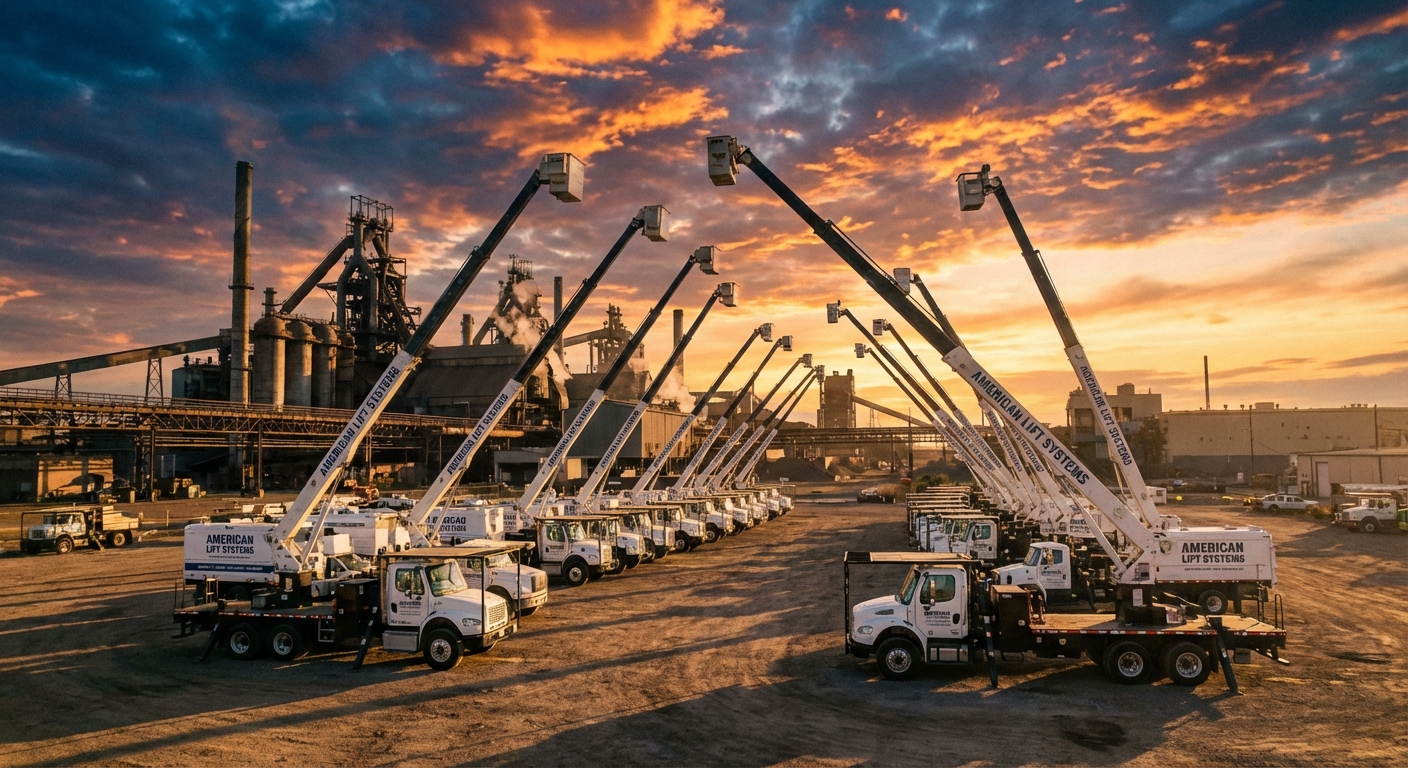
The work truck and aerial platform industry is witnessing a significant consolidation as Stellar Industries, the employee-owned manufacturer based in Garner, Iowa, completes its acquisition of Elliott Equipment Company. The deal, which closed in early 2026, brings together two American manufacturing powerhouses with a combined history spanning over a century.
Elliott Equipment Company, headquartered in Omaha, Nebraska, pioneered the first truck-mounted telescoping aerial platform when it was founded in 1948. The company has since grown into a leading manufacturer of truck-mounted aerial work platforms, digger derricks, and cranes serving utility, construction, and municipal markets across North America.
Editor’s Note: Managing equipment acquisitions and fleet transitions requires robust tracking systems. FieldFix helps operators maintain detailed service histories and cost-per-hour analytics during ownership changes—critical data for evaluating how acquisitions impact your fleet’s bottom line.
A Strategic Expansion into Aerial Work Platforms
The acquisition represents Stellar’s most significant expansion into the aerial work platform segment. While Stellar has built its reputation on mechanic trucks, cranes, hooklifts, and service truck accessories since its founding in 1990, the addition of Elliott brings an entirely new product category with established dealer relationships and a loyal customer base.
Following the acquisition, Elliott Equipment Company will operate as a distinct business unit within Stellar, maintaining its Omaha facilities, workforce, brand identity, and existing dealer network. Jim Glazer, who has led Elliott through its recent growth phase, will continue as President of the Elliott Equipment Company division.
The combined entity now offers an expanded portfolio that includes:
- Mechanic trucks and service cranes (Stellar’s core products)
- Hooklifts and roll-off cable hoists for waste, construction, and government applications
- Truck-mounted aerial work platforms with working heights from 46 to 141 feet
- Boom trucks and truck cranes with lifting capacities up to 45 tonnes
- Digger derricks for utility transmission work
- Service truck and van accessories for fleet customization
The Employee-Ownership Advantage
What makes this acquisition particularly notable is Stellar’s employee-ownership structure. The company transitioned to 100% employee ownership in January 2023 after operating with a partial ESOP since 1991. This ownership model has become central to Stellar’s culture and growth strategy.
The ESOP structure creates alignment between company performance and employee interests. Research consistently shows that companies combining employee ownership with high-performance cultures outperform their peers in productivity, retention, and long-term growth.
For Elliott’s approximately 250 employees, joining an employee-owned company represents an opportunity to participate directly in the combined organization’s success. While the specific terms of how Elliott employees will be integrated into Stellar’s ESOP have not been publicly disclosed, the cultural fit between the two organizations appears strong.
Both companies share commitments to American manufacturing, exceptional customer service, and engineering excellence. Elliott’s products are designed and built in Omaha, while Stellar operates multiple manufacturing facilities across Iowa, Nebraska, and Pennsylvania.
Market Timing and Industry Context
The acquisition comes at an opportune moment for the truck-mounted aerial work platform market. According to industry analysis, the global market was valued at approximately $8.86 billion in 2025 and is projected to grow at a compound annual growth rate of 9.06% through 2032, potentially reaching $16.26 billion.
Several factors are driving this growth:
Infrastructure Investment: Federal and state infrastructure programs are creating sustained demand for utility and construction equipment. Power grid modernization, telecommunications expansion, and renewable energy installations all require elevated access equipment.
Labor and Safety Considerations: Truck-mounted aerial platforms offer significant safety advantages over traditional scaffolding and ladder-based work. As safety regulations tighten and skilled labor becomes harder to find, contractors are investing in equipment that allows smaller crews to work more safely and efficiently.
Fleet Replacement Cycles: Many utility and construction fleets are facing equipment that has aged past optimal replacement points. Deferred purchases during economic uncertainty are now translating into pent-up demand.
Electrification Trends: The industry is seeing growing interest in electric and hybrid aerial platforms, particularly for urban applications where emissions and noise restrictions apply. Companies with strong R&D capabilities are well-positioned to capture this emerging segment.
What This Means for Dealers and Customers
For the dealer networks of both companies, the acquisition creates opportunities for expanded product offerings. Stellar’s existing dealers gain access to Elliott’s aerial platform lineup, while Elliott dealers can now offer Stellar’s mechanic trucks and service equipment.
The companies have emphasized that existing dealer relationships will be honored and that both brands will continue operating in the market. This approach minimizes disruption for customers who have established relationships with either company’s sales and service networks.
From a parts and service perspective, customers should see improved support as the combined organization leverages shared resources. Stellar’s emphasis on aftermarket support and service has been a key differentiator, and extending this approach to Elliott’s product line could enhance the ownership experience for aerial platform operators.
The Broader Consolidation Trend
Stellar’s acquisition of Elliott fits into a broader pattern of consolidation in the work truck and specialized equipment industries. Several factors are driving this trend:
Scale Advantages: Larger manufacturers can spread engineering and development costs across bigger volumes, invest more in new technology, and negotiate better terms with suppliers.
Product Portfolio Breadth: Customers increasingly prefer working with fewer vendors who can supply more of their needs. Companies offering complete solutions gain advantages in competitive bidding situations.
Succession and Ownership Transitions: Many equipment manufacturers founded in the mid-20th century face succession challenges. Acquisition by strategic buyers often provides better outcomes for employees and customers than private equity ownership or liquidation.
Technology Investment Requirements: The transition to electrification, telematics integration, and advanced safety systems requires significant R&D investment. Consolidation allows companies to pool resources for these technology transitions.
Looking Ahead
The Stellar-Elliott combination creates a more formidable competitor in multiple segments of the work truck market. The employee-ownership model, commitment to American manufacturing, and complementary product lines position the combined company well for the infrastructure investment cycle ahead.
For the broader industry, this acquisition signals continued consolidation pressure. Mid-sized manufacturers face a strategic choice: find merger partners to achieve scale, carve out defensible niches, or risk being squeezed between larger integrated competitors and specialized boutique manufacturers.
The work truck and aerial platform markets remain fundamentally healthy, supported by infrastructure needs that show no signs of diminishing. The question is increasingly not whether demand will exist, but which companies will be positioned to capture it.
Stellar’s acquisition of Elliott provides one answer: employee-owned American manufacturers betting on scale, product breadth, and cultural alignment to win in an evolving market.
This article is based on publicly available information from company announcements, industry publications, and market research. Equipment Insider provides independent coverage of the heavy equipment industry.