Kenco Corporation: How a Pennsylvania Company Became the Undisputed Leader in Below-the-Hook Lifting
Founded in 1984, Kenco has spent four decades engineering the lifting attachments that keep America's infrastructure projects moving. From jersey barriers to massive boulders, their USA-made products have become the gold standard for contractors and government agencies nationwide.
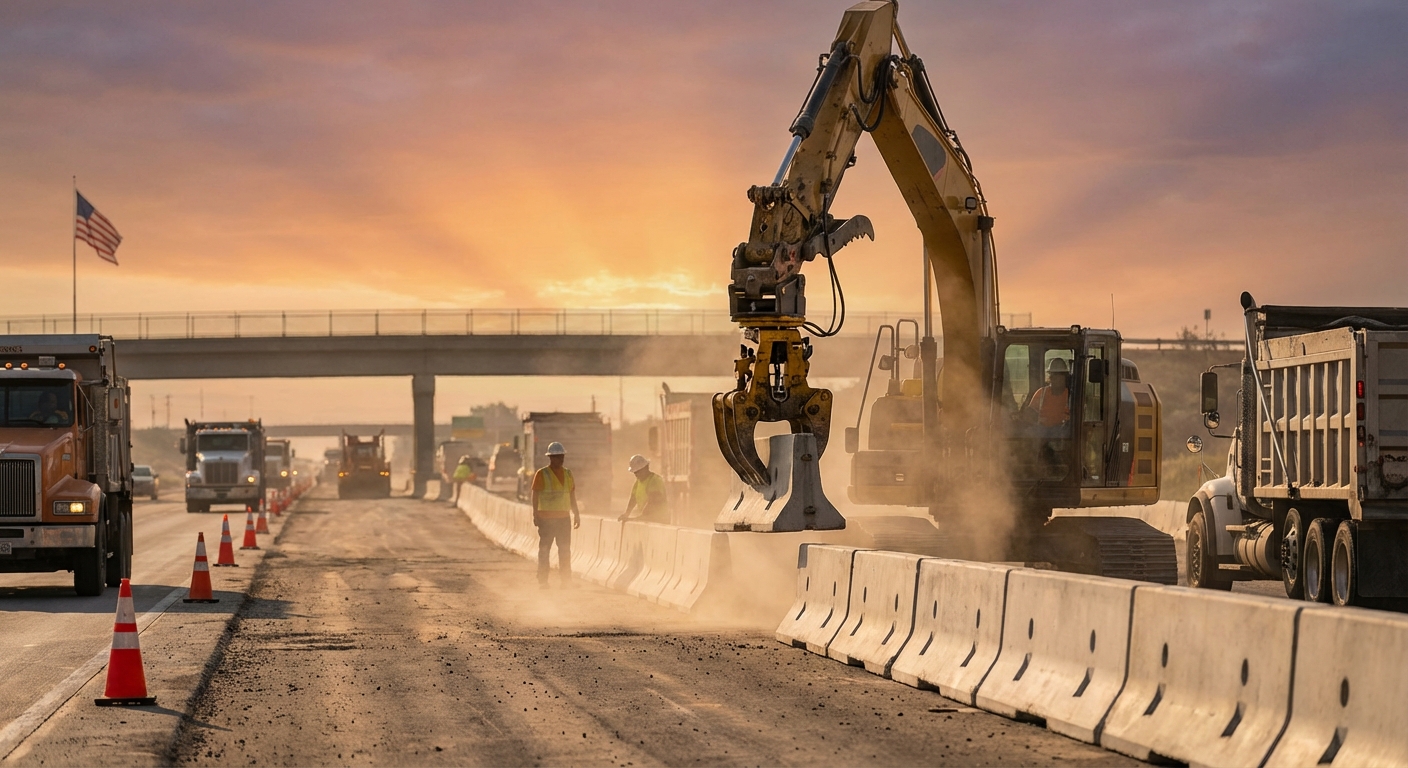
In heavy construction, the difference between a good day and a catastrophic one often comes down to how securely you can lift and place massive objects. Jersey barriers, concrete blocks, boulders, pipes—these aren’t items you can afford to drop. For over 40 years, one company from southwestern Pennsylvania has been solving that problem with attachments so reliable that they’ve become the default choice for contractors and government agencies across North America.
Kenco Corporation doesn’t make flashy equipment. They make the attachments that keep people alive and projects on schedule.
Editor’s Note: Tracking equipment performance and maintenance costs is crucial for any construction operation. FieldFix helps equipment owners monitor service intervals, log expenses, and calculate true cost-per-hour—giving you the data you need to make smarter fleet decisions.
The Birth of an Industry Standard
The Kenco story begins in 1984, when the company introduced what would become their flagship product: the Kenco Barrier Lift. At the time, jersey barriers were becoming increasingly common on American highways, but the methods for moving them were dangerous and inefficient. Workers used chains, improvised rigging, and plenty of hope.
Kenco’s barrier lift changed the equation. The design was elegantly simple: a mechanical grip that engaged the barrier’s center channel, allowing a single excavator operator to pick up, transport, and place concrete barriers with precision and safety. No rigging crew needed. No chains to slip. No fingers or toes at risk.
The product caught on fast. Highway contractors saw immediate productivity gains. State DOTs noticed the safety improvements. Within a few years, Kenco barrier lifts had become essentially mandatory equipment for any serious highway contractor.
The Product Line That Grew From Necessity
What makes Kenco interesting isn’t just that they invented a better barrier lift—it’s that they kept listening to their customers and engineering solutions for every lifting challenge the construction industry threw at them.
The Barrier Lift remains the company’s bread and butter, with models ranging from single-pick units for smaller barriers up to multi-barrier configurations that can move several sections at once. Every major highway contractor in the United States runs Kenco barrier lifts. Every state DOT either owns them or requires their contractors to use them.
But barriers were just the beginning.
Pipe Tongs and Pipe Hooks addressed the challenge of moving large-diameter pipe—the kind used in water mains, sewer systems, and industrial applications. The mechanical grip design ensures the pipe can’t slip, and the self-centering mechanism means operators can work quickly without wrestling the attachment into position.
The RockLift tackled boulder and landscape stone handling. For contractors in hardscaping, erosion control, and land clearing, this attachment eliminated the dangerous practice of using chains wrapped around irregular stones.
Multilift block lifters handle concrete blocks, jersey barriers, and modular retaining wall sections. The design accommodates the variety of shapes and sizes found in modern precast concrete products.
Slab Crab attachments pick up broken concrete slabs—critical equipment for bridge deck demolition and highway repair. When you’re removing old concrete from an active bridge, you need absolute confidence that those pieces aren’t going anywhere until you set them down.
Curb Lifters handle precast curb sections, keeping the installation process flowing smoothly.
And for the specialized jobs that don’t fit standard products, Kenco’s engineering team designs custom lifting devices built to the same standards as their production equipment.
Engineering Philosophy: Safety First, Then Durability
Every Kenco lifting product is designed, manufactured, and tested to comply with ASME B30.20 and BTH-1 standards. These aren’t suggestions—they’re the technical requirements that OSHA, Canadian OSHA, and virtually every other workplace safety authority recognizes as the baseline for acceptable lifting equipment.
But Kenco goes beyond the minimum requirements. Every excavator lifting attachment is hand-tested by engineering staff before leaving the facility. The company’s philosophy is that a lifting device should never be the weak link in a lifting operation.
The materials and construction reflect this priority. Heavy steel plate. Robust weld joints. Hardened wear surfaces where metal meets concrete. Kenco attachments are built to take punishment for years, not months.
Made in USA: Not Just a Marketing Slogan
Kenco manufactures all their products in southwestern Pennsylvania. In an era when many attachment manufacturers have moved production overseas, Kenco has kept their facility domestic. This isn’t nationalism—it’s quality control.
When your engineering team, production floor, and testing facility are all in the same building, problems get caught fast. When a customer calls with a question about a specific attachment, the engineer who designed it might be walking past the customer service desk.
The company’s location also puts them within a day’s drive of many of their largest customers—the heavy highway contractors working on infrastructure projects throughout the Eastern United States.
The Customer Relationship
Kenco’s approach to customer service reflects their position in a niche market. They’re not trying to sell the cheapest attachment. They’re trying to solve lifting problems.
Their website includes a detailed digital catalog, an e-commerce store for standard products, and a quote request system for custom work. But the company also encourages direct communication. Sales staff answer calls and emails from contractors who need advice on which attachment to specify for unusual applications.
This consultative approach builds relationships that extend beyond single transactions. Contractors who’ve been using Kenco products for decades keep coming back because they’ve never had a failure that cost them a job.
Trade Show Presence and Industry Recognition
Kenco maintains a strong presence at major construction trade shows. They’ll be exhibiting at CONEXPO 2026 in Las Vegas this March—the industry’s largest event for construction equipment. For contractors who want to see the products in person, handle them, and talk to the engineering team, events like CONEXPO provide that opportunity.
The company also attends regional shows focused on highway construction, paving, and infrastructure work. These smaller events often provide better opportunities for detailed technical discussions with existing customers and potential new users.
Competition and Market Position
The lifting attachment market includes numerous competitors, from major OEMs that offer branded attachments to small regional fabricators. Some competitors have attempted to replicate Kenco’s barrier lift design, with varying degrees of success.
Kenco’s response has been to keep engineering. Continuous improvement in materials, design refinements based on field feedback, and expansion into new lifting applications have kept the company ahead of imitators.
The barrier lift market is instructive. After 40 years, Kenco’s barrier lift remains the industry standard not because contractors are loyal to a brand, but because the product genuinely performs better than alternatives. When your livelihood depends on moving 2,000-pound concrete barriers safely and efficiently, you don’t gamble on second-best equipment.
The Heavy Highway Market
Kenco’s strongest market segment is heavy highway construction. The Infrastructure Investment and Jobs Act has pumped billions of dollars into road and bridge projects across the country, and that spending translates directly into demand for barrier lifts, slab crabs, and related attachments.
Highway contractors operate under intense schedule pressure. When a state DOT awards a contract with liquidated damages for late completion, every day matters. Equipment that speeds up barrier placement or concrete removal directly impacts profitability.
Safety regulations add another dimension. OSHA scrutiny of highway work zones has increased, and contractors who experience incidents involving lifting equipment can find themselves facing project shutdowns, citations, and increased insurance costs. Using properly designed and rated lifting equipment isn’t just good practice—it’s essential risk management.
Expansion Beyond Highways
While heavy highway remains Kenco’s core market, the company has successfully expanded into adjacent sectors.
Site development contractors use Kenco attachments for handling precast concrete products during commercial construction. Retaining wall installation, in particular, has become a significant application area.
Utility contractors have adopted pipe tongs and hooks for water, sewer, and gas line installation. The same safety and efficiency benefits that highway contractors experience translate directly to underground infrastructure work.
Demolition contractors use Slab Crabs and custom lifting attachments for controlled deconstruction of concrete structures. When the material being removed has value—either for recycling or reuse—careful handling with proper attachments makes economic sense.
Even landscaping operations have found uses for RockLift attachments when placing large boulders for erosion control, decorative applications, or retaining structures.
Technical Support and Training
Kenco provides technical support throughout the product lifecycle. Before purchase, engineering staff help customers select appropriate attachments for their applications. After purchase, the same team assists with any questions about operation, maintenance, or troubleshooting.
The company’s website includes video content demonstrating proper attachment use, and their “Kenco TV” platform offers ongoing educational material for operators and fleet managers.
For customers who specify custom attachments, the engineering process includes detailed drawings and specifications before manufacturing begins. This collaborative approach ensures the final product matches the application requirements exactly.
Looking Forward
The infrastructure spending environment remains favorable for Kenco’s core markets. Highway reconstruction, bridge replacement, and utility upgrades will drive demand for lifting attachments for years to come.
The construction industry’s continued emphasis on safety provides additional tailwind. As jobsite incidents become more costly—both in human terms and financial consequences—contractors are increasingly willing to invest in proper equipment rather than improvising with chains and rigging.
Kenco’s challenge is maintaining their engineering edge while scaling to meet demand. The company has managed this balance for four decades by staying focused on their core competency: designing and manufacturing lifting attachments that work safely and reliably.
Why Kenco Matters
In an industry often dominated by massive OEMs with diversified product lines, Kenco represents something different: a specialized manufacturer that does one category of products exceptionally well.
Their barrier lifts don’t have competitors because the competitors gave up trying to match them. Their pipe tongs don’t fail because the engineering team refuses to ship products that might fail. Their custom attachments solve problems that off-the-shelf equipment can’t address because the same engineers who design them also talk to the customers who use them.
For contractors who move heavy, awkward, dangerous objects for a living, that focus and expertise is worth paying for. It’s why Kenco has been growing for 40 years, and why they’ll likely keep growing for 40 more.
Kenco Corporation is headquartered in southwestern Pennsylvania and manufactures all products domestically. For more information, visit kenco.com or call 800-653-6069.