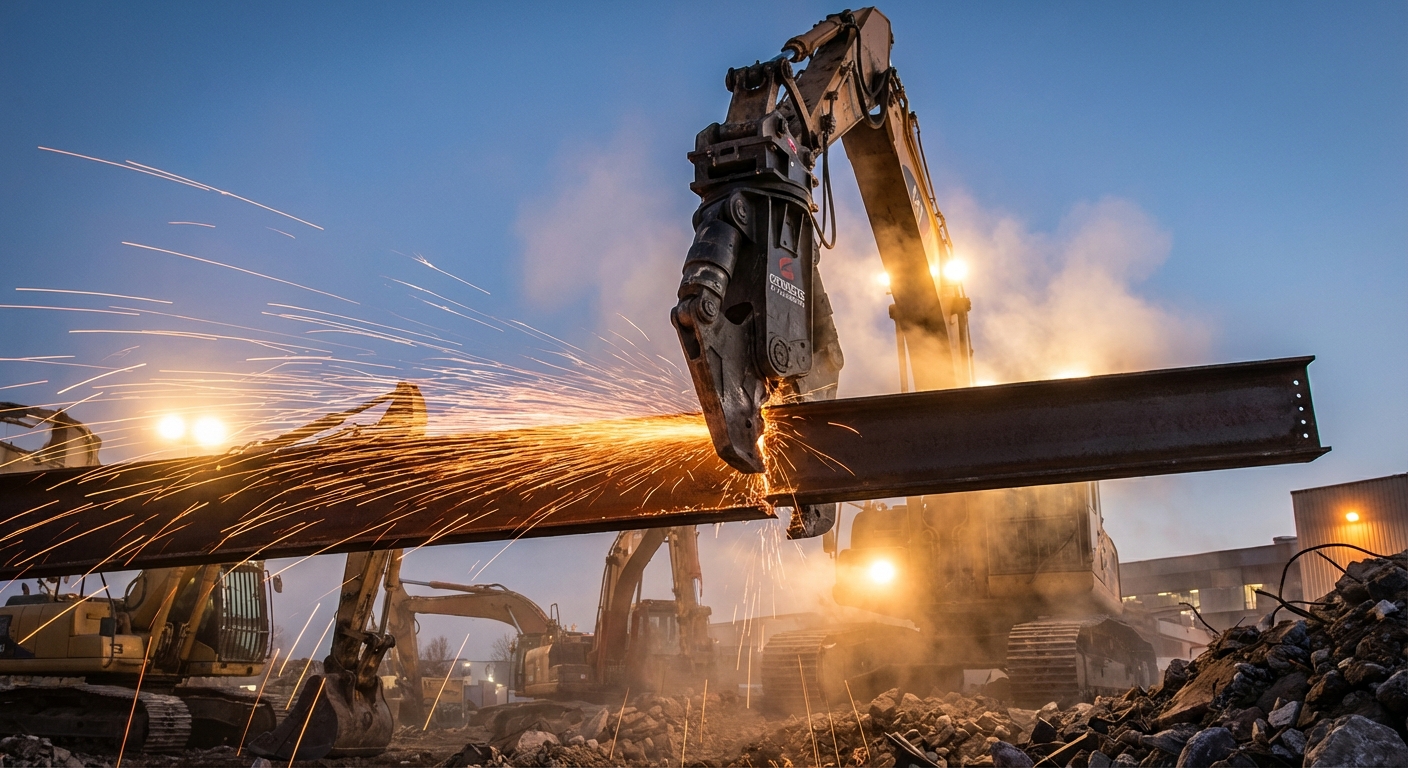
How Paladin Attachments Became the Biggest Name You Might Not Know
With nine brands, a Dover Corporation backing, and attachments on jobsites everywhere, Paladin is quietly one of the most important companies in construction equipment.
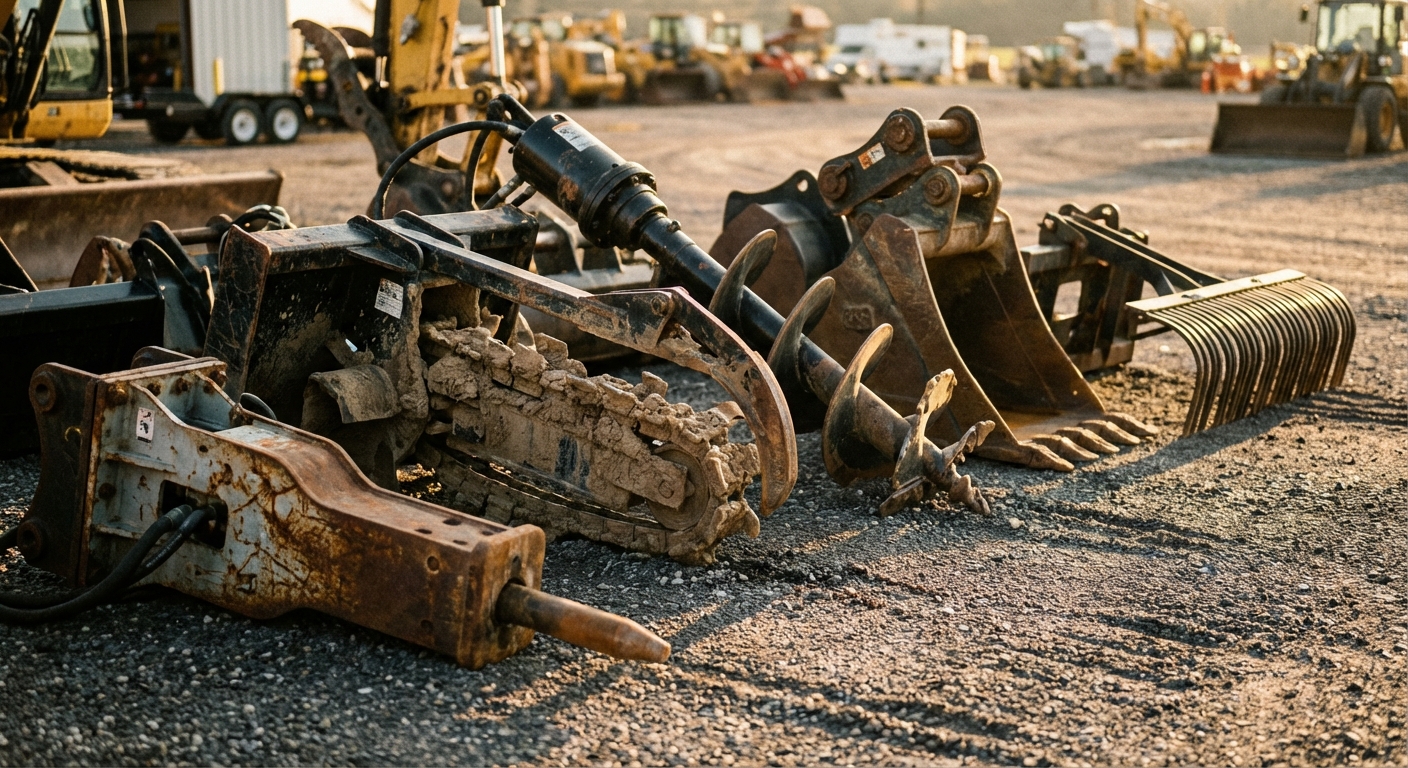
If you run heavy equipment, you’ve probably used a Paladin product without knowing it. The company doesn’t slap its name on the side of excavators or put its logo on Super Bowl ads. But its attachments — sold under brands like Bradco, JRB, Sweepster, Harley, and CP — are bolted onto machines on thousands of jobsites across North America every day.
Paladin Attachments is one of the largest independent attachment manufacturers in the world. Based out of operations spanning the U.S. and Canada, the company makes everything from augers and buckets to mobile shears and specialty couplers. If you’ve ever used a Bradco trencher on a skid steer or swapped buckets with a JRB coupler, you’ve used Paladin iron.
And after Dover Corporation acquired the company in August 2025, Paladin is entering 2026 with something it hasn’t had before: a $9 billion parent company with deep pockets and a stated interest in infrastructure growth.
FieldFix Editor’s Note: Tracking attachments across your fleet is just as important as tracking the machines themselves. FieldFix helps you log maintenance, hours, and expenses for every piece of equipment — attachments included. Know what you’re spending before it surprises you.
Nine Brands, One Company
The thing that sets Paladin apart from most attachment companies is its brand portfolio. Where a typical manufacturer might specialize in one or two product categories, Paladin runs nine distinct brands:
- Bradco — Trenchers, augers, brush cutters, and a wide range of skid steer attachments
- CP (Construction Products) — Hydraulic hammers and demolition tools
- CustomWorks — Engineered-to-order specialty attachments
- CWS — Quick couplers and work tools for excavators
- FFC — Compact equipment attachments, pallet forks, snow pushers
- Harley — Landscape rakes and power boxes (the name is basically synonymous with the product)
- JRB — Couplers and buckets for wheel loaders and excavators
- Strikeforce — Ground engaging tools and wear parts
- Sweepster — Brooms and sweeper attachments
Each brand has its own identity and dealer relationships, but they all run through Paladin’s manufacturing and distribution network. It’s a classic house-of-brands strategy: contractors buy the brand they trust without necessarily knowing who’s behind it.
This approach works because attachments aren’t bought the same way machines are. Nobody goes to a Paladin dealer and asks for “a Paladin.” They ask for a Bradco trencher or a JRB coupler. The individual brands carry the weight in the field.
The Dover Deal Changes the Math
Paladin has changed hands a few times over the years. KPS Capital Partners picked it up in 2011 through International Equipment Solutions Inc. Then came years of bolt-on acquisitions — Kodiak Manufacturing in 2015 for agricultural implements, the CWS and Jewell Manufacturing integrations the same year — all aimed at broadening the product line and filling geographic gaps.
But the Dover Corporation acquisition in August 2025 is a different kind of move. Dover is a diversified global manufacturer with around $9 billion in annual revenue. They bought Paladin to add infrastructure exposure to their Materials Handling group, and they’ve said publicly they plan to invest in the business.
What does that actually mean for the attachment market? A few things.
First, capital. Paladin under private equity ownership was profitable but capital-constrained in the way PE-backed companies often are. Every dollar spent had to justify itself against a near-term return timeline. Under Dover, the investment horizon gets longer. Product development, manufacturing capacity, distribution expansion — all of that gets easier when your parent company isn’t looking to flip you in five years.
Second, distribution reach. Dover operates globally across multiple industrial segments. Paladin has historically been a North American business with some international presence. Dover’s existing relationships and infrastructure could open doors in markets where Paladin’s brands aren’t established yet.
Third, technology integration. Dover has been pushing digital tools and IoT across its portfolio. The attachment market is still largely analog — you bolt it on, you use it, you replace it when it breaks. There’s room for sensor integration, wear monitoring, and predictive maintenance in attachments, and Dover has the engineering bench to push that forward.
Why Attachments Matter More Than You Think
The global construction machinery attachment market is projected to hit $9.49 billion by 2031, up from $7.59 billion in 2026, according to industry research from Mordor Intelligence. That growth rate — around 4.6% annually — might sound modest until you consider what’s driving it.
Compact track loaders are the fastest-growing equipment segment for attachment sales, with demand growing at roughly 7% per year. That tracks with what anyone in the field already knows: compact equipment is eating the world. Machines like the Bobcat T770 or the John Deere 333G are only as useful as the attachments you run on them. A skid steer without attachments is an expensive wheelbarrow.
The aftermarket channel accounts for about 62% of attachment sales. That means most attachment buying happens after the initial machine purchase, driven by operators adding capability or replacing worn-out tools. This is where Paladin’s multi-brand strategy pays off — if you’re already running a Bradco auger and need a brush cutter, there’s a decent chance your dealer carries that too, under the same parent company.
Rental is the other growth area. Attachment rentals are expected to grow at nearly 7% annually through 2031. As rental companies expand their fleets and try to offer more versatile packages, they need reliable attachment suppliers who can deliver volume. Paladin, with its breadth of products and established dealer network, is positioned well for that kind of demand.
The Competitive Picture
Paladin doesn’t operate in a vacuum. The attachment space has a handful of large players and hundreds of smaller ones.
On the big end, you’ve got companies like Epiroc (hydraulic breakers and demolition tools), Caterpillar’s own attachment line (Cat Work Tools), and Komatsu’s integrated offerings. These OEM attachment lines have the advantage of being sold alongside machines through the same dealer, but they’re typically limited to their own equipment ecosystem.
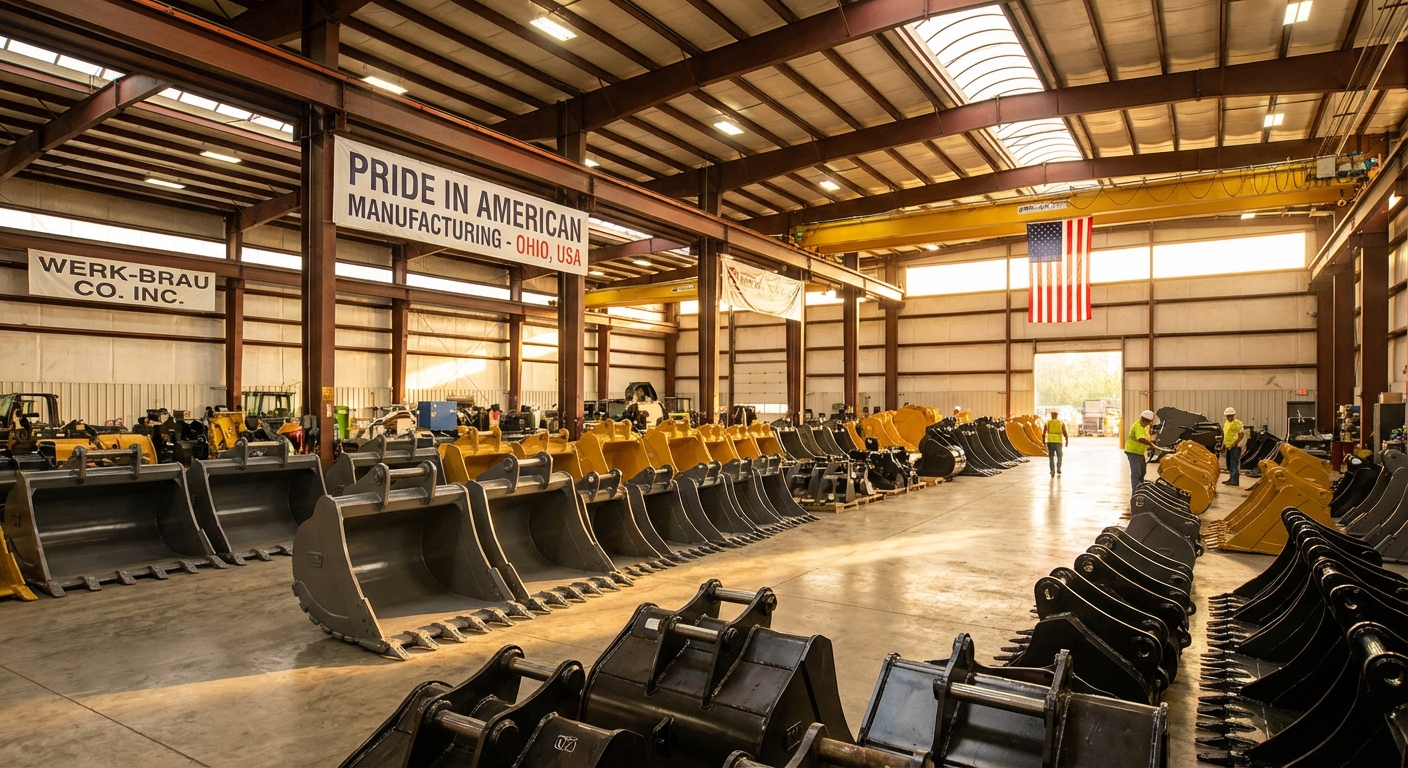
The independent attachment makers — Paladin, Werk-Brau, Craig Manufacturing, and others — compete by being machine-agnostic. A JRB coupler works on multiple loader brands. A Bradco trencher fits different skid steer platforms. That flexibility is valuable for mixed fleets, which describes most small and mid-size contractors.
Where Paladin stands out is breadth. Most independent attachment companies specialize. Werk-Brau is known for buckets and thumbs. Craig Manufacturing focuses on couplers and grapples. Paladin, through its brand portfolio, covers almost every attachment category. That breadth makes them a one-stop-shop for dealers and a preferred supplier for rental companies that need to stock a wide range of tools.
What This Means for Contractors
If you’re running equipment in the field, the Paladin-Dover deal probably won’t change your day-to-day anytime soon. You’ll still buy Bradco or JRB or Harley products through the same dealers, at similar prices.
But over the next few years, watch for a few shifts. More product availability — Paladin has historically had some supply chain gaps, especially for specialty items, and Dover’s manufacturing investment could help close those. Better warranty and support infrastructure as Dover standardizes service across the portfolio. And possibly new products that incorporate sensors or digital tracking, especially for high-wear items like buckets and ground engaging tools.
The bigger picture is that attachment manufacturing is consolidating, just like the rest of the equipment industry. The days of buying from a small regional fab shop are fading — not because those shops aren’t good, but because the economics favor companies with scale, distribution networks, and R&D budgets. Paladin, with Dover behind it, is built for that environment.
For the average contractor, the practical takeaway is simple: pay attention to what you’re bolting onto your machines. Attachments aren’t an afterthought. They’re where a lot of your productivity (and your maintenance budget) actually lives. Whether you’re running Paladin brands or something else, tracking attachment hours, wear, and replacement costs is worth your time.
The companies that treat attachments as strategic assets rather than disposable tools are the ones that get more work done with fewer machines. And that’s a better business model than buying more iron every time you need more capability.