
Fecon Built a Business Around the Work Nobody Can Fake
Fecon is not a general attachment brand with a forestry page tacked on. The Ohio manufacturer has spent decades around mulching heads, dedicated carriers, and the ugly applications where weak equipment gets exposed fast.
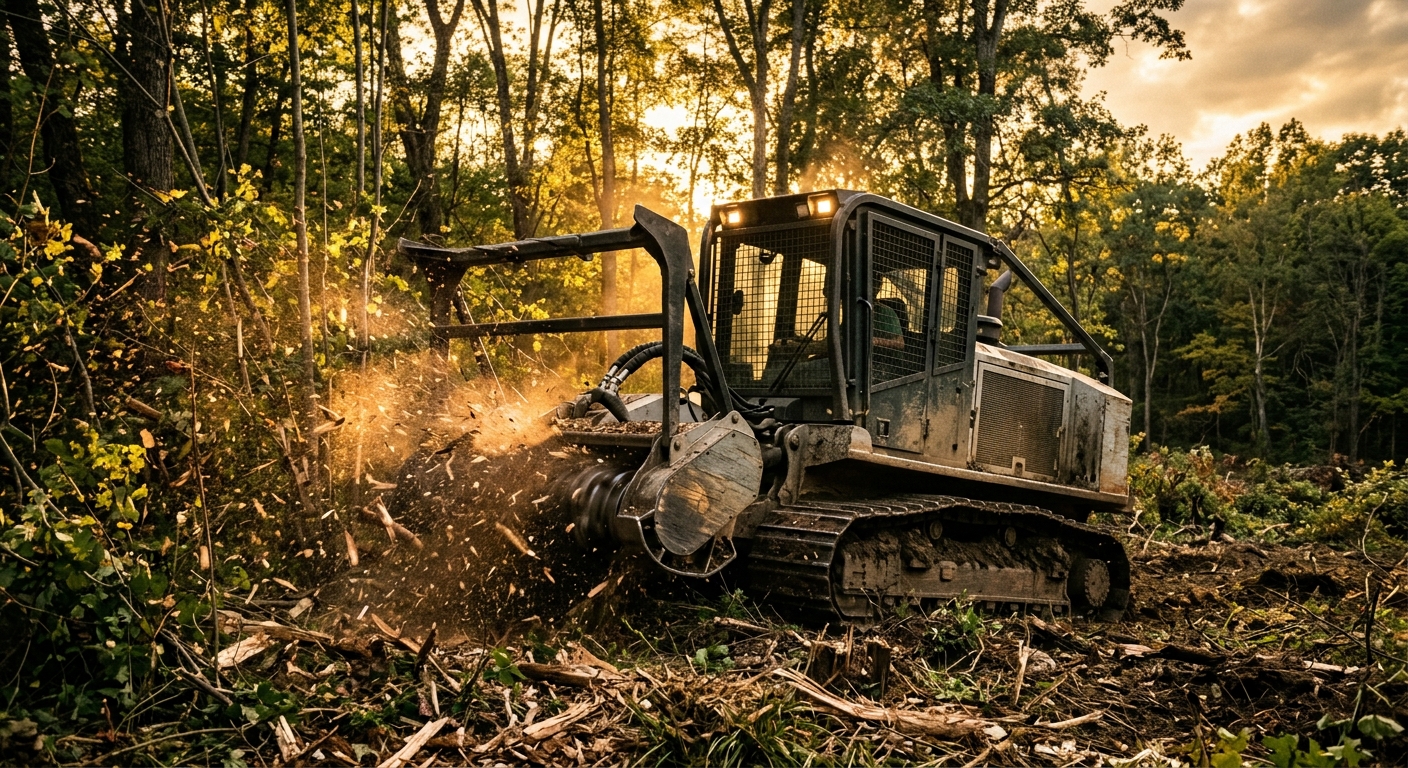
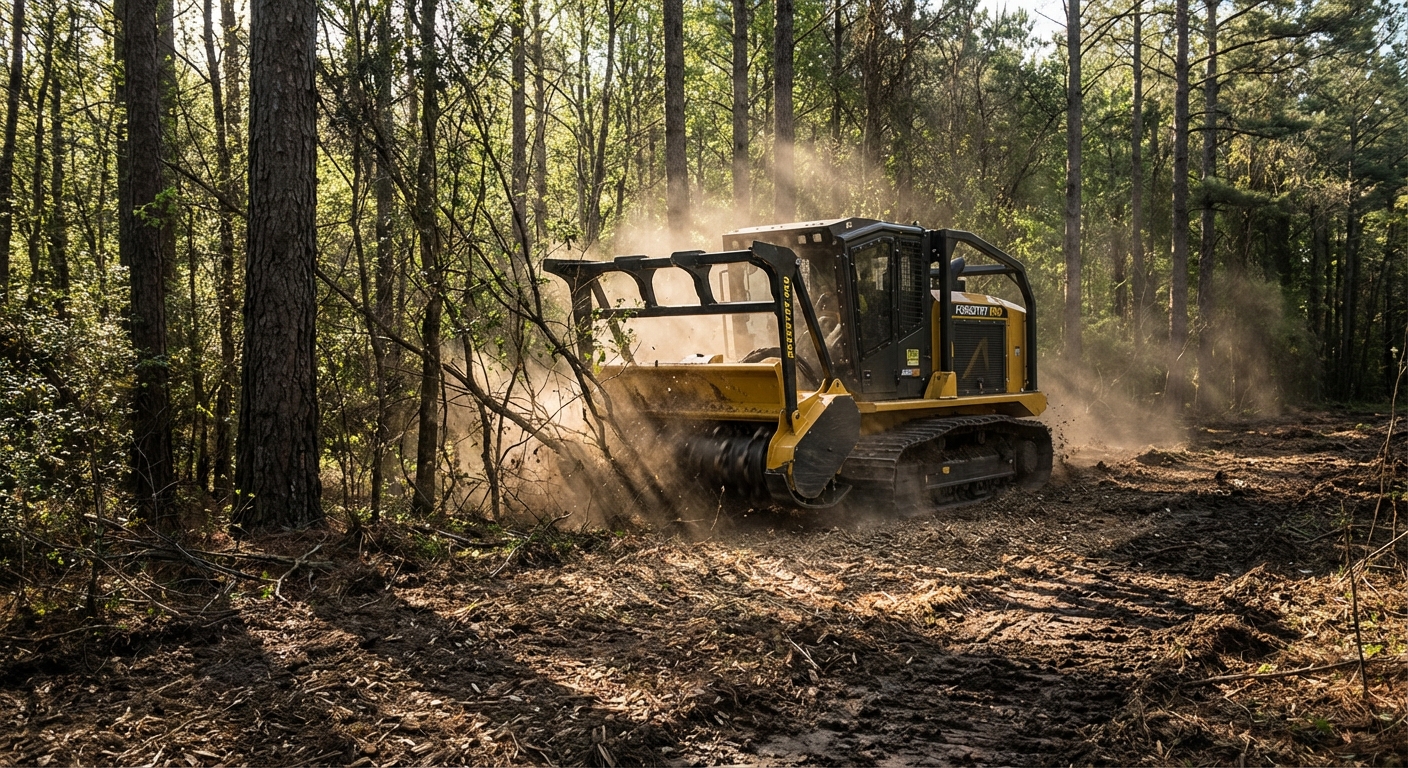
Forestry mulching is a brutal filter.
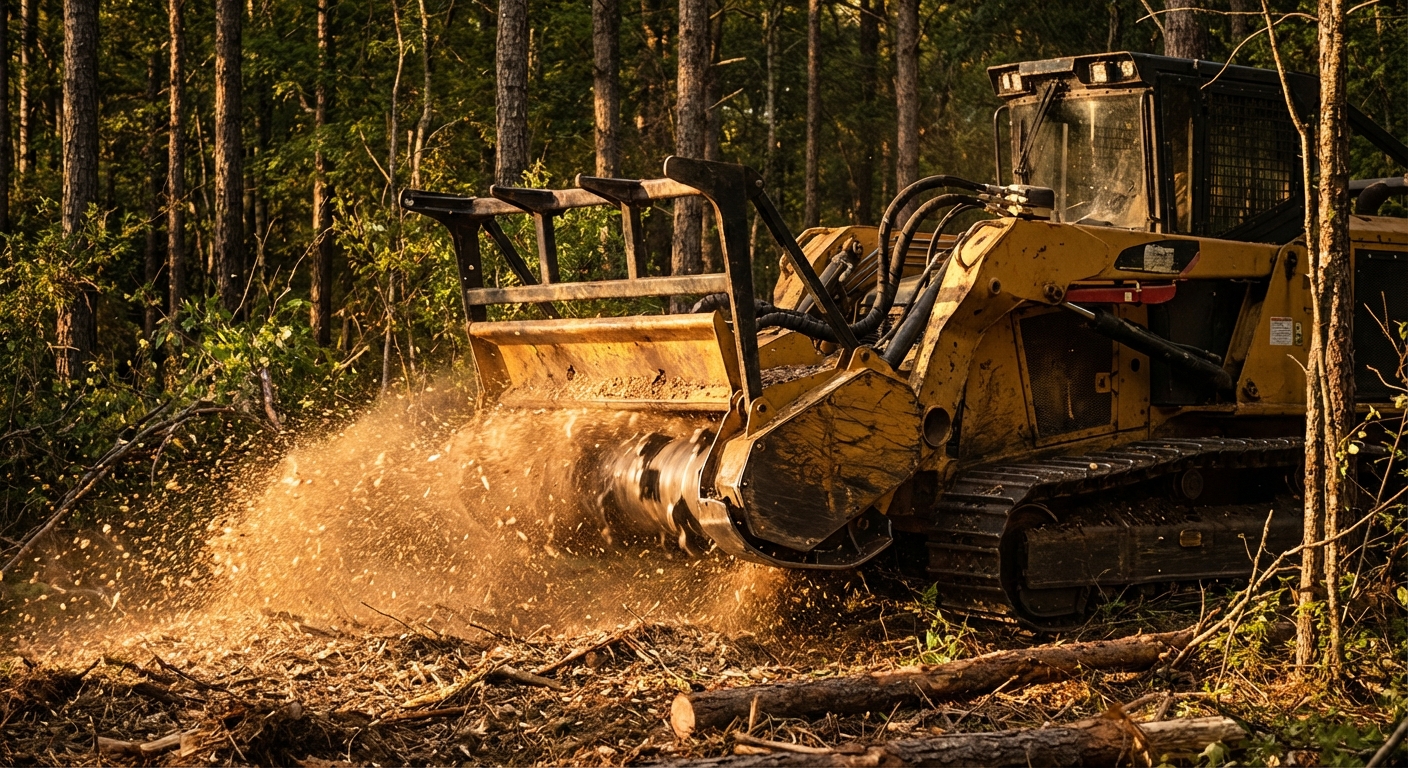
A lot of equipment can look strong on a dealer lot. Put it in saplings, vines, hardwood regrowth, stumps, old fence, rock, heat, dust, slopes, and impatient operators, and the truth shows up fast. Bearings get hot. Teeth disappear. Hydraulic oil tells on weak cooling. Doors rattle loose. The carrier runs out of machine before the head runs out of appetite, or the head is all show and no feed.
That is the world Fecon chose.
The Lebanon, Ohio manufacturer is best known for Bull Hog mulching heads, dedicated FTX mulching tractors, stump grinders, tree shears, grapples, and tools built around land clearing, right-of-way work, vegetation management, fire mitigation, site prep, and utility maintenance. Fecon’s own product pages are organized less like a broad attachment catalog and more like a company that knows exactly where it wants to fight: mulching and vegetation control. You can start with its Bull Hog line here and its tracked carrier lineup here.
That focus matters. Forestry is not a place where a manufacturer can hide behind a pretty spec sheet for long.
FieldFix Editor’s Note: Mulching equipment has a different cost curve than general dirt work. Teeth, knives, belts, filters, hydraulic hoses, fuel burn, and cooling problems can turn a good-looking job into a bad one fast. FieldFix helps contractors track service history, expenses, downtime, and cost per hour so land clearing decisions are based on numbers instead of memory.
Fecon is not chasing every attachment category
There are attachment companies that want a SKU for every machine and every job. That can work. It can also turn a brand into a catalog with a logo on it.
Fecon is narrower than that. Its public lineup centers on clearing and reduction: Bull Hog forestry mulchers, Blackhawk knife rotors, stump grinders, tree shears, bunching shears, grapples, deck mowers, and FTX carriers. The company sells into skid steers, compact track loaders, excavators, tractors, and dedicated mulching tractors, but the common thread is material reduction.
That sounds simple until you look at how different the applications are.
A right-of-way crew wants predictable production and uptime because the work may stretch for miles. A land clearing contractor wants enough aggression to win the job without beating the carrier to death. A municipality may care about roadside maintenance, visibility, and keeping labor needs down. A forestry operator may run in remote areas where a small failure means hours of lost time. A fire mitigation contractor may work in dry, dirty conditions where heat and debris management matter as much as cutting speed.
One mulcher does not solve all of that.
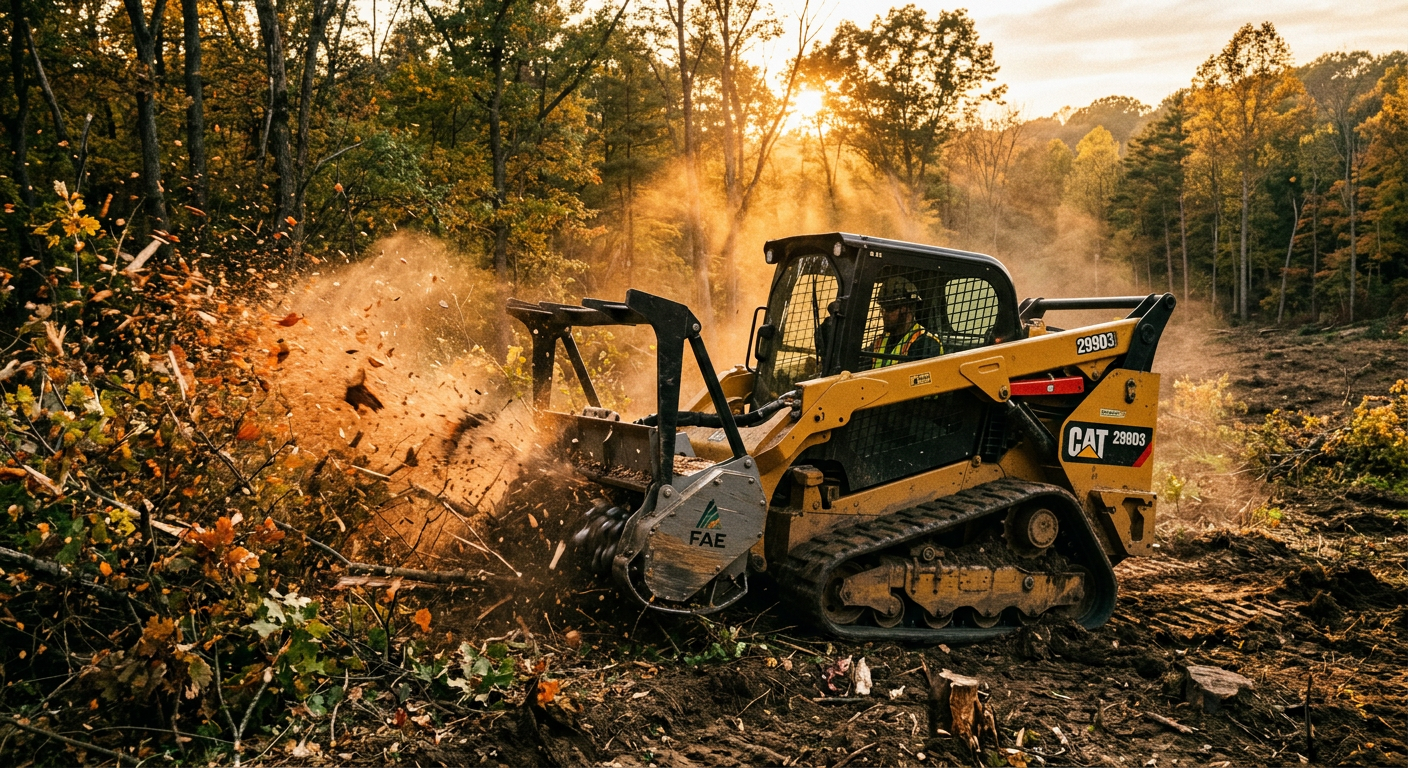
Fecon’s Bull Hog family is split across carrier classes and rotor options, including skid steer and compact track loader heads, excavator heads, PTO units, and high-flow configurations. Its Blackhawk rotor is aimed at operators who want a knife-style cut rather than the more common carbide approach. That split is not cosmetic. Knife rotors can leave a cleaner, finer result in the right material, while carbide tools are usually the safer answer when the job includes dirt, rock, unknown debris, or abrasive conditions.
That is the real buying question in forestry attachments: not “which one is strongest?” but “which failure mode can I live with?”
The head is only half the machine
The mistake contractors make with mulchers is treating the attachment like the whole decision.
It is not.
A mulching head is a hydraulic demand sitting on the front of a carrier. If the carrier does not have enough flow, enough pressure, enough cooling, enough weight, enough protection, and enough traction, the head becomes a very expensive reminder that horsepower claims do not clear land by themselves.
That is why Fecon’s dedicated FTX machines are worth watching even if many contractors will still run mulchers on compact track loaders or excavators. Dedicated carriers exist because mulching punishes general-purpose machines. They are built around cooling, guarding, hydraulic performance, visibility, balance, and service access in a way a standard compact track loader usually is not.
The dedicated carrier is not automatically the right answer. It ties up more capital, narrows the machine’s use case, and has to stay busy. But when a contractor is in vegetation every week, the math changes. Less downtime, less heat stress, better protection, and higher production can matter more than having a carrier that can also grade driveways or move pallets.
For smaller operators, the smarter move may be a high-flow compact track loader with the right head and realistic expectations. For bigger clearing crews, a dedicated carrier can become the thing that separates a land clearing business from a skid steer owner who occasionally takes brush jobs.
Fecon sits in the middle of that decision. It sells the heads for carrier owners, but it also sells the carrier for contractors who want a purpose-built platform. That gives the company a broader view of the job than an attachment-only manufacturer. It has to think about the full system.
Private equity saw the niche value
Fecon was founded in 1992 and is based in Lebanon, Ohio. In early 2022, LFM Capital sold the company to Windjammer Capital Investors. Compact Equipment’s coverage of the deal said Fecon had served forestry and vegetation markets for more than 30 years and had more than 550 dealer customers nationwide at the time. You can read that report here. Lincoln International also published a transaction note on the sale here.
That ownership detail is not inside baseball. It says something about the attachment market.
Niche equipment makers have become more interesting because the best ones are not just selling steel. They are selling application knowledge, dealer relationships, parts demand, and repeat purchases from customers who cannot afford downtime. A good mulcher customer is not a one-time buyer. That customer needs teeth, knives, holders, belts, hoses, bearings, service support, and eventually another head or another carrier.
That aftermarket stream is why specialized attachment companies can be more durable than they look from the outside. A contractor may delay a machine purchase when the market gets soft. He still has to keep the head running if the machine is booked on clearing work.
The risk is that financial ownership can push a company toward growth for its own sake. In this niche, that would be a mistake. Fecon’s value is tied to trust in hard applications. Contractors do not forgive weak forestry equipment because the work is too expensive to redo.
Dealers matter more in forestry
A weak dealer can make a good mulcher look bad.
That is true across equipment, but forestry makes it obvious. The buyer needs help matching head width, rotor type, hydraulic requirements, carrier size, guarding, coupler setup, and intended work. He also needs teeth and wear parts quickly, not someday. If a dealer cannot answer basic application questions or stock the right parts, the brand takes the hit.
Fecon’s 2022 acquisition coverage pointed to a large dealer customer base, and that is one of the company’s more important assets. Forestry contractors talk. A head that runs well will get noticed. So will a parts delay that leaves a crew parked for two days while a customer is waiting.
The best dealer conversations in this category should be uncomfortable in a useful way. What are you actually cutting? How much rock? How much dirt contact? How often will the machine run? Are you trying to finish mow, rough clear, reclaim pasture, clear lots, maintain ROW, or do post-harvest cleanup? Is the operator experienced? What carrier is really under the head? Does it have enough cooling? Is it guarded for the job?
Those questions can cost the sale if the buyer only wants the cheapest number. They can also prevent a very expensive mismatch.
This is where Fecon’s narrow focus helps. A broad attachment seller may have forestry products. A forestry-first seller has seen more ways the job can go wrong.
The market is bigger than land clearing contractors
Forestry mulching used to feel like a specialist’s lane. It still is, but the customer base is wider now.
Utility companies need right-of-way maintenance. Municipalities need roadside and drainage access. Developers need lots opened before dirt work starts. Farmers and landowners want fence lines, invasive growth, and rough acreage reclaimed. Fire mitigation is pulling more attention in dry regions. Solar, transmission, pipeline, and infrastructure work all create vegetation problems before the more glamorous construction equipment shows up.
That does not mean every contractor should buy a mulcher. Plenty should rent, subcontract, or stay away. Mulching is hard on machines and harder on margins when the owner prices it like normal skid steer work.
But demand for vegetation control is not going away. The question is who can do it profitably.
That is why a company like Fecon is interesting. It is not betting on one construction cycle. It is tied to land management, utility work, infrastructure access, fire risk, development, and property maintenance. Those markets move differently, which can give a specialized manufacturer a broader base than its narrow product focus suggests.
The buying lesson is discipline
Fecon’s place in the market is a reminder that specialization cuts both ways.
For the manufacturer, focus creates credibility. Fecon is not trying to be everything to every contractor. It is trying to own the messy world of cutting, grinding, shredding, and reducing material that most general-purpose equipment was never built to enjoy.
For the buyer, specialization raises the bar. A forestry mulcher is not a bucket. It is a production tool with a constant appetite for maintenance and a long list of ways to become unprofitable if matched poorly.
The right question is not whether Fecon makes tough equipment. The right question is whether the head, rotor, carrier, dealer, parts plan, operator, and job type all line up.
When they do, mulching can be a strong business. When they do not, it becomes a loud, dusty way to turn revenue into repairs.
That is the part nobody should fake.