
AMI Attachments Is Betting on Welding Capacity, Not Flash
The Ontario attachment maker just opened a second facility. The move says a lot about where the excavator and wheel loader attachment market is headed.
AMI Attachments is not the loudest name in construction equipment. That may be the point.
The Hawkesville, Ontario manufacturer sits in a part of the market that rarely gets the same attention as machines with engines: buckets, couplers, thumbs, rakes, grapples, loader tools, and specialty attachments. Operators notice those parts when they work. Owners notice them when they crack, twist, miss fitment, or sit on backorder while a paid-off machine waits for the right tool.
AMI has built its business around that less glamorous side of the fleet. According to the company’s about page, AMI was founded in 2001 by Steve Frey as a manufacturer and marketer of construction equipment attachments. The company says it now has more than 150 employees, a head office and manufacturing facility in Ontario, and a North American customer base served through construction equipment dealers. Heavy Equipment Guide’s company listing describes AMI as a manufacturer of attachments for excavators, backhoes, wheel loaders, and other heavy construction equipment.
That sounds straightforward. It is also where the attachment business is getting more interesting. Contractors are asking existing machines to do more kinds of work. Dealers need lines that can move without endless handholding. Rental yards want durability and broad fitment. And owners, especially the small and mid-size ones, are trying to squeeze more production out of the iron they already own.
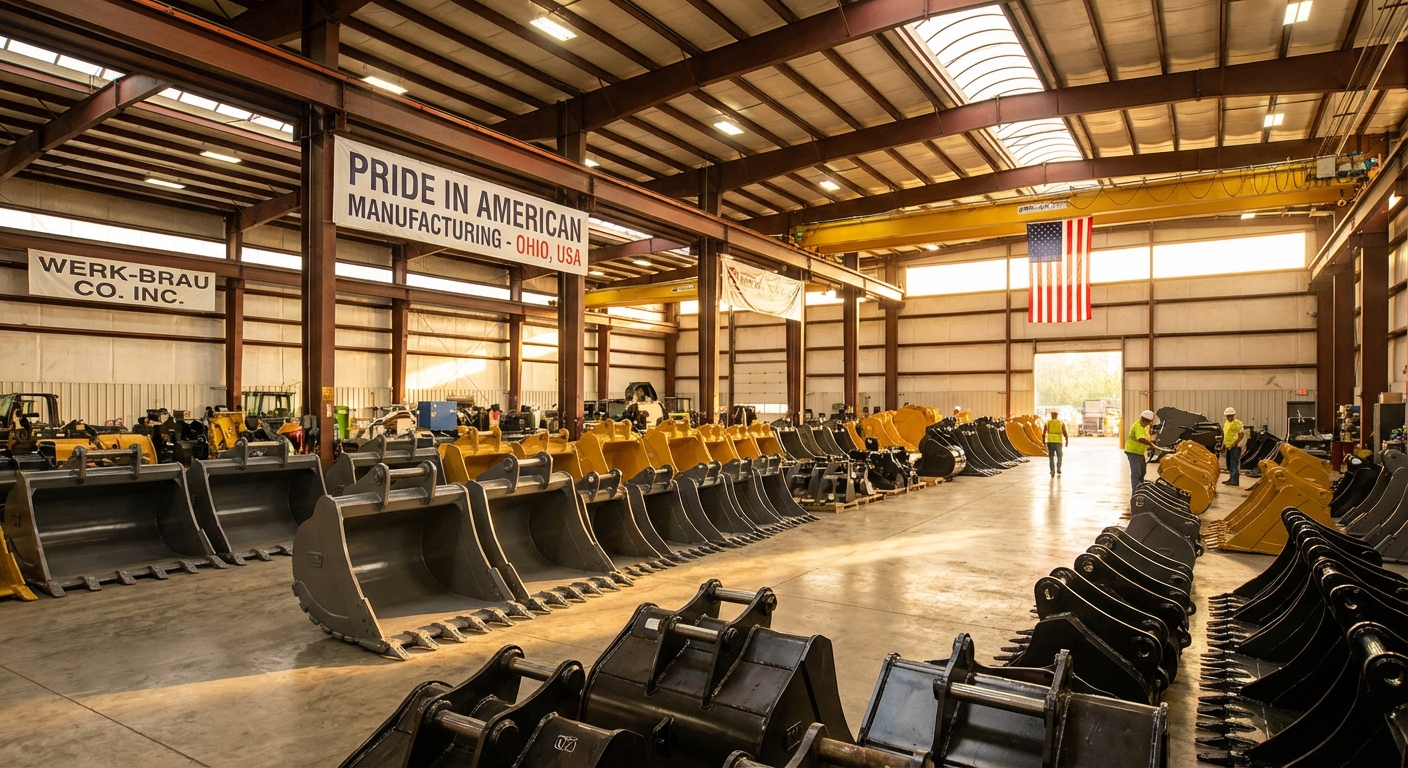
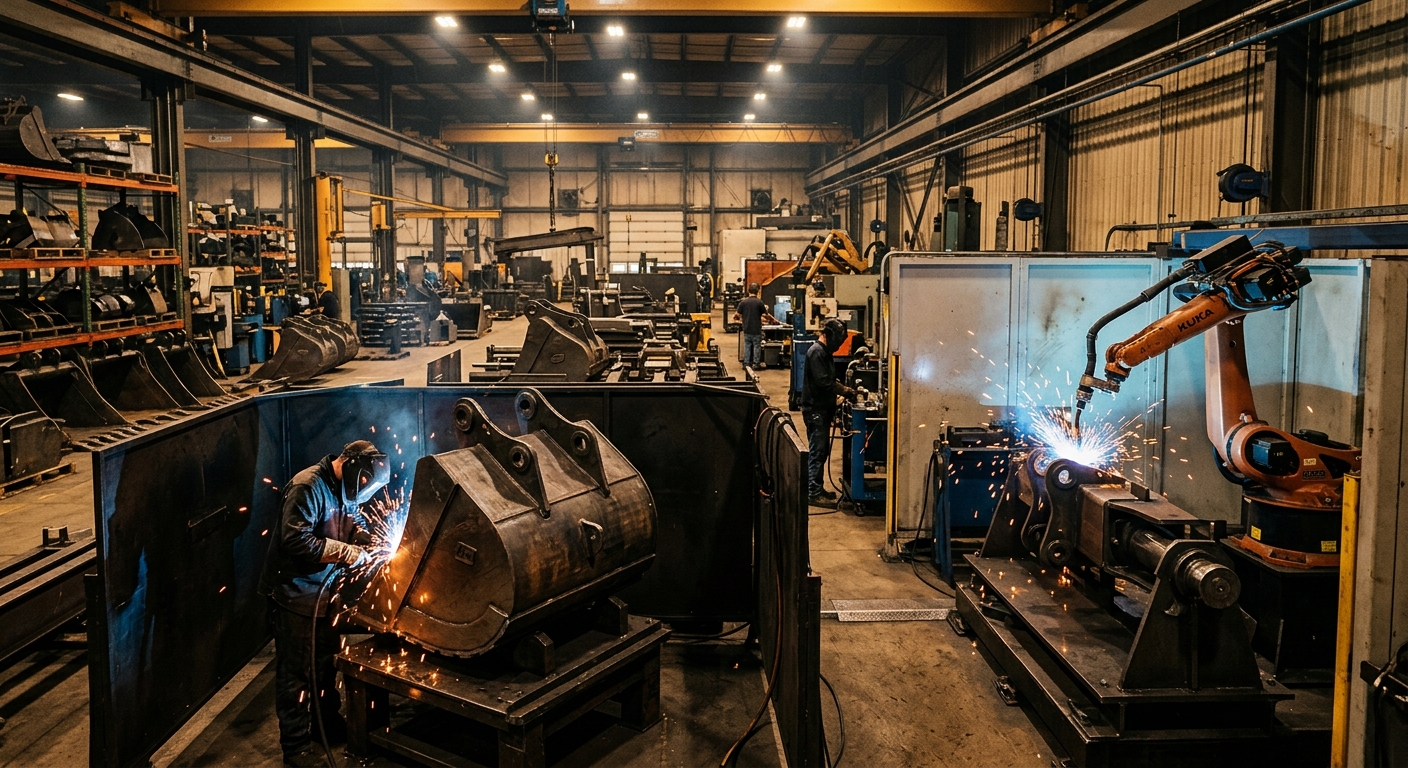
AMI’s recent expansion is a useful signal. The company announced that it opened a second manufacturing facility in Elmira, Ontario, adding 22,000 square feet of space and increasing welding capacity by 15 percent. The new site includes 17,800 square feet of manufacturing space, 4,200 square feet of office space, 10 manual weld bays, four robotic welding centers, and two service bays. AMI said more than 30 employees will be based there, with 10 new roles created.
That is not a hype move. It is a capacity move. In attachments, that matters.
FieldFix Editor’s Note: Attachments can quietly make or wreck machine economics. If a bucket, coupler, grapple, or rake changes how fast a crew works, track it against machine hours, repair notes, and job margin. FieldFix helps owners connect equipment history to real cost-per-hour decisions instead of treating every attachment as just another line on the invoice.
Attachments have become fleet strategy
A contractor used to buy attachments in a fairly simple way. Get the bucket that came with the machine. Add a thumb if the excavator needed one. Buy a snow pusher, rake, forks, or grapple when a specific job called for it. The machine was the main purchase. The attachment was support gear.
That view is dated.
Today, the attachment often decides whether the machine can do the job at all. A compact excavator with the right coupler and bucket package can move between trenching, grading, utility cleanup, hardscape prep, and demolition support. A wheel loader with the right coupler, fork carriage, bucket, and snow tool becomes a year-round machine instead of a seasonal loader. A skid steer or compact track loader with a proper rake, grapple, broom, auger, or breaker can cover work that used to require another crew or a rented specialty machine.
The economics are obvious. A contractor may not be ready to add another excavator. But they might be willing to buy a better attachment package if it lets the machine bill more hours or finish jobs faster. Dealers understand this too. Attachments help sell machines, but they also help keep customers tied to the dealership after the machine sale.
AMI is positioned right in that middle ground. Its product mix, shown across the company’s home page, includes excavator buckets, the AXXIS RC rotating coupler, tilt buckets powered by RAMCAM, OilQuick wheel loader couplers, Graptor buckets, tiltrotators, XMOR mining buckets, rakes, and Jawbone multipurpose buckets. That range says AMI is not chasing one narrow category. It is trying to cover the practical places where attachments change how the carrier earns.
The interesting part is the split between basic and advanced tools. Digging buckets, couplers, thumbs, and loader attachments are bread-and-butter products. Tiltrotators, rotating couplers, protected hydraulic cylinders, high-production buckets, and lighter high-capacity bucket designs push the conversation toward productivity and operator control. That is where the attachment market has been moving.
Welding capacity is the unsexy bottleneck
AMI’s Elmira announcement leads with square footage and welding capacity. That tells you where the pain is.
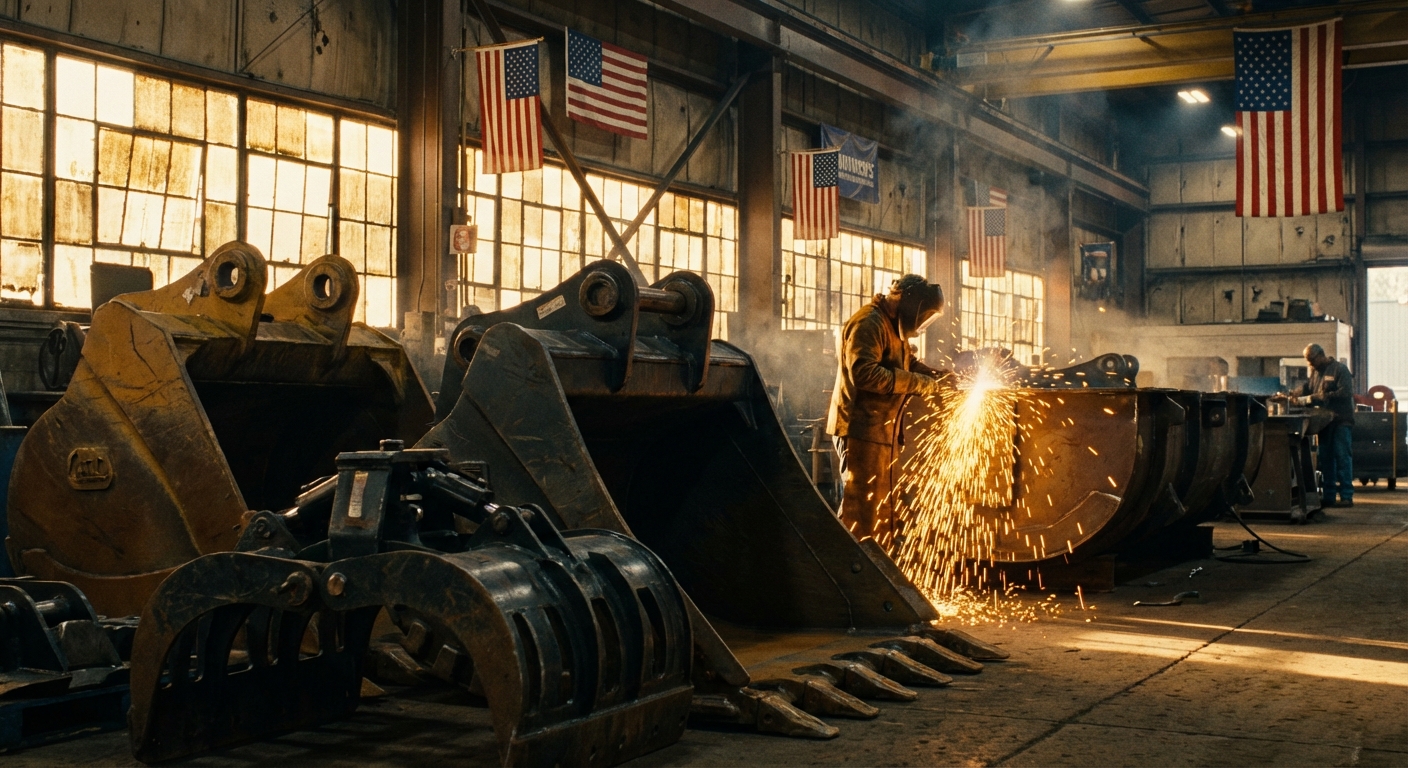
Attachment manufacturing is not just design work. It is steel, cutting, forming, machining, welding, fitting, finishing, paint, quality control, and shipping. When demand rises, the bottleneck is often not the brochure or the CAD model. It is how many qualified weldments can move through the plant without quality slipping.
That is why a 15 percent welding-capacity increase deserves attention. It does not sound huge. But for a company with dealer commitments and custom-order pressure, a 15 percent improvement can change lead times, responsiveness, and how confidently the sales team can say yes.
AMI’s new Elmira site has both manual weld bays and robotic welding centers. That mix is worth noting. Robotic welding can help with repeatable components and production consistency. Manual welding still matters for complexity, lower-volume runs, custom work, repair, fit-up judgment, and the realities of attachment manufacturing. The market likes to talk as if automation replaces skilled labor cleanly. In fabrication, the better answer is usually more boring: automate the repeatable work, keep experienced people close to the problems, and do not pretend every weldment is the same.
For dealers and contractors, that back-end capacity shows up as availability. A good attachment that cannot arrive when the machine needs to go to work is not a good attachment for that job. An attachment maker can have the right product catalog and still lose business if lead times drag or support gets thin.
AMI’s expansion suggests the company sees demand outpacing the old footprint. It also suggests management believes the attachment market has enough depth to justify more fixed manufacturing capacity, not just outsourced overflow or a temporary production push.
Dealer channels still matter
AMI is a dealer-facing company. The firm’s about page says dealer inquiries are welcome from OEM construction equipment dealers, and it lists territory managers covering large parts of North America. That matters because attachment sales are often local and relationship-heavy.
A contractor buying a coupler, bucket, or wheel loader attachment wants compatibility first. Will it fit the carrier? Will the hydraulics work? Does the pin grabber match the fleet? Can the dealer support it if something is off? Is there a service path after delivery? A slick product video helps, but it does not replace a parts counter, a sales rep who knows the machines, and a manufacturer that answers the phone.
That gives mid-size attachment makers a real lane. They do not have to outspend the global OEMs. They need to be dependable enough that dealers trust the product and responsive enough that contractors do not regret the purchase.
AMI’s management structure points toward that model. The company lists leadership across operations, design and engineering, sales, business development, and market development. Several senior people have long tenures with the firm, including operations and engineering leaders who started in the early 2000s. That kind of continuity matters in a category where institutional knowledge shows up in small details: pin geometry, wear points, cylinder protection, weld sequencing, edge options, and the little fitment choices that operators either love or curse.
The custom work is the hard part
The word “attachment” makes the category sound standardized. It is not.
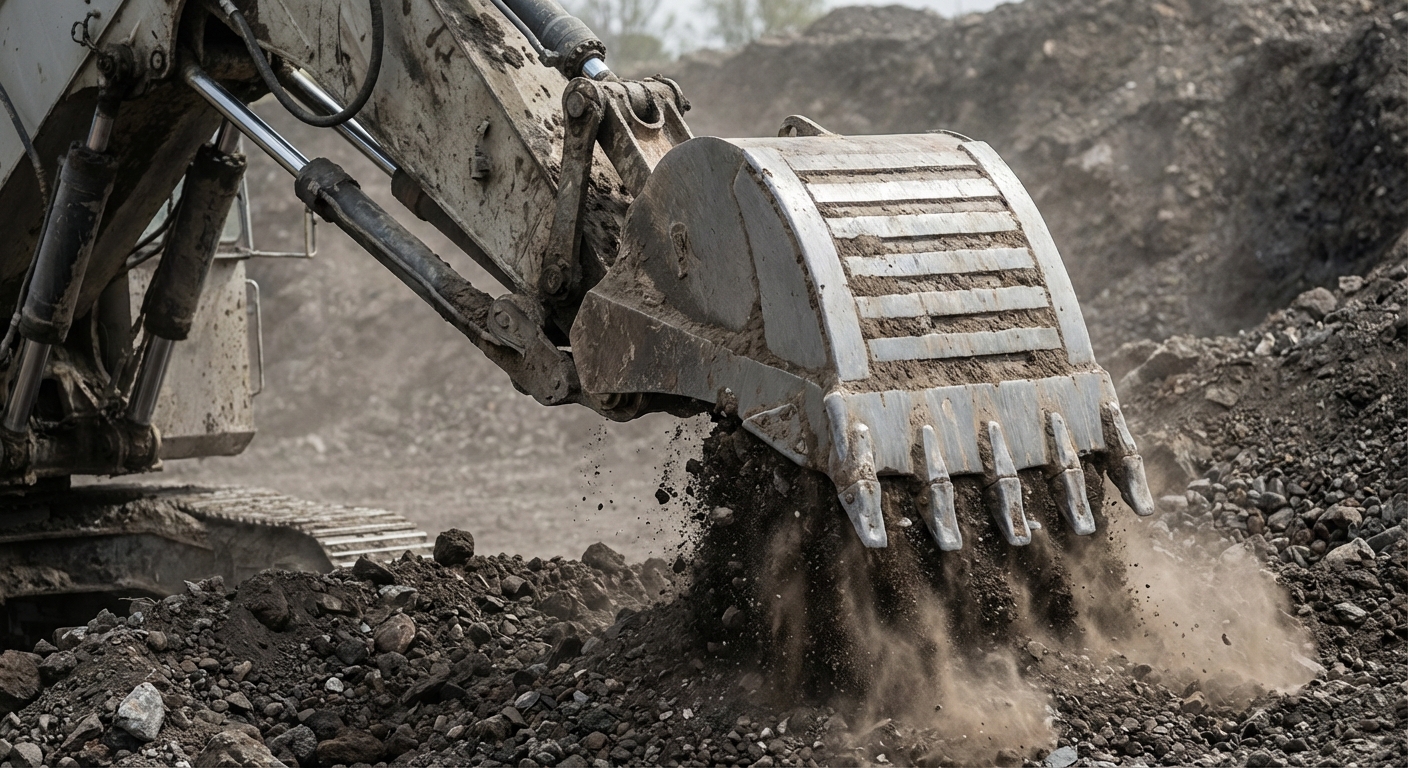
A bucket for a compact excavator is different from a bucket for a production excavator. A wheel loader tool has different forces, use cycles, and customer expectations than a backhoe attachment. Mining and quarry buckets live in a different world than landscaping rakes. Couplers change geometry. Hydraulics change the buying decision. Carrier weights, linkage, pin size, flow, and the kind of material being moved all matter.
That is where companies like AMI earn or lose trust. A contractor may start with a standard product, but real fleets are messy. Machines are mixed across brands and ages. Operators have preferences. Jobs create weird requirements. Dealers need answers that are specific enough to protect the customer and simple enough to sell.
AMI’s public product lineup shows that it is trying to solve across several job types: general construction, demolition and recycling, environmental work, forestry, landscaping, material handling, mining and quarry, road work, snow and ice, oil and gas, and waste handling. That breadth is useful, but it also raises the bar. A company cannot fake its way across that many categories for long. The products either survive field use or they come back with broken welds, bent steel, and angry phone calls.
The expansion into a second facility should help if AMI can keep quality control tight. More weld bays are only valuable if the finished tools stay consistent. In attachments, reputation is built slowly and damaged quickly. One bad batch of buckets or a coupler support issue can follow a brand through dealer conversations for years.
Why AMI is worth watching
AMI is interesting because it is not trying to be a full-line machine maker. It is operating where a lot of equipment decisions now get made: after the machine purchase, when the owner asks how to make the carrier produce more revenue.
That is a healthier place than it used to be. Contractors are more cautious about adding big-ticket machines. Financing costs are higher than the cheap-money era. Used iron is not the easy bargain it once looked like. Labor is tight. In that kind of market, attachments become one of the more practical ways to add capability without adding another engine, another insurance policy, another trailer problem, and another machine payment.
That does not mean every attachment purchase is smart. Plenty of owners buy tools for work they have not sold yet. A specialty bucket or rotating coupler can sit just as uselessly as a parked excavator if the owner does not have a plan to feed it. But when the work is real, the right attachment can change the whole production equation.
AMI’s second facility is a bet that enough contractors and dealers are making that calculation. More welding capacity, more service space, more employees, and more production room are not exciting in the way a new machine launch is exciting. They are better than that. They are evidence that the attachment business is growing up.
The companies that win this category will not just have the biggest catalogs. They will ship reliably, support dealers, protect quality as volume grows, and build tools around the way operators actually use machines. AMI has put more steel-making capacity behind that idea. Now the market gets to judge the results.