State-by-State Equipment Weight and Permit Regulations: A 2025 Compliance Guide
Moving heavy equipment across state lines requires navigating a complex web of weight limits, permit requirements, and escort regulations that differ significantly from one jurisdiction to another.
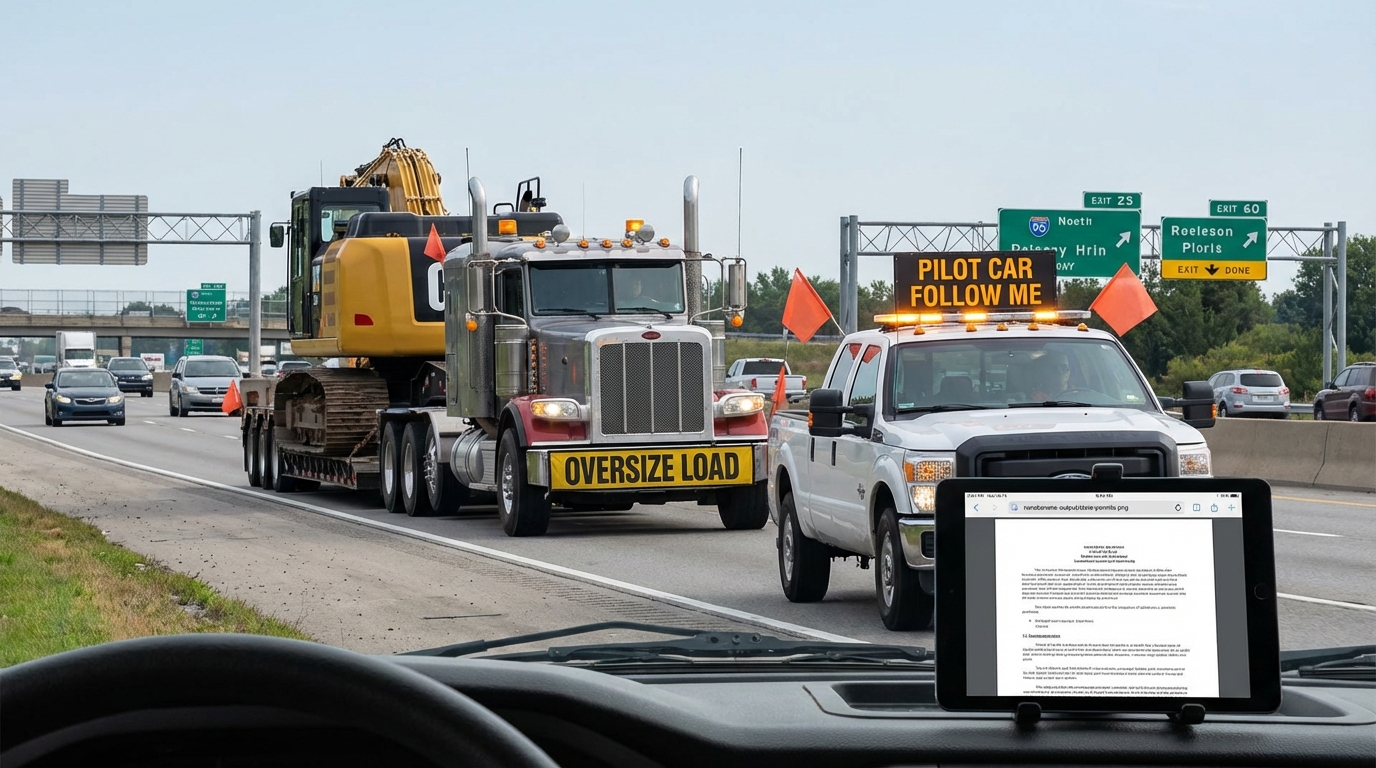
Transporting heavy construction equipment between states requires navigating a complex patchwork of regulations. Weight limits, dimensional restrictions, permit requirements, and escort vehicle rules all vary by jurisdiction, creating compliance challenges for contractors operating across state lines.
This guide provides an overview of key regulatory considerations and strategies for managing multi-state equipment transport effectively.
Federal Framework and State Authority
The federal government establishes baseline standards for interstate highways, while states retain significant authority over transportation regulations:
Federal Bridge Formula
The federal bridge formula (Federal Bridge Formula B) sets maximum weight limits based on axle spacing to protect highway infrastructure. The formula allows gross vehicle weights up to 80,000 pounds on Interstate highways, with specific limits per axle and axle group.
However, states can set lower limits on state highways not designated as part of the Interstate system, and many do.
Grandfather Rights
Some states have “grandfather rights” that allow higher weights on certain routes based on historical usage patterns predating federal standards. These provisions benefit established operations but create confusion for contractors unfamiliar with local exceptions.
State Highway Authority
States exercise broad authority over non-Interstate routes, resulting in significant variation:
Gross weight limits: Range from 80,000 to over 164,000 pounds depending on state and route.
Axle weight limits: Vary from 20,000 to 24,000 pounds for single axles.
Dimensional limits: Height, width, and length restrictions differ substantially.
Regional Permit Agreements
Several regional agreements simplify permit acquisition for multi-state operations:
Western Regional Permit Agreement
The Western Regional Permit Agreement covers Arizona, Colorado, Idaho, Kansas, Montana, Nebraska, Nevada, New Mexico, North Dakota, Oklahoma, Oregon, South Dakota, Utah, Washington, and Wyoming. A single permit covers movement through all participating states for qualifying loads.
Benefits include:
- Reduced administrative burden
- Consistent requirements across participating states
- Faster permit processing
- Cost savings compared to individual state permits
Other Regional Programs
Additional regional programs exist for specific corridors or equipment types:
WASHTO Agreement: Western Association of State Highway and Transportation Officials coordinates regional permitting.
Multi-State Pilot Programs: Various pilot programs test expanded regional coordination.
Bilateral Agreements: Individual states maintain agreements with neighboring jurisdictions.
Contractors should investigate regional programs covering their typical operating areas.
State-Specific Considerations
Regulations vary significantly across key states:
Texas
Texas allows some of the highest weights nationally:
Routine permits: Available for oversize/overweight loads up to 254,300 pounds gross weight.
Super-heavy permits: Special provisions for extremely heavy loads with enhanced requirements.
Online permitting: Texas DOT offers efficient online permit systems.
California
California maintains relatively restrictive limits:
Weight limits: Federal limits apply on Interstate routes; state routes may have lower restrictions.
Caltrans permits: Required for oversize/overweight movements on state highways.
Escort requirements: More restrictive escort requirements for larger loads.
New York
New York imposes specific requirements:
Permit processing: Longer processing times than many states.
Special hauling permits: Required for various equipment types.
NYC restrictions: Additional restrictions within New York City.
Illinois
Illinois has notable provisions:
Toll roads: Different permit requirements for toll roads versus other routes.
Seasonal restrictions: Spring weight restrictions on certain routes.
Local restrictions: Counties and municipalities may impose additional requirements.
Pennsylvania
Pennsylvania presents unique challenges:
Multiple agencies: Different agencies handle different routes and equipment types.
Bridge restrictions: Extensive bridge-specific weight restrictions.
Posted roads: Many roads posted below legal limits.
Permit Types and Requirements
Understanding permit categories helps plan equipment movements:
Single-Trip Permits
Most oversize/overweight equipment movements require single-trip permits specifying:
- Origin and destination
- Specific route
- Movement dates
- Load dimensions and weights
- Escort requirements
Processing times range from hours to weeks depending on load complexity and state requirements.
Annual Permits
For frequent operations, annual permits reduce administrative burden:
Blanket permits: Cover multiple trips within specified parameters.
Blanket permits: Allow movements without individual trip authorization.
Cost efficiency: Annual fees typically justify for five or more similar movements.
Superload Permits
Extremely heavy or large loads require enhanced permitting:
Engineering reviews: Route analysis for bridge capacities and clearances.
Escort requirements: Enhanced escort and sometimes law enforcement accompaniment.
Time restrictions: Movement may be limited to specific hours or days.
Advance notice: Extended lead times for permit processing.
Escort Vehicle Requirements
Escort requirements vary dramatically:
Pilot Car Requirements
States specify when pilot cars are required:
Width triggers: Commonly required above 12-14 feet wide.
Length triggers: Often required above 100-120 feet.
Height triggers: Sometimes required for tall loads.
Weight factors: Some states require escorts based on weight.
Pilot Car Specifications
Requirements for escort vehicles include:
Signage: “OVERSIZE LOAD” or equivalent signage with specific dimensions.
Lighting: Warning lights (amber rotating or strobe).
Flags: Fluorescent flags of specified size.
Communication: Radio communication between escort and load.
Escort Vehicle Operators
Operator requirements vary:
Training: Some states require certified pilot car operators.
Licensing: May require specific endorsements or certifications.
Insurance: Minimum insurance requirements may apply.
Planning Multi-State Movements
Effective planning reduces delays and costs:
Route Analysis
Before committing to equipment transport:
Identify restrictions: Research weight limits, height restrictions, and bridge limitations along potential routes.
Evaluate alternatives: Compare primary and alternate routes for permit requirements.
Consider timing: Seasonal restrictions, construction zones, and event impacts affect routing.
Permit Acquisition Strategy
Systematic permit acquisition includes:
Start early: Allow adequate processing time, especially for complex loads.
Use appropriate resources: Permit services, trucking associations, and technology tools facilitate permit acquisition.
Coordinate across states: Ensure permits from all states align for continuous movement.
Contingency Planning
Equipment transport faces uncertainties:
Weather delays: Have flexibility in permit dates when possible.
Route changes: Identify alternative routes and associated permit requirements.
Equipment issues: Plan for potential breakdowns en route.
Technology and Permit Management
Modern tools simplify permit management:
Online Permitting Systems
Most states now offer online permit applications:
Real-time issuance: Many routine permits available within hours.
Account management: Track permit status and history.
Payment processing: Electronic payment simplifies transactions.
Permit Management Software
Commercial software platforms provide:
Multi-state integration: Single interface for multiple state systems.
Route optimization: Identify routes with fewest restrictions.
Compliance tracking: Monitor permit status and expiration.
GPS and Telematics
Technology supports permit compliance:
Route tracking: Verify compliance with permitted routes.
Weight documentation: Support weight verification if challenged.
Electronic permits: Some states allow electronic permit display.
Enforcement and Penalties
Understanding enforcement helps prioritize compliance:
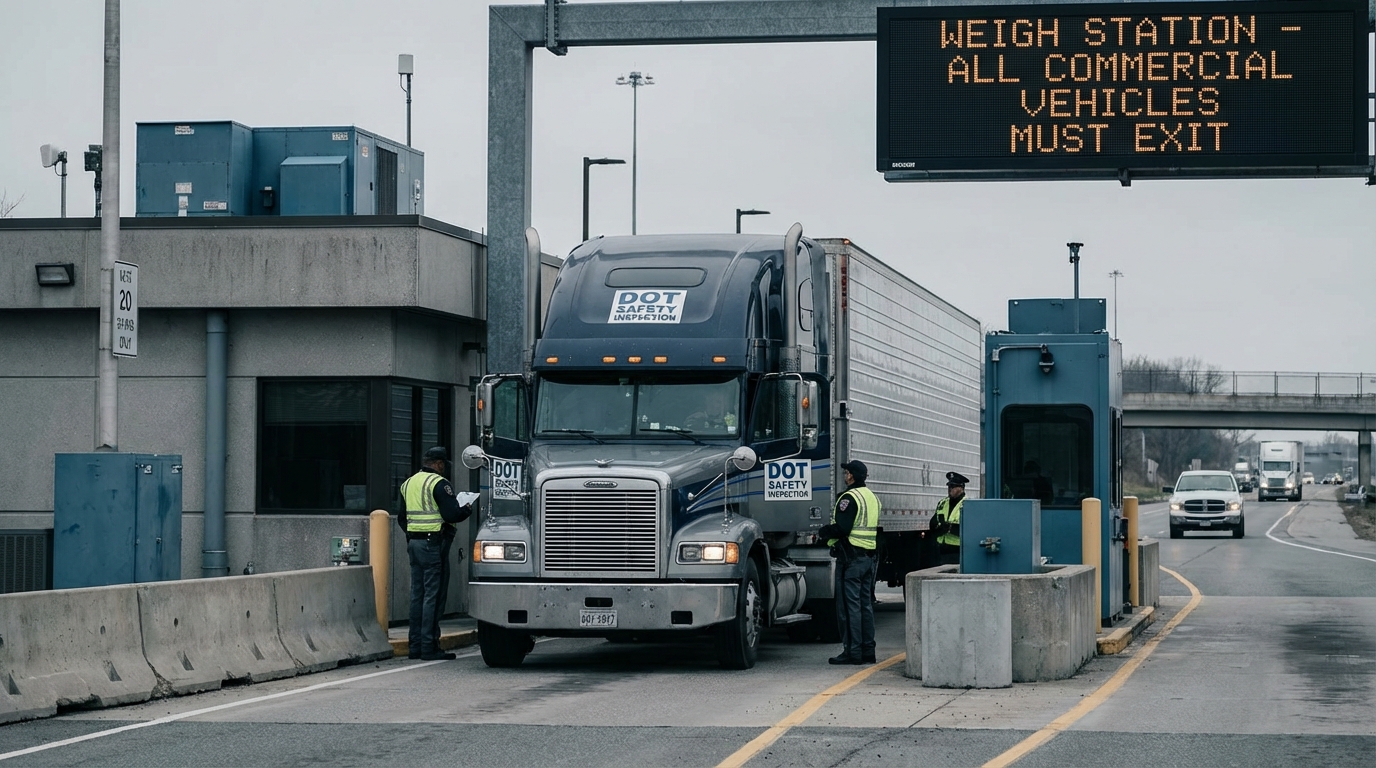
Weigh Stations
Fixed and portable weigh stations verify compliance:
Pre-clearance programs: Programs like PrePass allow qualified carriers to bypass some stations.
Permit verification: Officers check for valid permits and compare to actual loads.
Dimension verification: Physical measurement of oversize loads.
Roadside Enforcement
Officers conduct roadside enforcement:
Portable scales: Used for weight verification anywhere.
Document checks: Review of permits, licenses, and logs.
Safety inspections: May combine permit enforcement with safety inspection.
Penalties
Non-compliance consequences include:
Fines: Overweight violations often assessed per pound over limit.
Permit fees: May require purchasing required permits plus penalties.
Delay costs: Loads may be held until compliance achieved.
Equipment impoundment: Serious violations can result in load detention.
Best Practices
Successful multi-state equipment transport requires:
Know before you go: Research requirements before committing to transport.
Build relationships: Develop relationships with permit offices and transport services.
Document everything: Maintain complete records of permits, weights, and routes.
Plan for exceptions: Have contingency plans for route changes and delays.
Stay current: Regulations change; maintain awareness of updates.
Looking Ahead
State permit harmonization continues advancing through regional agreements and technology integration. Federal pilot programs exploring expanded regional coordination may further simplify multi-state operations.
However, infrastructure concerns—particularly bridge conditions—may result in new restrictions in some areas. Contractors should monitor both harmonization efforts and potential new limitations affecting their operations.
For related coverage, see our analysis of DOT commercial vehicle compliance and equipment transport technology.