Caterpillar Unveils Next-Generation Engine Platform for 2027 Equipment
Cat's new C-series engines promise 12% fuel efficiency gains and Tier 5-ready architecture. Here's what contractors should expect from the transition.
Caterpillar has announced a comprehensive next-generation engine platform that will power the company’s construction and mining equipment beginning in late 2027. The new C-Series architecture represents Caterpillar’s most significant engine redesign in two decades, delivering substantial fuel efficiency improvements while positioning machines for anticipated Tier 5 emission standards.
The announcement provides important visibility into the equipment technology pipeline, helping contractors plan procurement and fleet strategies.
Platform Overview
Caterpillar’s new engine family spans five displacement classes, covering equipment from compact machines to large mining trucks:
| Engine | Displacement | Power Range | Target Applications |
|---|---|---|---|
| C4.8 | 4.8L | 75-175 hp | Compact equipment, small excavators |
| C7.4 | 7.4L | 150-340 hp | Medium equipment, loaders, excavators |
| C11 | 11.0L | 300-500 hp | Large excavators, dozers, haul trucks |
| C15 | 15.0L | 425-700 hp | Mining equipment, large dozers |
| C18 | 18.0L | 600-850 hp | Large mining trucks, production equipment |
The architecture emphasizes modularity, with shared components across displacement classes reducing manufacturing complexity and parts inventory requirements. Common control systems, emissions hardware, and serviceability features span the entire range.
“We’ve designed this platform for the next 15 years of emission regulations and customer expectations,” said Guillaume Lesueur, Caterpillar Vice President with responsibility for the company’s engine division. “These engines deliver immediate performance improvements while providing a pathway to whatever emission requirements emerge.”
Fuel Efficiency Gains
The headline number—12% average fuel efficiency improvement over current engines—reflects multiple engineering advances:
Combustion Optimization
Advanced fuel injection systems deliver more precise fuel metering and timing control. Injection pressures up to 2,800 bar (versus 1,800 bar in current systems) enable finer fuel atomization and more complete combustion.
Friction Reduction
Redesigned bearing systems, optimized piston ring packages, and improved surface finishes throughout the engine reduce parasitic power losses. Caterpillar estimates friction reduction alone contributes 3-4% efficiency gain.
Thermal Management
Intelligent cooling systems match heat rejection to operating conditions, reducing the power consumed by cooling fans and pumps during low-load operation while maintaining protection during demanding conditions.
Air Handling
Variable geometry turbochargers and optimized air intake systems improve volumetric efficiency across the operating range, enabling the engine to produce required power with less fuel input.
For contractors, the fuel efficiency gains translate directly to operating cost reductions. On a machine burning 5 gallons per hour at current efficiency levels, 12% improvement saves approximately $2,000 annually in fuel costs at current prices—meaningful savings that compound across fleets.
Emission Compliance Architecture
While EPA Tier 4 Final standards remain current requirements in the United States, Caterpillar designed the new platform with future Tier 5 compliance in mind. European Stage V regulations, already in effect, provide a template for potential U.S. requirements.
The engine architecture incorporates:
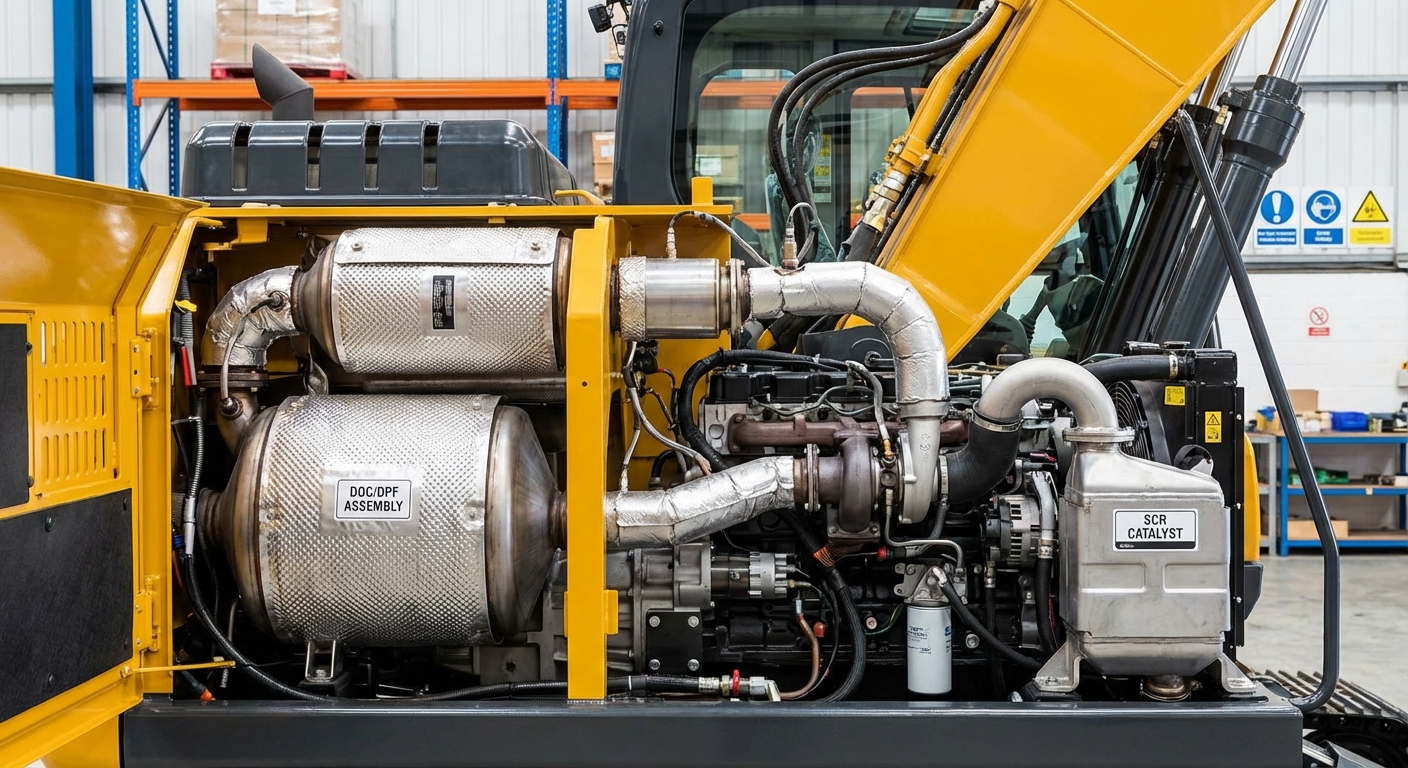
Selective Catalytic Reduction (SCR): Continued use of diesel exhaust fluid (DEF) for NOx reduction, with improved catalyst formulations and more efficient dosing systems.
Diesel Particulate Filters (DPF): Advanced filter media with improved regeneration efficiency, reducing fuel consumed during active regeneration events.
Closed Crankcase Ventilation: Captures and treats crankcase emissions that current designs vent to atmosphere.
Enhanced Controls: More sophisticated engine management systems enable optimization across emission, performance, and efficiency priorities.
“The platform is designed to meet requirements that don’t exist yet,” Lesueur noted. “When Tier 5 arrives—and we believe it will—machines equipped with these engines will need minimal modification for compliance.”
Service and Maintenance
Caterpillar emphasized serviceability features designed to reduce ownership costs and improve uptime:
Extended Service Intervals
- Oil change intervals extended to 1,000 hours (from 500 hours on most current engines)
- Fuel filter intervals extended to 1,500 hours
- Coolant life extended to 12,000 hours with proper maintenance
Diagnostic Capabilities
- Enhanced onboard diagnostics with more detailed fault identification
- Predictive maintenance algorithms identifying developing issues before failures occur
- Integration with Cat Product Link telematics for remote monitoring
Simplified Service
- Consolidated service points for faster routine maintenance
- Tool-free access panels where practical
- Improved component modularity for faster repairs
“Every hour spent on maintenance is an hour not spent working,” said Tom Bucklar, Caterpillar’s Director of Customer Support Operations. “We’ve designed these engines to minimize scheduled downtime while maximizing the information available to prevent unscheduled downtime.”
Transition Timeline
Caterpillar outlined a phased introduction plan:
Q4 2027: Initial availability in select excavator models (C7.4, C11) Q1 2028: Expansion to wheel loaders and articulated trucks Q2 2028: Dozers and motor graders Q3 2028: Full product line transition complete
Current-generation engines will remain in production through the transition, ensuring parts and service availability for existing equipment. Caterpillar committed to 15-year parts support from the last production date of current engines.
“We understand customers have significant investments in current equipment,” Bucklar said. “Our parts commitment ensures those investments remain protected.”
Dealer Preparation
Caterpillar dealers are preparing for the transition with updated training programs and diagnostic capabilities:
Technician certification: New certification requirements for technicians servicing next-generation engines, with training programs rolling out beginning Q1 2027.
Diagnostic tools: Updated diagnostic software and hardware required to service new engines, with dealer investments supported by Caterpillar co-op programs.
Parts inventory: Dealers will stock both current and next-generation parts during the transition, maintaining service capability for both engine families.
“The transition requires dealer investment, but Caterpillar is providing good support,” reported one Midwest dealer who attended recent transition planning sessions. “We see this as strengthening our service capability and differentiating from independent shops.”
Competitive Implications
Caterpillar’s announcement pressures competitors to reveal their engine technology roadmaps:
Komatsu has previewed next-generation engine technology but has not announced specific platforms or timelines. The company’s strong position in mining equipment makes engine competitiveness particularly important in that segment.
John Deere produces its own engines through its PowerTech division and will need to demonstrate comparable efficiency and emission capabilities. The company’s expanded partnership with Hitachi may influence engine strategy for excavators.
Volvo CE has emphasized electric and hybrid powertrains but will need competitive diesel offerings for applications where electrification isn’t yet practical.
For mid-tier manufacturers dependent on third-party engines, Caterpillar’s announcement highlights the technology gap they face. Engine suppliers like Cummins and Deutz will need to deliver comparable capabilities to maintain their OEM relationships.
Customer Considerations
For contractors planning equipment purchases, several considerations emerge:
Buy Now or Wait?
Equipment purchased today with current-generation engines remains fully supported and capable. For immediate operational needs, delaying purchases until 2027 isn’t practical. However, for planned fleet renewals with flexible timing, waiting for next-generation technology may provide long-term value.
Residual Value Implications
Introduction of significantly improved technology typically affects residual values of prior-generation equipment. Contractors should consider resale timing in fleet planning—equipment traded before next-generation introduction may achieve stronger residual values than equipment traded after.
Operating Cost Projections
The 12% fuel efficiency improvement affects total cost of ownership calculations. For rent vs. buy analyses, updated efficiency assumptions may shift decision points.
Looking Ahead
Caterpillar’s next-generation engine platform represents a significant technology advance with real customer benefits. Fuel efficiency gains reduce operating costs. Extended service intervals reduce maintenance burden. Emission compliance readiness protects against regulatory uncertainty.
The transition will require dealer preparation and customer planning, but the direction is clear: more efficient, cleaner, more capable equipment is coming. Contractors who understand the timeline and implications can make better-informed fleet decisions.
Equipment Insider will provide continued coverage of next-generation engine technology as more details emerge and competitive responses develop.