Midwest Machinery: A Regional Dealer's Blueprint for Success
How a family-owned dealer in Iowa built a thriving equipment business by focusing on service, relationships, and strategic brand partnerships.
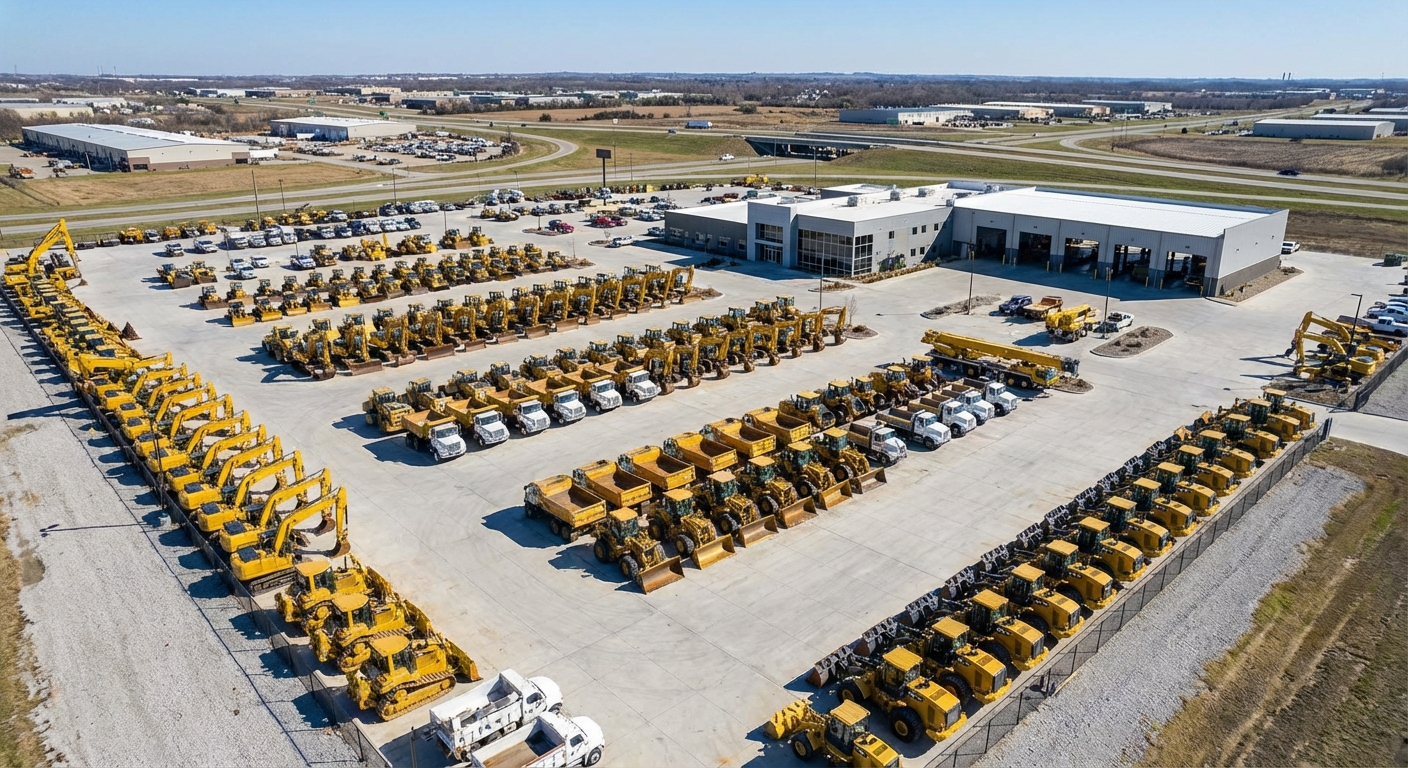
In an industry increasingly dominated by mega-dealers and manufacturer-direct sales channels, Midwest Machinery of Cedar Rapids, Iowa, stands as proof that regional dealerships can not only survive but thrive. The family-owned operation has grown from a single-location startup in 1987 to a six-location network serving contractors across Iowa and western Illinois, generating estimated annual revenues north of $85 million.
Their success offers lessons for other regional dealers navigating the challenging competitive landscape of heavy equipment sales and service.
The Midwest Machinery Story
David and Patricia Mueller founded Midwest Machinery with a simple premise: contractors needed a dealer that would treat their equipment like their own. David had spent fifteen years as a service manager at a large regional dealer before striking out independently, and he’d observed firsthand how transactional approaches to customer service left money—and relationships—on the table.
“Dad always said that selling the machine was just the beginning of the relationship,” explains current president Jennifer Mueller-Hopkins, who took over operations in 2018 after her father’s retirement. “Everything that happens after the sale is what determines whether that customer comes back.”
That philosophy has driven every major decision the company has made, from brand partnerships to facility investments to hiring practices.
Strategic Brand Portfolio
Unlike dealers who attempt to offer every brand and product category, Midwest Machinery has maintained a focused portfolio built around complementary lines. Their primary partnerships include:
Kobelco excavators represent the flagship line, with Midwest Machinery consistently ranking among Kobelco’s top North American dealers. The Japanese manufacturer’s reputation for durability and fuel efficiency resonates strongly with Iowa’s agricultural and civil construction markets.
Takeuchi compact equipment fills out the compact excavator and track loader categories, providing strong offerings in the high-volume small equipment segments.
Terex compact equipment and aerial products round out the lineup, giving the dealer a presence in categories that larger competitors often dominate.
“We’re not trying to be everything to everyone,” Mueller-Hopkins explains. “We pick brands we believe in, that we can support properly, and that fit together for our customer base. Our contractors know that when they buy from us, we’re committed to that product line.”
The Service-First Model
Walk into any Midwest Machinery location and you’ll notice something different from many dealerships: the service department is front and center, not hidden in the back. This physical layout reflects the company’s strategic priorities.
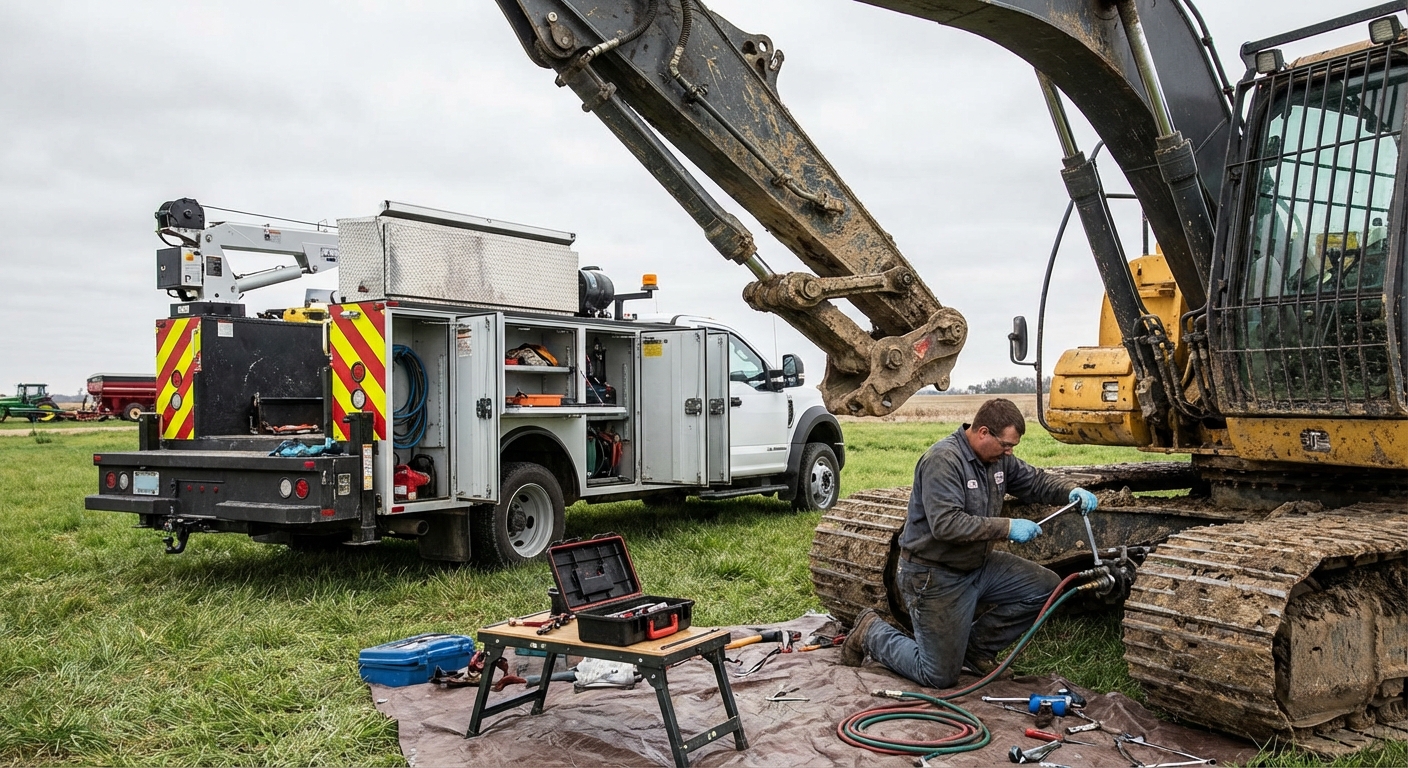
The company maintains a service technician-to-sales-person ratio of nearly 4:1, dramatically higher than industry averages. Their field service fleet includes 28 fully-equipped service trucks capable of handling most repairs on-site.
Response time metrics are treated as seriously as sales numbers. The company promises four-hour response for emergency calls during business hours, and they publish their actual performance data on their website—currently averaging 2.7 hours.
“Anyone can sell a machine,” says service director Tom Castellano, a 22-year company veteran. “What happens when that machine breaks down at 6 AM on a Monday when the contractor has a deadline? That’s when dealer relationships are really made or broken.”
Parts Investment
Supporting that service commitment requires substantial parts inventory investment. Midwest Machinery maintains over $4.2 million in parts inventory across their locations—a significant capital commitment for a regional dealer.
Their parts availability rate exceeds 94% for common service and wear items, meaning most repairs can be completed without waiting for parts shipment. For less common parts, next-day availability is standard through their OEM partnerships.
Technology Adoption
Despite their traditional relationship-focused approach, Midwest Machinery has embraced technology as a competitive differentiator.
Their customer portal, launched in 2022, allows contractors to view their complete equipment history, request service, order parts, and access machine documentation. The system integrates with major fleet management platforms, enabling customers to manage Midwest Machinery equipment alongside machines from other brands.
Service technicians use tablet-based diagnostic systems that connect directly to equipment telematics, often identifying problems before customers report them. This predictive approach has reduced emergency breakdown calls by an estimated 23% over three years.
“Technology should make the relationship stronger, not replace it,” Mueller-Hopkins observes. “Our customers appreciate that they can check their machine history online at 10 PM, but they also appreciate that they can call me directly if they have a problem. Both matter.”
Customer Base and Market Position
Midwest Machinery’s customer base reflects Iowa’s economic mix. Agricultural contractors represent the largest segment, followed by civil infrastructure contractors, municipal customers, and landscaping operations.
The company has deliberately maintained a diverse customer portfolio, avoiding over-dependence on any single contractor or market segment. Their largest customer represents less than 8% of annual revenue—a conscious strategy to maintain stability through economic cycles.
Geographic expansion has been measured rather than aggressive. Each new location opened only after the company was confident they could deliver the same service standards as existing facilities.
Competitive Challenges
Operating as a regional dealer isn’t without challenges. Midwest Machinery competes against well-capitalized national players, manufacturer-direct sales operations, and private equity-backed consolidators willing to sacrifice near-term profitability for market share.
“We can’t compete on financing terms with a manufacturer or on price with someone trying to buy market share,” Mueller-Hopkins acknowledges. “We have to compete on service, on relationships, on being the partner contractors trust when things go wrong.”
The ongoing consolidation in the dealer landscape creates both threats and opportunities. Each dealer acquisition by a national player means more customers discovering that their local relationships have disappeared. Some of those customers become Midwest Machinery converts.
Financial Performance
While the company doesn’t publicly disclose detailed financials, industry sources estimate annual revenues in the $85-95 million range, with service and parts operations generating higher margins than equipment sales.
The company has remained debt-free since paying off their initial startup loans in 1996, funding expansion through retained earnings. This conservative financial approach has allowed them to weather industry downturns without layoffs or service cuts.
Looking Forward
Midwest Machinery is preparing for leadership transition as Mueller-Hopkins’ children begin entering the business. The fourth generation is being deliberately exposed to all aspects of operations—from the service bay to the sales floor to the finance office.
Geographic expansion remains possible but selective. The company evaluates potential new markets based on customer density, competitive dynamics, and the availability of quality staff—recognizing that the dealership model only works when you can deliver on service promises.
“We’re not trying to take over the world,” Mueller-Hopkins laughs. “We’re trying to be the best equipment dealer in our markets. If we keep that focus, the growth takes care of itself.”
Lessons for Regional Dealers
Midwest Machinery’s success offers several takeaways for other regional dealers:
Differentiate on service, not price. In a market where price competition is intense, sustainable differentiation comes from service quality and customer relationships.
Maintain brand focus. Trying to offer every product category spreads resources thin. Strategic brand partnerships enable deeper expertise and better support.
Invest in people. The company’s low turnover rates and experienced staff are competitive advantages that can’t be easily replicated.
Embrace technology thoughtfully. Technology should enhance customer relationships and operational efficiency, not become a distraction.
Financial conservatism enables flexibility. Avoiding excessive debt provides resilience during downturns and freedom during opportunities.
For equipment buyers, dealers like Midwest Machinery represent the best of both worlds: local relationships backed by manufacturer partnerships, with service quality that often exceeds what larger operations can deliver.
For more company profiles, see our coverage of Columbus Equipment and other regional equipment dealers.