Excel KC: The Heavy Metal Behind Kansas City's Brightest Signs
How Excel KC uses specialized equipment for commercial sign installation
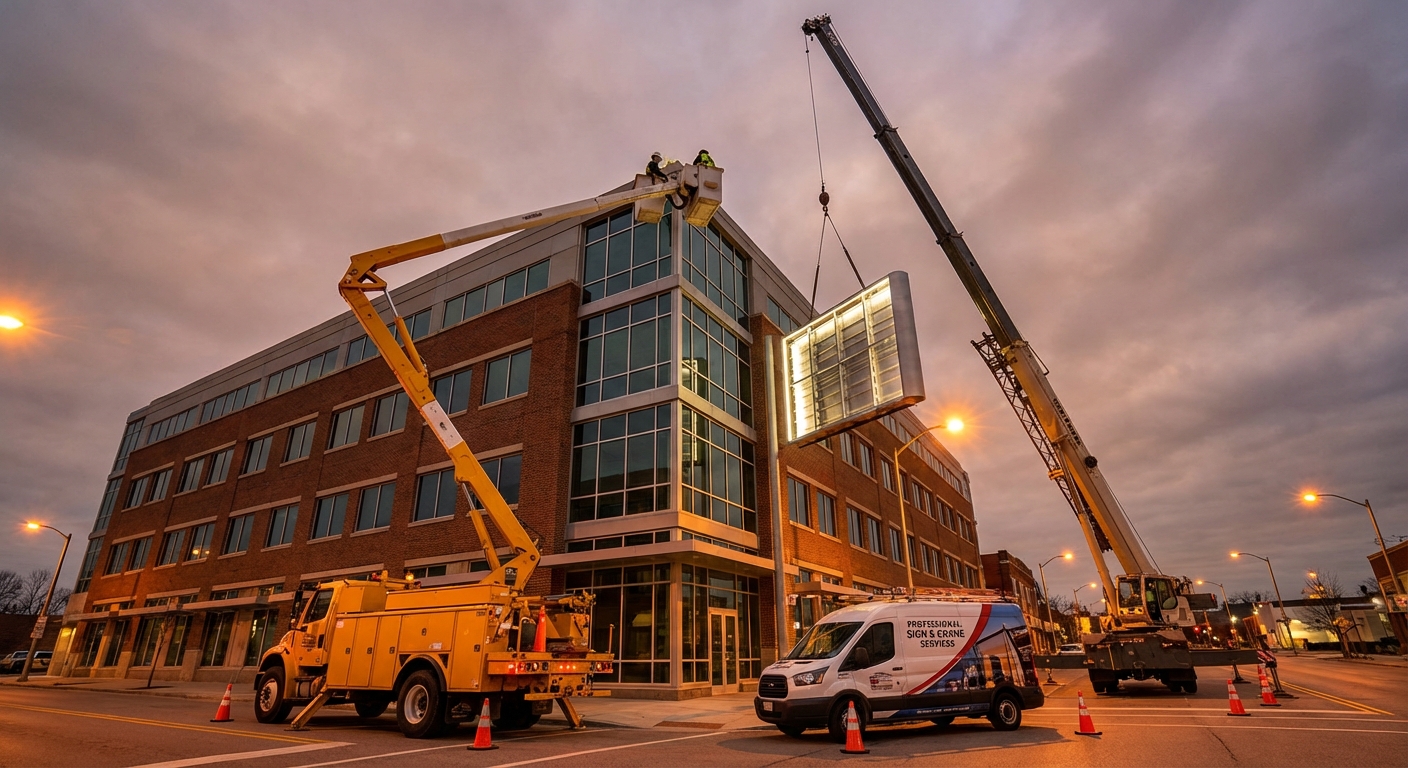
When you drive through Kansas City and see a glowing channel letter sign atop a three-story building or a massive monument sign welcoming visitors to a corporate campus, you probably don’t think about how it got there. But for Dustan Fankhauser and his team at Excel Lighting & Signs, that installation is the culmination of precision engineering, specialized equipment, and two decades of hard-won expertise in getting heavy, fragile, illuminated objects safely into the sky.
Founded in 2006, Excel KC has built a reputation as Kansas City’s go-to sign company for everything from neon retrofits to full monument sign installations. But behind every completed project is a fleet of specialized vehicles and equipment that most people never see—the bucket trucks, cranes, rigging systems, and service vehicles that make commercial sign installation possible.
FieldFix Editor’s Note: Sign installation is one of those trades that sits at the fascinating intersection of electrical work, structural engineering, and heavy equipment operation. Companies like Excel KC represent a segment of the service industry where fleet management isn’t just about logistics—it’s about having the right tool at the right height for every job. We visited their Kansas City facility to learn more about the equipment that keeps the city lit.
The Anatomy of a Sign Installation Fleet
Walk into Excel KC’s facility on McAlpine Avenue in Kansas City, Kansas, and you’ll quickly understand that this isn’t just a graphics shop with a delivery van. The company operates a diverse fleet of specialized vehicles, each serving a specific purpose in the sign installation and maintenance lifecycle.
“People think sign work is just about the design and fabrication,” says Mike Masoner, Excel KC’s Foreman and Operations Manager. “But getting that sign from our shop to a customer’s building—and then 40 feet up on their wall—that’s where the real equipment investment comes in.”
The backbone of any sign company’s fleet is the bucket truck, and Excel KC is no exception. These aerial work platforms—typically featuring insulated fiberglass buckets rated for electrical work—allow technicians to safely access sign mounting locations that would otherwise require extensive scaffolding or crane rentals. For a company that handles everything from routine bulb replacements to full sign installations, having reliable bucket trucks isn’t optional—it’s existential.
But bucket trucks only tell part of the story. Commercial sign installations often involve components that weigh hundreds or even thousands of pounds. Channel letter sets for a big-box retailer, illuminated cabinet signs, and monument sign structures all require careful lifting and positioning that goes far beyond what a single technician in a bucket can manage.
Rigging, Lifting, and the Physics of Signage
Ralph Brasheer, Excel KC’s Service and Install Lead with decades of experience in the trade, explains the engineering challenge: “A lot of people don’t realize how heavy signs are. A standard channel letter—just one letter—can weigh 30 to 50 pounds depending on size and construction. Now multiply that by a 15-letter storefront sign, factor in the raceway it mounts to, and you’re talking about lifting 800 pounds or more to a precise location on a building facade.”
This weight consideration drives equipment decisions at every level. For larger installations, Excel KC coordinates crane services capable of lifting sign cabinets and monument structures into position. These lifts require careful planning, load calculations, and often traffic control and permits—especially in Kansas City’s busy commercial corridors.
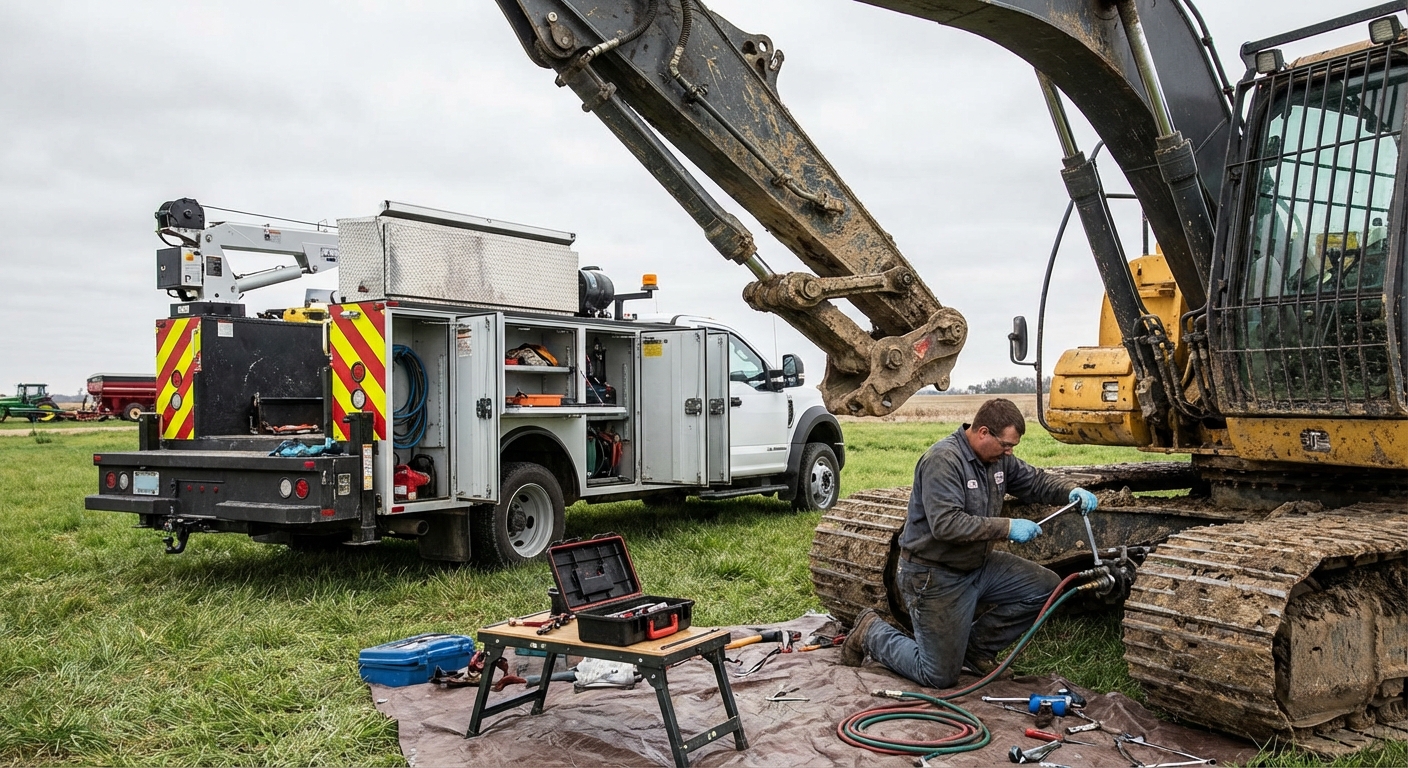
The company’s service vehicles are configured as rolling workshops, equipped with generators, welding equipment, electrical testing gear, and an inventory of common replacement parts. When a client calls about a flickering sign or burned-out section, the goal is to diagnose and repair in a single visit whenever possible. That means every truck needs to carry the right tools and materials for a wide range of scenarios.
“We run our trucks hard,” Brasheer admits. “They’re not highway cruisers—they’re stop-and-go workhorses that idle for hours while we’re up in the bucket, then drive across town to the next job. That’s tough on any vehicle, and it means we have to stay on top of maintenance.”
Fleet Management Challenges for Service Companies
The operational demands on sign company fleets are substantial and often underappreciated. Unlike delivery or transportation businesses where vehicles follow predictable routes, sign service companies face highly variable daily schedules driven by emergency calls, installation timelines, and the unpredictable nature of electrical and structural repairs.
Excel KC’s scheduling typically juggles multiple job types simultaneously: routine maintenance contracts that require regular visits, new installation projects with fixed deadlines, and emergency service calls from businesses with non-functioning signs. Each job type has different equipment requirements, and mismatching a vehicle to a job means either returning to the shop for different equipment or calling for backup—both costly in terms of time and customer satisfaction.
“We might start the day planning to do three maintenance calls and end up getting pulled to an emergency where a restaurant’s sign went dark the night before a grand opening,” explains Sarah Fankhauser, Excel KC’s Office Manager and the person responsible for coordinating the daily logistics puzzle. “The trucks have to be ready for anything, and the crews have to know which truck has what equipment.”
This variability puts pressure on fleet maintenance schedules. Bucket truck hydraulics, aerial lift certifications, electrical safety equipment, and standard vehicle maintenance all compete for attention. The consequences of deferred maintenance in this industry go beyond inconvenience—they can mean safety incidents, OSHA citations, or catastrophic equipment failures at height.
The Evolution of Sign Installation Equipment
The sign industry has evolved significantly since Excel KC’s founding in 2006, and equipment has evolved with it. LED technology, which has largely replaced traditional neon and fluorescent illumination, has changed not just the signs themselves but the service model around them.
“LEDs last longer and use less power, which is great for customers,” says Masoner. “But when they do fail, the diagnosis is different. It’s more like troubleshooting a computer than changing a lightbulb. Our trucks now carry laptops and diagnostic equipment that would have seemed crazy 15 years ago.”
The shift toward digital signage has added another layer of complexity. Modern LED message centers and video displays require not just electrical installation but network connectivity, software configuration, and ongoing content management support. Excel KC’s digital sign services reflect this evolution—and so does the equipment their technicians carry.
At the same time, some fundamentals remain unchanged. Bucket trucks still need to reach 40, 60, or 80 feet. Heavy signs still need to be lifted and positioned with precision. Electrical connections still need to meet code and perform reliably for years. The tools have gotten more sophisticated, but the core challenge—safely placing large illuminated objects in elevated positions—remains the defining technical problem of the trade.
Monument Signs: When Ground-Level Work Requires Heavy Equipment
Not all sign work happens at height. Monument signs—the freestanding structures that mark entrances to shopping centers, office parks, and corporate campuses—present their own equipment challenges. These installations often involve excavation, concrete work, and structural steel fabrication before any illuminated elements enter the picture.
“A monument sign installation might look simple from the road, but there’s a lot happening underground,” Brasheer notes. “Concrete footings, electrical conduit, drainage considerations—it’s construction work that happens to end with a sign on top.”
For these projects, Excel KC coordinates with concrete contractors, electricians, and sometimes civil engineers depending on the complexity and local permitting requirements. The company’s role often extends beyond signage into general construction management, ensuring that the finished monument meets both aesthetic goals and structural requirements.
The equipment for monument work differs substantially from aerial sign installation: skid steers for site preparation, concrete mixing and delivery, and forklift capability for positioning heavy cabinet components. Many sign companies maintain relationships with equipment rental providers to supplement their core fleet for these specialized ground-level installations.
The Human Element: 50+ Years of Combined Experience
Equipment alone doesn’t install signs—people do. Excel KC emphasizes the depth of experience within its leadership team, claiming over 50 combined years in the sign and lighting industry across its key personnel.
This experience manifests in countless small decisions that separate efficient operations from costly mistakes: knowing which mounting hardware works best on different building materials, understanding how Kansas City’s weather affects installation timing, recognizing when a job needs additional equipment before the crew arrives on site.
“There’s no substitute for having seen a thousand jobs,” says Dustan Fankhauser, the company’s owner. “Equipment gives you capability, but experience tells you how to use it. I’d rather have an experienced crew with basic equipment than a new crew with the fanciest trucks on the market.”
That said, Excel KC continues to invest in both people and equipment. The company’s commitment to what it calls “safe and efficient” installation practices reflects an industry where the consequences of cutting corners can be severe—both in terms of worker safety and the potential for property damage when heavy objects and electrical systems are involved.
Looking Ahead: Technology and the Future of Sign Service
The sign industry, like many trades, faces ongoing technological evolution. GPS fleet tracking, digital work order management, and mobile-first customer communication have all become standard expectations rather than competitive advantages. Excel KC’s 72-hour estimate guarantee—providing customers with pricing within 72 business hours of initial contact—reflects the accelerated pace that modern service businesses must maintain.
Emerging technologies may further transform the equipment landscape. Drone inspection capabilities, while not yet replacing bucket trucks, offer potential for initial site assessment and documentation. Advanced materials continue to reduce sign weights while improving durability. And energy efficiency improvements in LED technology mean that electrical infrastructure requirements continue to evolve.
For Excel KC, the equipment strategy remains grounded in the company’s core values of being “dependable, reasonable, flexible, professional, creative, and adaptive”—words that have guided the company since 2006. In practical terms, this means maintaining a fleet capable of handling the full range of sign services, from emergency repairs to complex new installations, while staying nimble enough to respond to industry changes.
The Bottom Line on Sign Installation Equipment
Commercial sign companies occupy a unique niche in the equipment world. They’re not heavy construction, but they handle substantial loads. They’re not primarily electrical contractors, but they work with power constantly. They’re not crane operators, but they need lifting capability for virtually every job.
This hybrid nature creates both challenges and opportunities. Companies like Excel KC must maintain diverse equipment inventories, train personnel across multiple technical disciplines, and manage fleets that see demanding, variable use patterns. But it also creates barriers to entry that protect established operators and reward the kind of deep operational expertise that comes from decades in the trade.
For businesses evaluating sign service providers, the equipment question deserves attention. A company’s fleet tells you something about their capabilities, their investment in the trade, and their ability to handle whatever challenges your project might present. In Kansas City, Excel KC has spent nearly two decades building both the equipment base and the human expertise to deliver on that promise.
Excel Lighting & Signs is located at 1100 McAlpine Avenue in Kansas City, Kansas. For more information, visit excelkc.com or follow them on X @dustandfank.